
The Heinzelmännchen
Creatures who did the craftsmen's work at night until someone spied on them.
Raimond Spekking — CC BY-SA 4.0 · Frank Vincentz — CC BY-SA 3.0 · Frank Vincentz — CC BY-SA 3.0 · Frank Vincentz — CC BY-SA 3.0
A bronze fountain near the church of Gross St Martin in Cologne's old town, by the sculptors Theo Heiermann and Elmar Hillebrand in 1980, depicting animals connected with the city's folklore. The work is recent but points at an older layer: Cologne has a rich folklore of its own, with characters and stories that recur in its monuments, its songs and its carnival. The best known are the Heinzelmännchen, small creatures who the story says did the work of the city's craftsmen at night while they slept, until a tailor's curious wife spied on them and they vanished for good. This kind of urban folklore is not decoration in Cologne but part of a strong local identity, expressed in the Kölsch dialect and in the carnival that stops the city for a week each year. The area around the fountain is the heart of the old town rebuilt after the destruction of the Second World War, which erased around ninety per cent of Cologne's centre. Practical points: free and always open. The visit is minutes on a walk through the old town between the cathedral and the river.
Creatures who did the craftsmen's work at night until someone spied on them.
The stories are part of a strong identity in dialect and carnival.
What you see in the centre is reconstruction after near-total destruction.
Near Gross St Martin, the old town
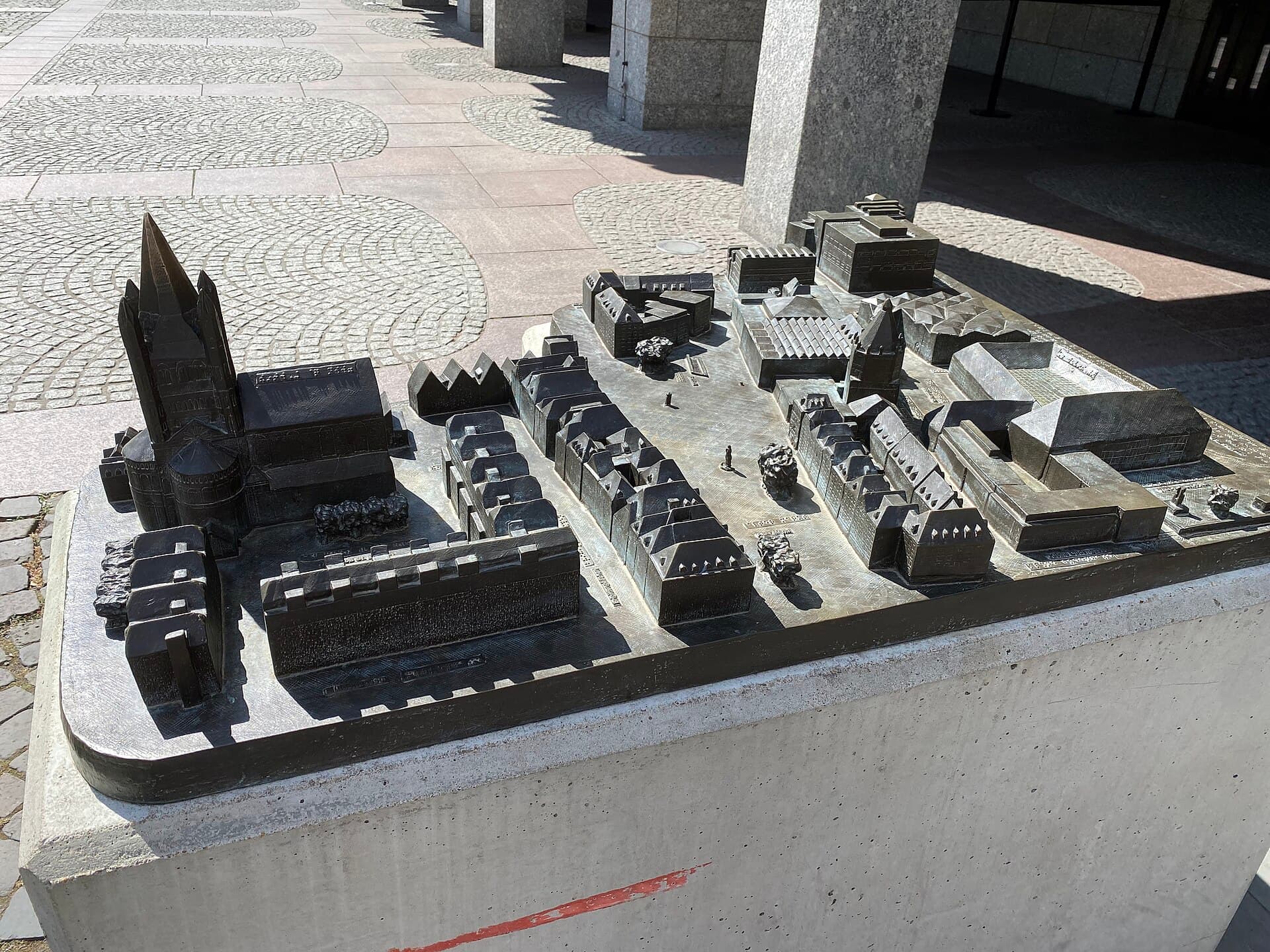 Great St. Martin ChurchGreat St. Martin is a Romanesque church in Cologne's old town, its square tower 1 minute walk4.5
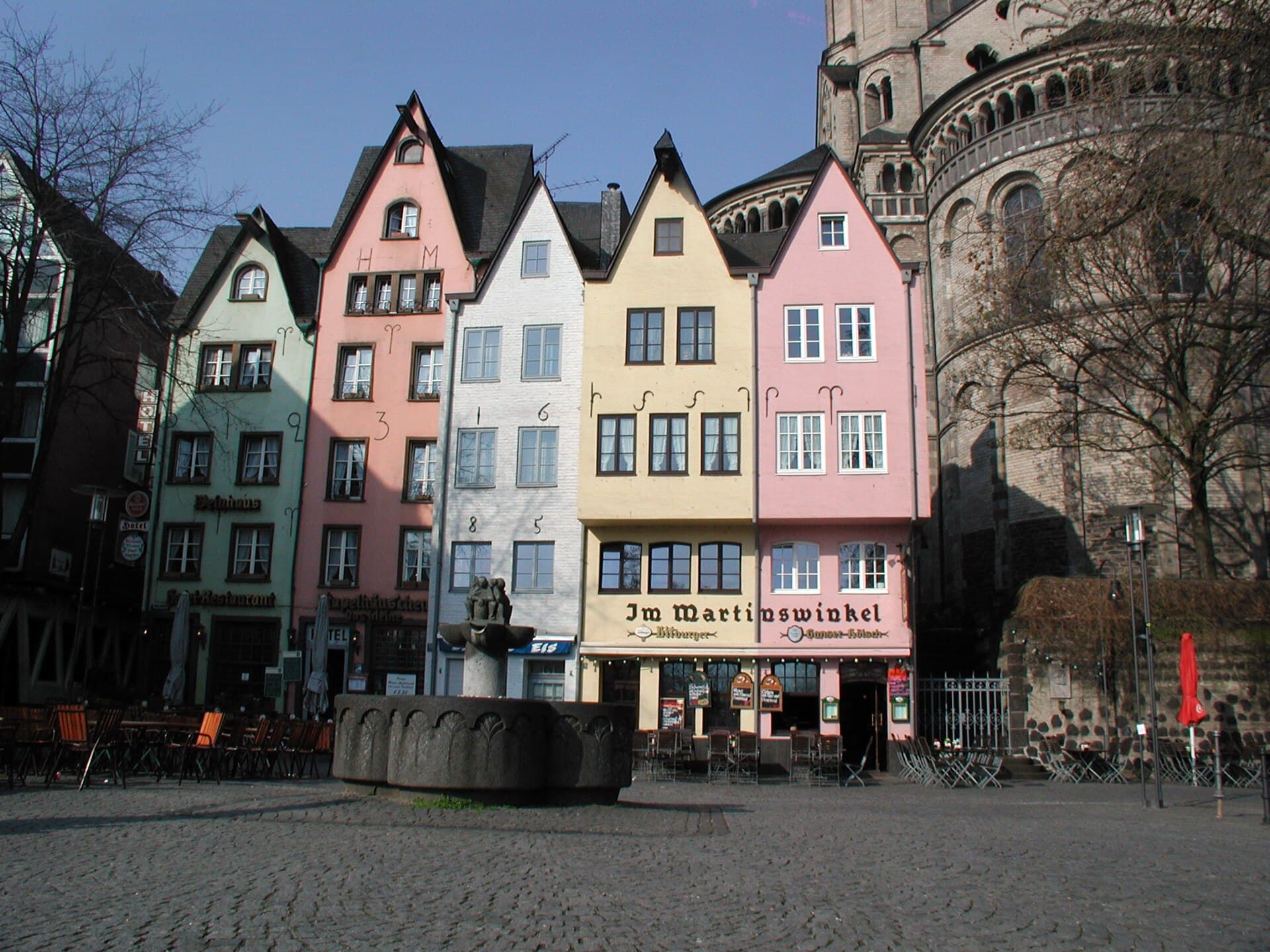 FischmarktThe Fischmarkt is a small triangular square on the Rhine bank behind Great St. M1 minute walk4.3
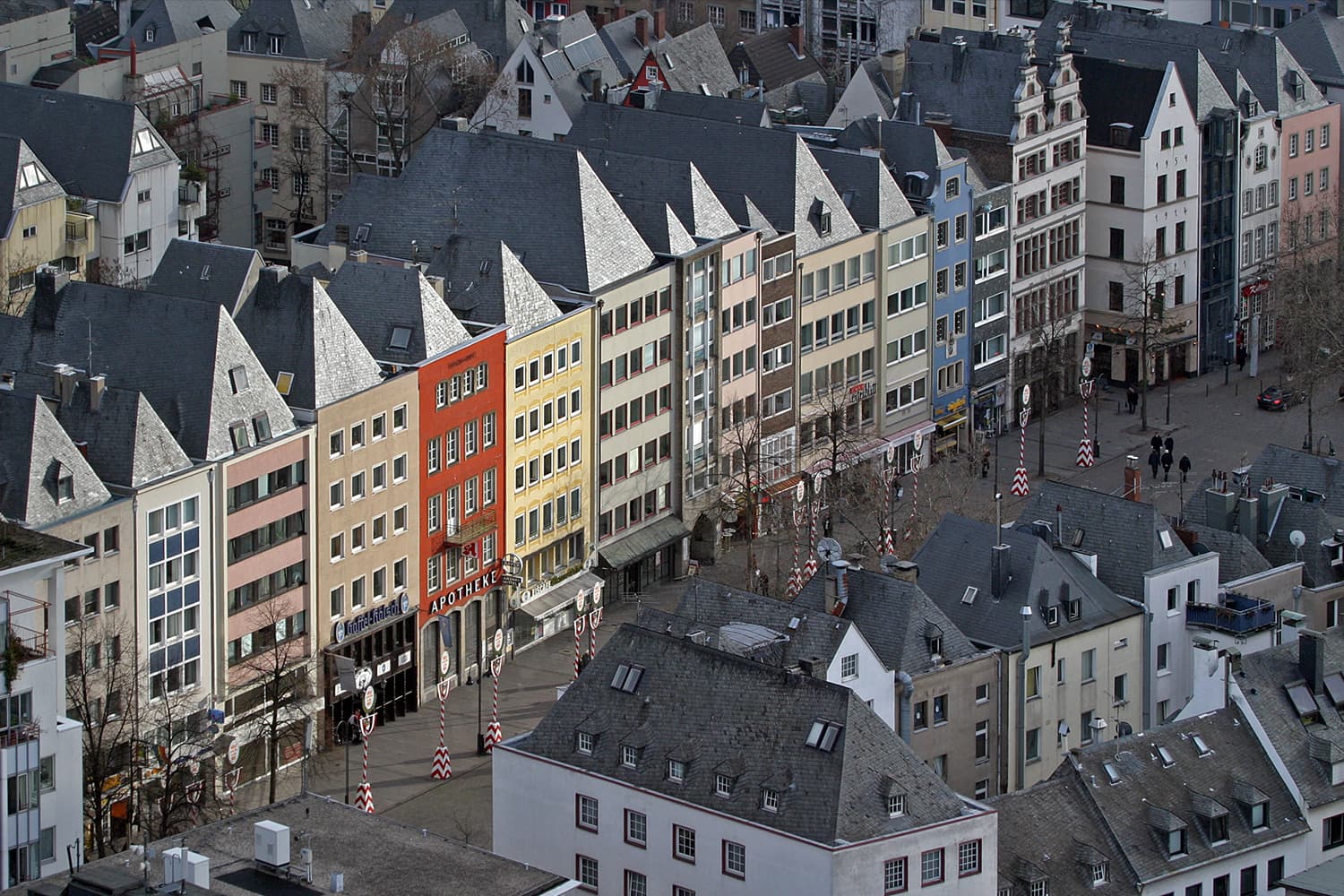 Alter MarktThe Alter Markt is Cologne's oldest square and was the city's trading centre fro1 minute walk4.4
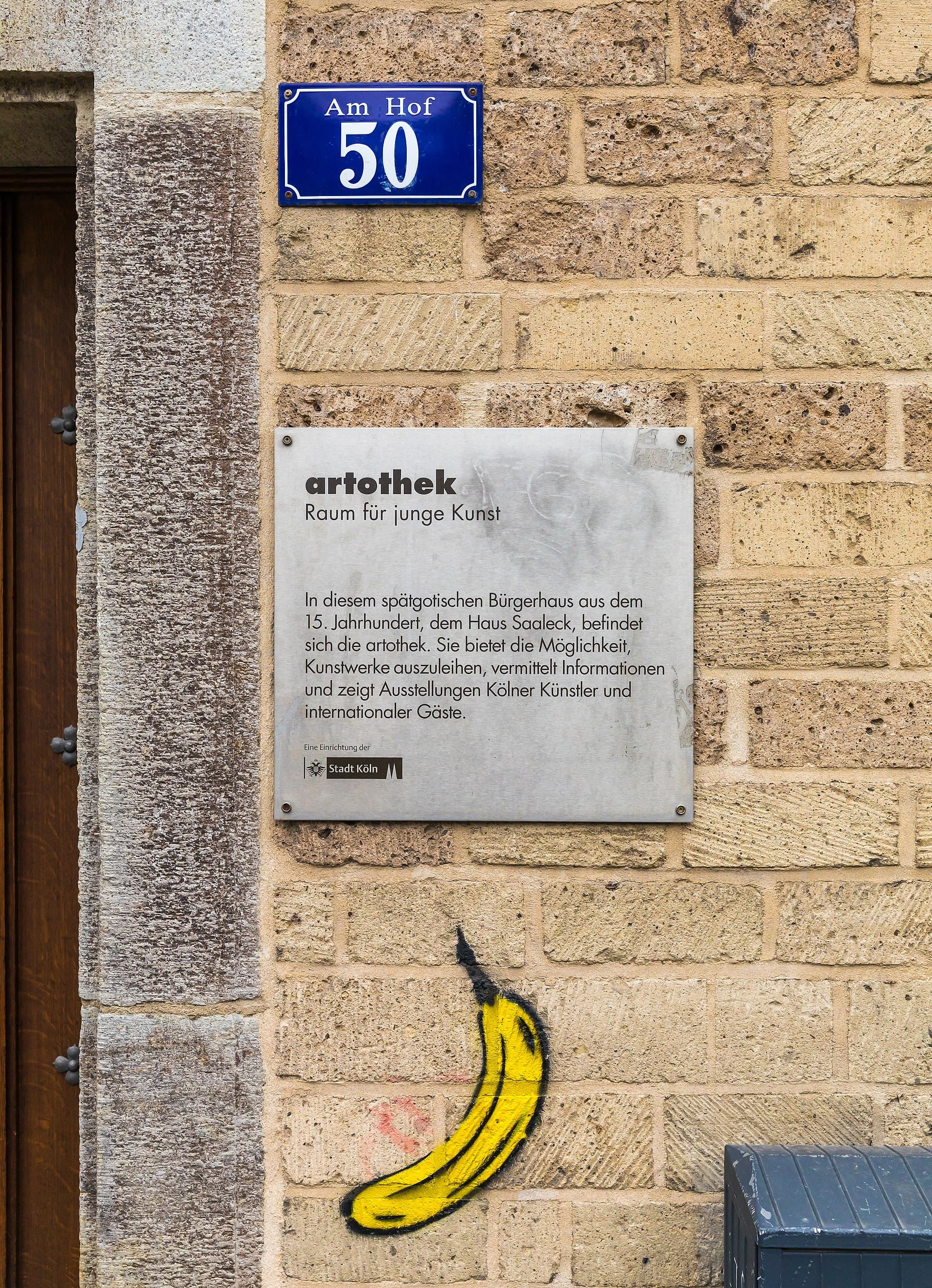 The Artothek — art lending libraryA municipal art institution in central Cologne working on an unusual principle: 2 minutes walk4.6
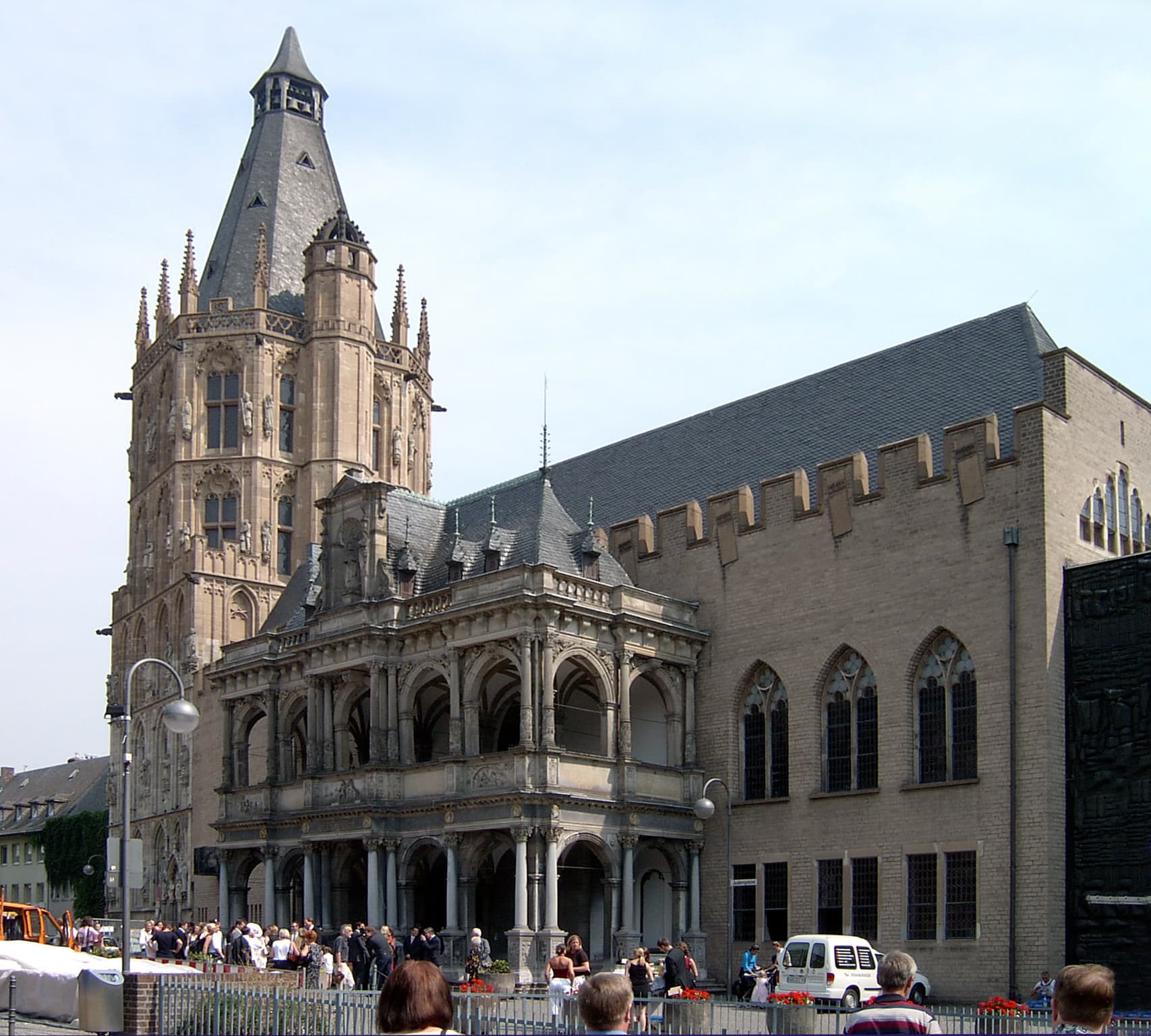 Cologne Historic City HallCologne's Rathaus is Germany's oldest working city hall: documented since 1135, 2 minutes walk4.3
The largest popular festival in Germany, formally beginning on 11 November and peaking in the days before Ash Wednesday with vast processions, costumes and songs in the Kölsch dialect. The city effectively stops: schools and offices close and the streets fill. Carnival is central to Cologne's identity and a main reason it feels distinct from the rest of Germany — a feeling its people express plainly.
Almost completely. The city was a target for intensive bombing because of its industry and rail junction, and around ninety per cent of the historic centre is estimated to have been destroyed. The cathedral remained standing despite many hits — it is said the Allies kept it as a navigational landmark. What you see in the old town today is reconstruction, some of it exact and some contemporary.