
Kuching's oldest temple
Survived the 1884 fire.
Yeo Jiun Tzen — CC BY-SA 4.0 · Damian Pankowiec — CC BY-SA 4.0 · Marufish from Alor Setar, Malaysia — CC BY-SA 2.0 · Yeo Jiun Tzen — CC BY-SA 4.0 · Yeo Jiun Tzen — CC BY-SA 4.0
The oldest temple in Kuching, standing on a raised terrace at the eastern end of the waterfront opposite the Chinese History Museum. It is believed to have existed before 1839, though its recorded history begins in 1843, and it was renovated several times in the nineteenth century. The temple survived the great fire that swept Kuching in 1884 and then the Second World War bombing that destroyed the buildings around it, so to the city's people it became a symbol of endurance and good fortune. It is dedicated to Tua Pek Kong, the god of prosperity and protection of the Chinese of Southeast Asia. It is ringed by a low wall painted with a colourful mural of dragons and waves, its green-tiled roof is topped by fine ceramic figures, and in front stand an incense burner and a tower for burning paper offerings. Entry is free, and it is packed at Chinese New Year and other Chinese festivals. It stands at the start of the waterfront, so begin your walk along the Sarawak River here, then cross to the Chinese History Museum opposite and Main Bazaar.
Survived the 1884 fire.
Colourful waves and dragons.
Where the river walk begins.
Jalan Tunku Abdul Rahman, at the eastern end of the waterfront, opposite the Chinese History Museum
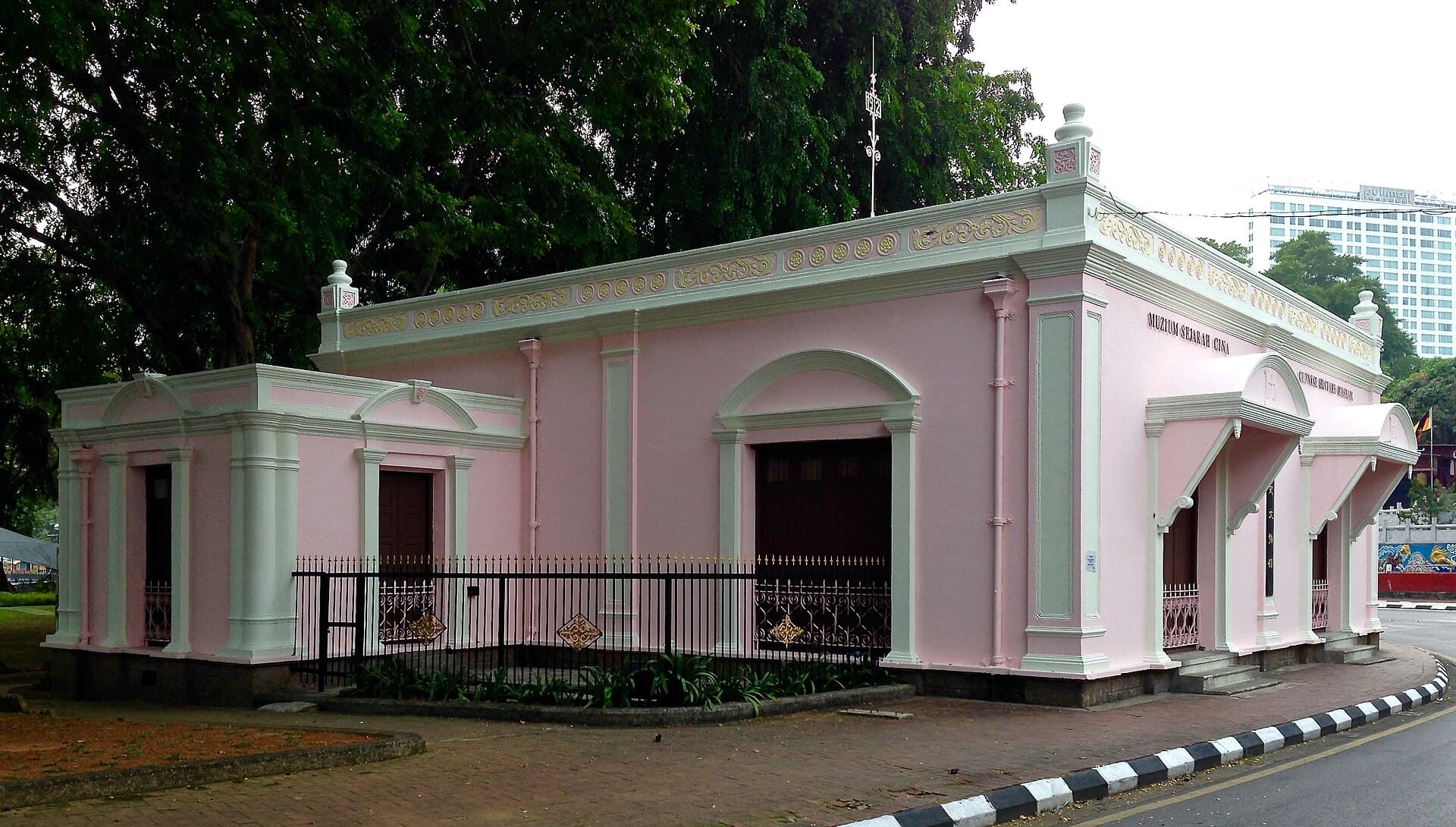 Chinese History Museum, KuchingA small, elegant building on the waterfront, built in 1912 as the headquarters o1 minute walk
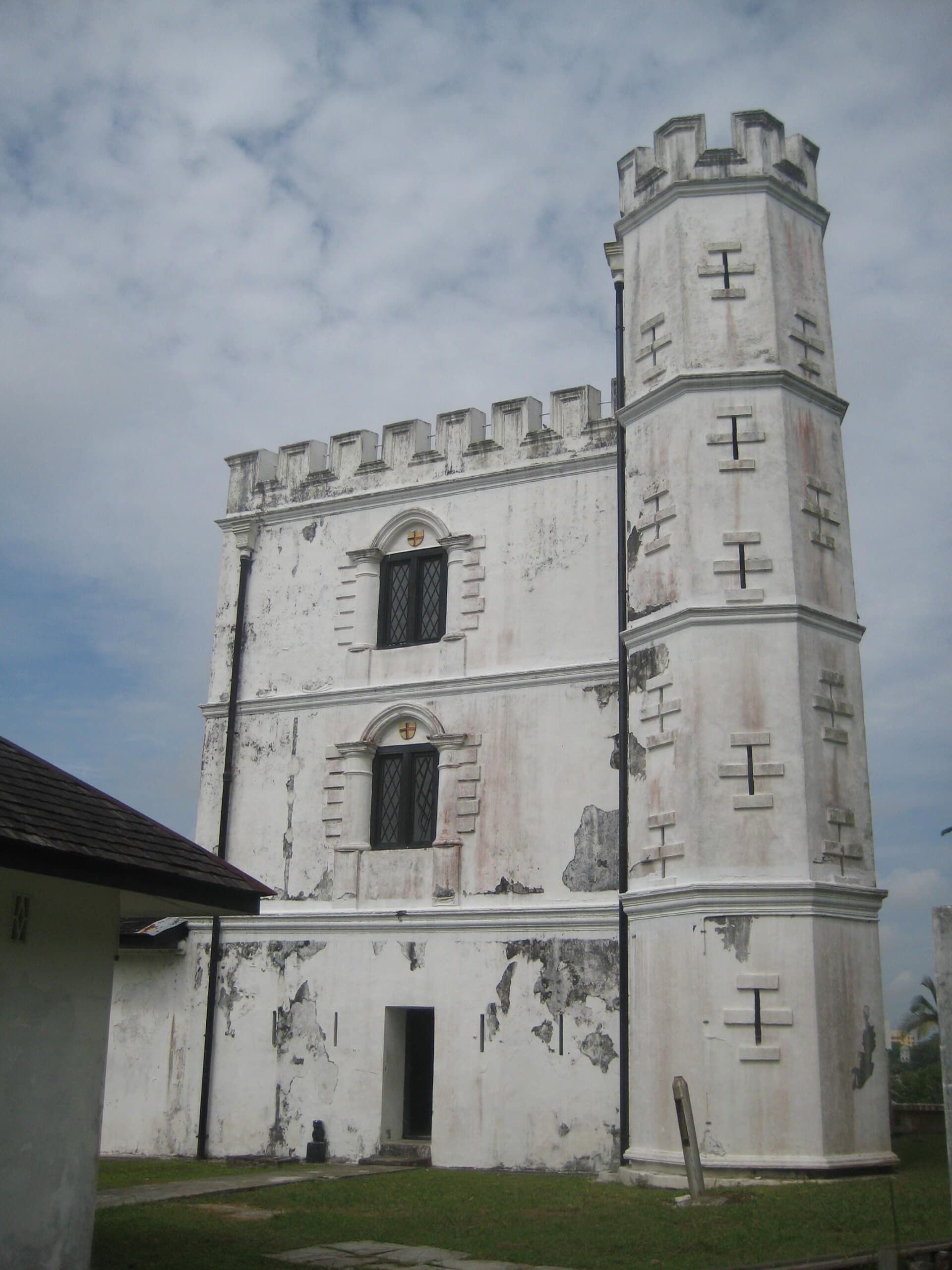 Fort Margherita and the Brooke GalleryA small white fort in the style of an English castle, built in 1879 by Charles B5 minutes walk
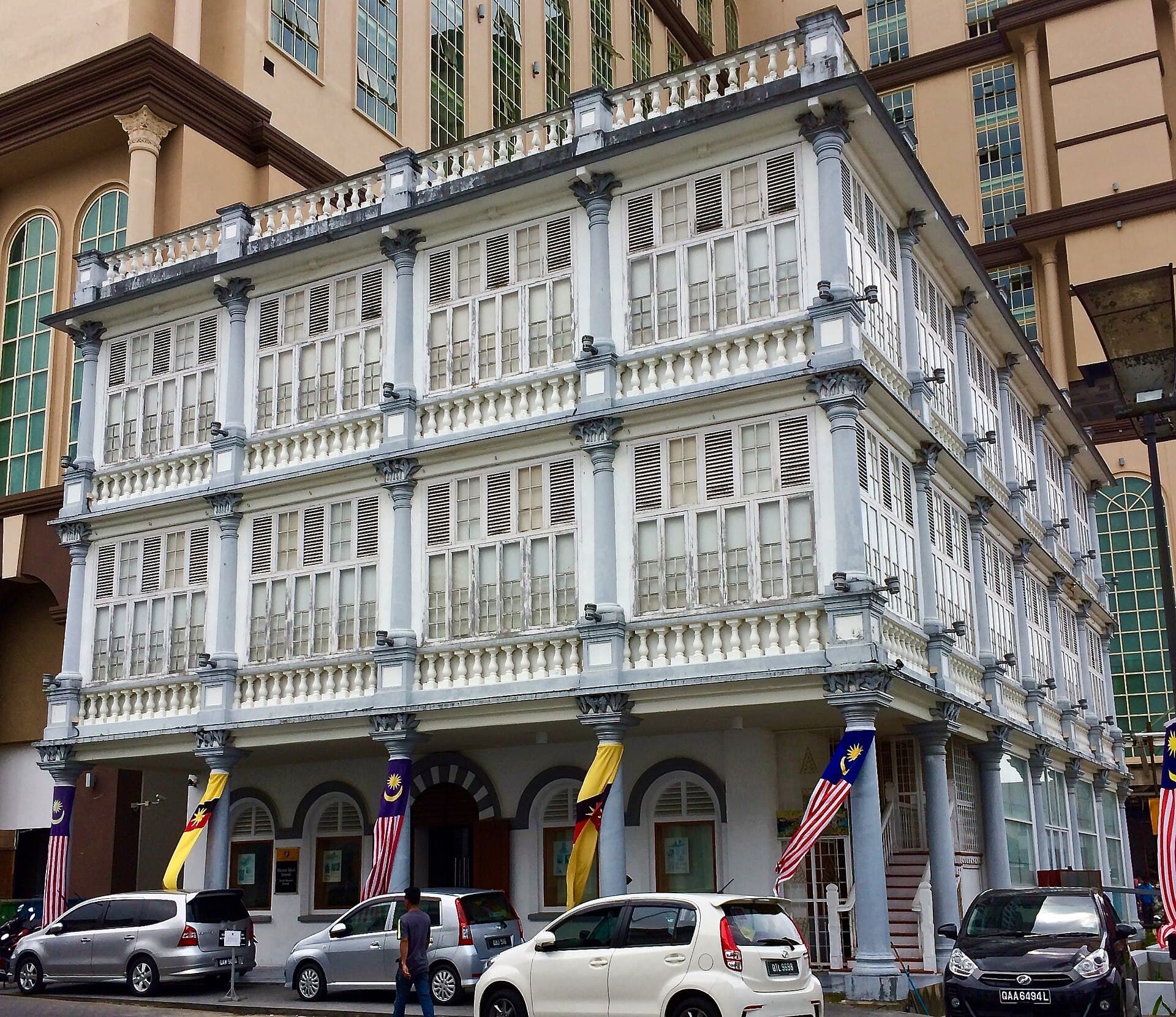 Textile Museum SarawakA small, elegant museum in the Pavilion Building, a three-storey colonial buildi6 minutes walk
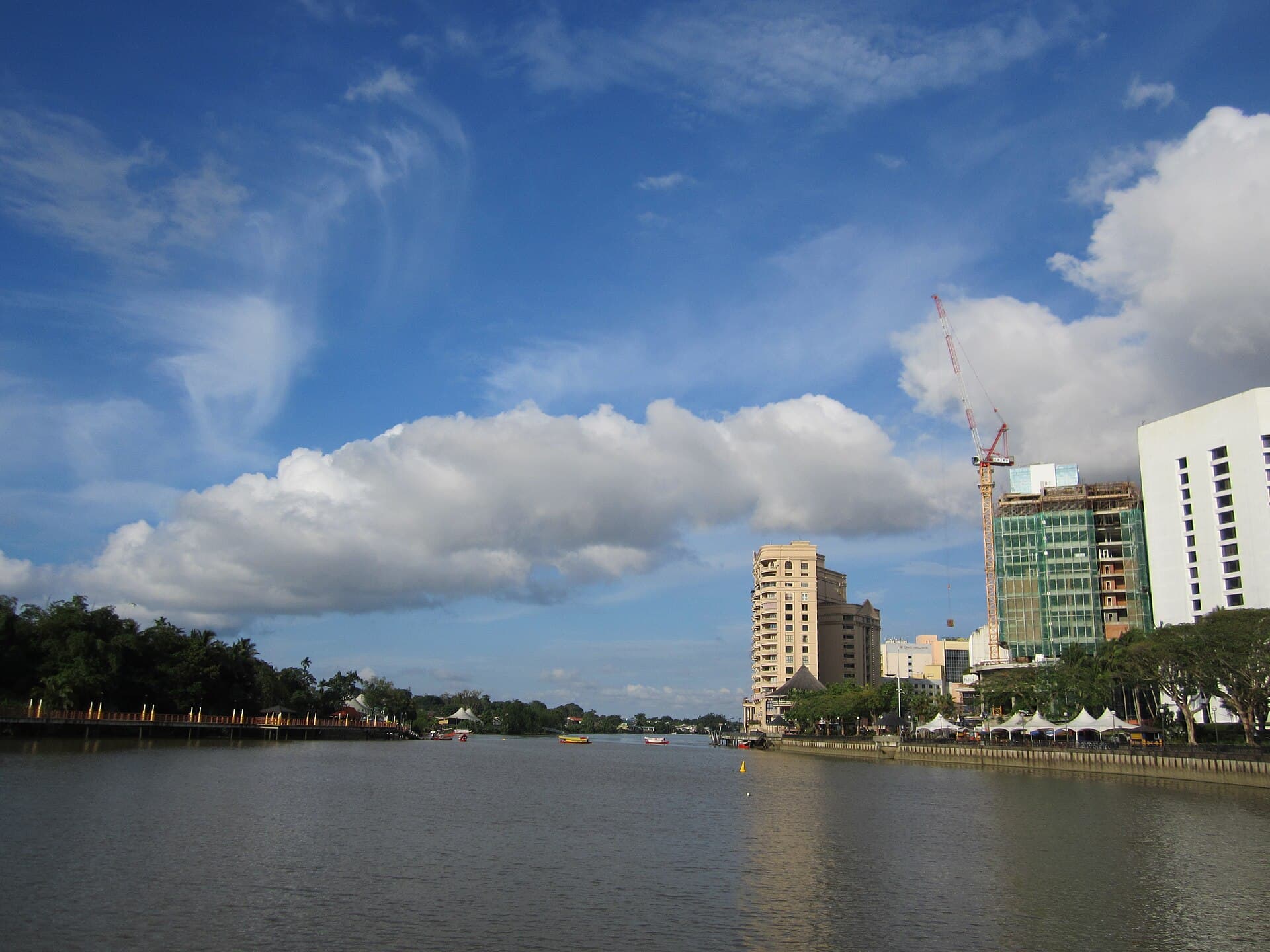 Kuching Waterfront and Darul Hana BridgeThe waterfront is the heart of Kuching and its loveliest part: a promenade of ab6 minutes walk
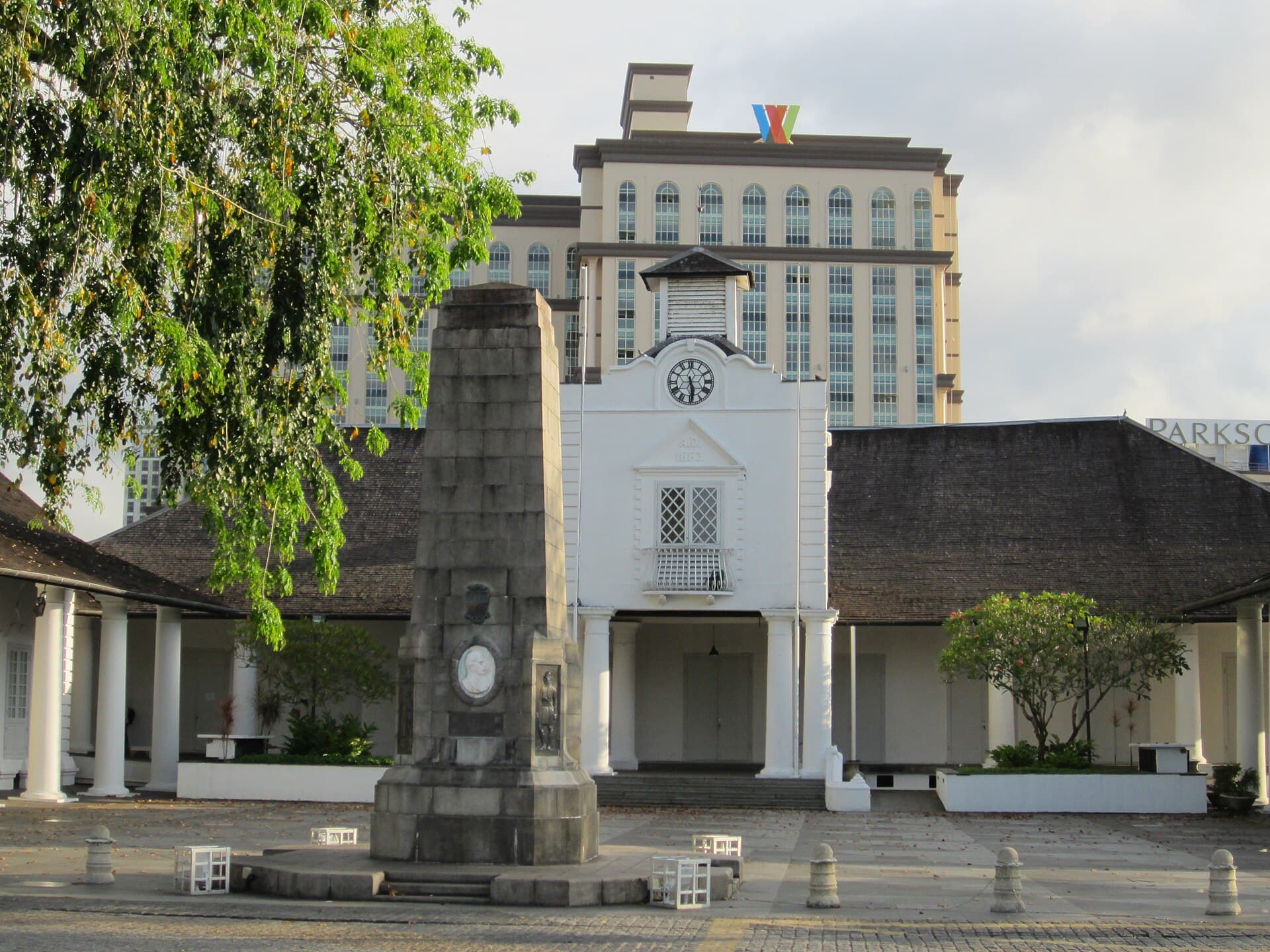 Old Court HouseAn elegant white complex from the era of Sarawak's White Rajahs, built by Charle7 minutes walk
The Chinese History Museum opposite, then the waterfront and Main Bazaar, all a few minutes' walk away.