
Eight wooden horses
Life-size carvings in complete Ottoman harness.
FrDr — CC BY-SA 4.0 · Andraszy — CC BY-SA 4.0 · Rabe! — CC BY-SA 4.0 · Rabe! — CC BY-SA 4.0
This collection emerged inside the Saxon electors' armoury as early as fifteen ninety-one, when it was called the Hungarian Chamber; the present name is first recorded in sixteen fourteen. Over centuries it grew out of diplomatic gifts, purchases and spoils from the Ottoman wars until it became one of the oldest and largest holdings of Ottoman art outside Turkey. The centrepiece is an Ottoman tent of seventeen twenty-nine, roughly twenty metres long, eight wide and six high, made of satin, cotton and gilded leather, restored over fourteen years and pitched at full size inside the hall. Around it stand more than six hundred exhibited pieces: eight life-size carved wooden horses in complete harness, composite bows still carrying their original strings from fifteen eighty-six, and sabres, mail, helmets, banners and costume. One piece of context matters for reading the room honestly. The Saxon princes did comparatively little fighting against the Ottomans. Most of what you see was bought, commissioned in Constantinople or received as a gift, and Augustus the Strong staged court festivals with his nobles dressed in Ottoman style. The hall is as much a document of European fascination with the East as it is an Ottoman collection. Entry is on the combined Residenzschloss ticket and it closes on Tuesdays with the rest of the palace.
Life-size carvings in complete Ottoman harness.
Original strings surviving from 1586.
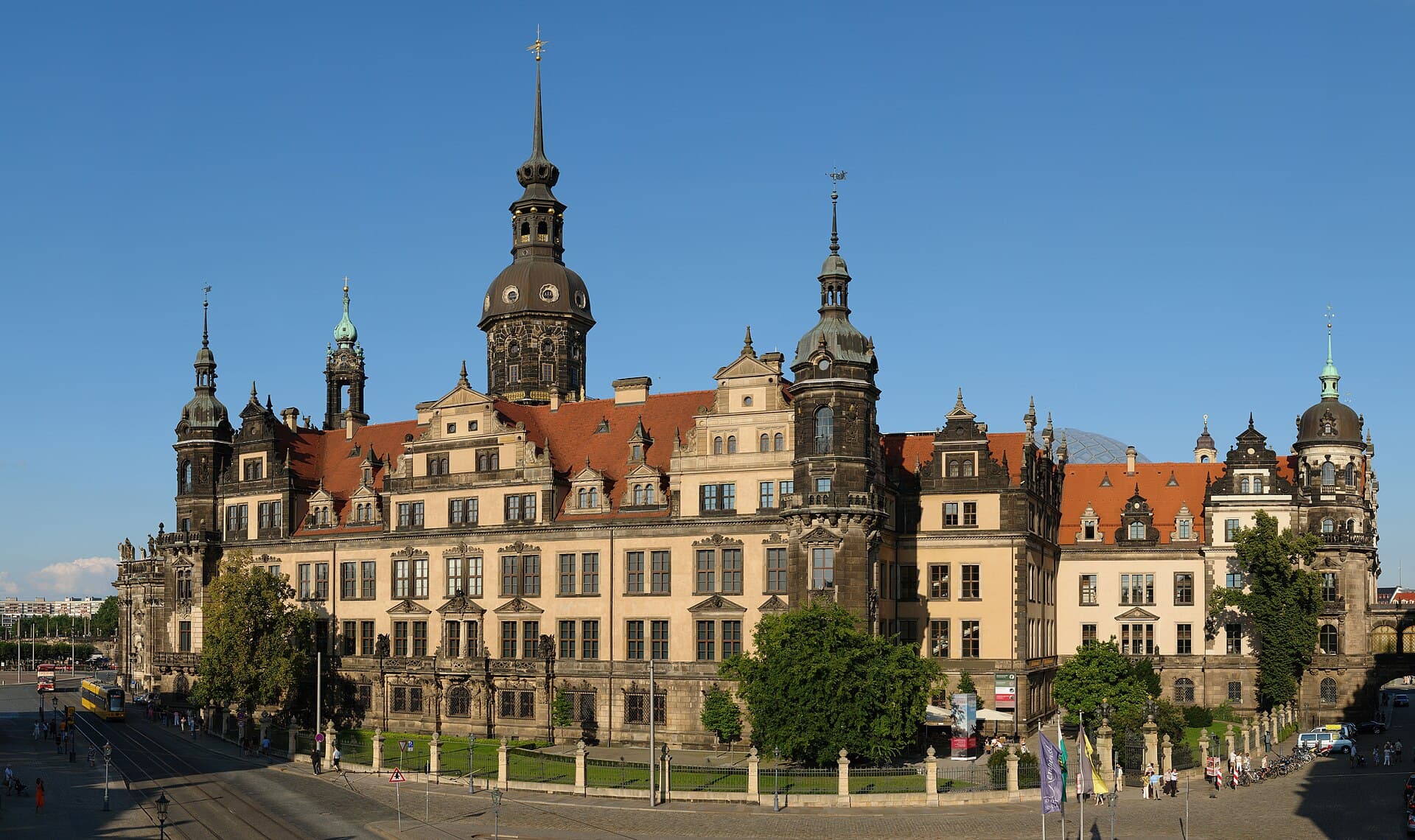
Residenzschloss, Taschenberg 2, 01067 Dresden
 Historic Green VaultThe Historic Green Vault is the treasure chamber of Augustus the Strong, ruler o1 minute walk4.8
 Dresden CastleDresden Castle was the seat of the rulers of Saxony for more than four hundred y1 minute walk4.6
 The Coin CabinetThe Münzkabinett in the Residenzschloss is one of the oldest coin collections in1 minute walk4.5
 Kupferstich-KabinettAugustus the Strong founded this collection in seventeen twenty, making it one o1 minute walk4.4
 Dresden State Art CollectionsAn institution of fifteen museums in Dresden, among the oldest and richest art c1 minute walk3.8
Forty-five minutes covers the hall itself, but the ticket also opens the armoury, the New Green Vault and the state apartments, so budget half a day for the palace. For anyone interested in Ottoman or Islamic art, this single room is among the strongest things in Dresden.