The colonnaded street
And its mosaics.
Vyacheslav Argenberg — CC BY 4.0 · Vyacheslav Argenberg — CC BY 4.0 · Daieuxetdailleurs — CC BY-SA 4.0 · Daieuxetdailleurs — CC BY-SA 4.0 · Daieuxetdailleurs — CC BY-SA 4.0 · Daieuxetdailleurs — CC BY-SA 4.0 · RomanDeckert — CC BY-SA 4.0
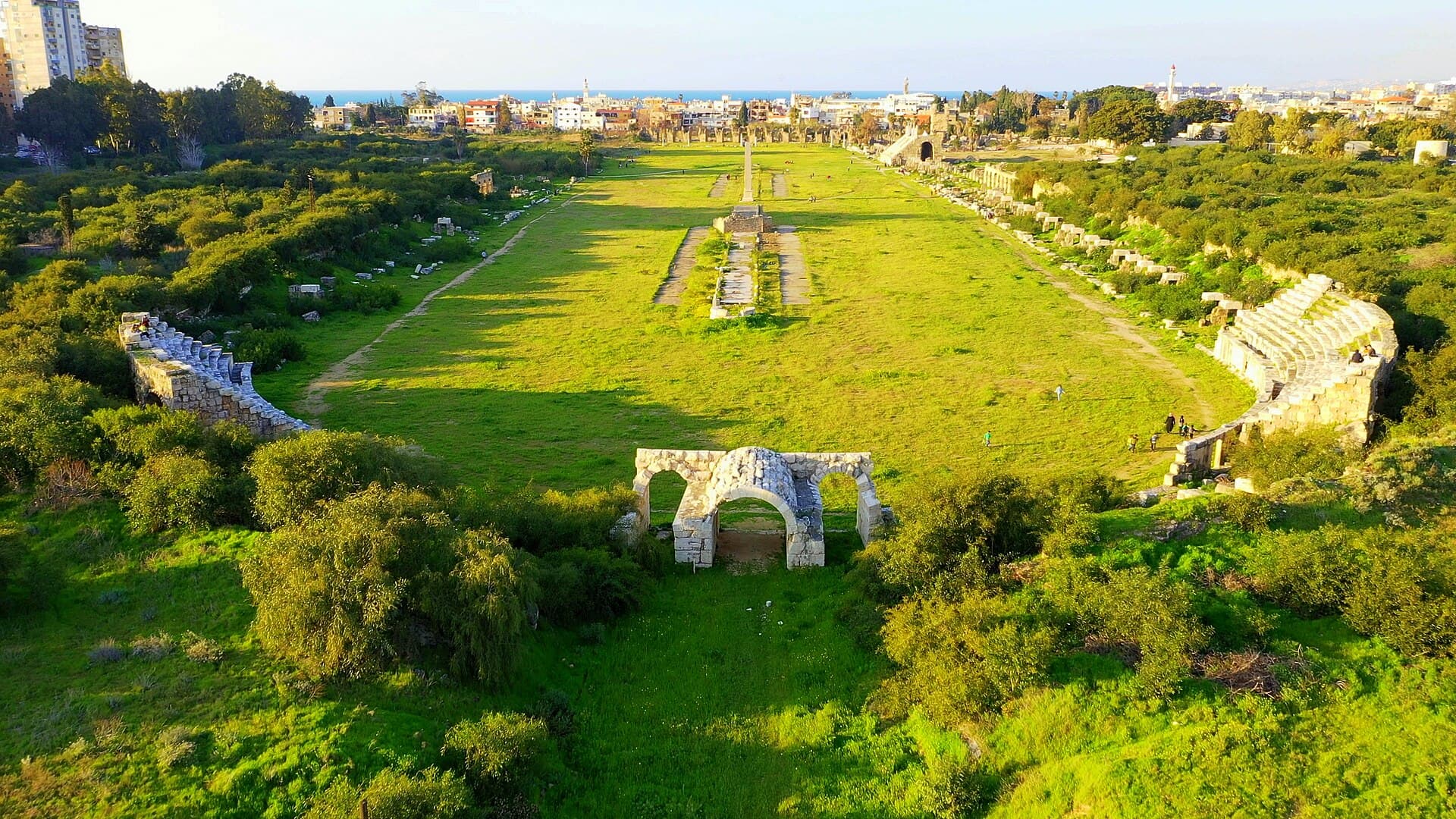
An archaeological site on the shore of Tyre, on what was the island of the ancient Phoenician city until Alexander the Great joined it to the mainland with a causeway during his siege of 332 BC. It is part of the UNESCO-listed Tyre site, and some of its remains now lie underwater. The highlight is a long colonnaded street paved with Roman and Byzantine geometric mosaics, which led from the centre of the Roman city to its southern harbour; the standing columns against the sea make an unforgettable picture. There are also large public Roman baths of the second and third centuries, where the stone discs that held up the heated floor still show, a fourth-century rectangular arena with rock-cut stands for some 2,000 spectators, exercise grounds and a residential quarter. The site is fairly compact and an hour is enough. It sits steps from the old harbour and the souk, and pairs well with Al-Bass on the same day.
And its mosaics.
Raised floors.
For 2,000 people.
Al-Mina, old Tyre
Yes. The ancient Phoenician city stood on an island off the coast until Alexander the Great built a causeway to it during his siege of 332 BC; over time it became a peninsula.