
The library hall
A circular room under a dome, among the north's finest interiors.
Marty B — CC BY-SA 2.0 · Kulttuurinavigaattori — CC BY-SA 4.0 · Heikki Kastemaa — CC BY-SA 4.0 · Kulttuurinavigaattori — CC BY-SA 4.0
The main building of the University of Helsinki stands on the western side of **Senate Square** — one of four buildings around the square all designed by the German architect **Carl Ludvig Engel**: the cathedral, the government palace, the university and its library. That ensemble is the most important architecture in Helsinki. It was built between 1822 and 1852 when the capital was moved from Turku to Helsinki by order of the Russian tsar, and was meant to be **a small imperial capital** in the manner of St Petersburg — yellow fronts, white columns and complete symmetry. Its resemblance to Petersburg is deliberate and exact, which is why many films about Russia have been shot in it. The university itself dates from 1640, originally in Turku, and is Finland's oldest and largest. **The building that matters most to a visitor is the National Library** next door: its circular hall under a dome is among the finest interiors in the north, **and entry is free**.
A circular room under a dome, among the north's finest interiors.
Four symmetrical buildings by one architect.
Senate Square, Helsinki
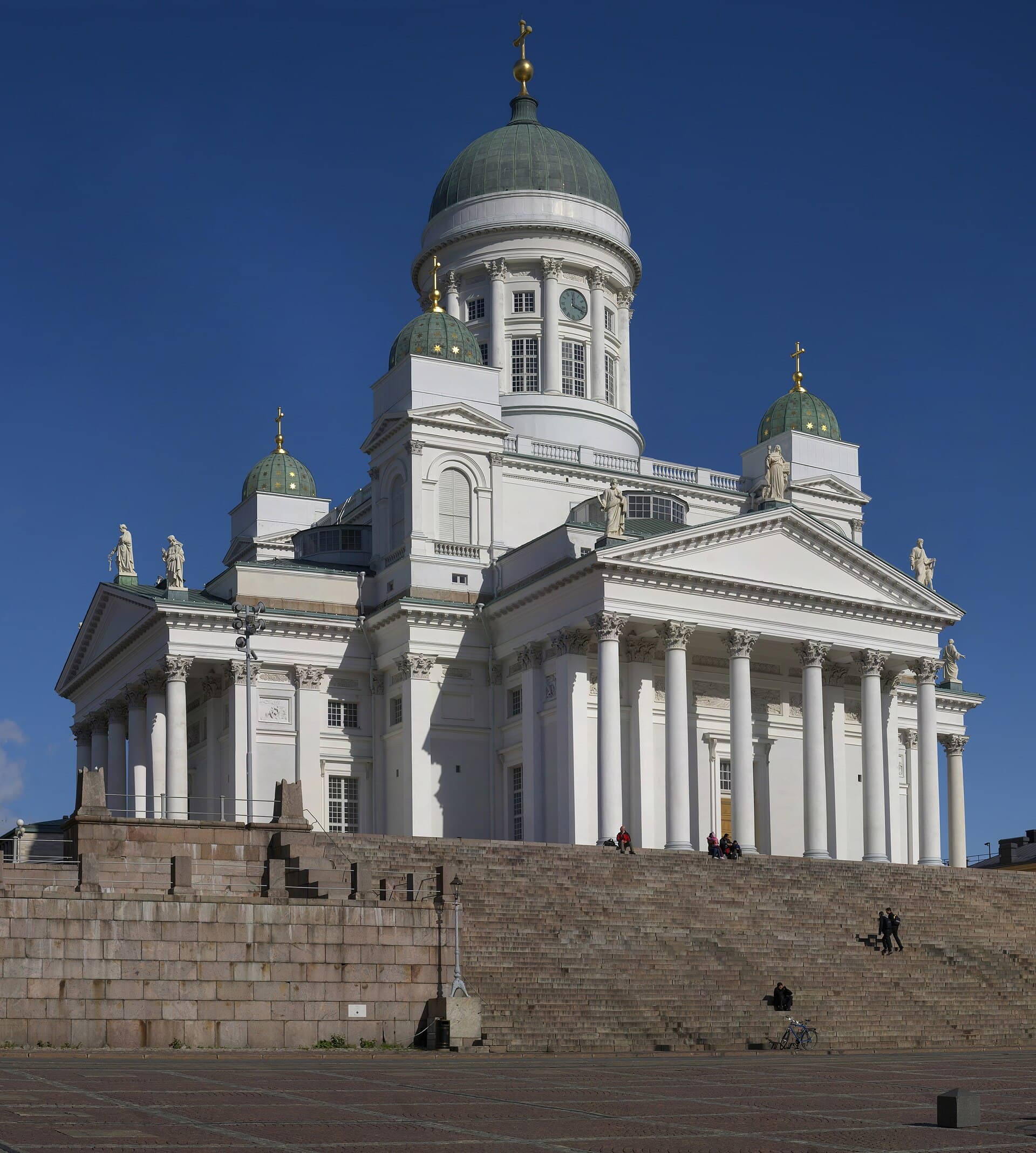 Helsinki CathedralFinland's first picture: a white cathedral with green domes crowning a vast flig2 minutes walk4.7
 Havis AmandaHavis Amanda is a bronze fountain at the edge of **Market Square** on Helsinki's3 minutes walk4.5
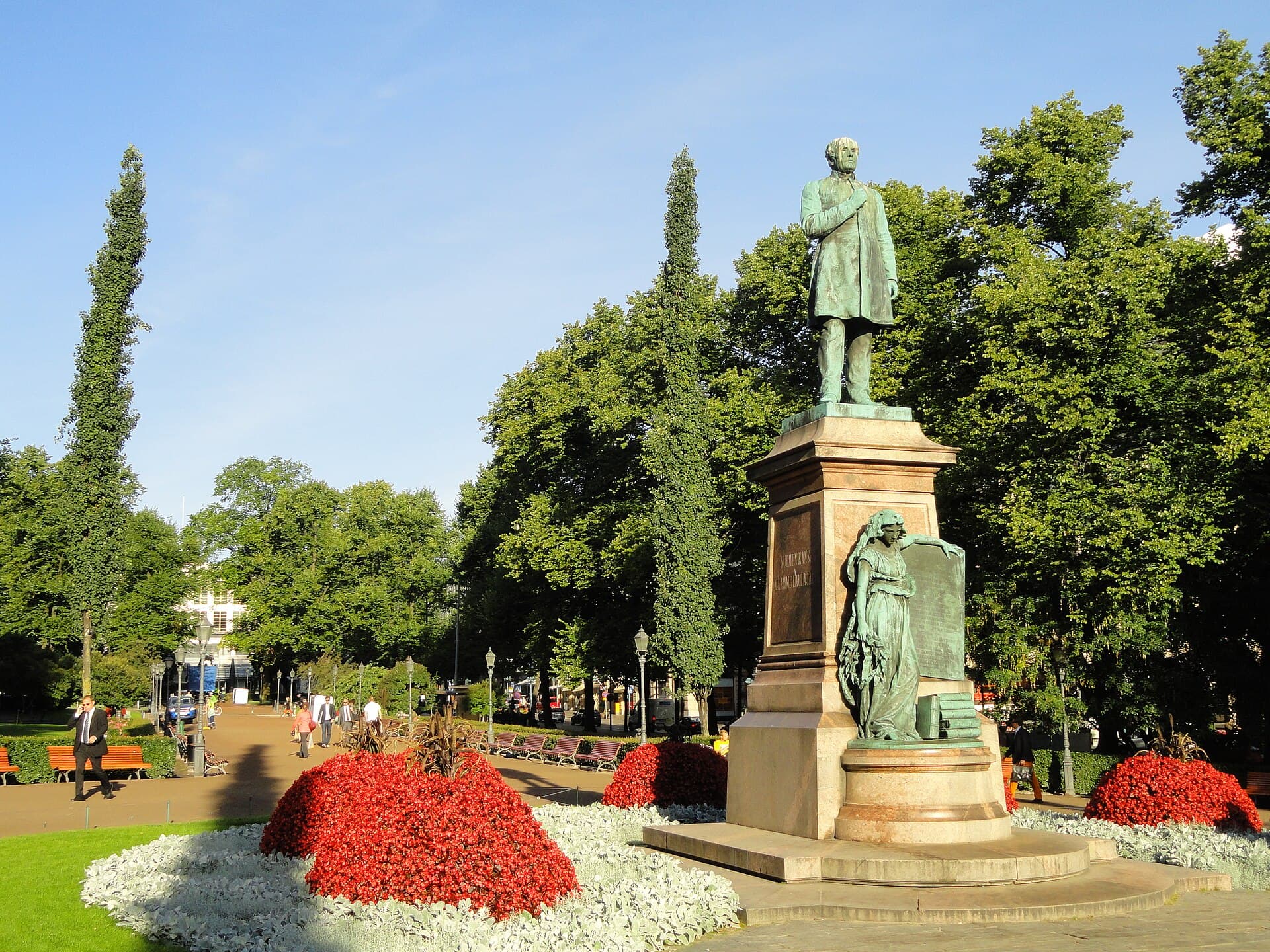 Esplanadi ParkHelsinki's elegant street: Esplanadi is a long park between two avenues from 1813 minutes walk4.6
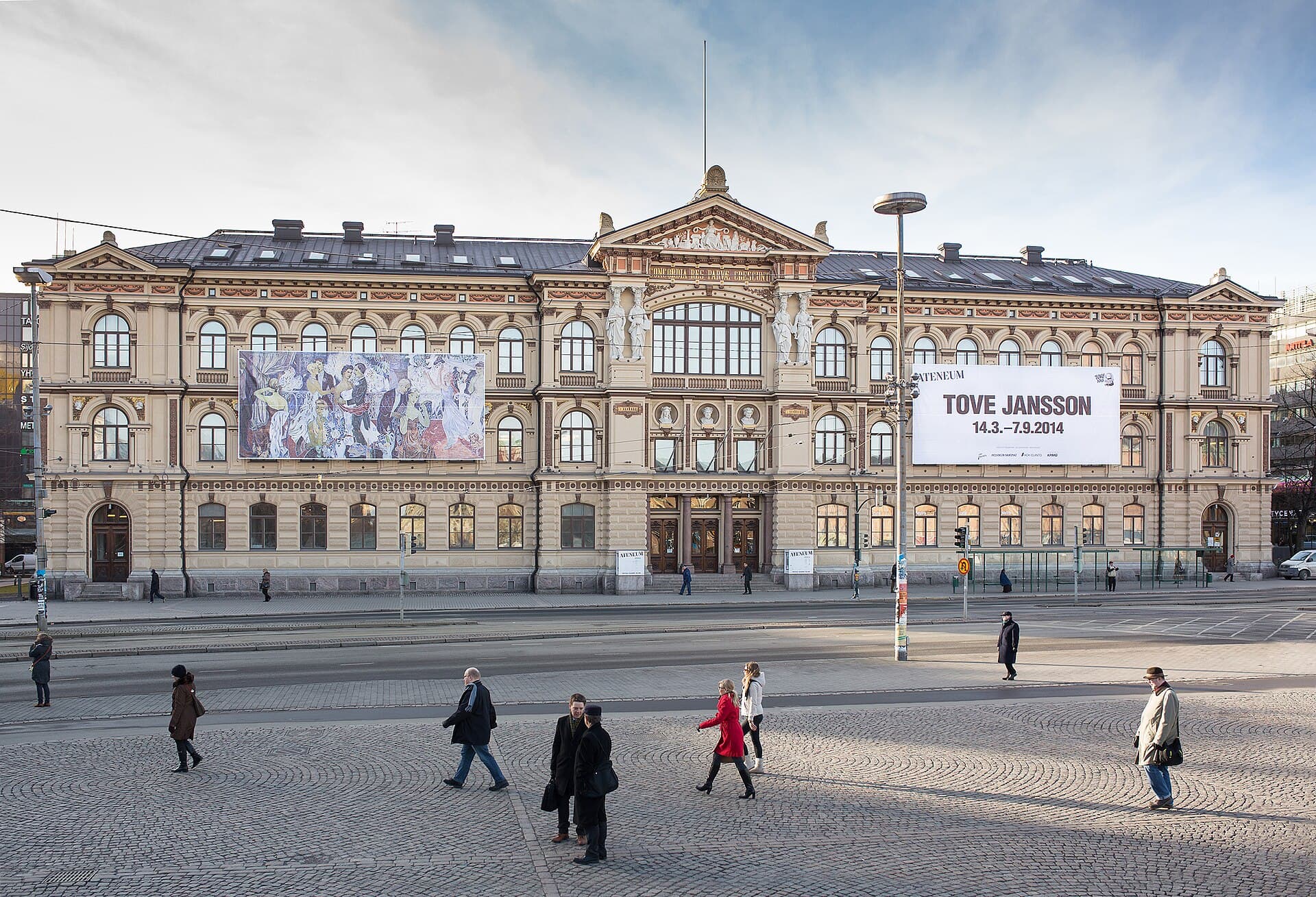 Ateneum Art MuseumFinland's largest classical art collection: the Ateneum, opposite Central Statio4 minutes walk4.5
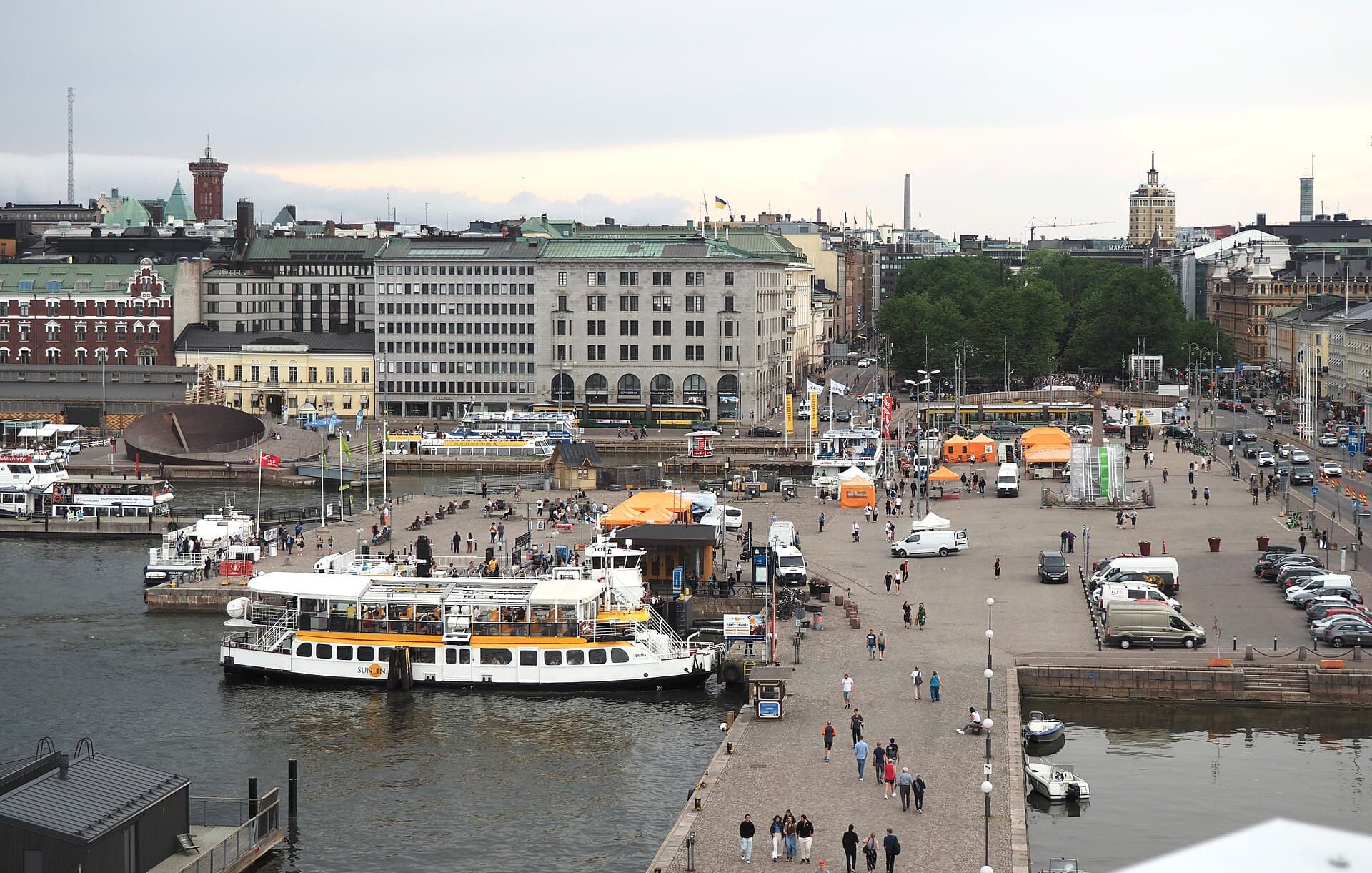 Market Square (Kauppatori)Helsinki's harbour, market and terminus in one place: Market Square on the south5 minutes walk4.5
Because it was designed to. Finland was under Swedish rule until 1809, when Russia annexed it as the autonomous Grand Duchy of Finland. Tsar Alexander I moved the capital from Turku — close to Sweden — to Helsinki, close to Petersburg, and commissioned the German architect Engel to rebuild the city in the same imperial classical manner. The result is a city centre that looks imperially Russian in the middle of a Nordic country. The effect is practical to this day: many Western films set in Moscow or Petersburg during the Cold War were shot in Helsinki.