
Stairways and arches
Both sides of the avenue.
Arlety da Silva — CC BY-SA 4.0 · Arlety da Silva — CC BY-SA 4.0 · Paulo JC Nogueira — CC BY-SA 3.0 · Thiago Melo from Brasília, Brasil — CC BY 2.0 · Eugenio Hansen, OFS — CC BY-SA 4.0 · Arlety da Silva — CC BY-SA 4.0
The Otávio Rocha Viaduct is one of Porto Alegre's outstanding feats of engineering, carrying Rua Duque de Caxias over Avenida Borges de Medeiros in the city centre. The idea dates from 1914, when the city's first general plan called for a road linking its eastern and southern districts with the centre, cut off until then by a small hill. Construction was approved only in 1926, when the intendant Otávio Rocha and the state president Borges de Medeiros decided to open the avenue; that meant cutting through the hill and severing Rua Duque de Caxias, so a viaduct had to restore the link. In 1927 a design by the engineers Manoel Barbosa Assumpção Itaqui and Duilio Bernardi was approved, the German firm Dyckerhoff & Widmann won the contract, and the work was finished in 1932. It is a reinforced-concrete structure with three spans; at its centre, at avenue level, two transverse porticoes hold large niches with sculpture groups by Alfred Adloff, and on both sides of the avenue wide stairways climb to the viaduct on great arches, with small shops beneath them and an ornamental balustrade along its length. It is seen from the avenue below and crossed on foot above, and it is one of Porto Alegre's best-known images. Pass by in the daytime.
Both sides of the avenue.
In the two niches.
The city's image.
Junction of Rua Duque de Caxias and Avenida Borges de Medeiros, central Porto Alegre
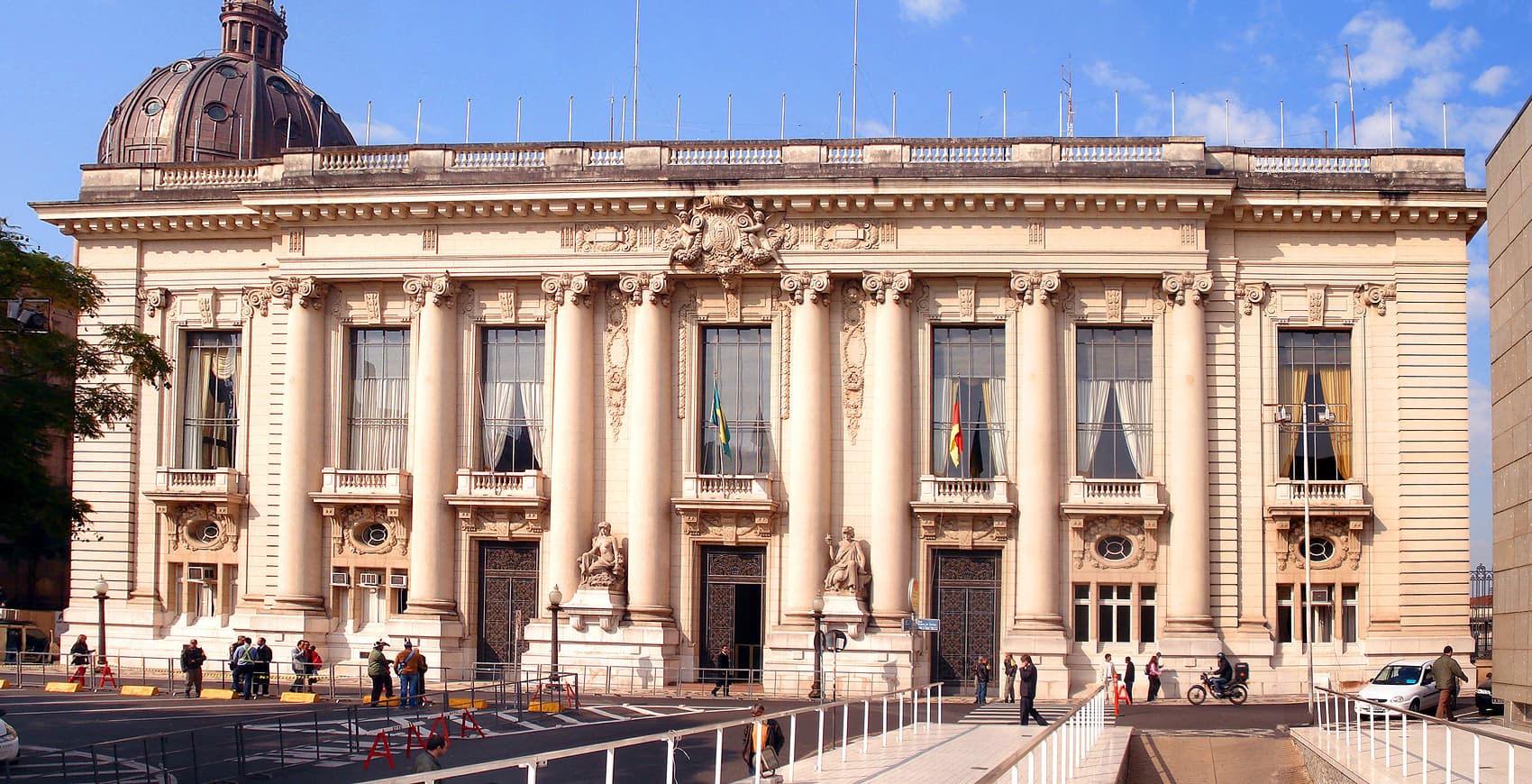 Piratini PalaceThe Piratini Palace is the seat of the Rio Grande do Sul state government, on Pr3 minutes walk4.6
 Praça da Matriz (Porto Alegre)Praça da Matriz, officially Praça Marechal Deodoro, is the heart of Porto Alegre4 minutes walk
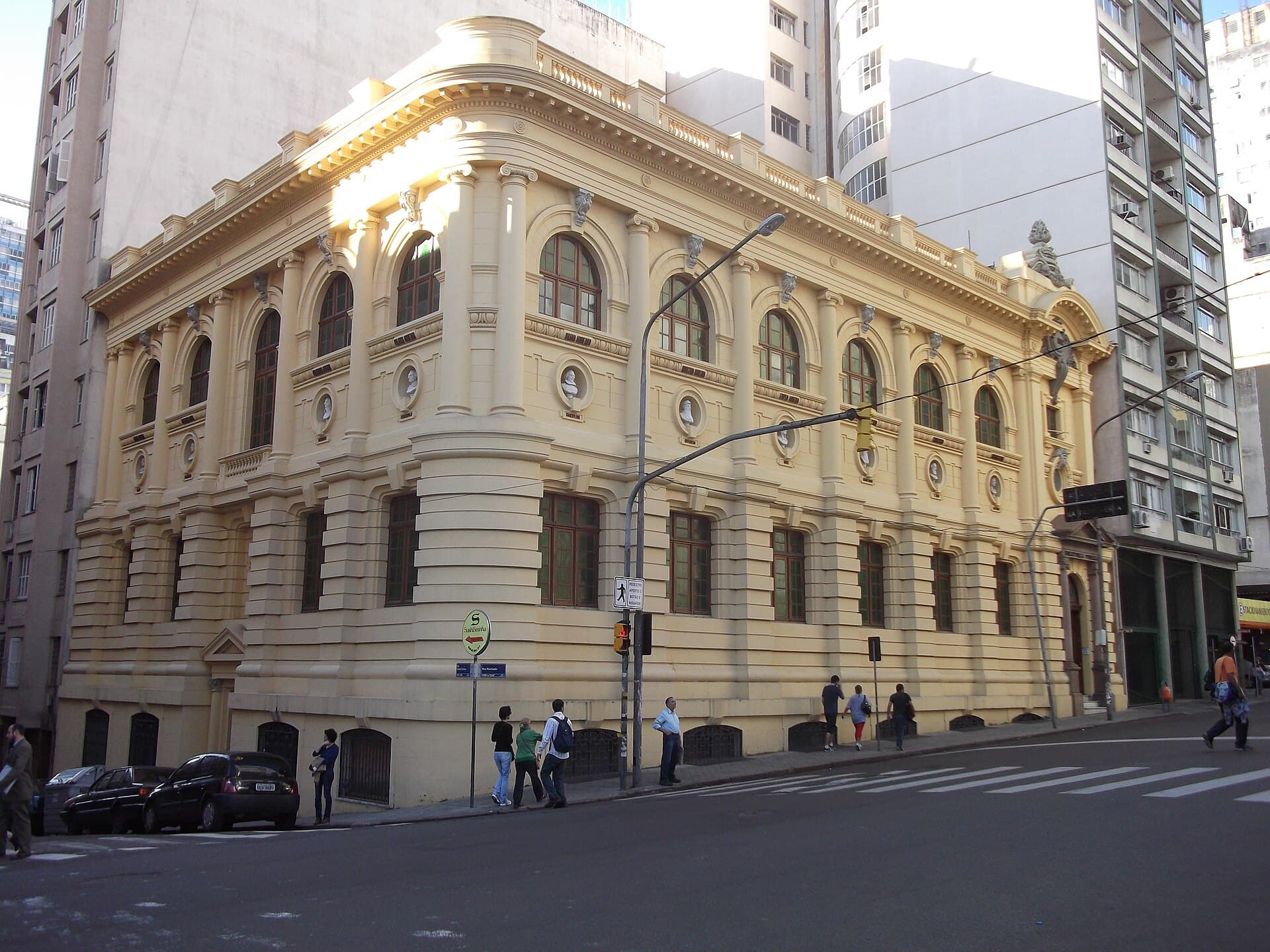 Biblioteca Pública do Estado (Rio Grande do Sul)The Rio Grande do Sul State Public Library is a cultural institution in Porto Al4 minutes walk4.6
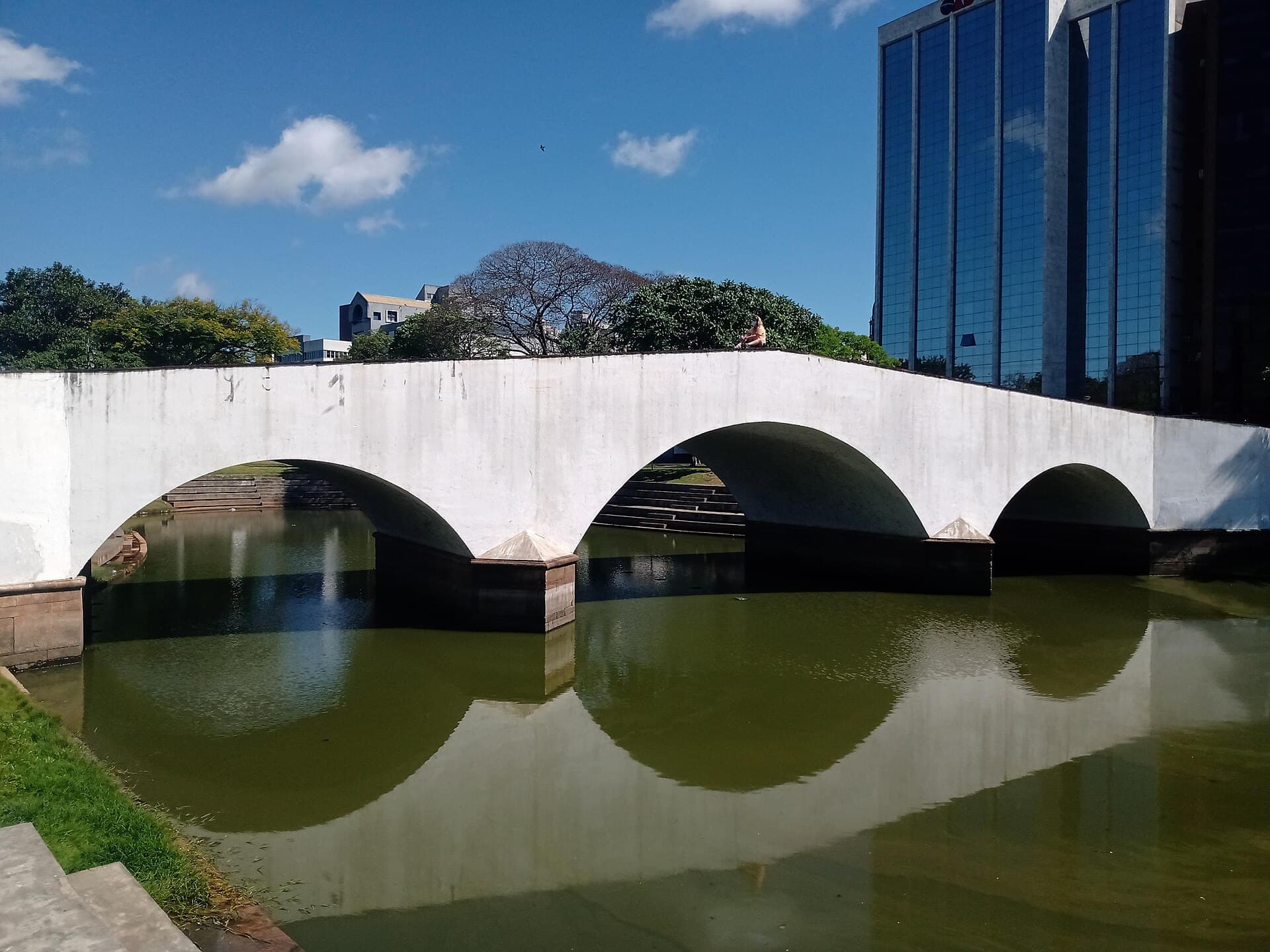 Ponte de Pedra (Porto Alegre)The Stone Bridge, also called the «Azores Bridge», is a historic monument in the6 minutes walk4.7
 UFRGS Astronomical ObservatoryThe Astronomical Observatory of the Federal University of Rio Grande do Sul is a8 minutes walk4.6
Between 1928 and 1932, after its design was approved in 1927, by the firm Dyckerhoff & Widmann.