The octagonal chapel
The finest-built part of the original castle.
Roland Struwe, uploader was Sneecs at de.wikipedia — CC BY-SA 3.0 de · Flocci Nivis — CC BY 4.0 · Wolkenkratzer — CC BY-SA 4.0 · Wolkenkratzer — CC BY-SA 4.0
Vianden Castle stands on a rock spur above the river Our in northern Luxembourg, among the largest fortified castles west of the Rhine and one of the most complete: halls, an octagonal chapel, kitchens, cellars, walls and towers, built between the eleventh and fourteenth centuries on the foundations of a Roman fort. The story of its fall is strange and well documented. After it passed to William I, King of the Netherlands and Prince of Orange, he sold it in 1820 to a local merchant for a trivial sum. The buyer stripped everything saleable — the lead from the roofs, the timber, the stone — and within a few years the castle collapsed in on itself and became a ruin. This caused wide public anger, but the damage was done. It stayed a ruin for about a century and a half. Ownership passed to the Luxembourg state in 1977 and a full restoration began that ran for decades, rebuilding it precisely on its original foundations. Today its halls can be walked in full, and it is Luxembourg's most visited sight outside the capital. The climb from the town is on foot or by chairlift.
The finest-built part of the original castle.
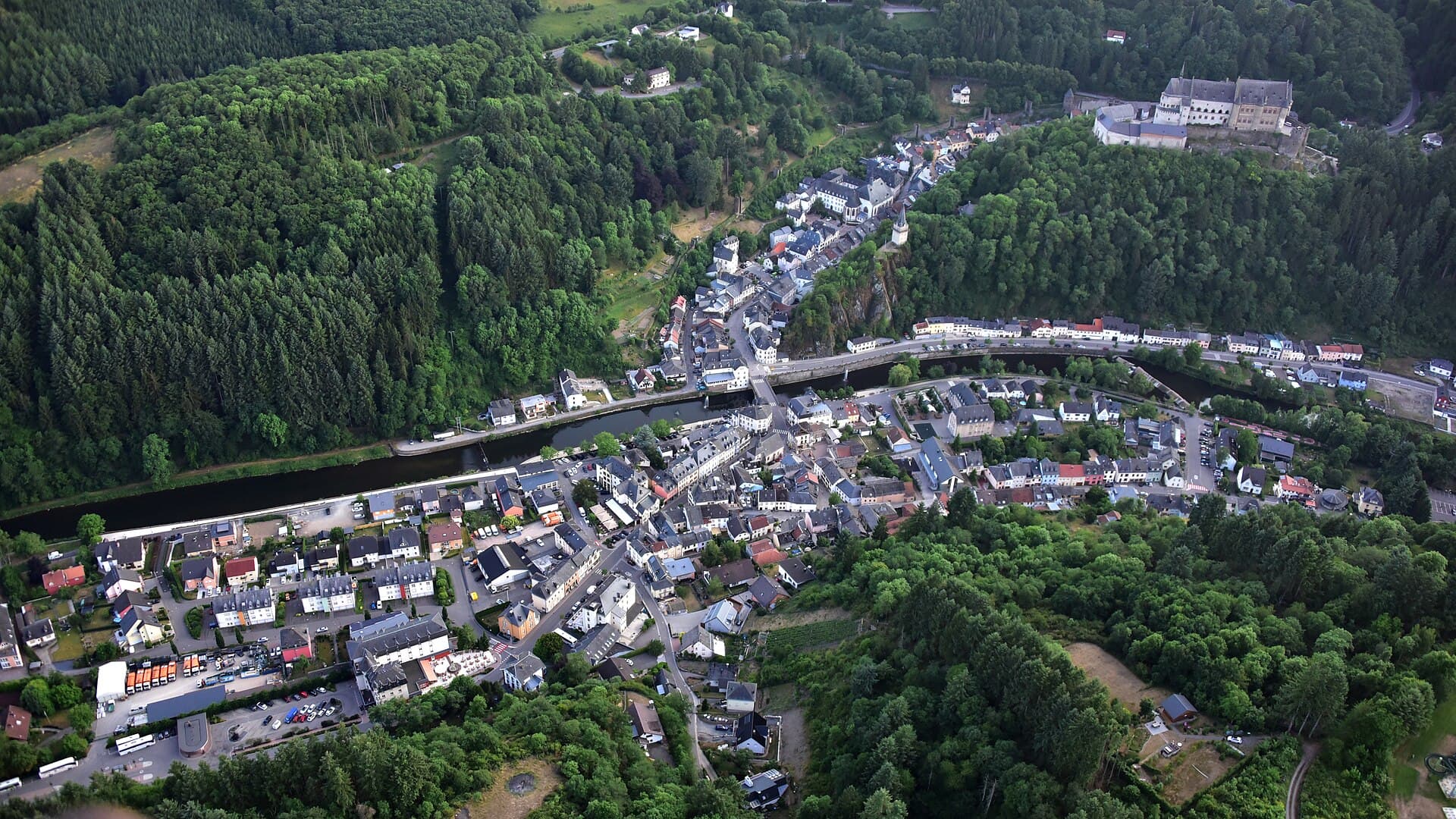
The river and town from the rock spur.
Montee du Chateau, 9408 Vianden
The French writer stayed in Vianden several times during his long exile after 1851, the longest for three months in 1871. He wrote about the castle as a ruin and drew it, and his affecting descriptions of its state helped build the case for saving it. The house he lived in, on the bridge in the town, is now a small museum showing his drawings, furniture and letters, and takes half an hour to see.