
The victory temple
Marking wins over the Burmese.
กสิณธร ราชโอรส — CC BY-SA 4.0 · กสิณธร ราชโอรส — CC BY-SA 4.0 · กสิณธร ราชโอรส — CC BY-SA 4.0 · กสิณธร ราชโอรส — CC BY-SA 4.0 · กสิณธร ราชโอรส — CC BY-SA 4.0
An old royal temple right next to Khaosan Road, dating to late Ayutthaya times, rebuilt by the Front Palace prince under Rama I and named Chana Songkhram, victory in war, to mark the Siamese army's victories over the Burmese in the late eighteenth century. It was the temple of the Mon soldiers who fought with the Siamese army. Its grounds hold a white Ayutthaya-style stupa and an ordination hall with an orange and green roof, inside which a golden Buddha draws people praying for victory and success, especially students before exams. It is a quiet surprise steps from the noise of the tourist street: walk in and find monks, students and birds in a shaded court. Entry is free and donations are welcome. Modest dress is expected: shoulders and knees covered, and shoes off in the halls. It is a working temple, so keep your voice down. Enter from the side passage off Khaosan Road or Rambuttri Road, and pair it with nearby Wat Bowonniwet.
Marking wins over the Burmese.
In Ayutthaya style.
Steps from Khaosan.
Chakrabongse Road, Banglamphu, beside Khaosan Road, Bangkok
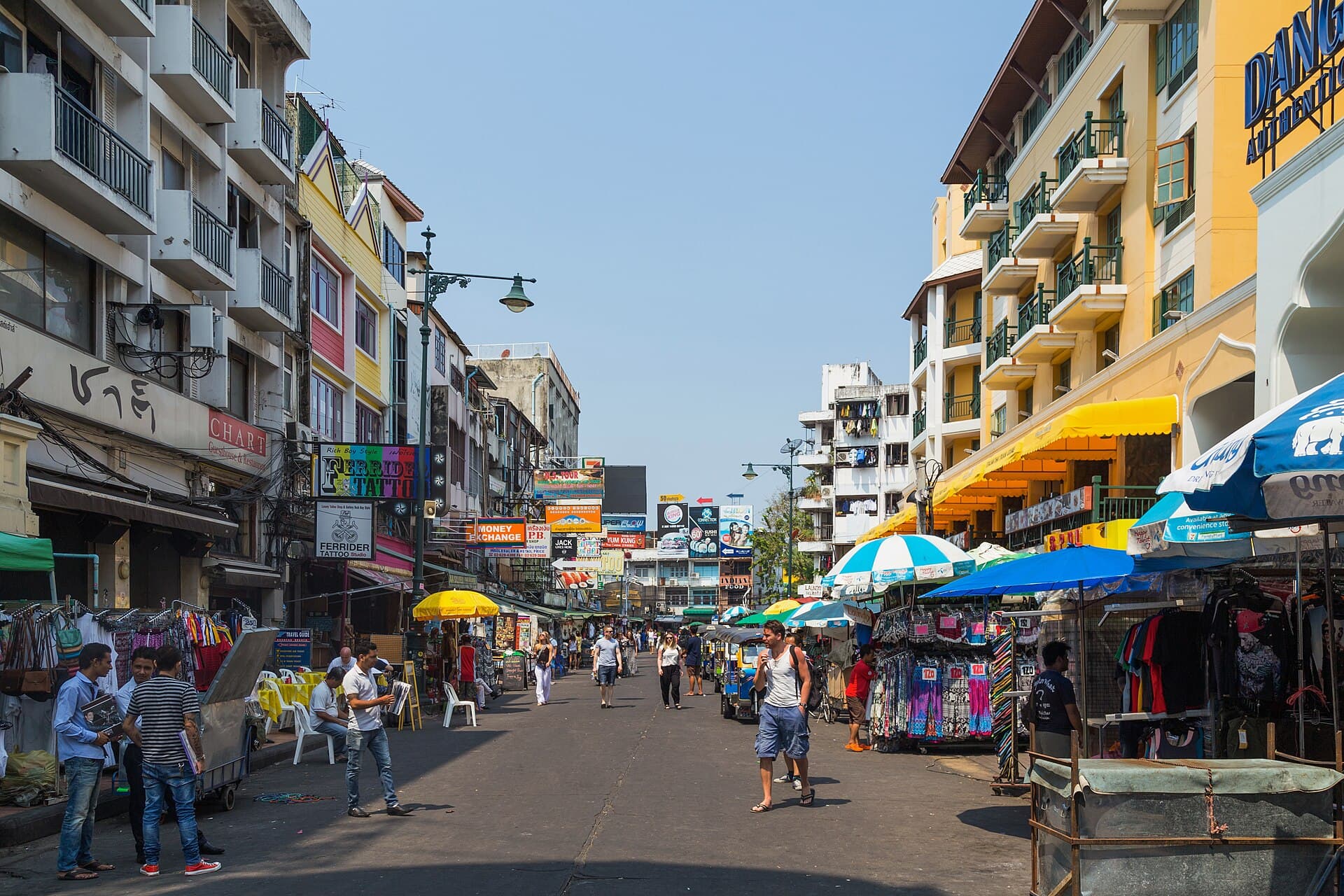 Khaosan RoadA short street of no more than four hundred metres in Banglamphu that has been A3 minutes walk
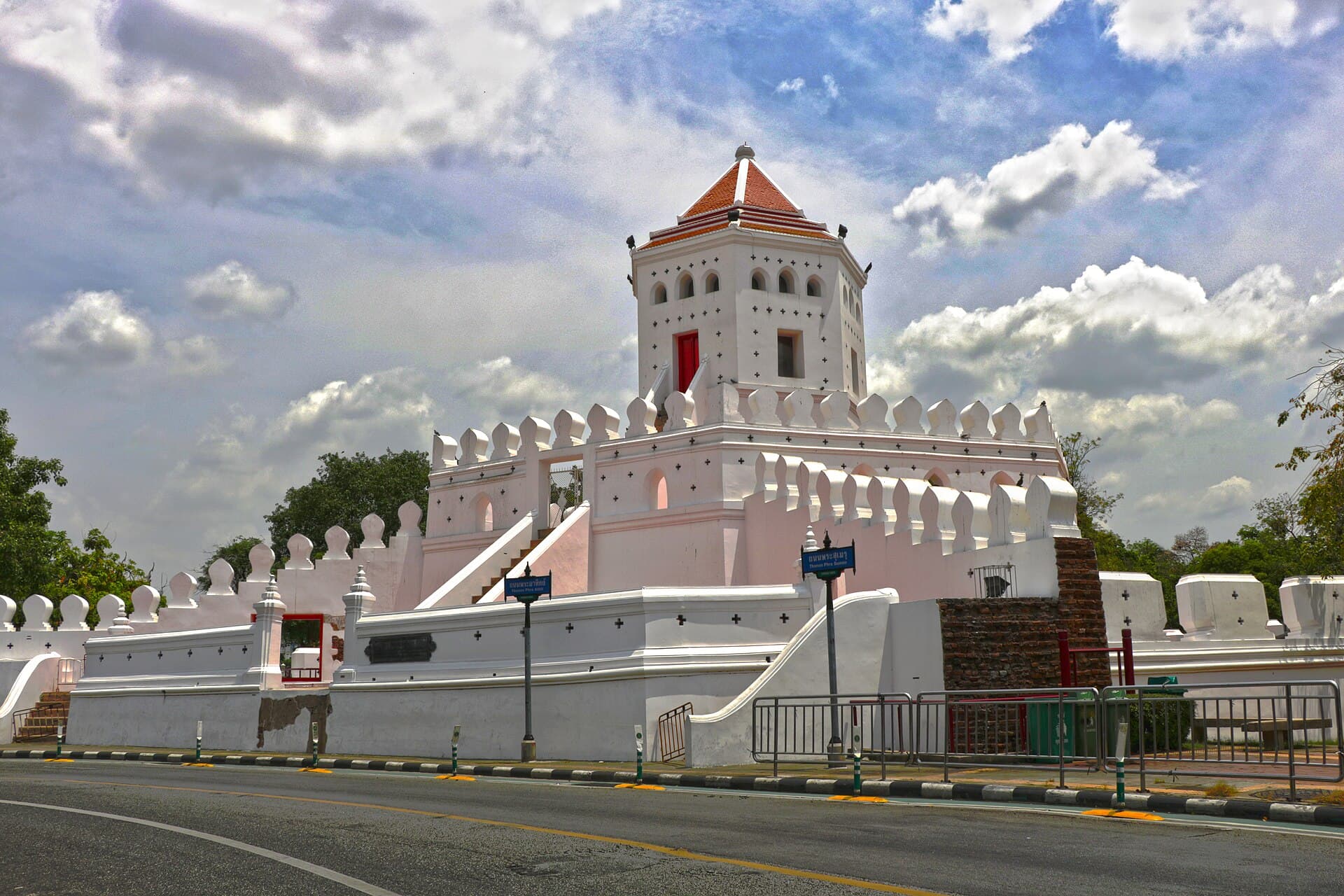 Phra Sumen Fort and Santichaiprakan ParkOne of only two survivors of the fourteen forts King Rama I built in 1783 to gua5 minutes walk
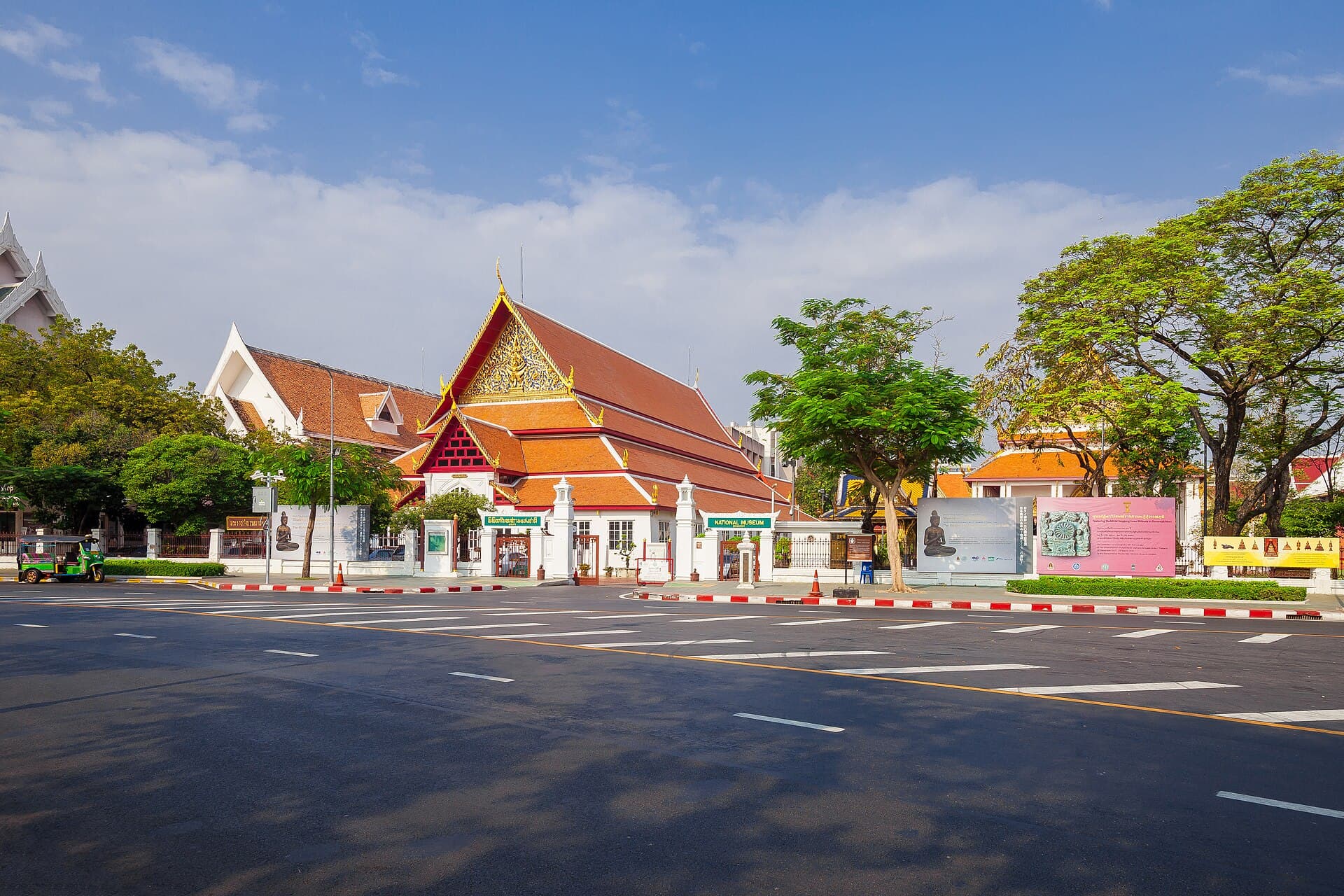 Bangkok National MuseumThailand's main museum and one of the largest in Southeast Asia, occupying the o6 minutes walk
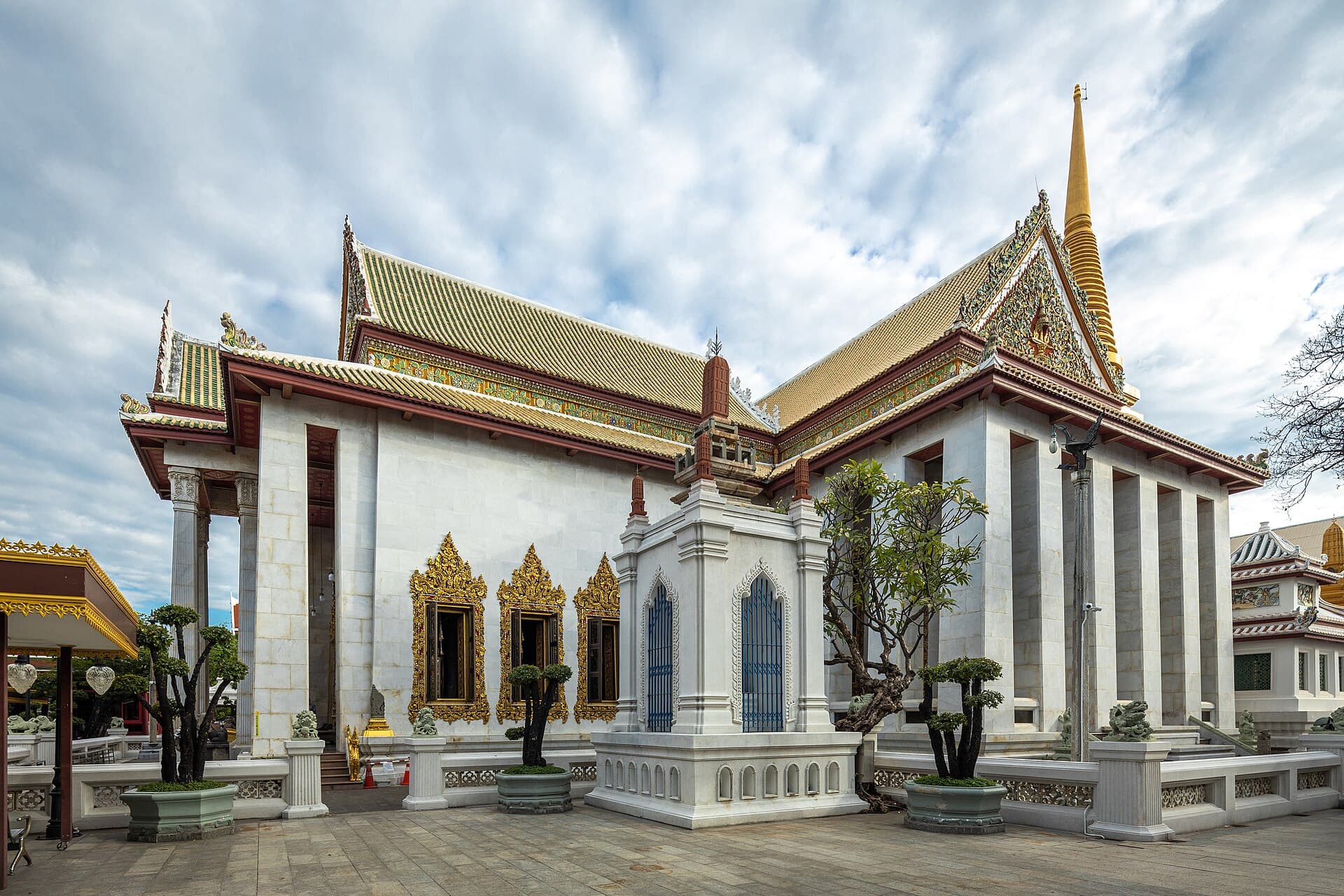 Wat BowonniwetOne of Bangkok's most important royal temples, minutes from Khaosan Road, where 6 minutes walk
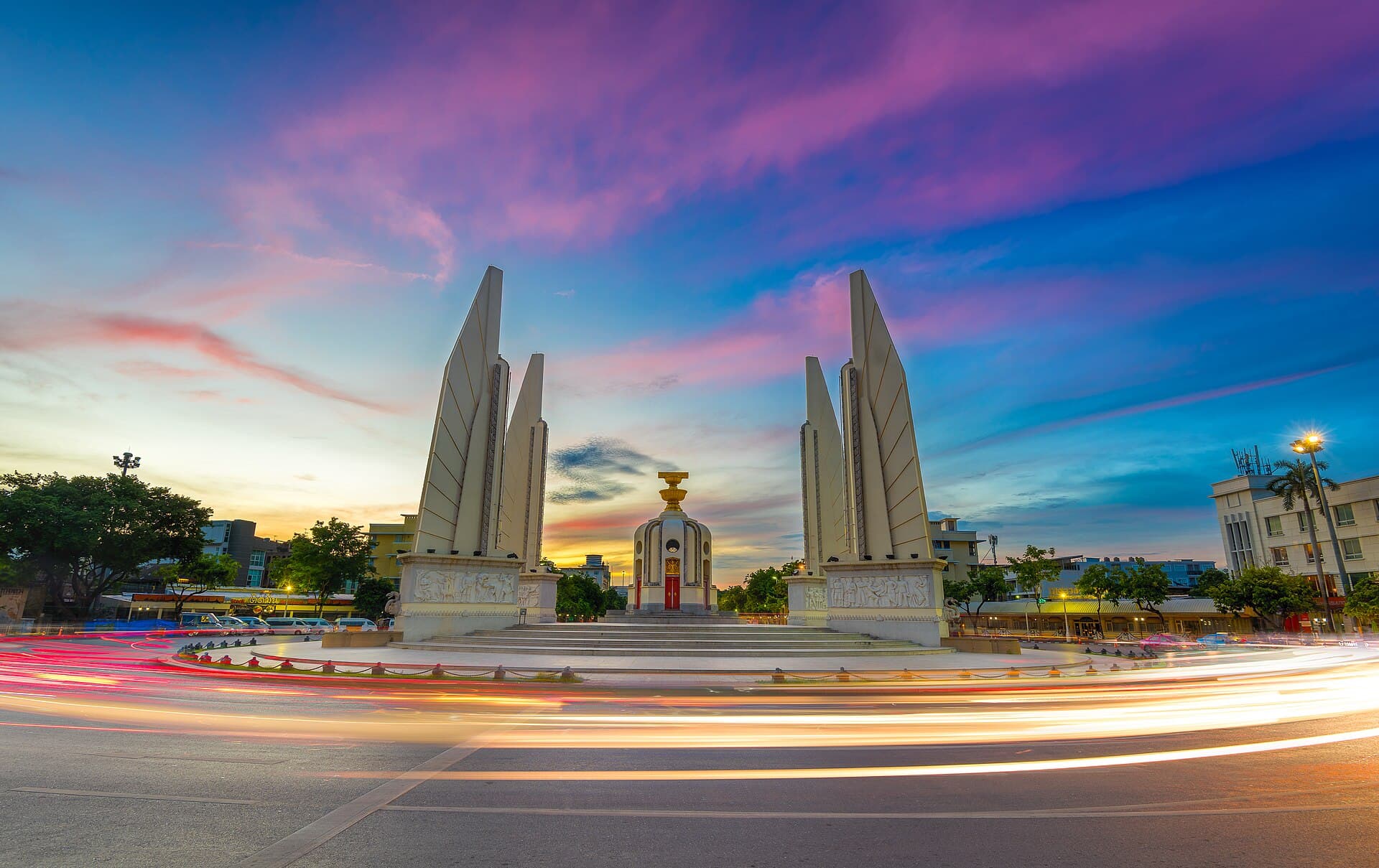 Democracy MonumentA large monument in the middle of a roundabout on Ratchadamnoen Avenue, the broa10 minutes walk
Chana Songkhram means victory in war, marking Siamese victories over the Burmese.