
The head in the roots
A Buddha head cradled by a fig tree.
Brian Chun (Funwithbchun) — CC BY-SA 4.0 · Chainwit. — CC BY 4.0 · Nord794ub — CC BY-SA 4.0 · Nord794ub — CC BY-SA 4.0
One of Ayutthaya's most important ruins; Ayutthaya was the capital of the Siamese kingdom from the fourteenth century until its destruction by the Burmese army in 1767. The temple was the seat of the kingdom's supreme patriarch, its heart a huge prang that collapsed over time, surrounded by rows of headless statues and crumbling red-brick towers that bear witness to the violence of that destruction. Its best-known sight is an image the world recognises: the sandstone head of a Buddha statue wrapped by the roots of a fig tree over decades, until the head was cradled inside the trunk. Local custom is to photograph the head while sitting or crouching, so no visitor stands above it out of respect, and a guard stands nearby to remind people. Foreigners pay about fifty baht, and the temple opens from morning to evening, sometimes lit at night. Modest dress is required. A combined ticket of about two hundred and twenty baht covers six major temples and is valid for thirty days. Come early in the morning before the heat and the tour buses, as the site is exposed to the sun. It is part of the Historic City of Ayutthaya, a UNESCO World Heritage Site, a few steps from Wat Ratchaburana.
A Buddha head cradled by a fig tree.
Part of the Historic City of Ayutthaya.
Traces of the old capital's fall.
The old-city island, east of the historical park
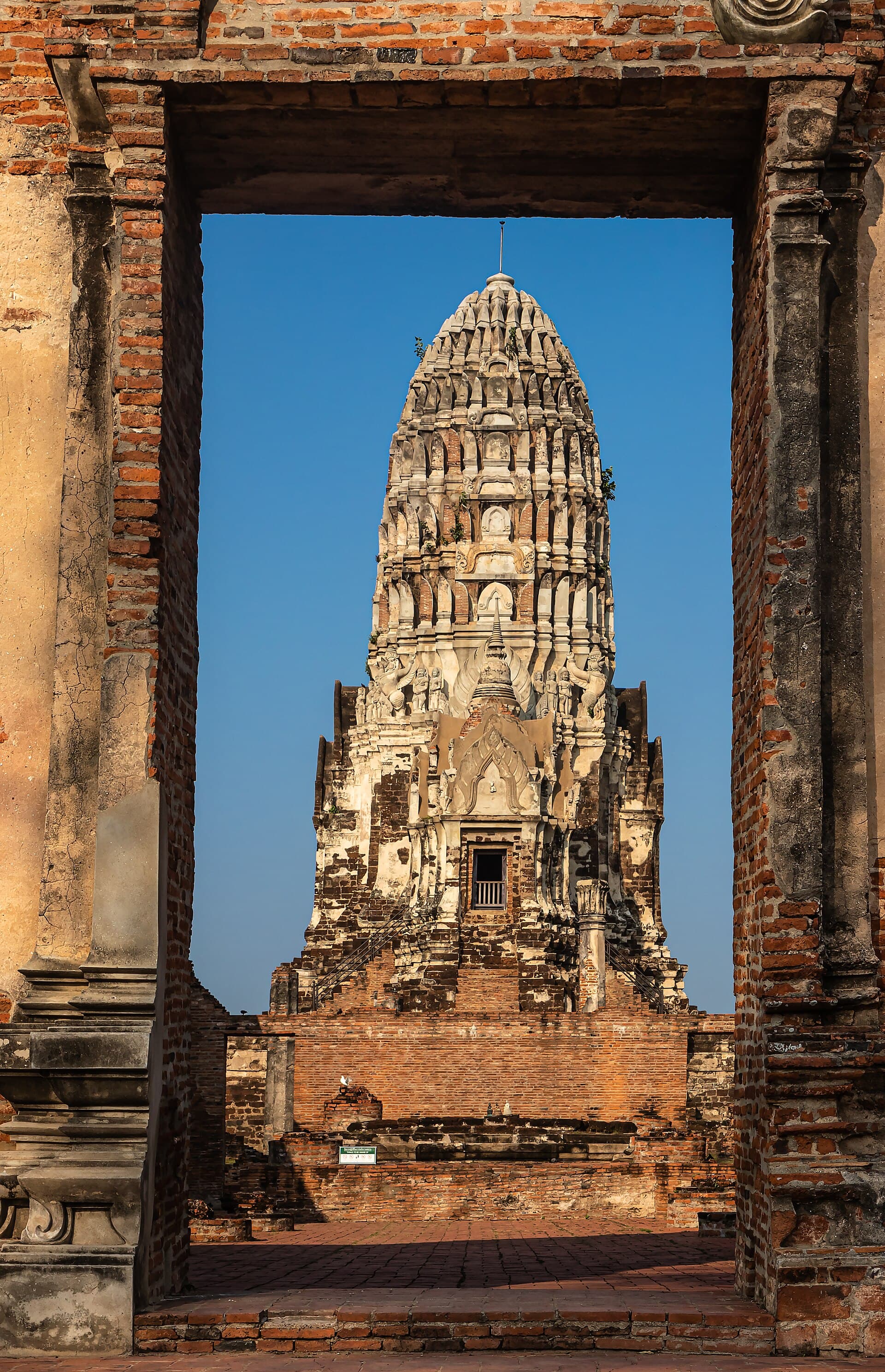 Wat RatchaburanaA temple built by King Borommarachathirat II in 1424 on the cremation site of hi3 minutes walk
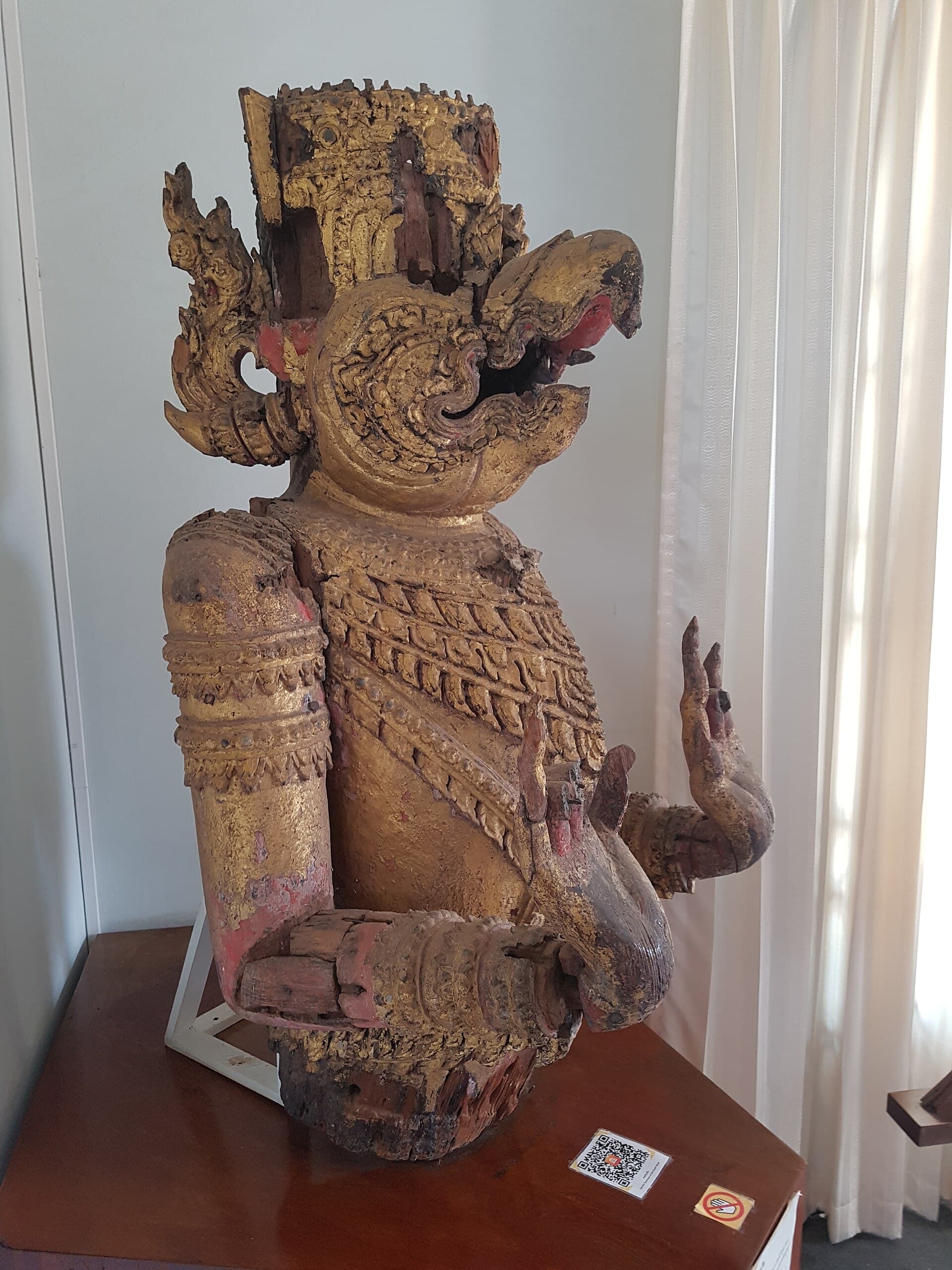 Chao Sam Phraya National MuseumAyutthaya's most important museum, holding treasures found in the city's ruins, 11 minutes walk
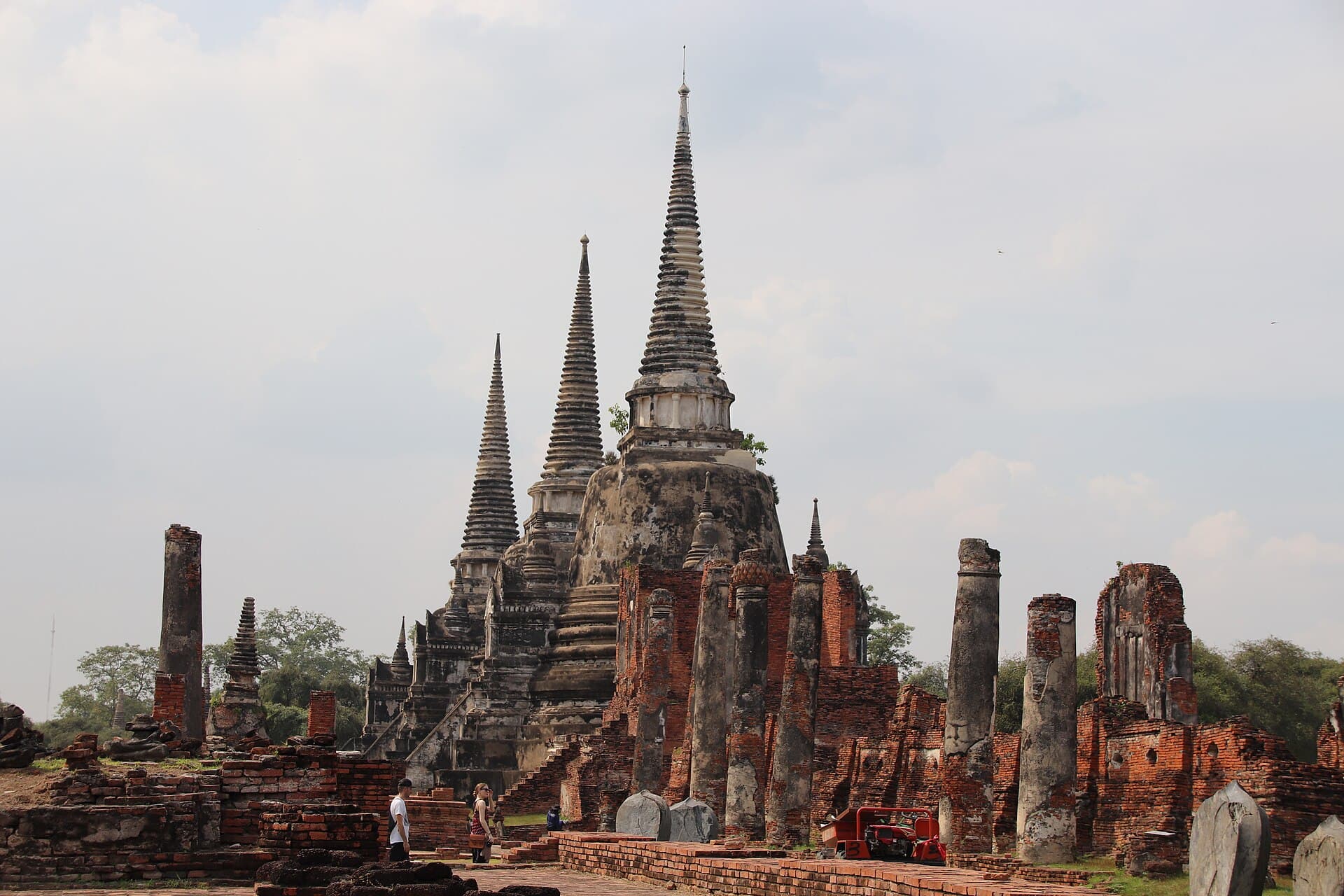 Wat Phra Si SanphetAyutthaya's most important and most photographed temple: it was the royal temple13 minutes walk
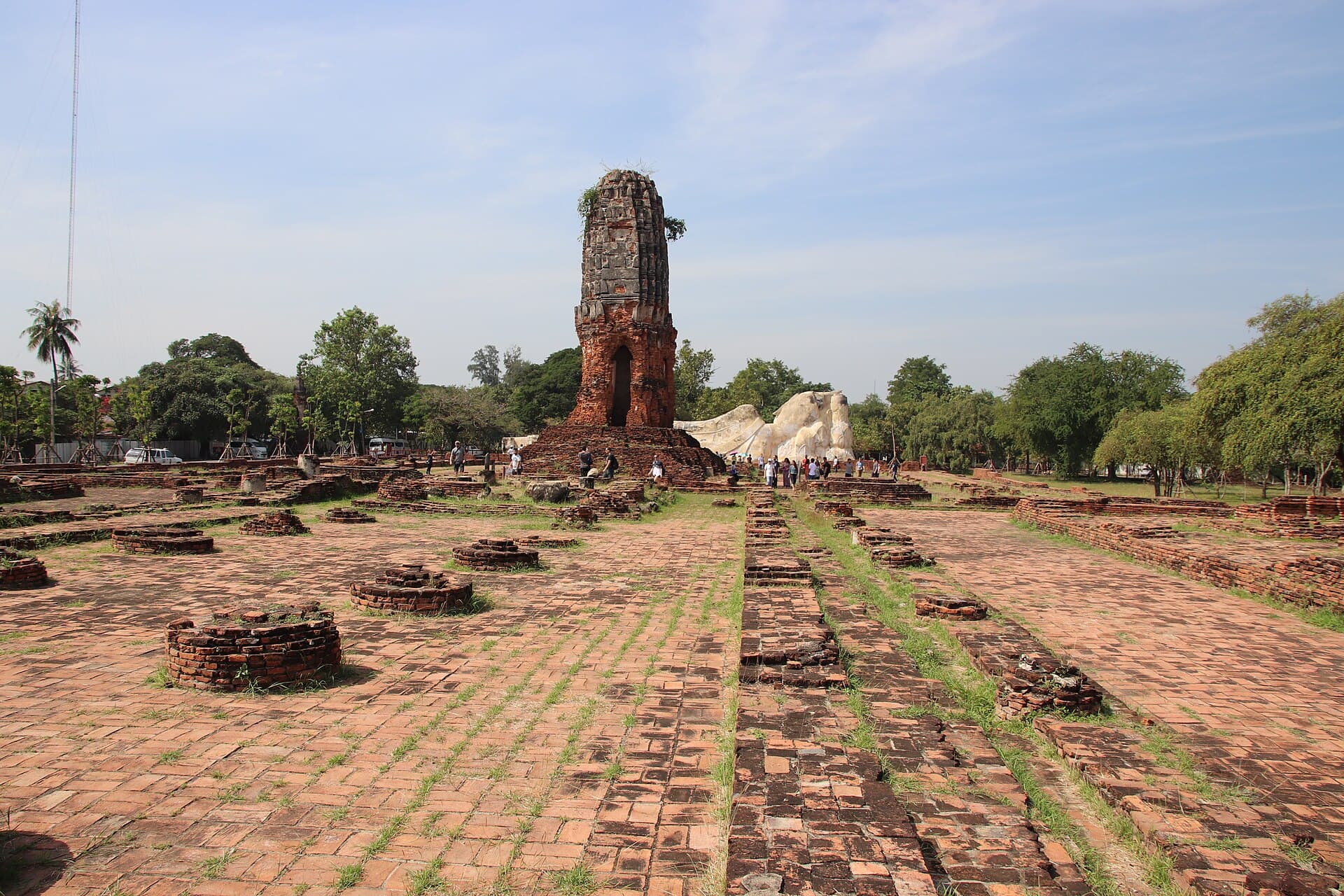 Wat Lokaya Sutha (Reclining Buddha)A huge open-air reclining Buddha, about forty-two metres long, built of brick an21 minutes walk
Because standing above a Buddha's head is considered disrespectful in Thai culture, so visitors are asked to sit or crouch when photographing it. Following this avoids embarrassment.