
The lion stupa
Guarded by stone lions.
Nord794ub — CC BY-SA 4.0 · Nord794ub — CC BY-SA 4.0 · Nord794ub — CC BY-SA 4.0 · Nord794ub — CC BY-SA 4.0 · Nord794ub — CC BY-SA 4.0
A temple that combines ruins and living worship north of Ayutthaya's old royal palace, thought to be one of the city's oldest, perhaps older than its founding as capital. Its landmark is a brick stupa ringed by stone lions guarding its base on every side, with the ruins of a great hall whose brick pillars still stand. In the court rests a huge bronze Buddha head, a copy of an original from one of Ayutthaya's oldest statues now kept in the Chao Sam Phraya National Museum. Its quirkiest sight is hundreds of colourful rooster statues around a small shrine, offered by visitors in thanks for vows, a custom tied to stories of King Naresuan and cockfighting. The temple is still active, with monks and a modern prayer hall. Entry is usually free and donations are welcome. Modest dress is expected: shoulders and knees covered, and shoes off inside the halls. It is quiet and shaded by trees compared with the big exposed temples. It is minutes from Wat Phra Si Sanphet and the old palace, so combine them on the same bike round.
Guarded by stone lions.
Visitors' vow offerings.
A copy of an ancient original.
North of the old royal palace, Ayutthaya island
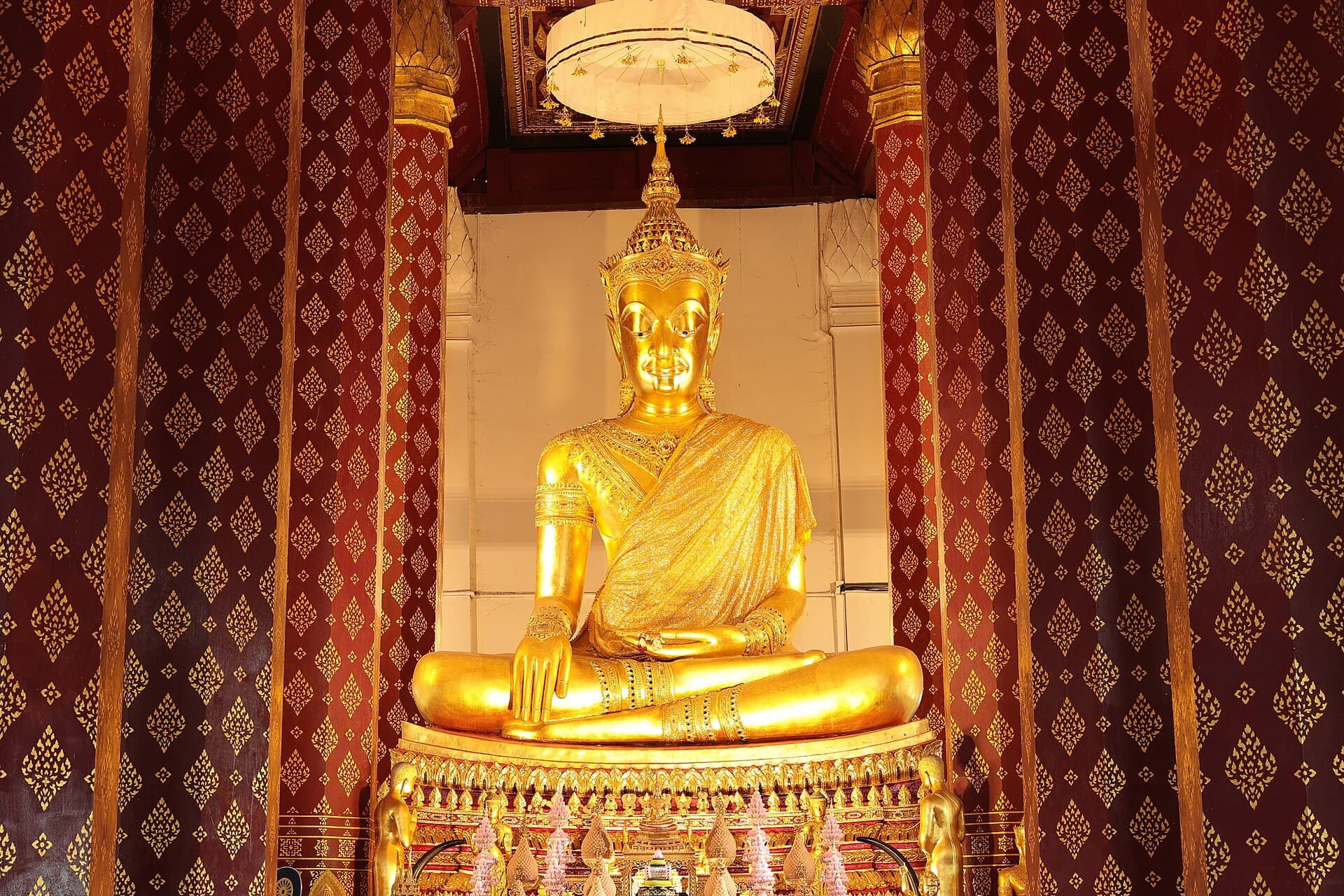 Wat Na Phra MenOne of the few temples in Ayutthaya that came through the 1767 sack intact, on t5 minutes walk
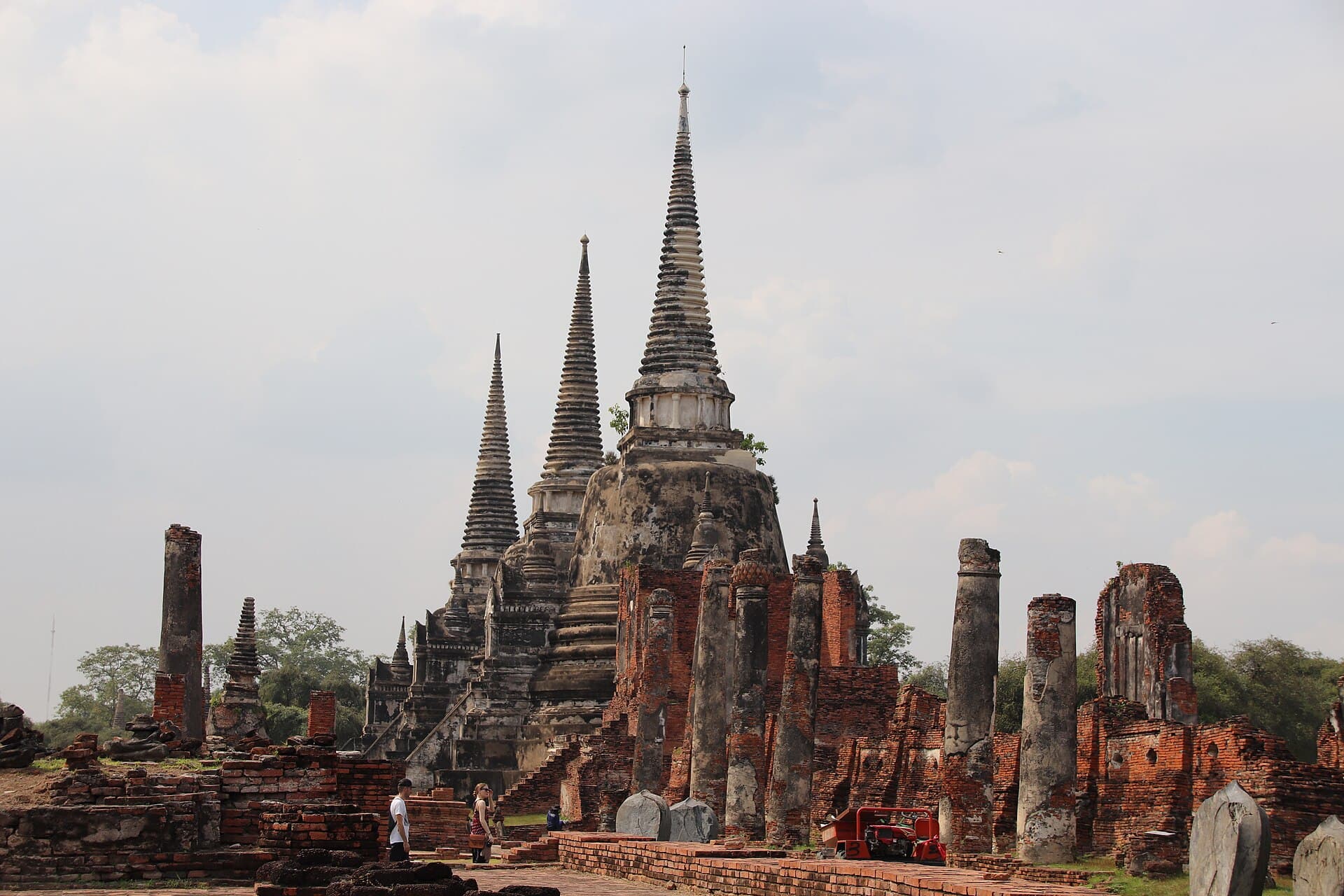 Wat Phra Si SanphetAyutthaya's most important and most photographed temple: it was the royal temple8 minutes walk
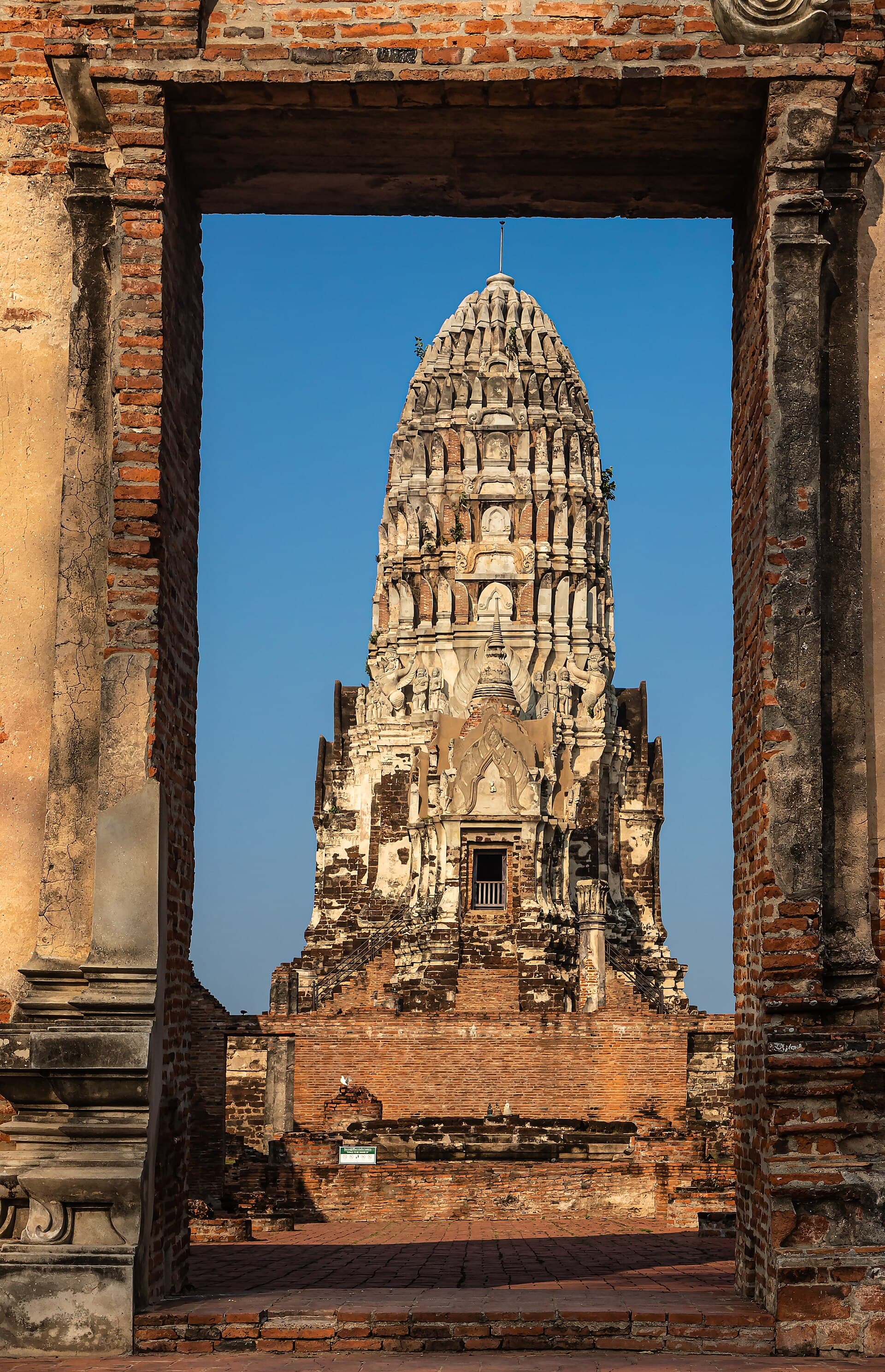 Wat RatchaburanaA temple built by King Borommarachathirat II in 1424 on the cremation site of hi8 minutes walk
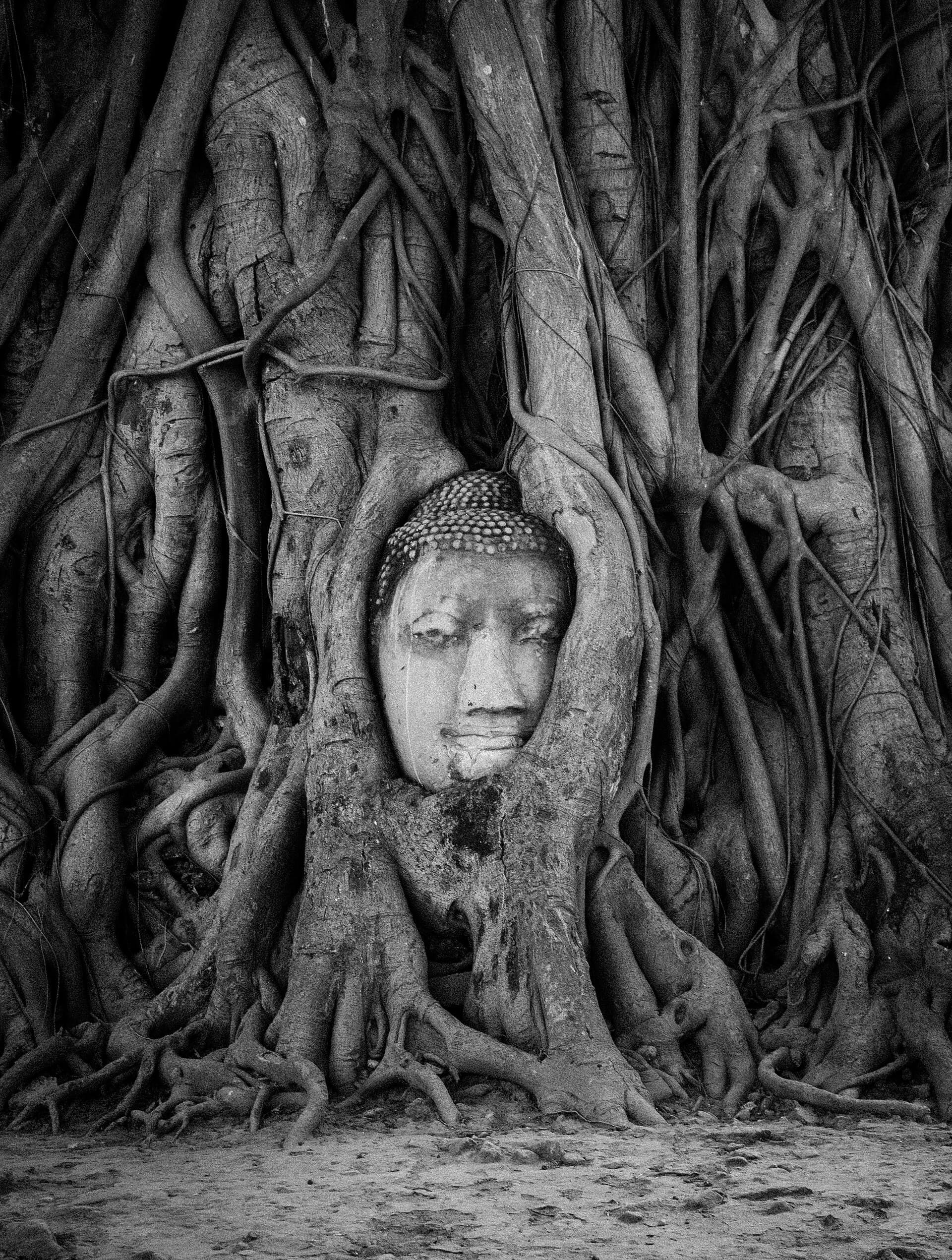 Wat Mahathat (Buddha Head in the Tree Roots)One of Ayutthaya's most important ruins; Ayutthaya was the capital of the Siames9 minutes walk
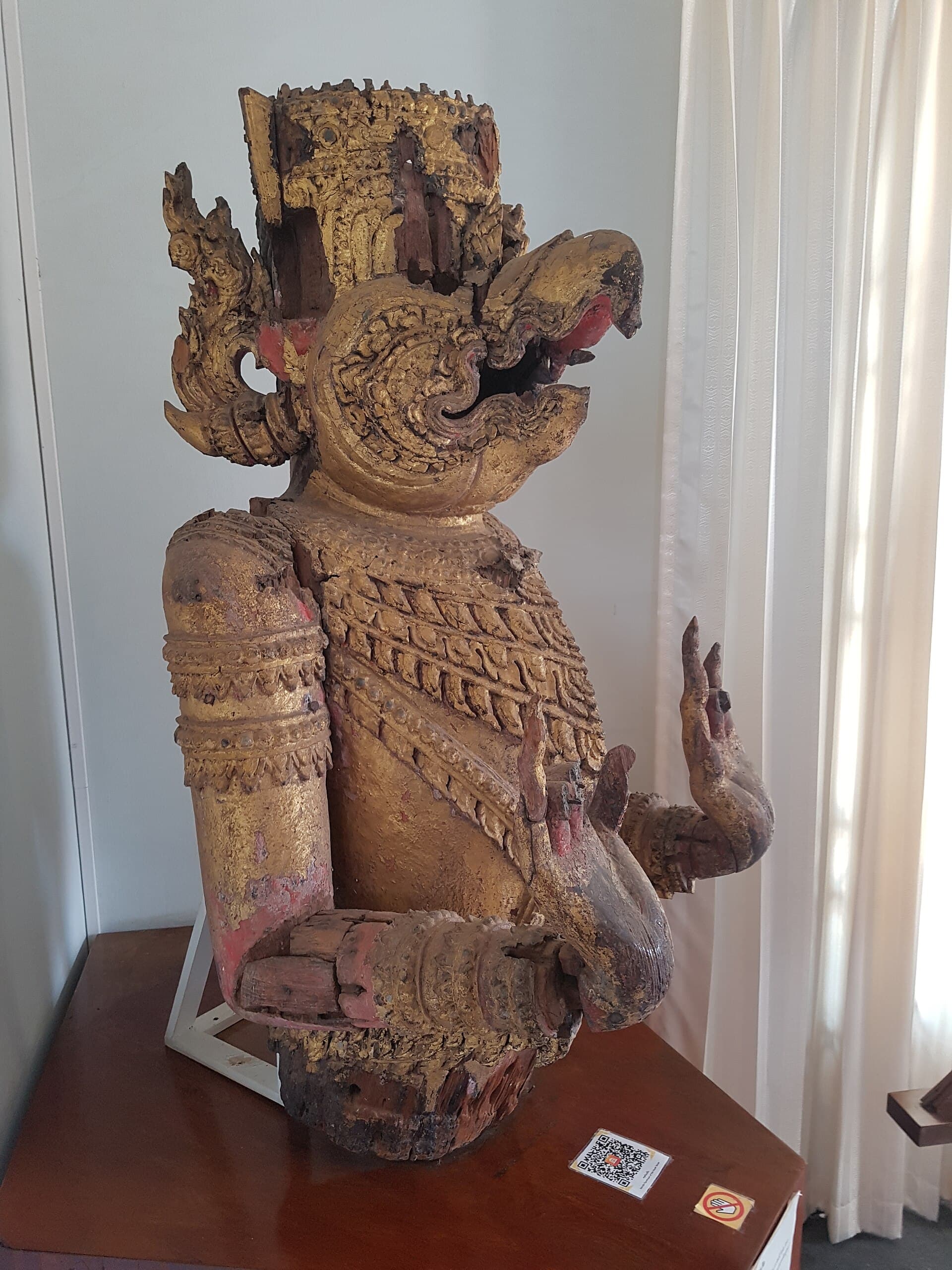 Chao Sam Phraya National MuseumAyutthaya's most important museum, holding treasures found in the city's ruins, 13 minutes walk
Visitors offer them in thanks for vows, a custom tied to stories of King Naresuan and cockfighting.