
A teak hall
Once part of a royal palace.
Vichitsilp — CC BY-SA 3.0 · Chainwit. — CC BY 4.0 · Chainwit. — CC BY 4.0 · Chainwit. — CC BY 4.0
A small wooden gem right beside famous Wat Chedi Luang that many visitors miss. Its prayer hall is one of the finest examples of Lanna timber architecture: a building made entirely of old dark teak panels, originally a hall in a nineteenth-century royal palace, later moved and reused as a temple. On the wooden facade above the entrance is a carving of a golden peacock over a small dog, the emblem of the ruling dynasty and the birth year of one of its kings, and the interior is calm and dim, with massive teak pillars and a golden Buddha. Around the hall are a small garden and pond, hung with thousands of lanterns during the Yi Peng festival in November, when it becomes one of the city's loveliest sights. Entry is free, and it is open in the daytime. Modest dress is required: shoulders and knees covered, and shoes off before entering the halls. From February to April, smoke from farm burning often hangs over the north, cutting visibility and air quality. Visit with neighbouring Wat Chedi Luang on the same walk, just steps away; a quarter of an hour is enough.
Once part of a royal palace.
Carved above the entrance.
In November.
Phra Pokklao Road, next to Wat Chedi Luang, old city
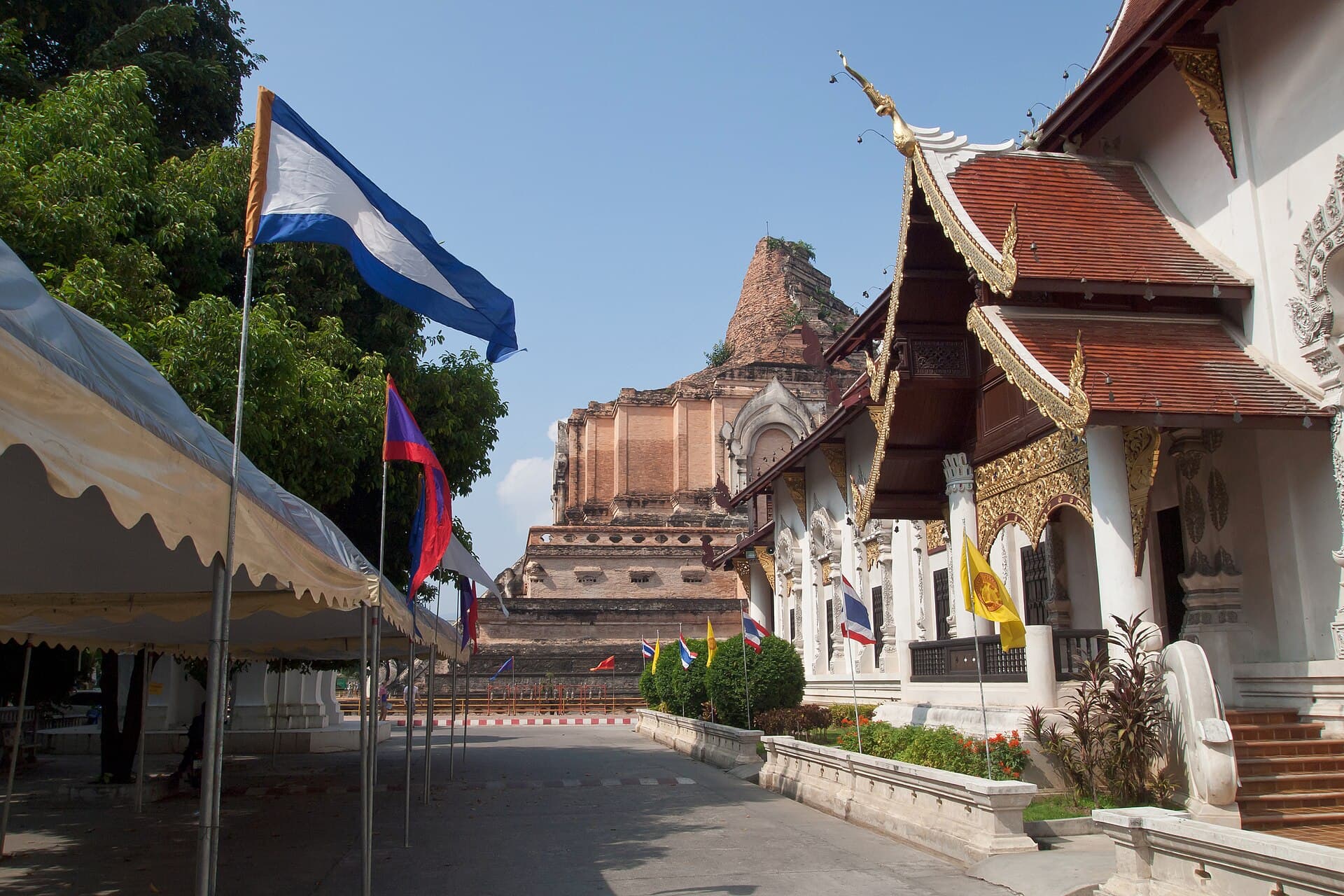 Wat Chedi LuangThe ruins of a colossal stupa at the heart of Chiang Mai's old city, one of its 2 minutes walk
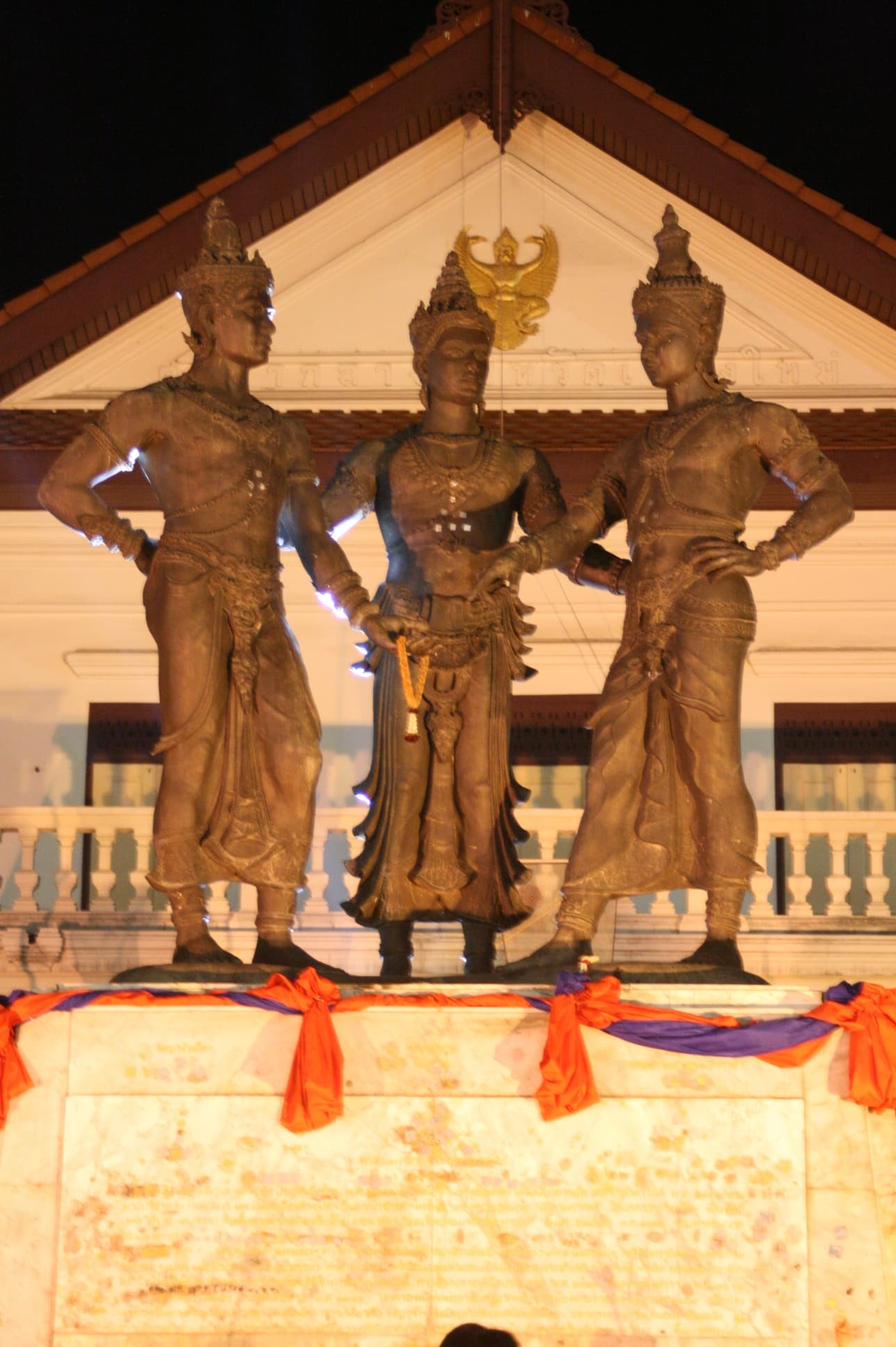 Three Kings MonumentThe symbol of Chiang Mai's founding: three large bronze statues of three kings a3 minutes walk
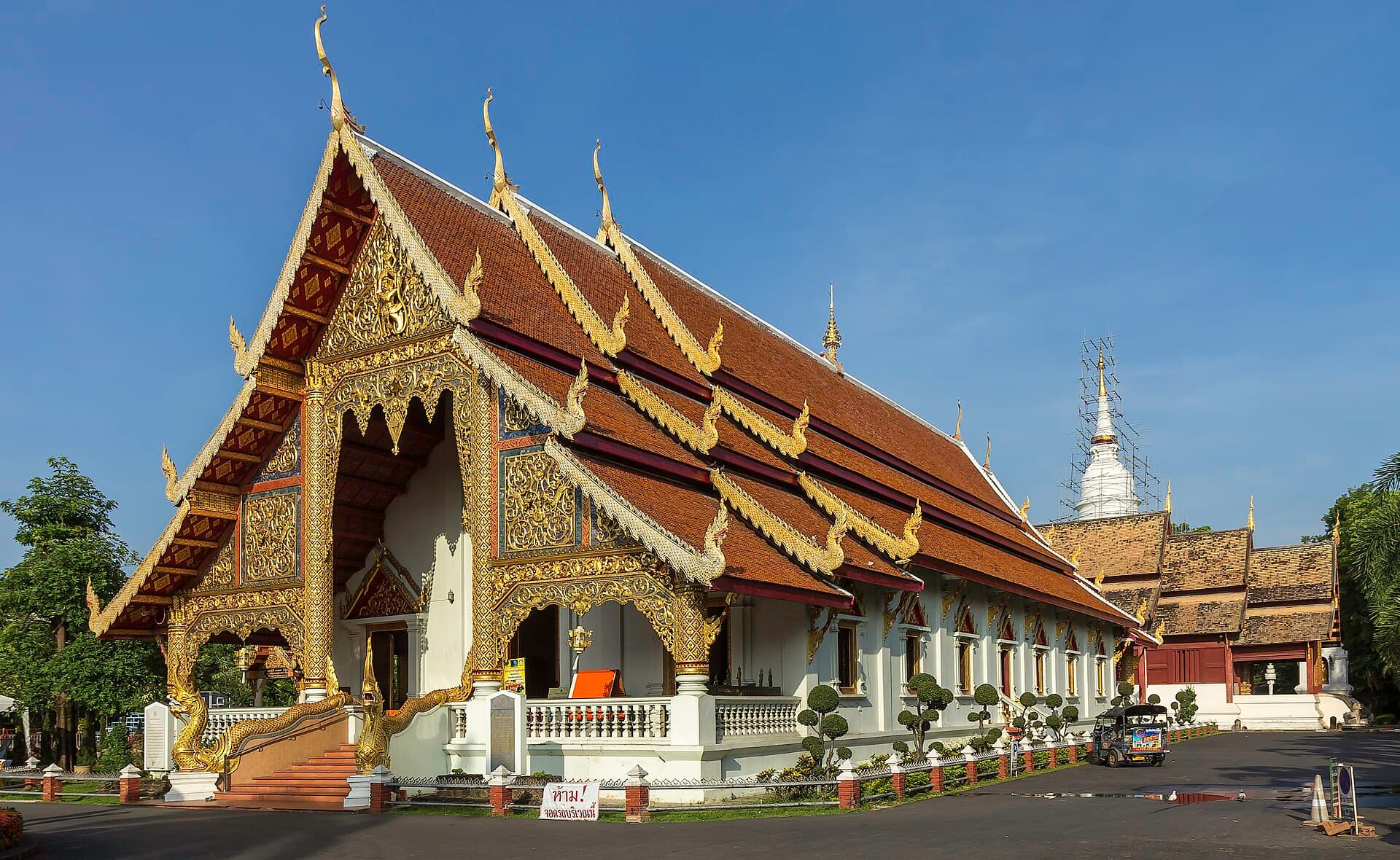 Wat Phra SinghOne of Chiang Mai's most revered and architecturally beautiful temples, at the w7 minutes walk
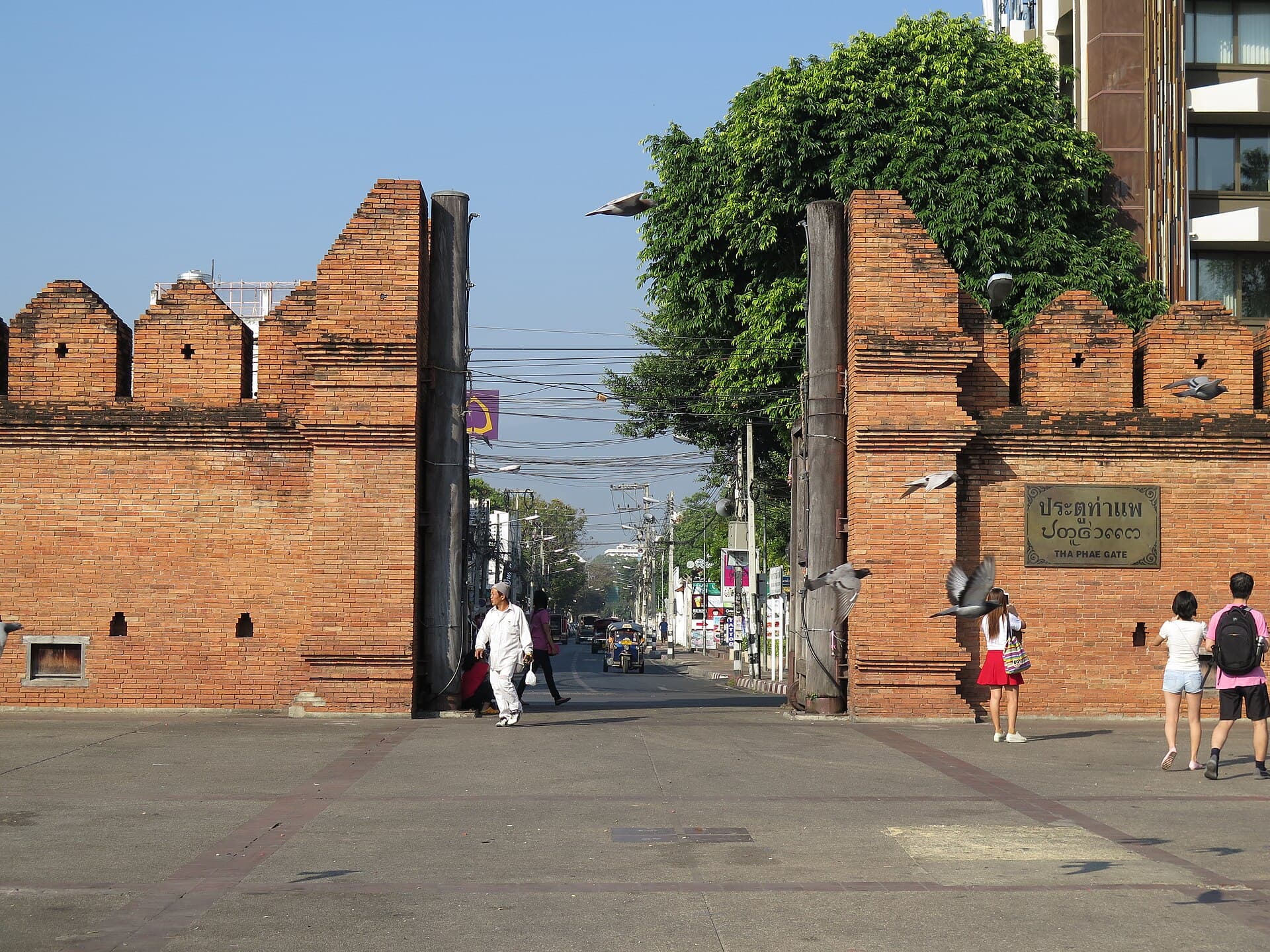 Tha Phae Gate and the Old City WallsThe best-known and most photographed gate of Chiang Mai's old city, on its east 8 minutes walk
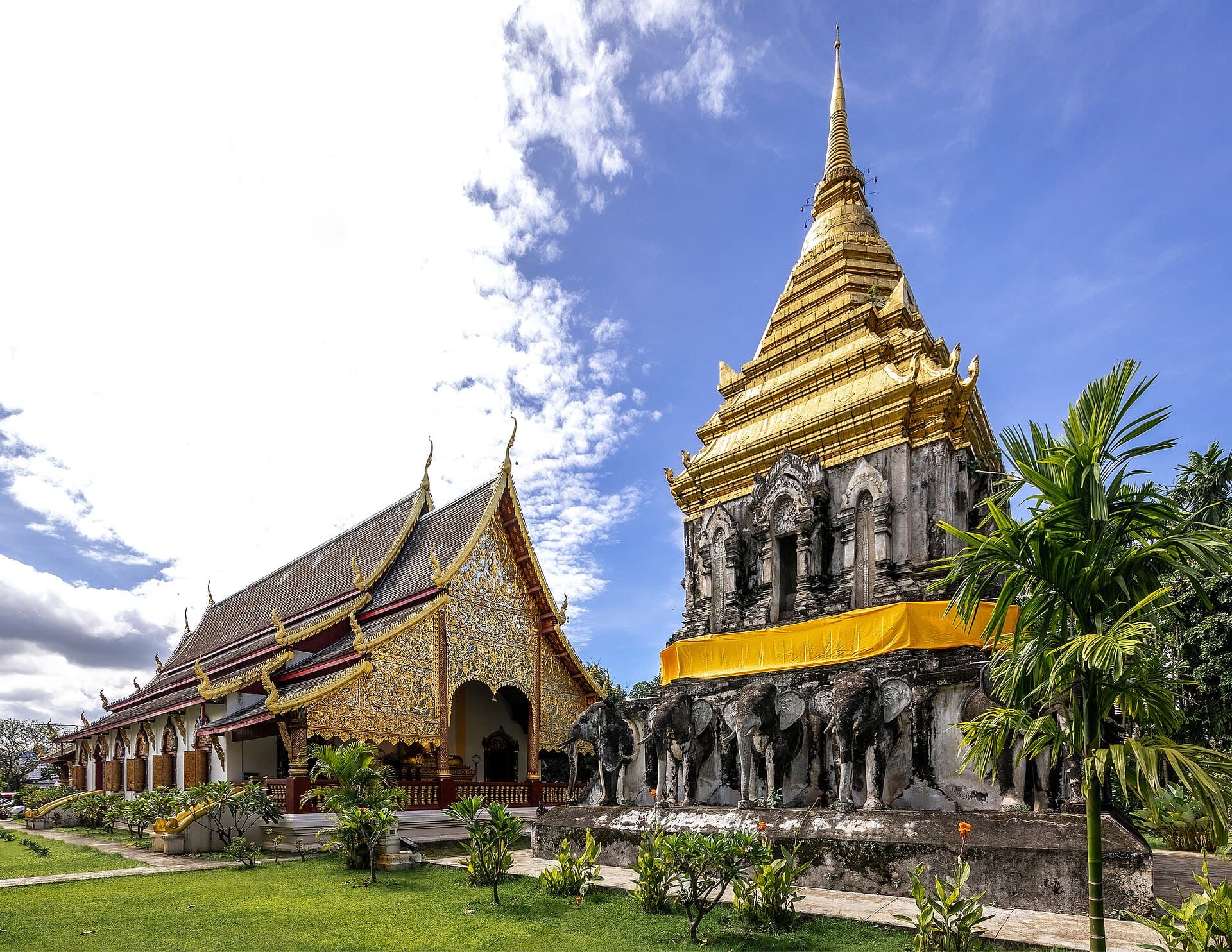 Wat Chiang ManChiang Mai's oldest temple, built by King Mangrai in 1297 on the spot where he c9 minutes walk
Any time in the day, but loveliest during Yi Peng and Loy Krathong in November, when lanterns are hung and candles lit.