
Viharn Lai Kham
Pure northern Lanna style.
Stefan Fussan — CC BY-SA 3.0 · กสิณธร ราชโอรส — CC BY-SA 4.0 · กสิณธร ราชโอรส — CC BY-SA 4.0 · กสิณธร ราชโอรส — CC BY-SA 4.0
One of Chiang Mai's most revered and architecturally beautiful temples, at the western end of the old city, dating from the fourteenth century. It houses an ancient and revered Buddha image known as Phra Buddha Sihing, carried through the city's streets each year in the Thai New Year celebrations in April. The complex's gem is the small Viharn Lai Kham hall, in pure northern Lanna style, with colourful murals depicting daily life in northern Thailand centuries ago and gilded wooden facades. Around it stand a white-and-gold stupa, other halls and a school for monks. The grounds are free, and foreigners pay a token fee of about forty baht to enter the main hall; the temple opens from early morning to evening. Modest dress is required. Half an hour is enough, and it is a few minutes from Wat Chedi Luang. On Sundays the big walking-street market starts in front of it and runs along Ratchadamnoen Road to Tha Phae Gate.
Pure northern Lanna style.
Daily life centuries ago.
Starts in front of the temple.
West end of Ratchadamnoen Road, old city
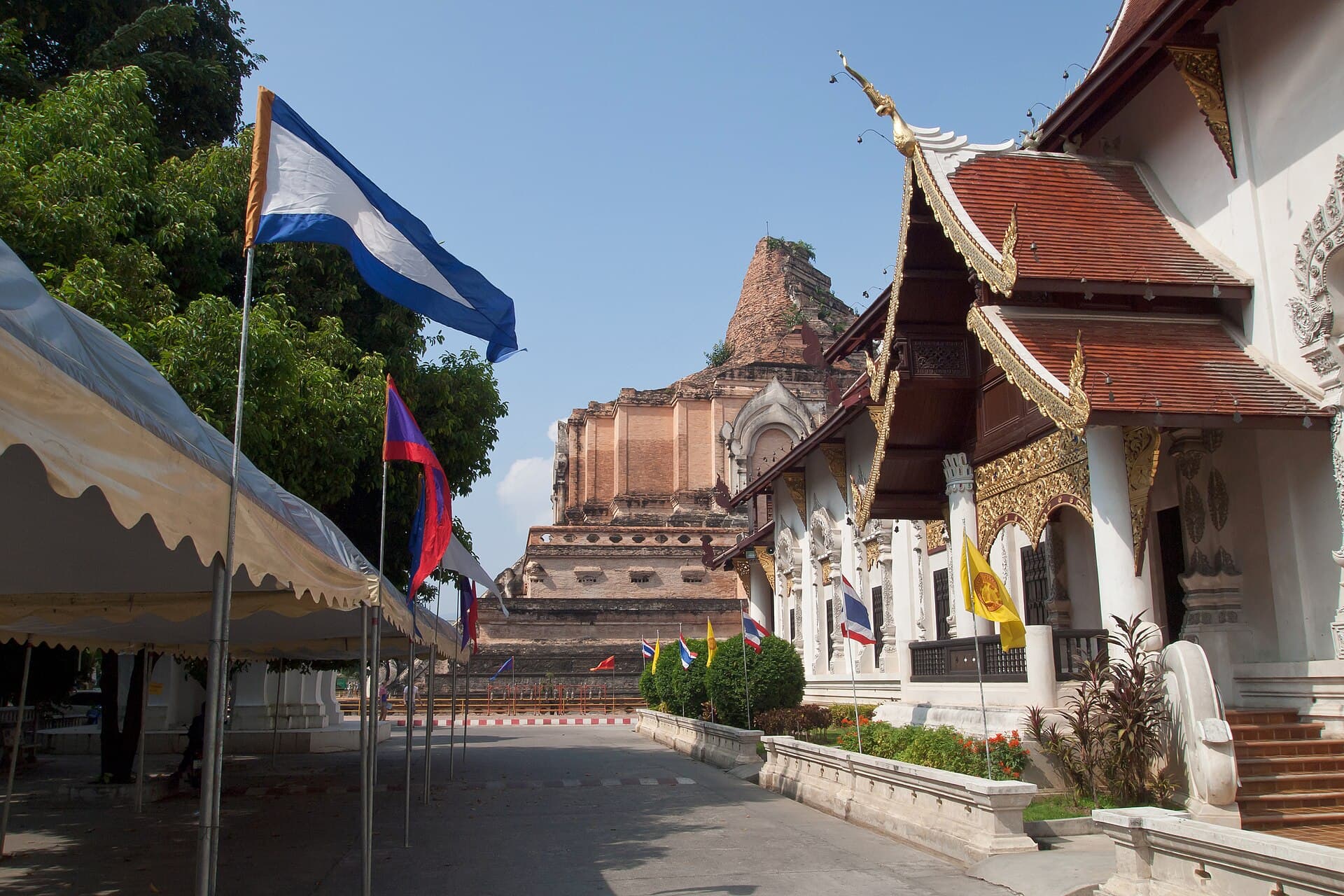 Wat Chedi LuangThe ruins of a colossal stupa at the heart of Chiang Mai's old city, one of its 6 minutes walkWat Phan TaoA small wooden gem right beside famous Wat Chedi Luang that many visitors miss. 7 minutes walkThree Kings MonumentThe symbol of Chiang Mai's founding: three large bronze statues of three kings a8 minutes walkWat Lok MoliA striking temple just outside the old city's northern moat, centred on a massiv11 minutes walkWat Chiang ManChiang Mai's oldest temple, built by King Mangrai in 1297 on the spot where he c12 minutes walk
Chedi Luang impresses with the scale of its fallen stupa; Phra Singh with beautiful architecture, murals and woodwork. Both are close together and visited in an hour and a half.