
Lion stairway
Naga serpents.
Marcin Konsek — CC BY-SA 4.0 · Marcin Konsek — CC BY-SA 4.0 · Marcin Konsek — CC BY-SA 4.0
The temple that gave the capital its name, on a small wooded hill about 46 metres high in the north of the city. Legend says a wealthy woman named Penh found a tree trunk floating down the river in 1372 holding sacred statues, and built a shrine for them on a mound she raised, so the place became Phnom Penh, Lady Penh's hill. A broad stairway guarded by stone lions and naga serpents climbs to a small, colourful shrine among tall trees and stalls of incense and flowers, where residents come to pray for luck in study and work. Behind it stands an old white stupa and a small statue of Lady Penh herself. At the foot of the hill is a round park with a giant flower clock and shady paths, and bold monkeys live in the trees, so keep food out of sight. It is close to the riverfront and the Central Market. Foreigners pay USD 1. Temples and palaces are places of worship and state: cover shoulders and knees and remove shoes where asked.
Naga serpents.
At the foot.
Lady Penh's hill.
Hill in Daun Penh district, northern central Phnom Penh
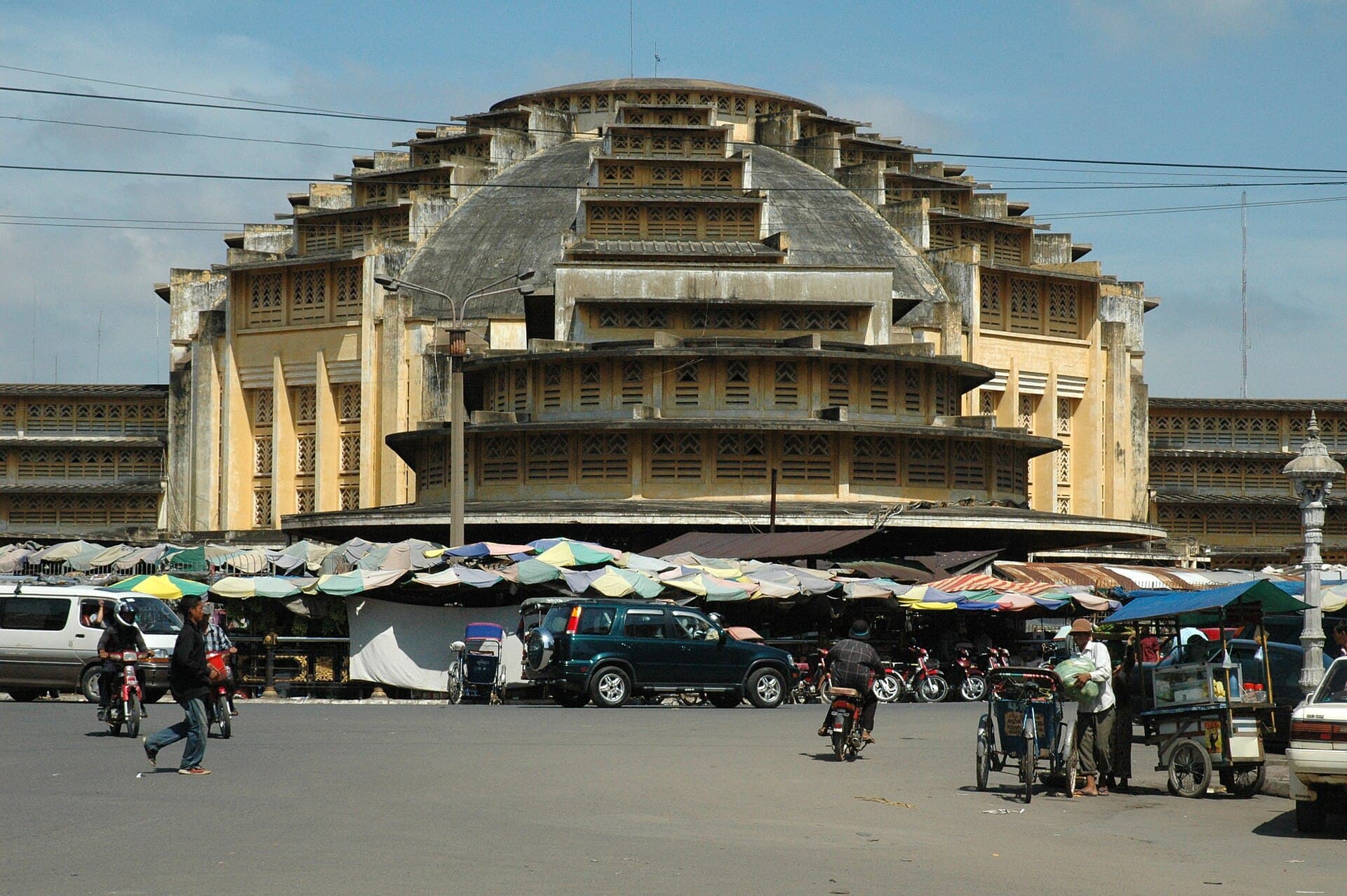 Central Market, Phnom PenhA market and art deco landmark: a bright yellow building completed in 1937, crow10 minutes walk4.3
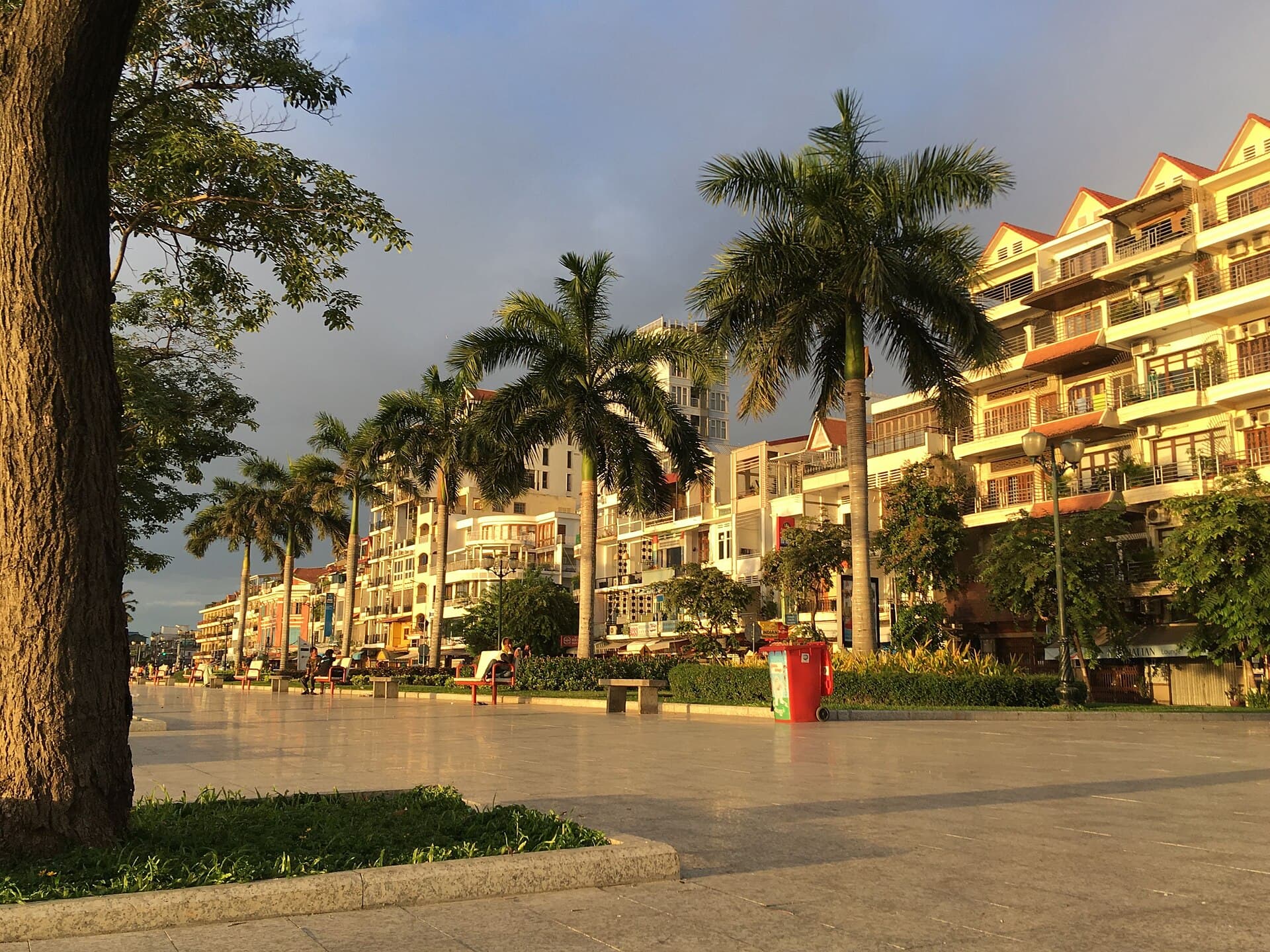 Sisowath QuayThe capital's riverfront, a broad promenade along the Tonle Sap from in front of13 minutes walk4.5
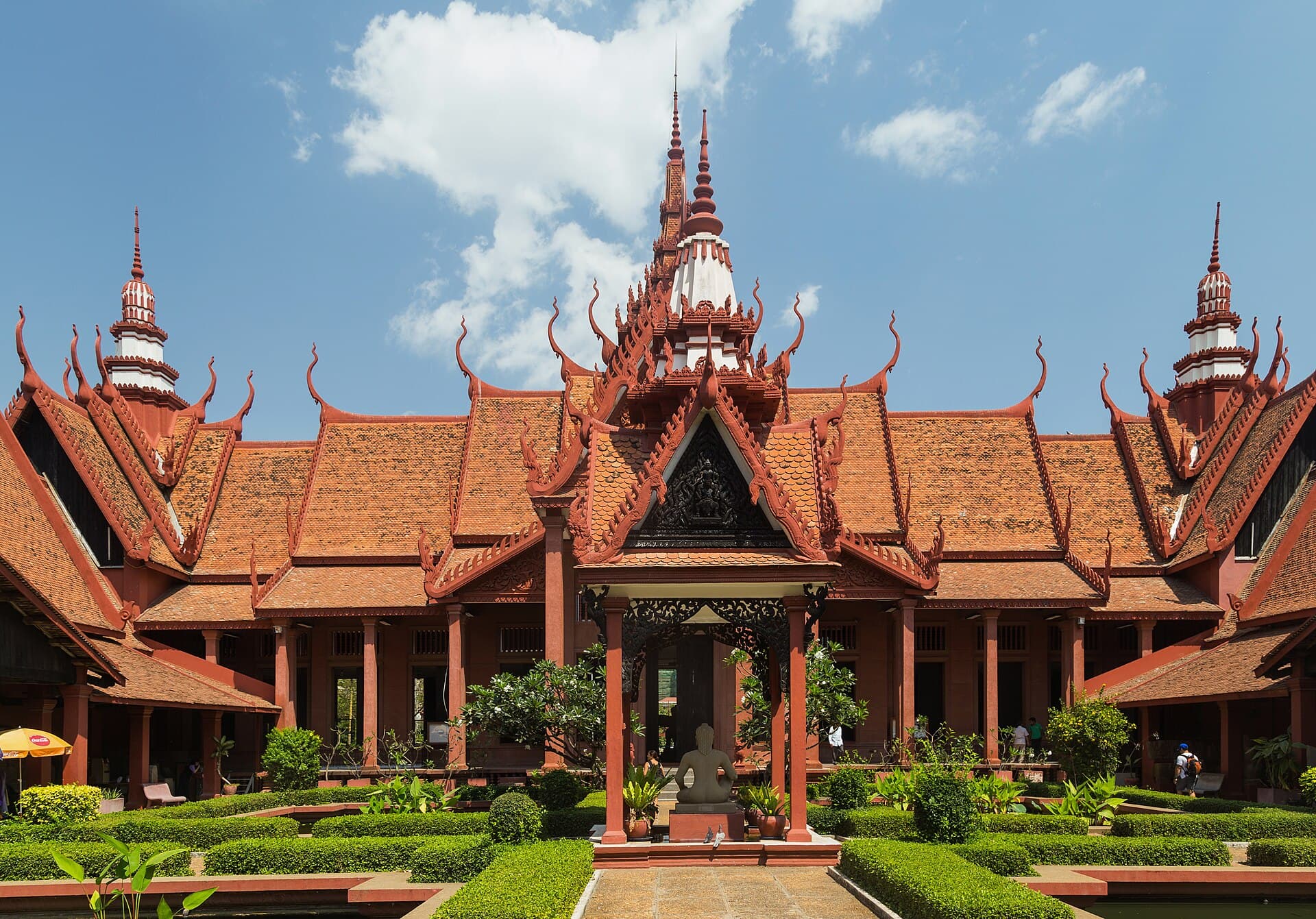 National Museum of CambodiaCambodia's largest museum of cultural history and its leading archaeological col17 minutes walk4.3
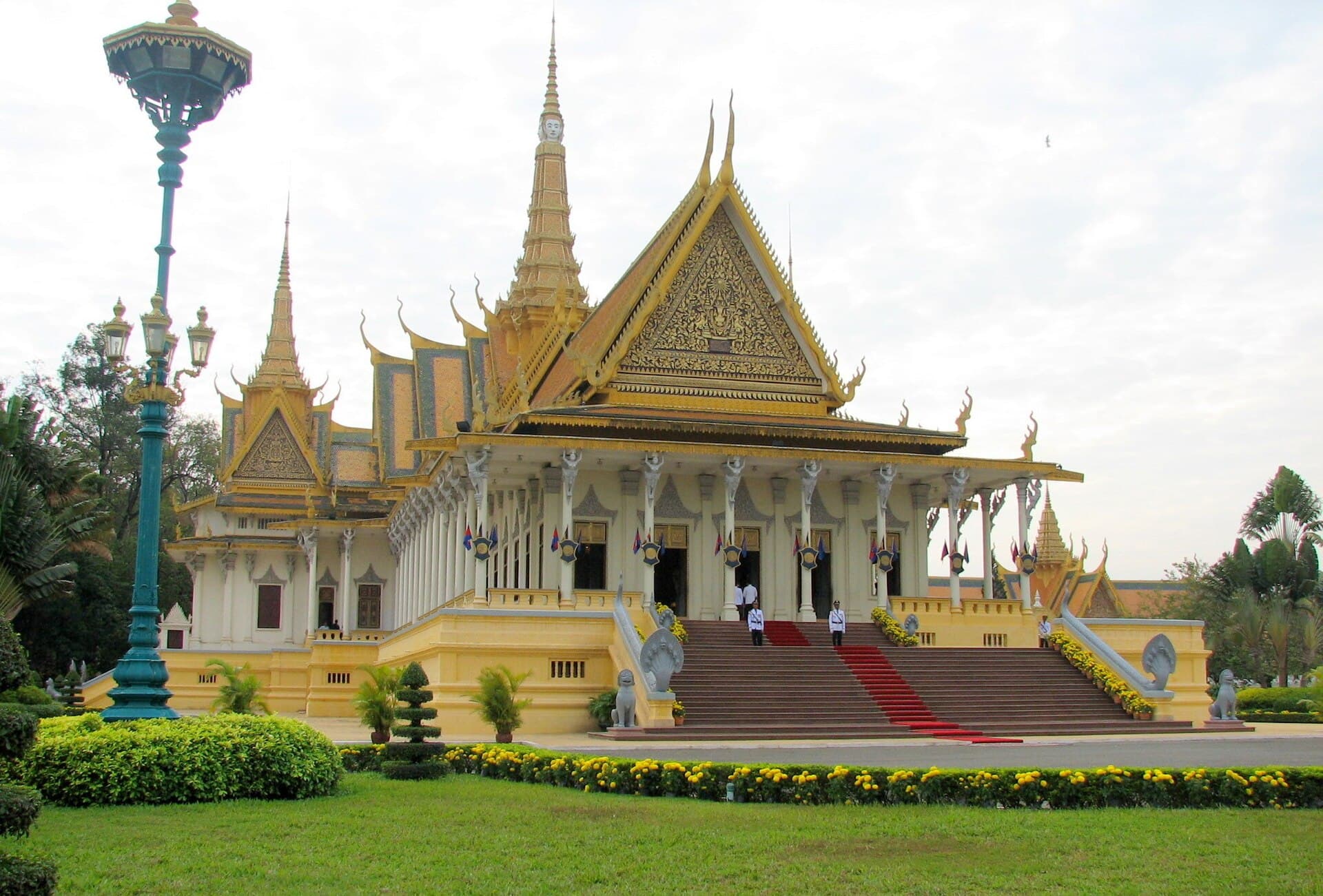 Royal Palace, Phnom PenhThe official residence of the King of Cambodia, a complex of palaces and halls b20 minutes walk4.2
Phnom means hill and Penh is the woman who, legend says, built the shrine on this hill in 1372.