
The Giant Swing
A red frame over twenty metres high.
KOSIN SUKHUM — CC BY-SA 4.0 · Suntawut80 — CC BY-SA 4.0 · BerryJ — CC BY-SA 4.0 · Marcin Konsek — CC BY-SA 4.0
One of Bangkok's first-class royal temples, begun by King Rama I in 1807, with King Rama II personally helping to carve its wooden doors, and completed under Rama III around 1848. Directly in front stands the district's best-known symbol: the Giant Swing, a towering red wooden frame more than twenty metres high. The swing was once used in a Brahmin ceremony in which men swung high trying to catch a bag of coins in their teeth, until the ceremony was stopped in the 1930s after fatal accidents. Inside the temple is a vast hall with huge colourful murals, and galleries lined with dozens of gilded statues. Foreigners pay about a hundred baht to enter the temple, while the swing in the square is free to see. It opens daily from morning to evening, and modest dress is required. The streets around it are among the loveliest in the old town, with antique shops and small restaurants. Combine it with the nearby Golden Mount; the swing photographs best in late-afternoon light.
A red frame over twenty metres high.
Carved by King Rama II himself.
A vast hall of colourful murals.
Bamrung Mueang Road, old town
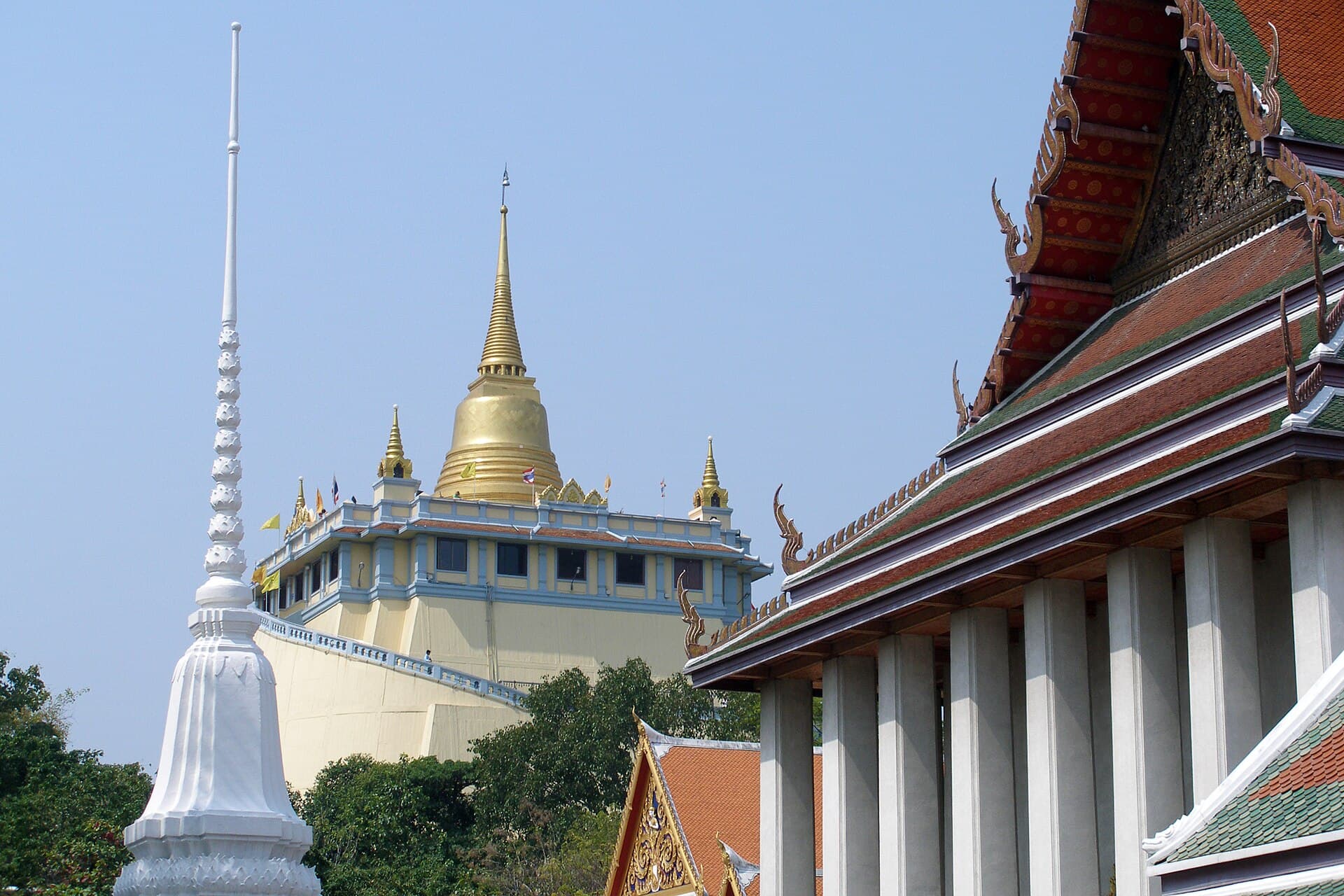 Wat Saket and the Golden MountA steep artificial hill crowned by a gleaming golden stupa, known as the Golden 9 minutes walk
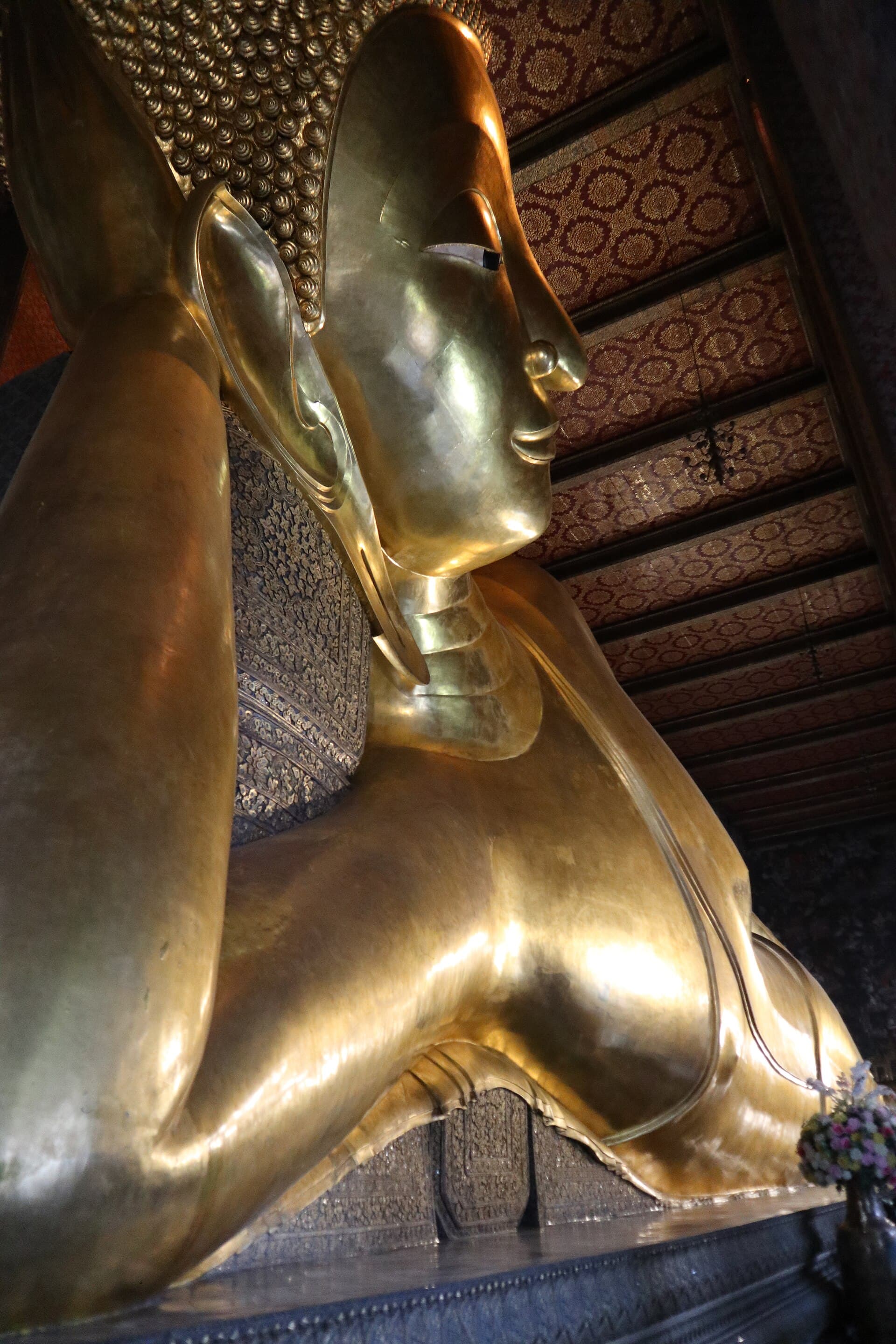 Wat Pho (Temple of the Reclining Buddha)One of Bangkok's oldest and largest temples, directly south of the Grand Palace 13 minutes walk
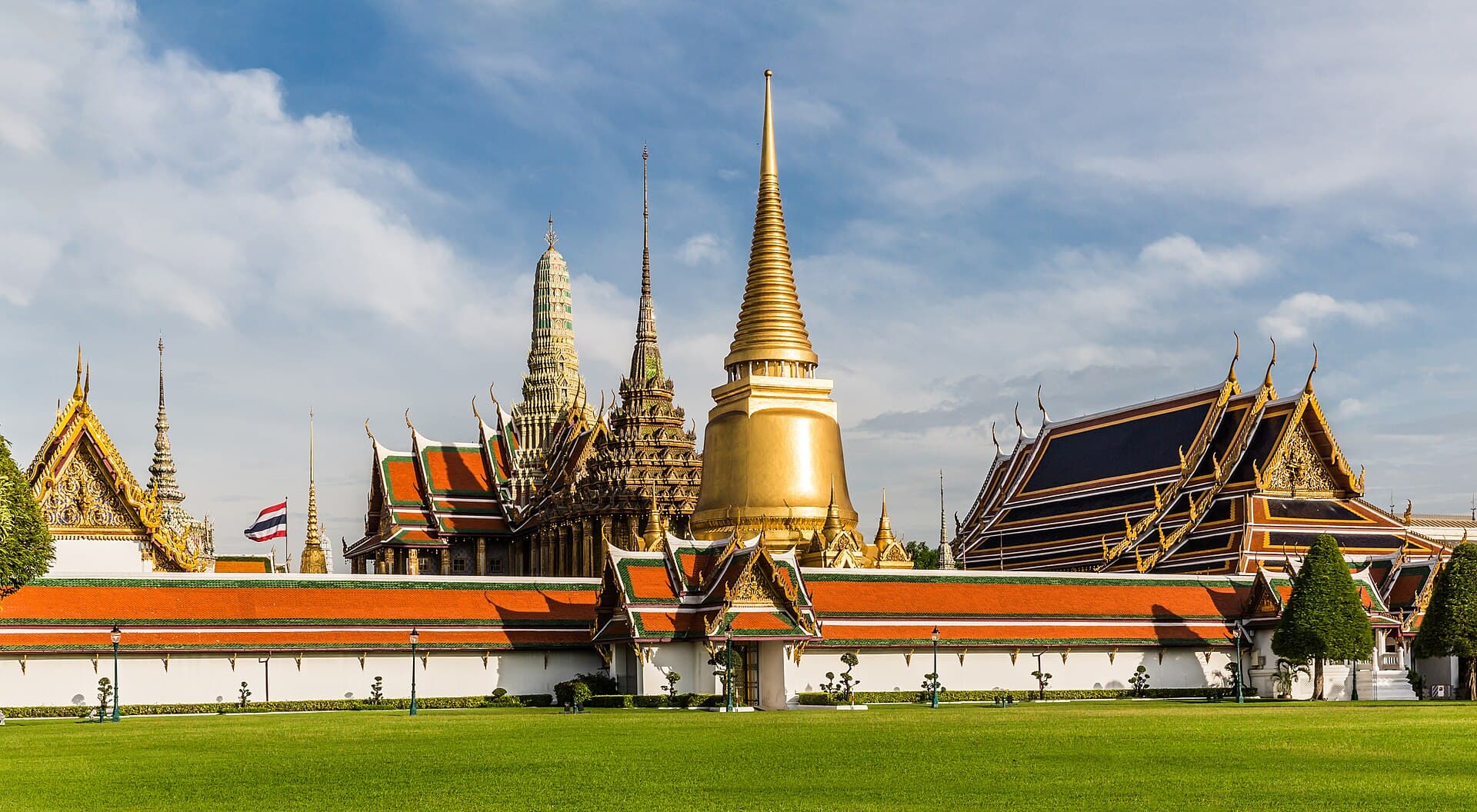 Grand Palace and the Emerald BuddhaThailand's most famous landmark: a lavish royal complex of palaces, halls and te13 minutes walk
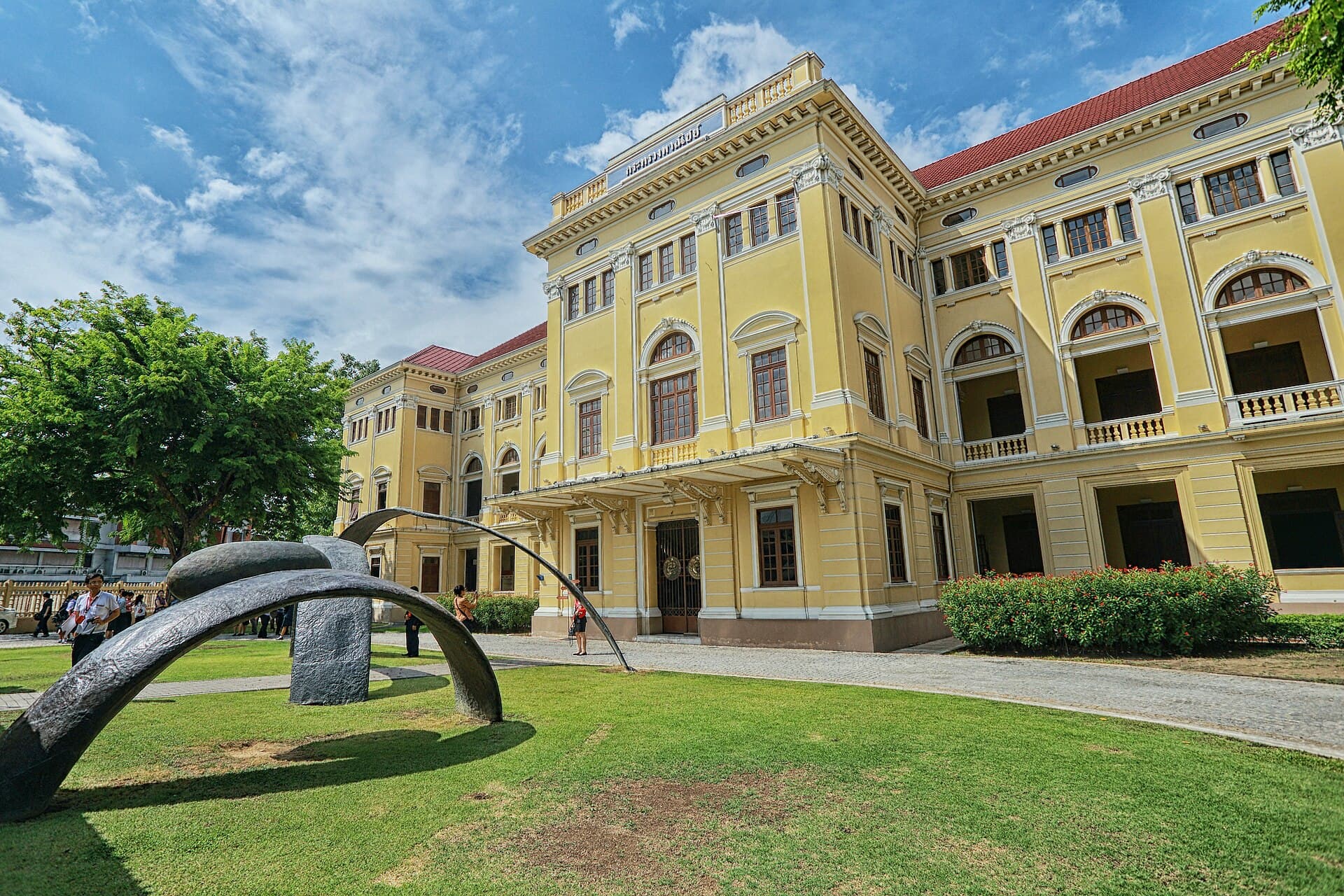 Museum SiamA modern interactive museum opened in 2007 in the old Ministry of Commerce build13 minutes walk
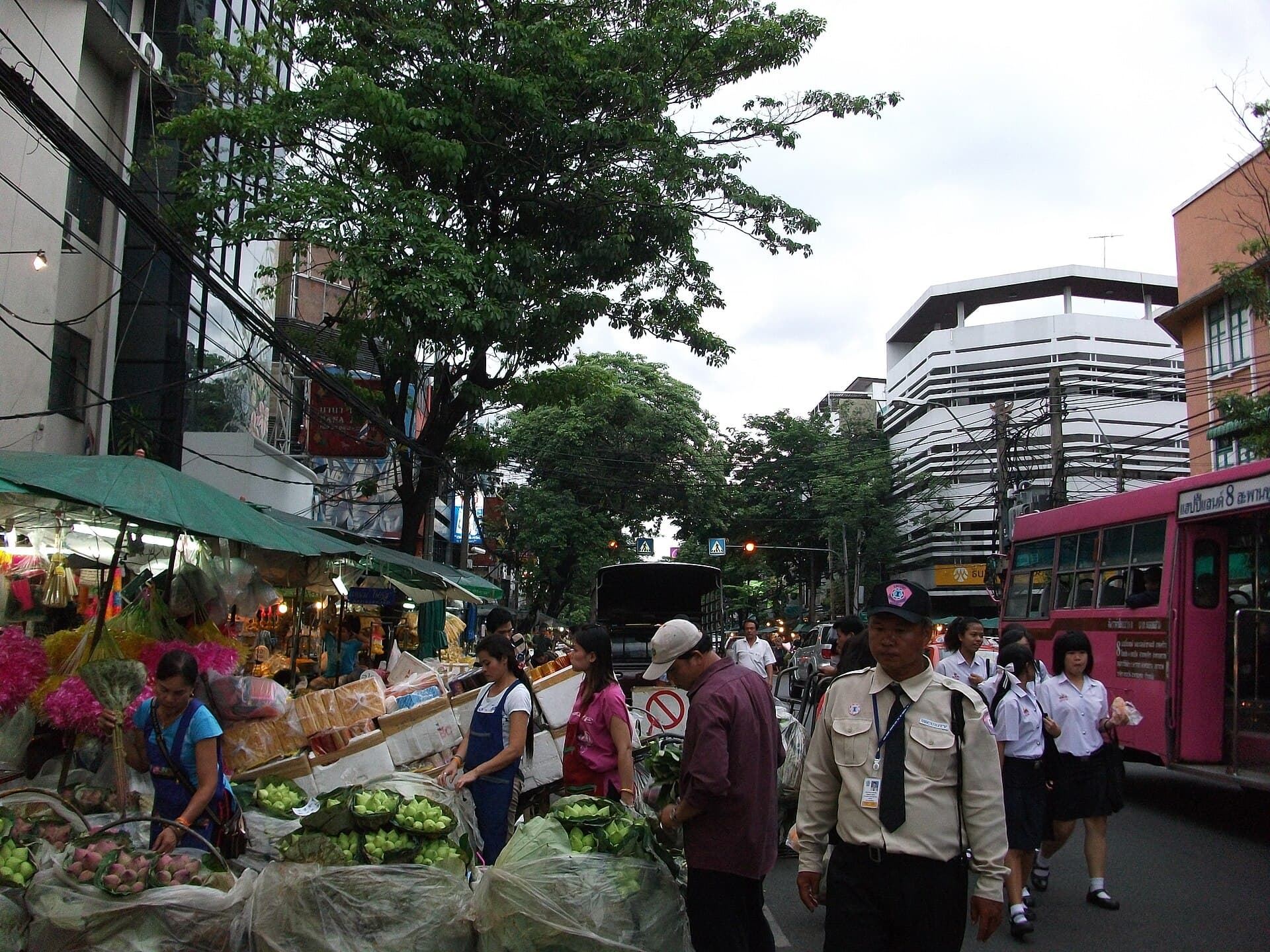 Pak Khlong Talat Flower MarketBangkok's main flower market, along Chak Phet Road and side streets near Memoria14 minutes walk
No, the swing stands in the square in front and is free to see at any time. The fee is only for the temple and its murals.