
Sweeping roofs
Almost to the ground.
Basile Morin — CC BY-SA 4.0 · xiquinhosilva — CC BY 2.0 · Jakub Hałun — CC BY-SA 4.0 · Jakub Hałun — CC BY-SA 4.0
The most beautiful and important temple in Laos, built by King Setthathirath in 1559-1560 at the northern tip of the peninsula, where the Nam Khan meets the Mekong; its name means temple of the golden city. For centuries it was a royal temple where kings were crowned, and monks still live here. The tiered roofs of the main hall sweep down almost to the ground, the purest example of the Luang Prabang style, in dark wood decorated with gold stencilling on black. Its rear wall carries a famous coloured-glass mosaic of the tree of life that glitters in the sun. Around the hall stand small chapels and shrines covered in pink and green mosaics telling scenes of old village life, and a hall holding a gilded wooden royal carriage. The courtyard is quiet, shaded by frangipani and palms. The entry fee is small; sources differ on the amount. Temples are living places of worship: cover shoulders and knees, take off shoes before entering halls, and do not touch monks or block their way. The whole old town of Luang Prabang is a UNESCO World Heritage site, its temples, wooden houses and colonial buildings set between the Mekong and Nam Khan rivers.
Almost to the ground.
Tree of life.
On black wood.
Northern tip of the Luang Prabang peninsula, at the river confluence
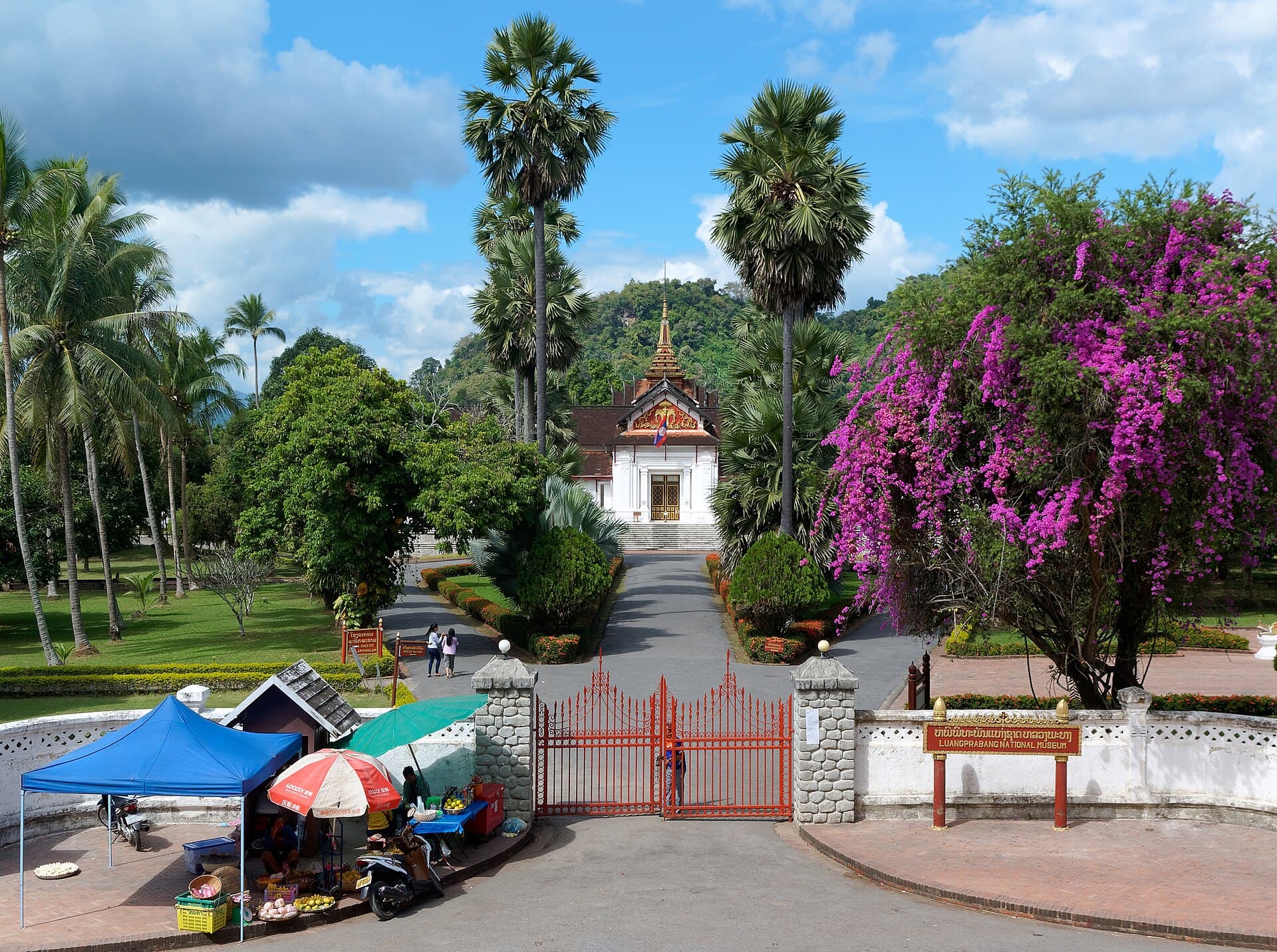 Royal Palace, Luang PrabangHaw Kham, built in 1904 in the French era for King Sisavang Vong and his family.13 minutes walk3.9
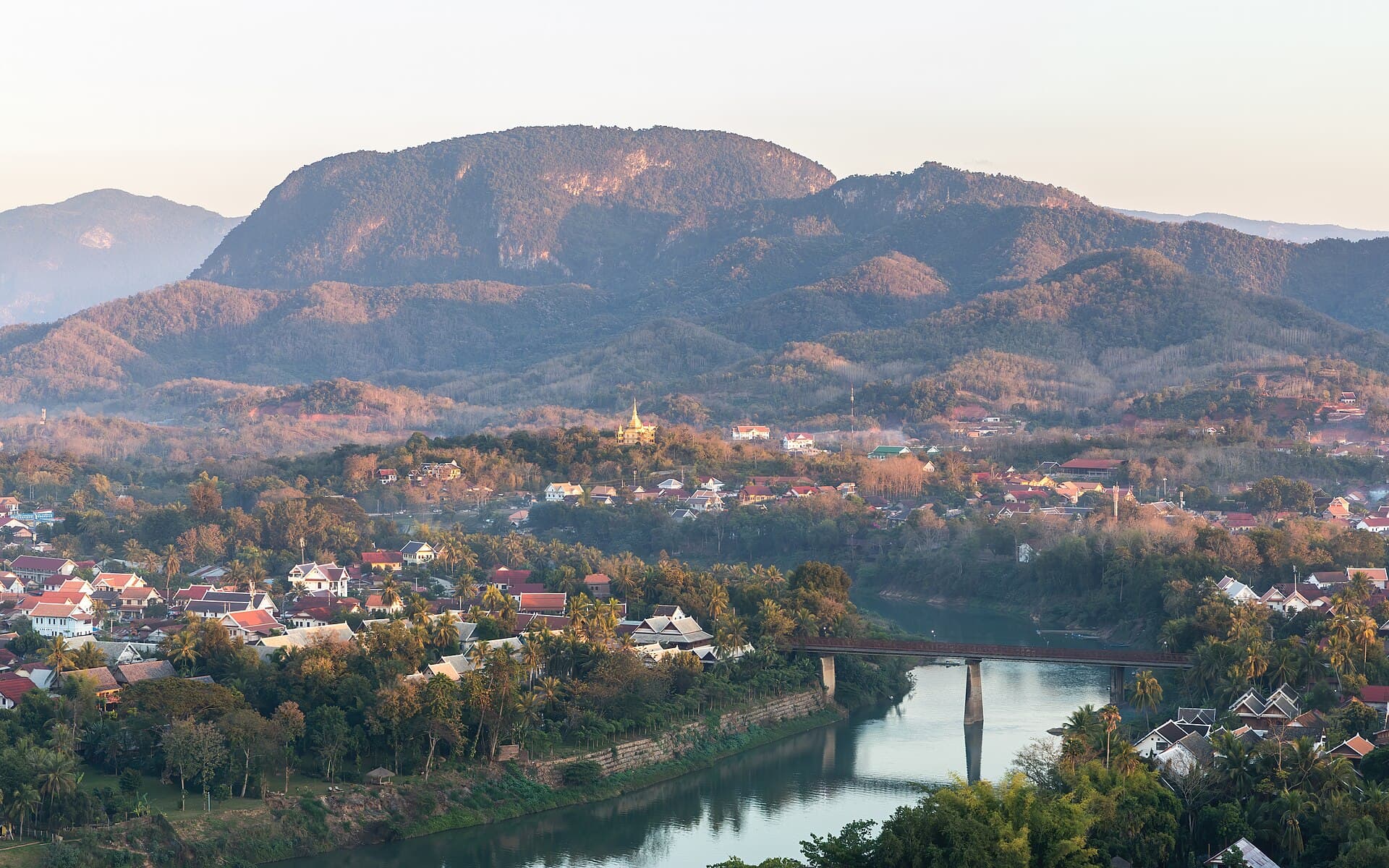 Mount PhousiA wooded hill about a hundred metres high in the heart of Luang Prabang, crowned13 minutes walk4.2
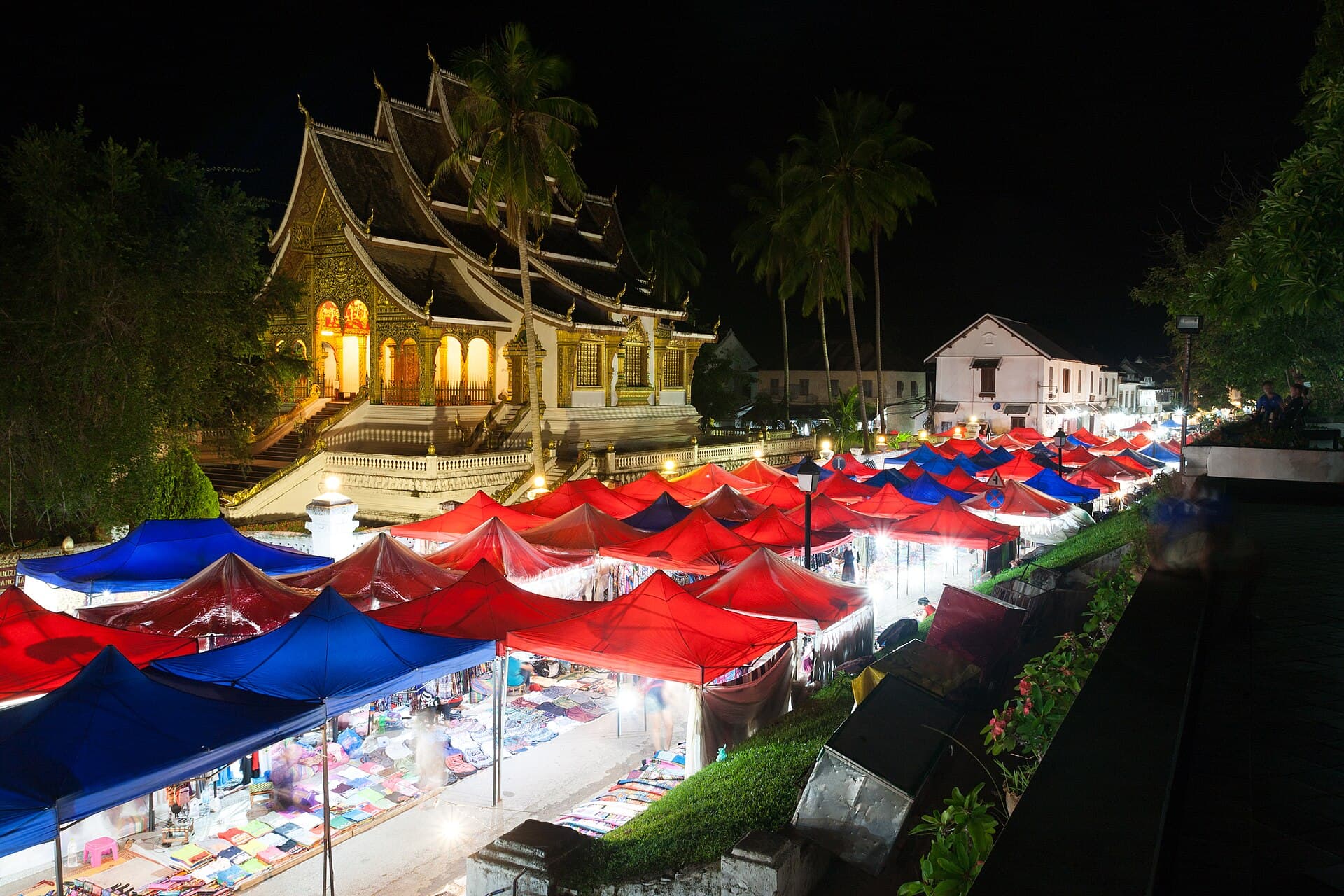 Luang Prabang Night MarketEvery evening the main street in front of the Royal Palace closes to cars, long 17 minutes walk4.3
It was the royal temple where Lao kings were crowned, and it is the purest example of Luang Prabang architecture.