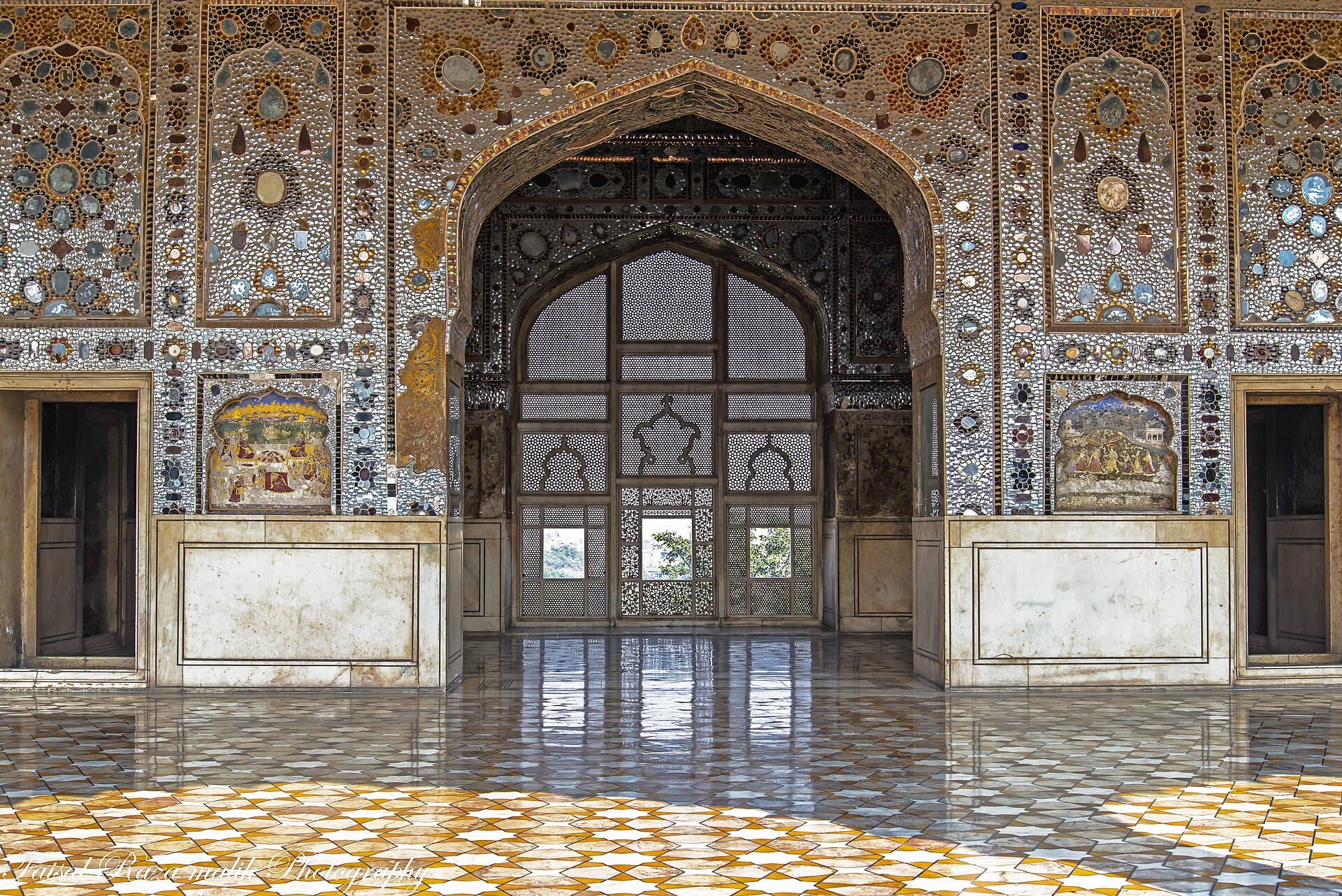
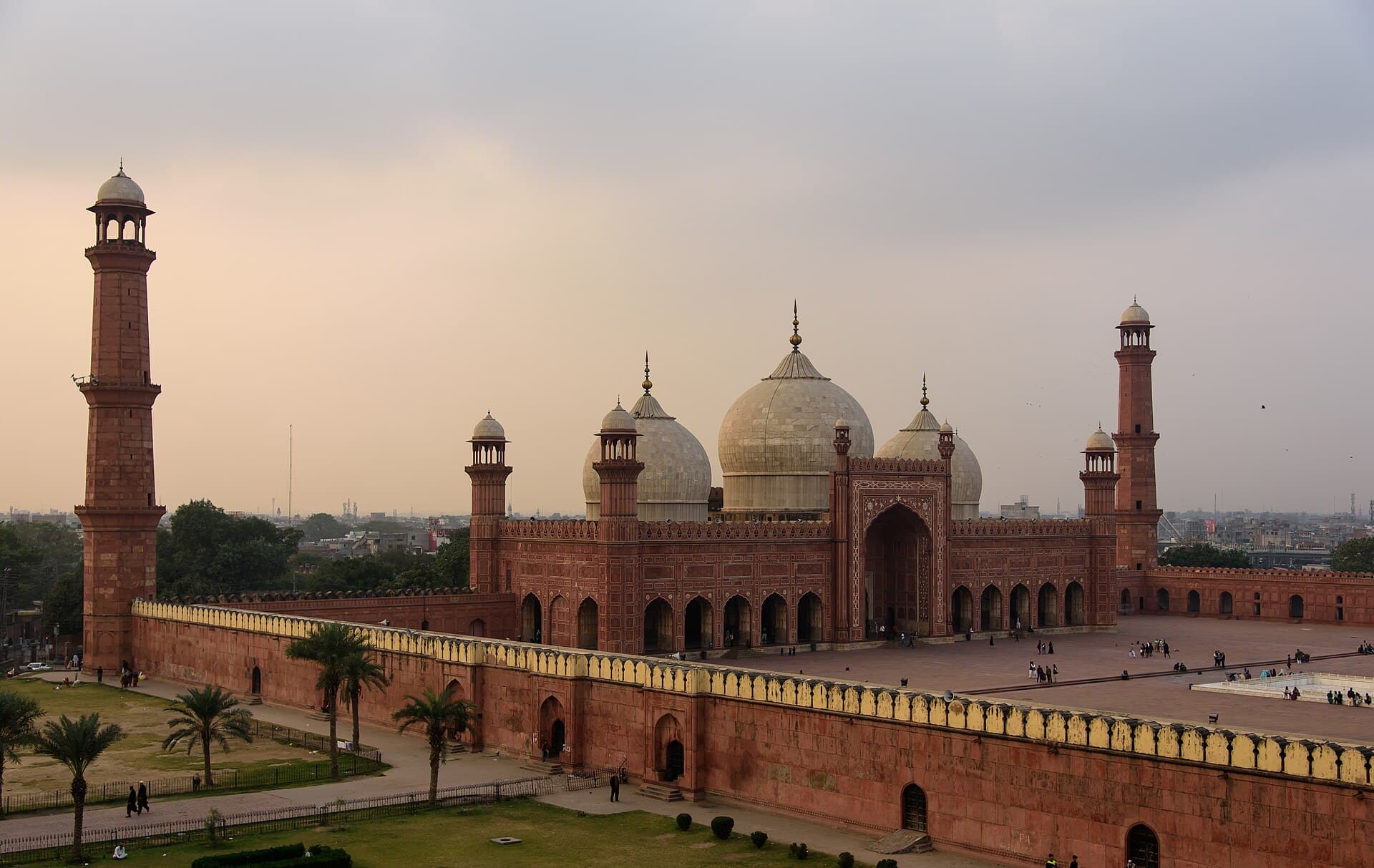
The decorated gateway
Tiles and calligraphy.
Asmar Hussain110 — CC BY-SA 4.0 · Taahaa Khalid — CC BY-SA 4.0 · Muhammad Umair Mirza — CC BY-SA 4.0 · Muhammad Umair Mirza — CC BY-SA 4.0 · Saadmuzafar — CC BY-SA 4.0
Wazir Khan Mosque is a 17th-century Mughal mosque in the Walled City of Lahore, considered the most ornately decorated of all Mughal mosques. It is known for its colourful faience tile work, called kashi-kari, and for interior walls almost entirely covered in frescoes. It is on the UNESCO tentative list, and it surprises everyone who reaches it through the crowded lanes. It was commissioned by Wazir Khan, governor of Lahore under Emperor Shah Jahan, as part of a group of buildings that included the nearby Wazir Khan Hammam. Work began in 1634 and ended in 1641. The mosque stands on the southern side of the Royal Road, the route Mughal nobles took to their residences at Lahore Fort. You enter by a huge gateway covered in tiles and calligraphy, into a courtyard paved in red brick with four octagonal minarets around it. In the prayer hall floral paintings and calligraphy interlace across the walls and arches, and they take time to absorb. This is a place of worship, so keep quiet and avoid prayer times. It is about 900 m in a straight line from Lahore Fort, and you can walk there through the bazaar. Dress modestly, women should cover their hair, and take off your shoes on entering. The lanes around it are worth a wander after your visit.
Tiles and calligraphy.
Four around the court.
Flowers and script in the hall.
Royal Road, Walled City, Lahore, Pakistan
It is the most ornately decorated Mughal mosque, with its tiles and interior paintings.
On foot from the fort through the bazaar, or by small rickshaw to the nearest point.