The gold façade
Sobieski's baroque as royal summer.
This photo was taken by Przemysław JahrAutorem zdjęcia jest Przemysław JahrWykorzystując zdjęcie proszę podać jako autora:Przemysław Jahr / Wikimedia Commons — Public domain · Władysław Marconi — Public domain · Maksym Kozlenko — CC BY-SA 4.0 · Maksym Kozlenko — CC BY-SA 4.0
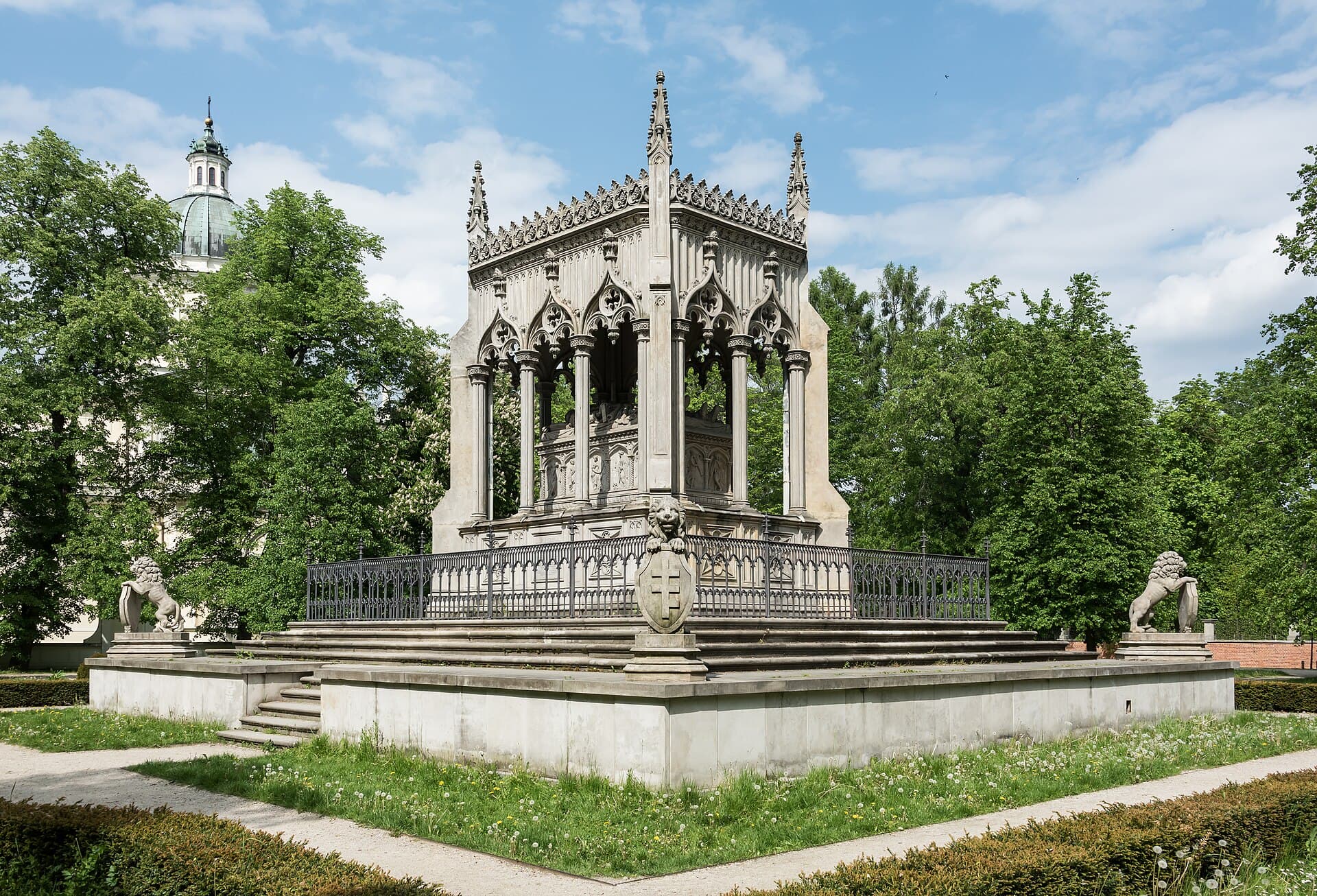
Wilanów is Warsaw's surviving Versailles: the palace of King Jan III Sobieski — Vienna's rescuer from the Ottoman siege (1683) and Poland's most famous warrior king — built as a gold-faced baroque summer seat, and spared the war's destruction by complete miracle: the true original in the city of faithful copies. Inside are the apartments of Jan and his French queen Marysieńka (their love-letter story a Polish legend) and a portrait gallery across three centuries — its gardens baroque terraces on the lake with a rose garden and Chinese pavilion: a complete aristocratic half-day south of the centre (direct bus). And its winter season is a national phenomenon: the Royal Garden of Lights (October-January), millions of bulbs as walks, light tunnels and water shows — Poland's greatest light festival, worth its own evening trip alone.
Sobieski's baroque as royal summer.
Garden baroque stepping to the water.
Kostki Potockiego 10/16, 02-958 Warsaw
The warrior king who saved Vienna in 1683: leading history's largest cavalry charge (the winged Hussars), he broke the Ottoman siege and turned the continent's balance — writing to Marysieńka from the battle tent before any official dispatch. Poles recall him as first military pride — this palace his intimate face: loving husband, father, collector.