
The Saadian minaret
Tiers of blind arches frame its windows.
Elfathi amine — CC BY-SA 4.0 · Miguel Discart — CC BY-SA 2.0 · Delpha — CC BY-SA 3.0 · Delpha — CC BY-SA 3.0 · R Prazeres — CC BY-SA 4.0
The Zawiya of Sidi Bel Abbès grew up around the tomb of Abu al-Abbas al-Sabti, the most venerated of the Seven Saints of Marrakech and widely seen as the city's patron saint. Its mosque, mausoleum, madrasa and hospice stand at the northern tip of the medina, a UNESCO World Heritage Site since 1985. Born in Ceuta in 1129 or 1130, al-Sabti reached Marrakech in 1146 and preached generosity, urging the rich to give to the poor; he died in 1204 or 1205. The Saadian sultan Abu Faris built the mosque and minaret around 1605. Moulay Ismail, on whose initiative the Seven Saints pilgrimage began, rebuilt the tomb chamber in 1720, and in the 18th century Sultan Mohammed ben Abdallah extended the city walls to take in the shrine's quarter. The mosque keeps its Saadian form, and tiers of blind arches frame the windows of its minaret. The mausoleum, a square chamber under a green pyramid roof, is decorated with zellij, carved stucco and stained-glass windows beneath a painted wooden cupola. Tradition credits the saint with special help for the blind, and the zawiya has long sheltered and supported them. The zawiya stands just north of Bab Taghzout, about 1.5 km north of Jemaa el-Fnaa as the crow flies. Muslims may enter the mausoleum and mosque; non-Muslims may not, but can see the minaret from outside. The Zawiya of al-Jazuli, tomb of another of the Seven Saints, is about 300 m south, the Ben Youssef Madrasa about 900 m south-east and the Jardin Majorelle about 1.2 km west.
Tiers of blind arches frame its windows.
A green pyramid roof over the saint's tomb.
Shops line the 19th-century approach.
North of Bab Taghzout, Sidi Bel Abbès quarter, medina, Marrakech
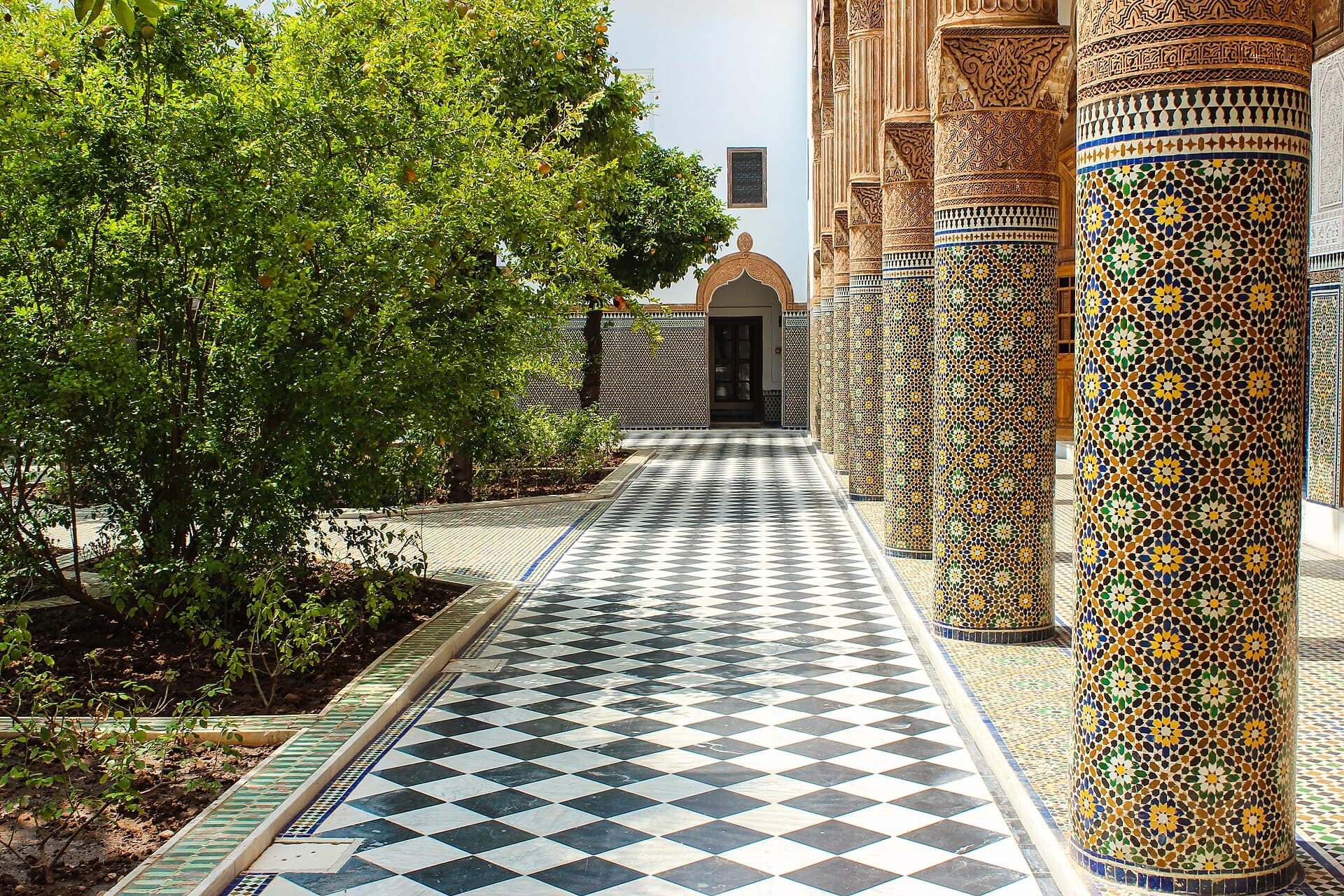 Dar El Bacha (Marrakech)Dar El Bacha, the House of the Pasha, is a palace in the Marrakech medina built 11 minutes walk
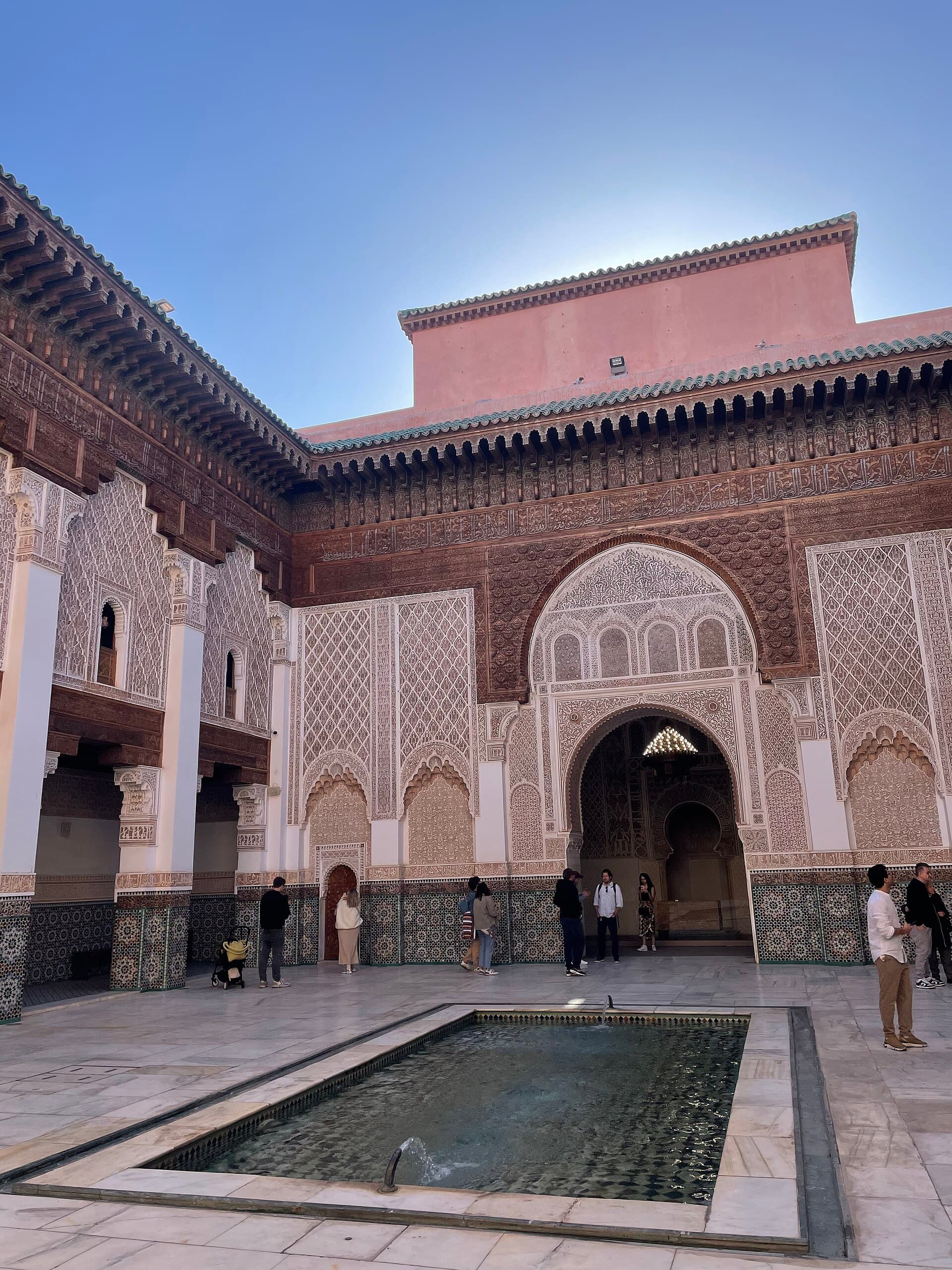 Ben Youssef MadrasaA historic Islamic college in the north of Marrakech's medina, named after the n11 minutes walk4.8
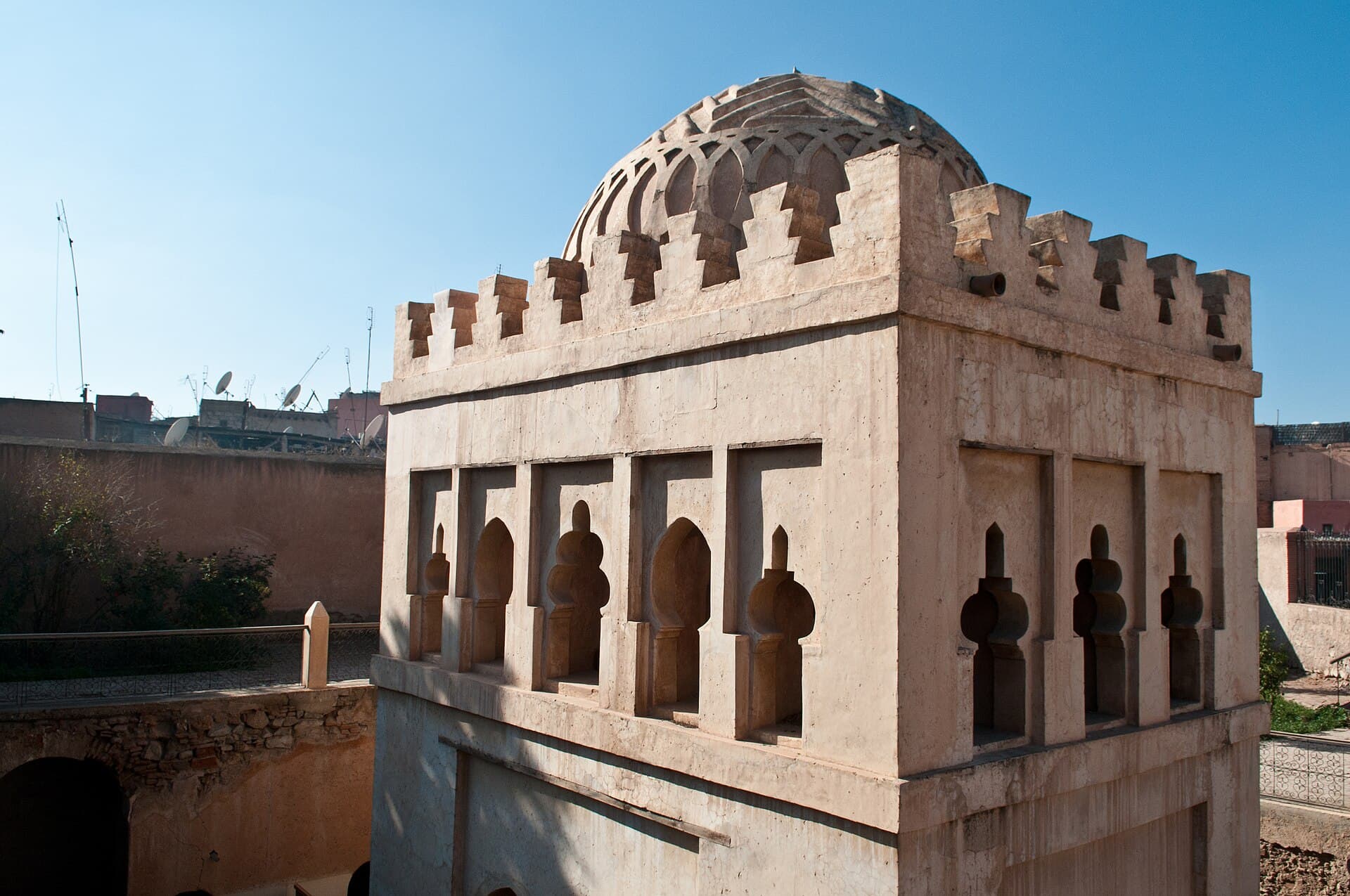 Almoravid KoubbaThe Almoravid Koubba, or Qubbat al-Barudiyyin, is a small domed pavilion in the 11 minutes walk
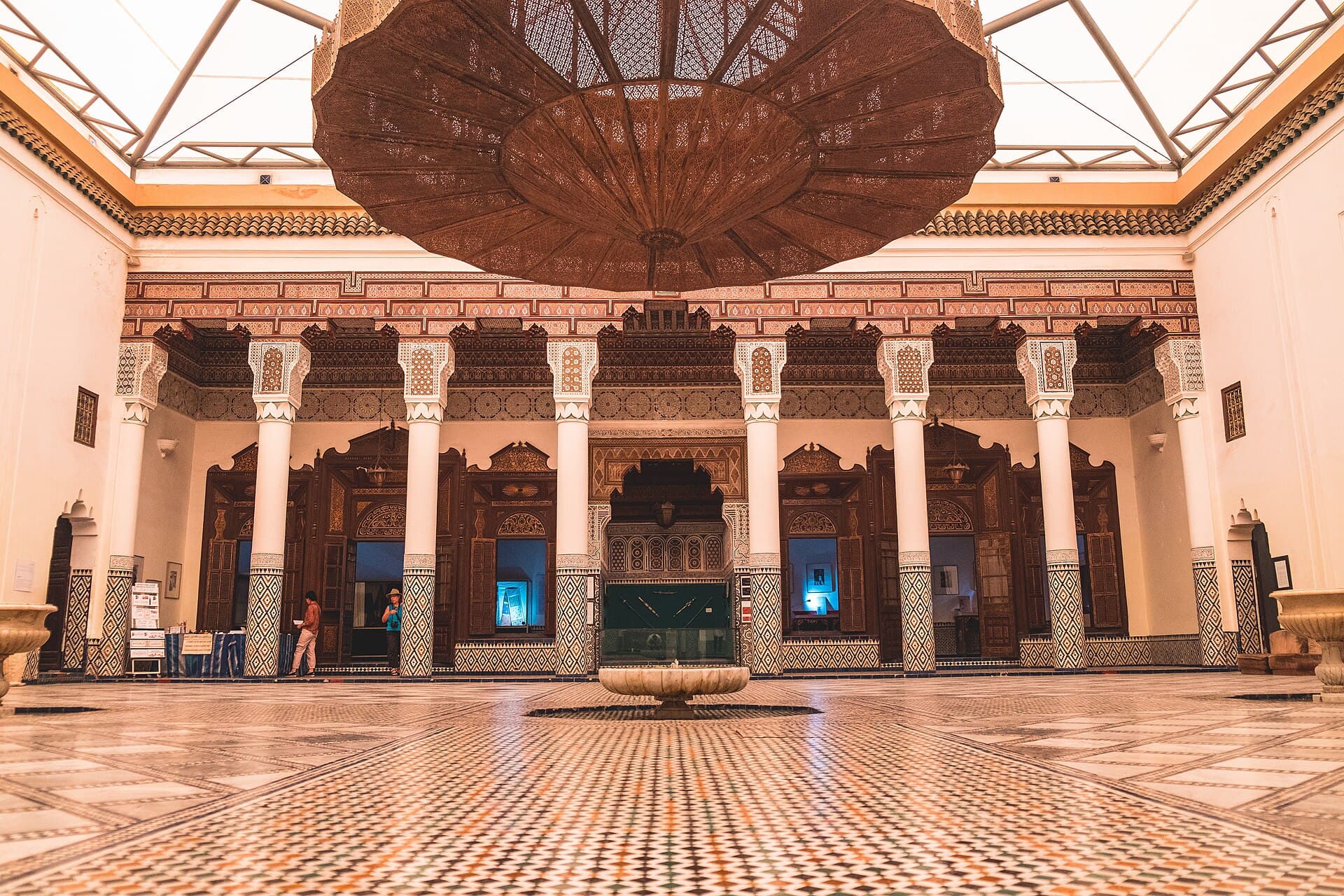 Marrakech MuseumThe Marrakech Museum occupies Dar Menebhi, a palace in the northern medina built12 minutes walk
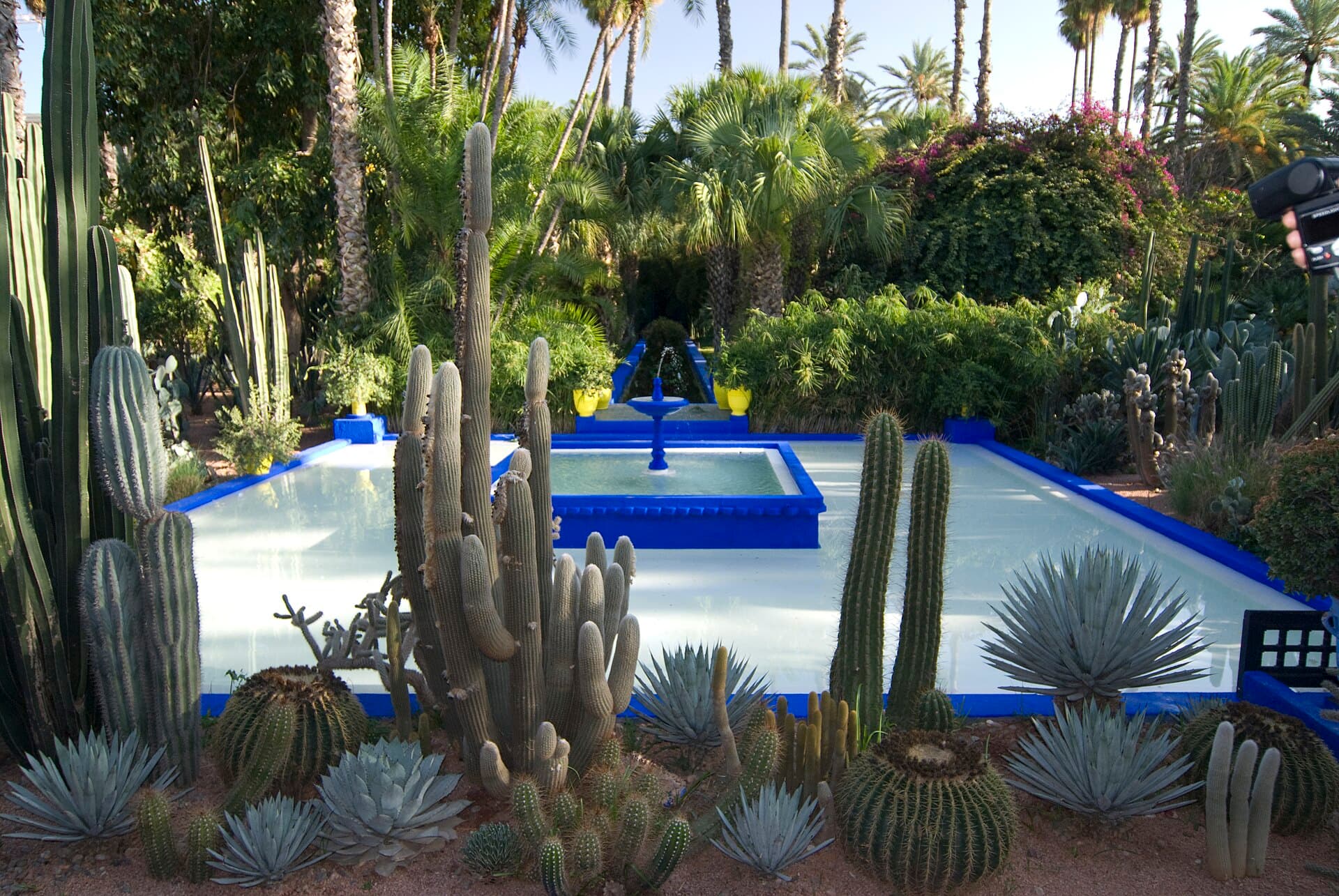 Jardin MajorelleA botanical and artist's garden of about one hectare, created by the French pain15 minutes walk4.3
A circuit of the tombs of seven scholars and Sufis buried in Marrakech, begun in the late 17th century at Moulay Ismail's wish and organised by the scholar al-Hasan al-Yusi. Pilgrims visited one tomb a day from Tuesday to Monday, reaching Sidi Bel Abbès on the Thursday.
The name means from Ceuta, his birthplace, while Bel Abbès is the popular form of Abu al-Abbas. His teacher, Abu Abd Allah al-Fakhkhar, was a pupil of Qadi Ayyad, another of the Seven Saints.