
Plaza del Azoguejo
The aqueduct's tallest point, seen from directly beneath.
Bernard Gagnon — CC BY-SA 3.0 · Marmontel — CC BY 2.0 · Marmontel — CC BY 2.0 · Jorge Franganillo — CC BY 2.0
**A Roman aqueduct 28 metres high built of twenty thousand granite blocks without mortar or cement — held up by gravity alone for two thousand years** — in the middle of Segovia. It was built in the **1st or 2nd century AD** to bring water from the Guadarrama mountains — **a distance of some seventeen kilometres**. ⚠ **What astonishes is not the scale but the method**: **the blocks are set on one another with no binding material at all** — **no mortar and no clamps**; **weight, balance and precise cutting do everything**. ✅ **The visible central stretch is 167 arches** on two levels, **at its tallest above the Plaza del Azoguejo**. ⚠ **And it actually carried water into the city until the 20th century** — **two thousand years of service**. ✅ **Free and always in the open.**
The aqueduct's tallest point, seen from directly beneath.
167 arches on two levels running across the valley.
Mortarless joints between blocks, visible to the eye.
Plaza del Azoguejo, 40001 Segovia, Spain
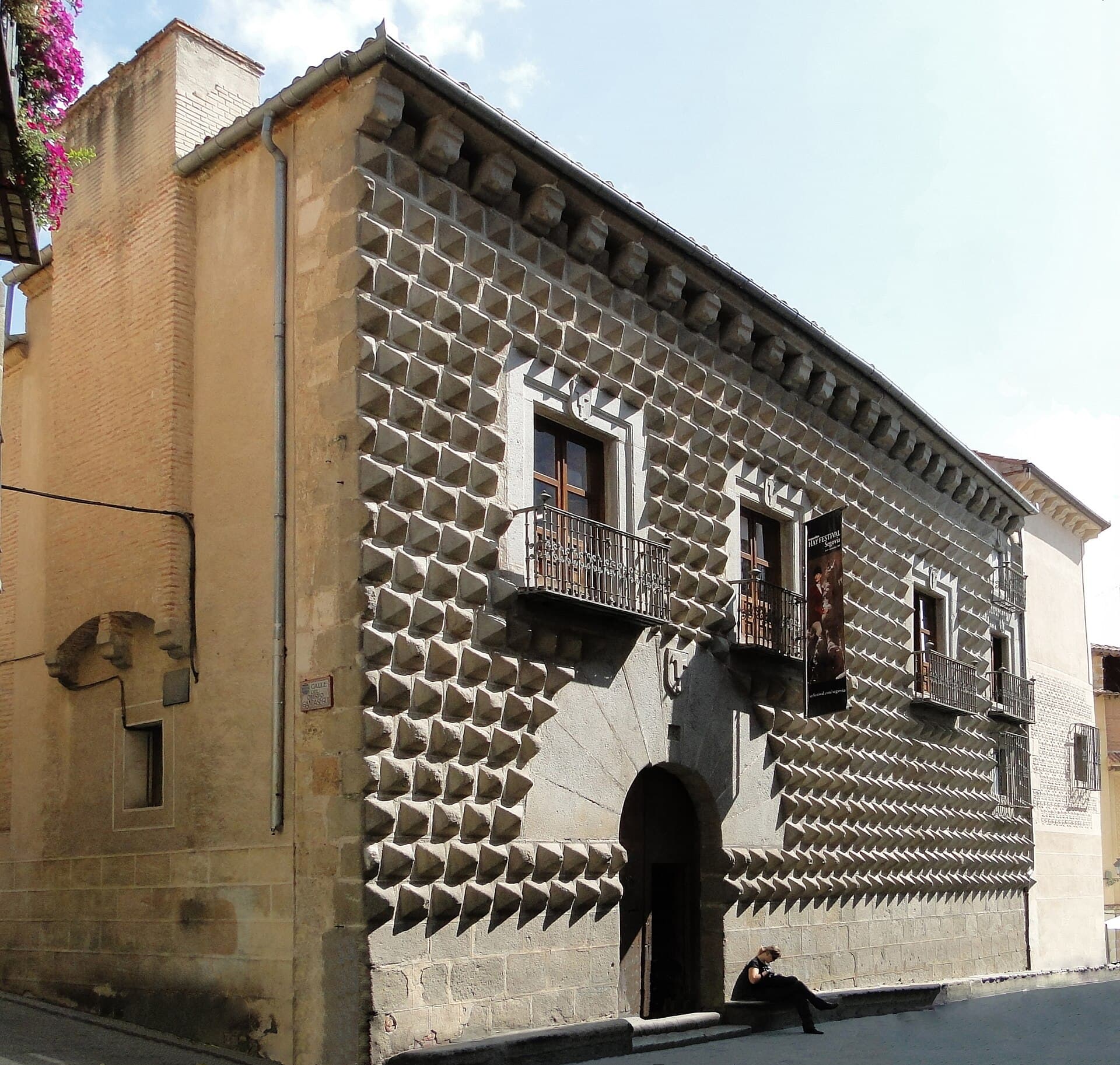 Casa de los Picos**A 15th-century palace whose front is covered in six hundred projecting stone p3 minutes walk4.2
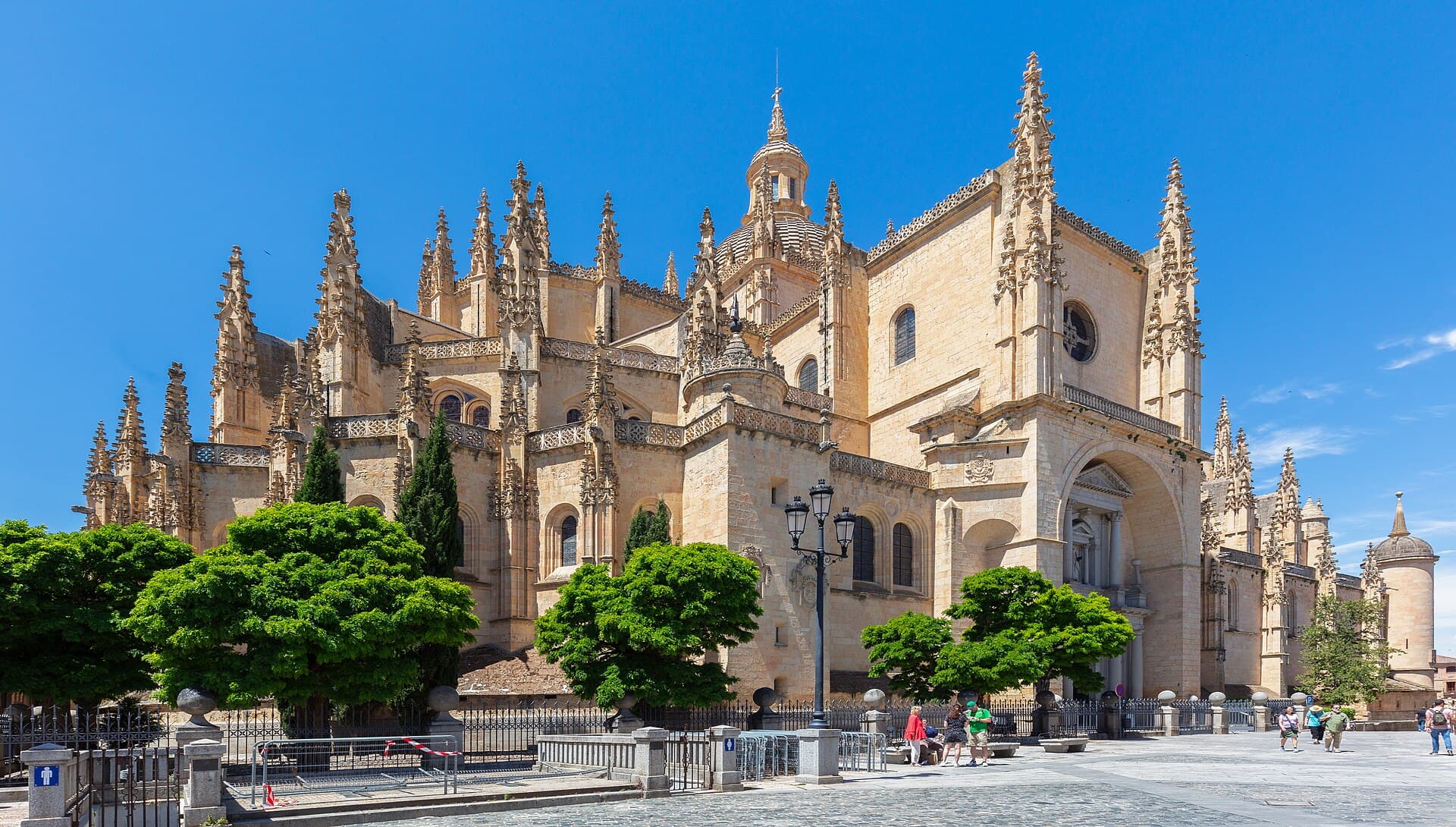 Segovia Cathedral**The last Gothic cathedral built in Spain — begun in 1525, when the rest of Eur9 minutes walk4.8
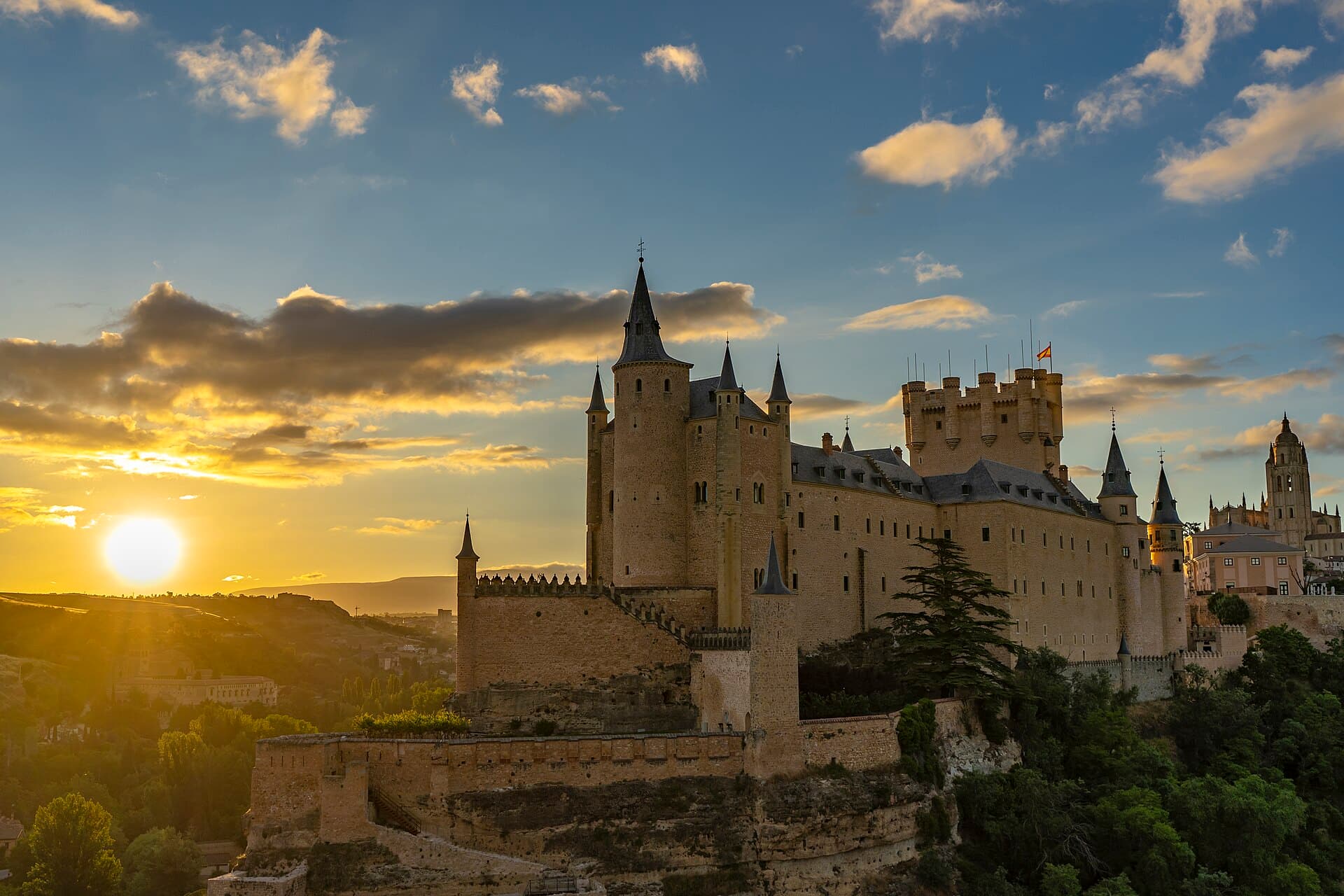 The Alcázar of Segovia**A castle on a rock at the meeting of two valleys, shaped like a ship's prow, i17 minutes walk4.6
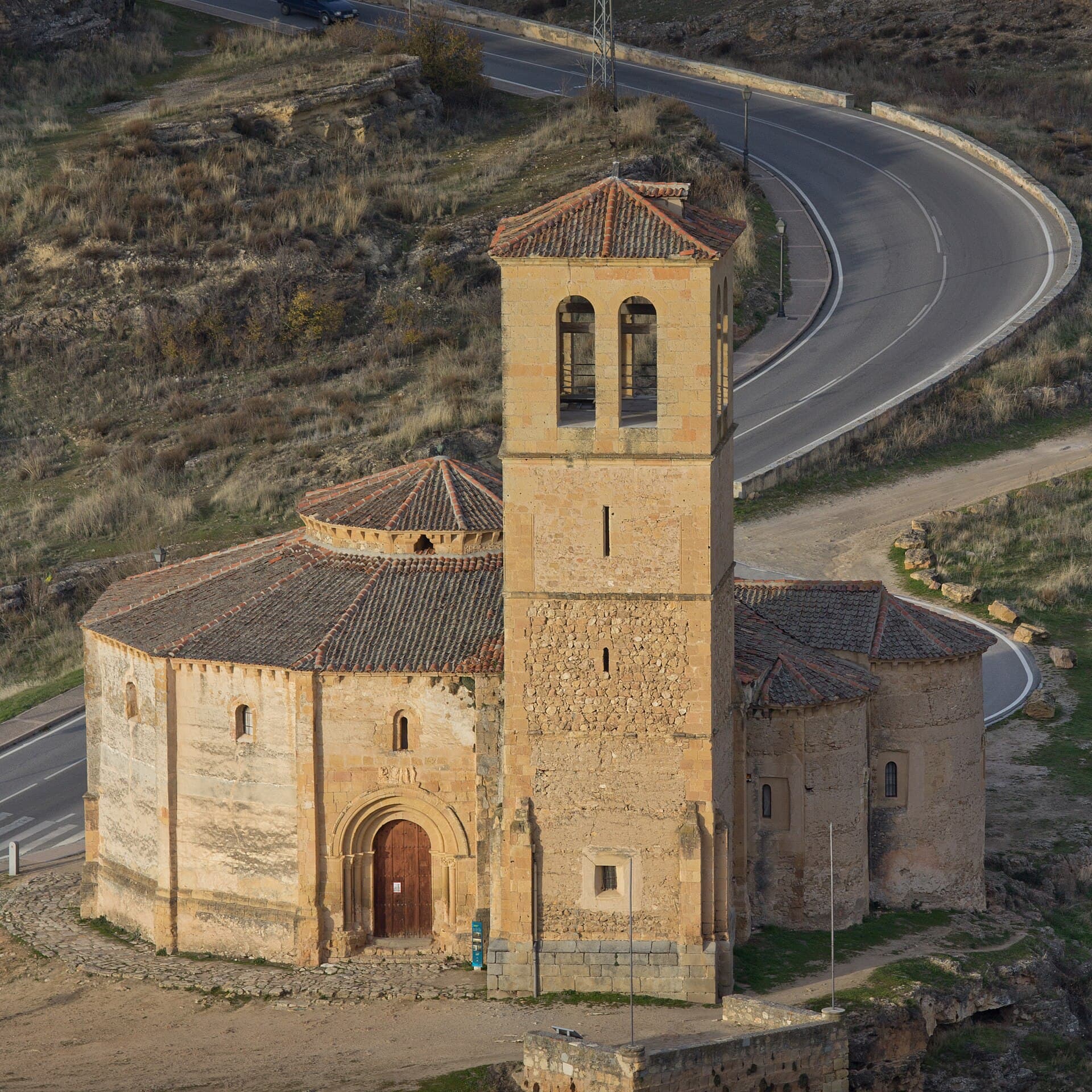 Church of the Vera Cruz**A twelve-sided round church of the 13th century, with a two-storey chamber sta19 minutes walk4.4
**Because a stone arch works in compression — and mortar is unnecessary if the cutting is precise and the load vertical.** ✅ **The principle**: **a semicircular arch transfers load sideways as compression** — **and stone is very strong in compression** (and weak in tension). **So as long as every stone is pressed against its neighbour, nothing need glue them.** ⚠ **Mortar in Roman building is largely for packing and levelling**, not for carrying load. ✅ **Three conditions make it work**: **(1) precise cutting** — **the meeting faces are perfectly flat**, so pressure spreads over the whole surface rather than points; **any protrusion cracks the stone there. (2) Sufficient weight** — **the blocks are very heavy**, so friction between them prevents lateral slipping. **(3) Correct geometry** — **the keystone at the crown locks the system**, **and the lower piers are broad** to absorb the outward thrust. ✅ **The practical advantage**: **dry construction tolerates a little movement** — **absorbing settlement and vibration by redistributing pressure**, ⚠ **where rigid construction cracks**. ⚠ **Its weakness**: **chemical erosion** — **granite decays slowly under air pollution and acid rain**, **and that, rather than gravity, is the real danger to the aqueduct today**.