
The Ambassadors' murals
7th century.
Bgag — CC0 · Ji-Elle — CC BY-SA 4.0 · Nassima Chahboun — CC BY-SA 4.0 · Faqscl — CC BY-SA 3.0 · Faqscl — CC BY-SA 3.0 · Nassima Chahboun — CC BY-SA 4.0 · Davide Mauro — CC BY-SA 4.0 · Jean Housen — CC BY-SA 4.0
Samarkand's city history museum on the Afrasiyab mound, the site of the ancient city destroyed by the Mongols in the early 13th century and one of the largest archaeological sites in the world. The architect Bagdasar Arzumanyan designed the building in 1970, and it opened for Samarkand's 2,500th anniversary, its façade carved with large reliefs. Its treasure is the Afrasiyab murals, known as the «Paintings of the Ambassadors», masterpieces of Sogdian art. Found in 1965 when a road was cut through the mound, they date from the mid-7th century CE, probably painted between 648 and 651, and show processions and embassies arriving at the court of Samarkand. The museum holds more than 22,000 items in five halls that tell the site's story: swords, knives and arrowheads, coins, ceramics, Zoroastrian-era ossuaries, manuscripts, everyday objects, and models of ancient houses and kilns. Tickets are about 50,000 som, per visitor guides. Afterwards you can walk the mound to see the ruins of the old city; the Khoja Daniyar mausoleum stands on its eastern edge.
7th century.
Large reliefs.
The old city's ruins.
Afrasiyab hill, northeast Samarkand
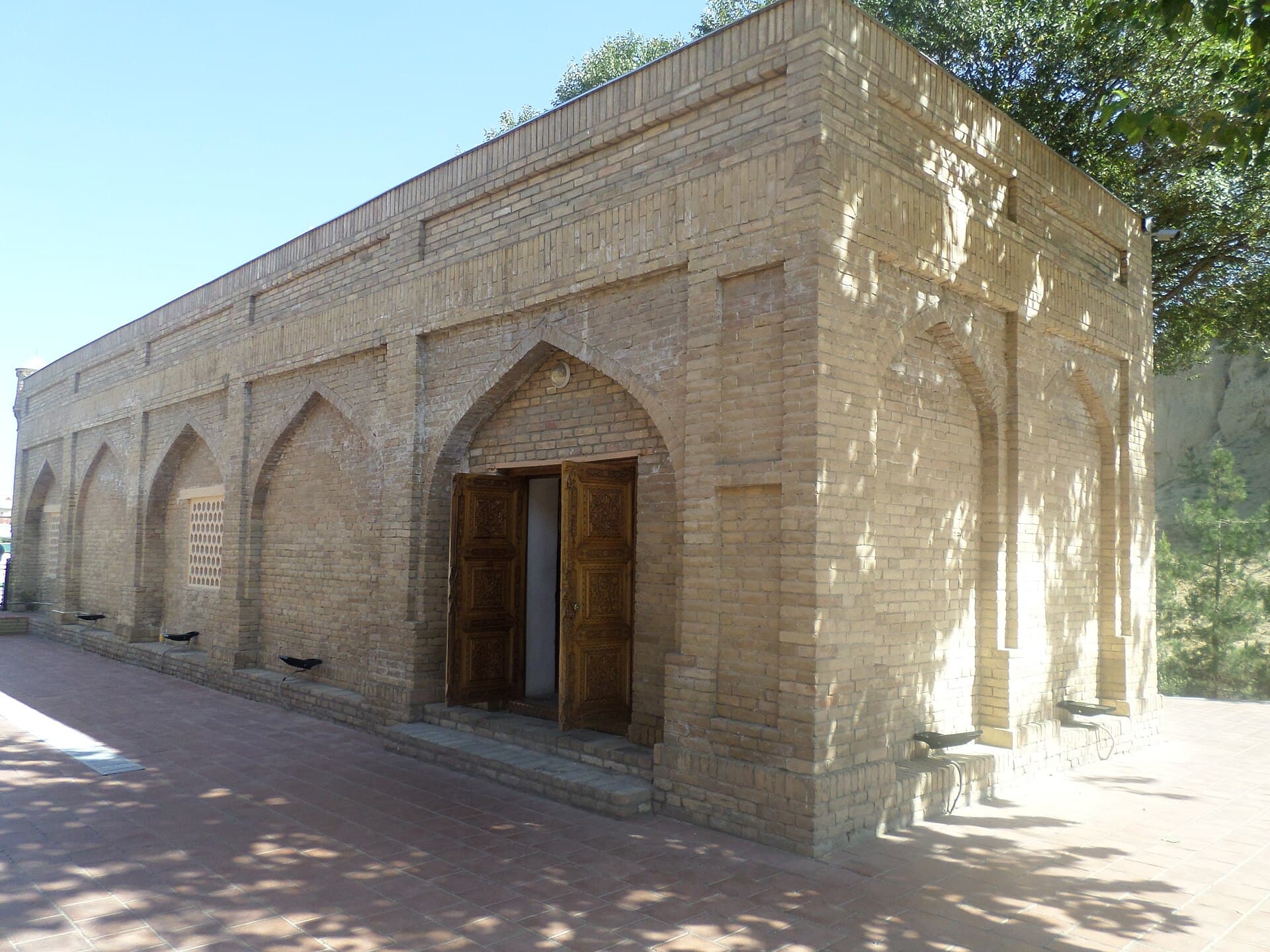 Khoja Daniyar MausoleumOne of Samarkand's most famous and revered shrines, on the eastern edge of the A6 minutes walk4.6
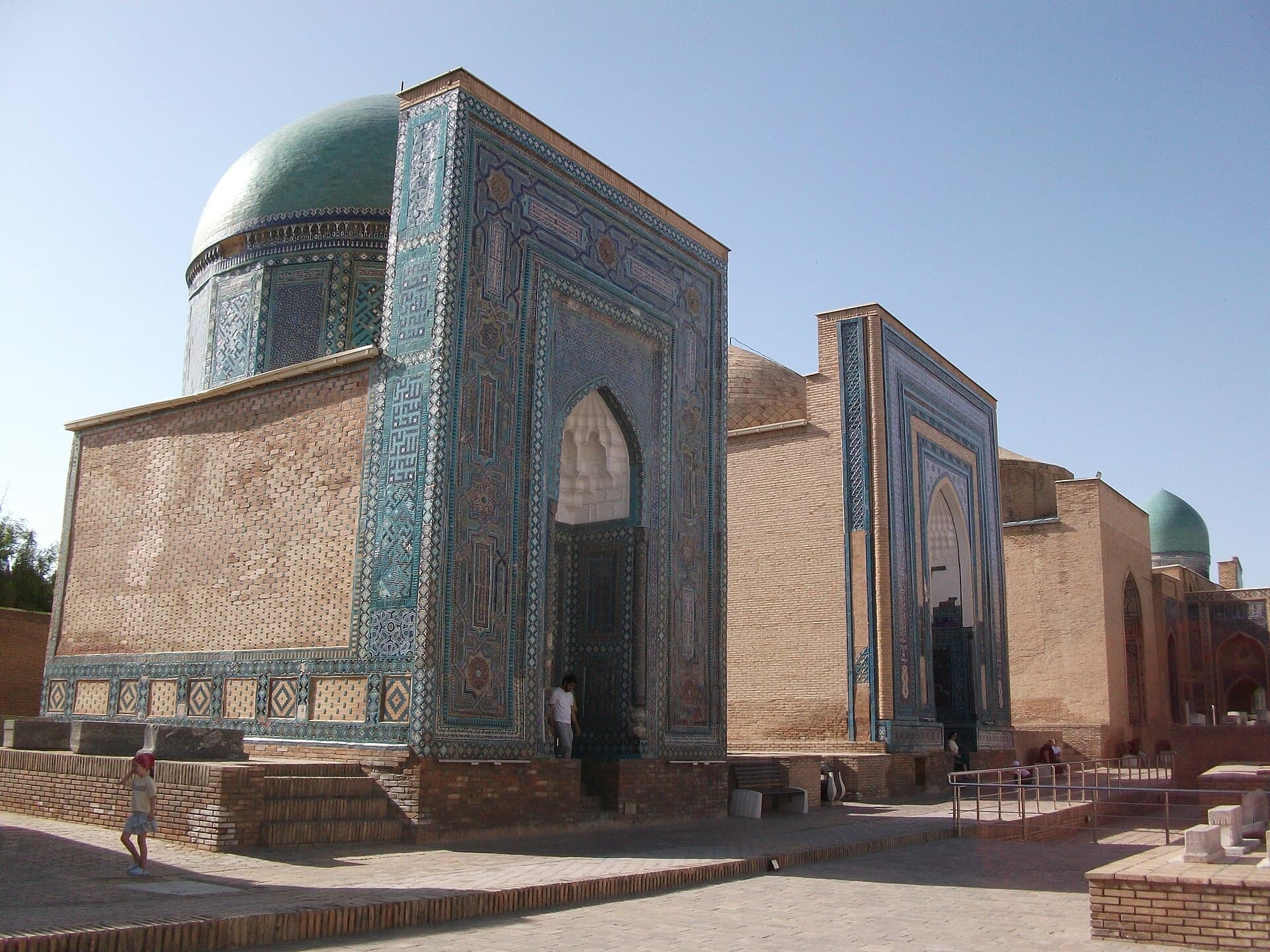 Shah-i-Zinda necropolisA complex of mausoleums and religious buildings in northeast Samarkand whose Per12 minutes walk4.7
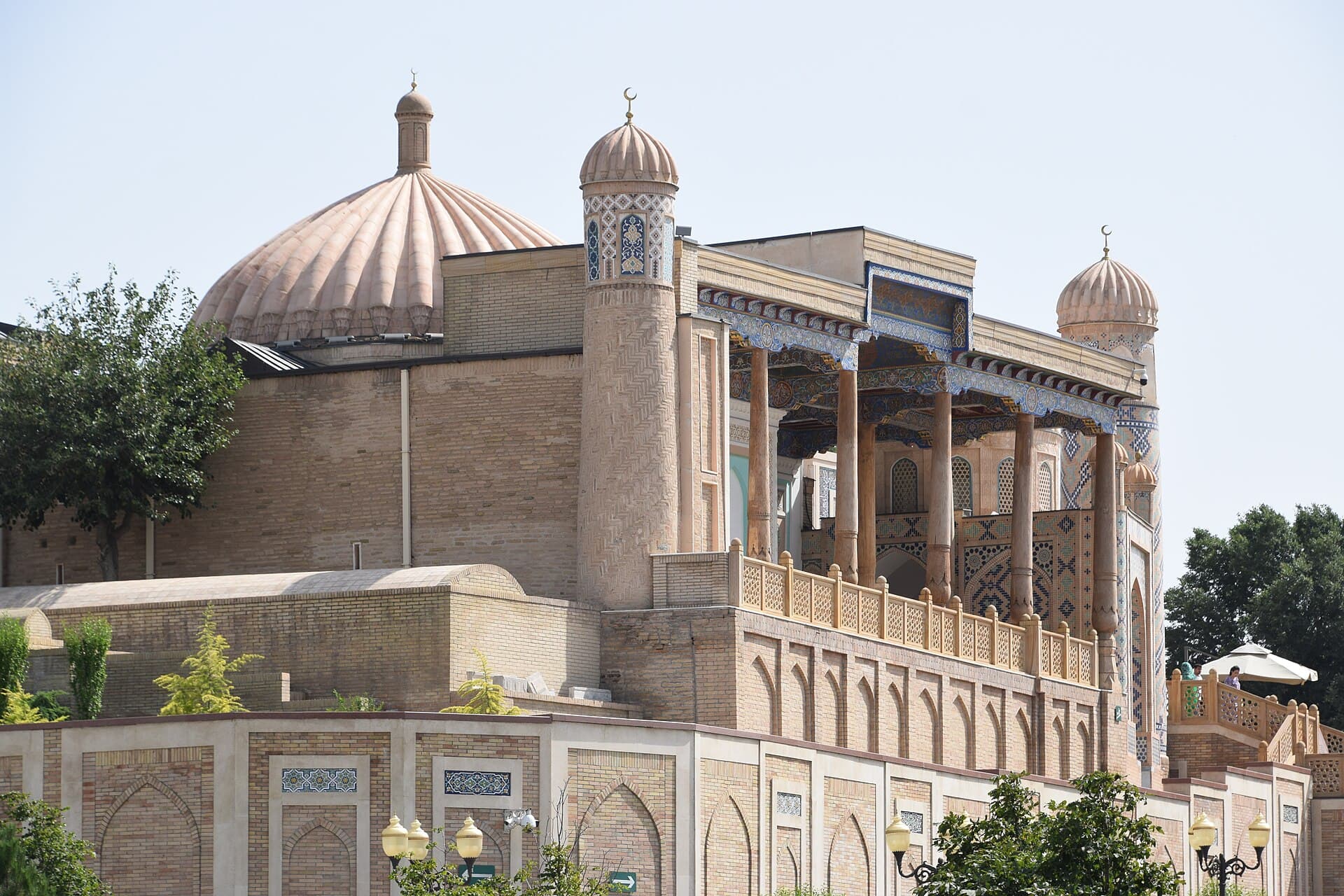 Hazrat Khizr MosqueA hilltop mosque facing the Shah-i-Zinda complex, named after the Prophet Khidr 14 minutes walk4.6
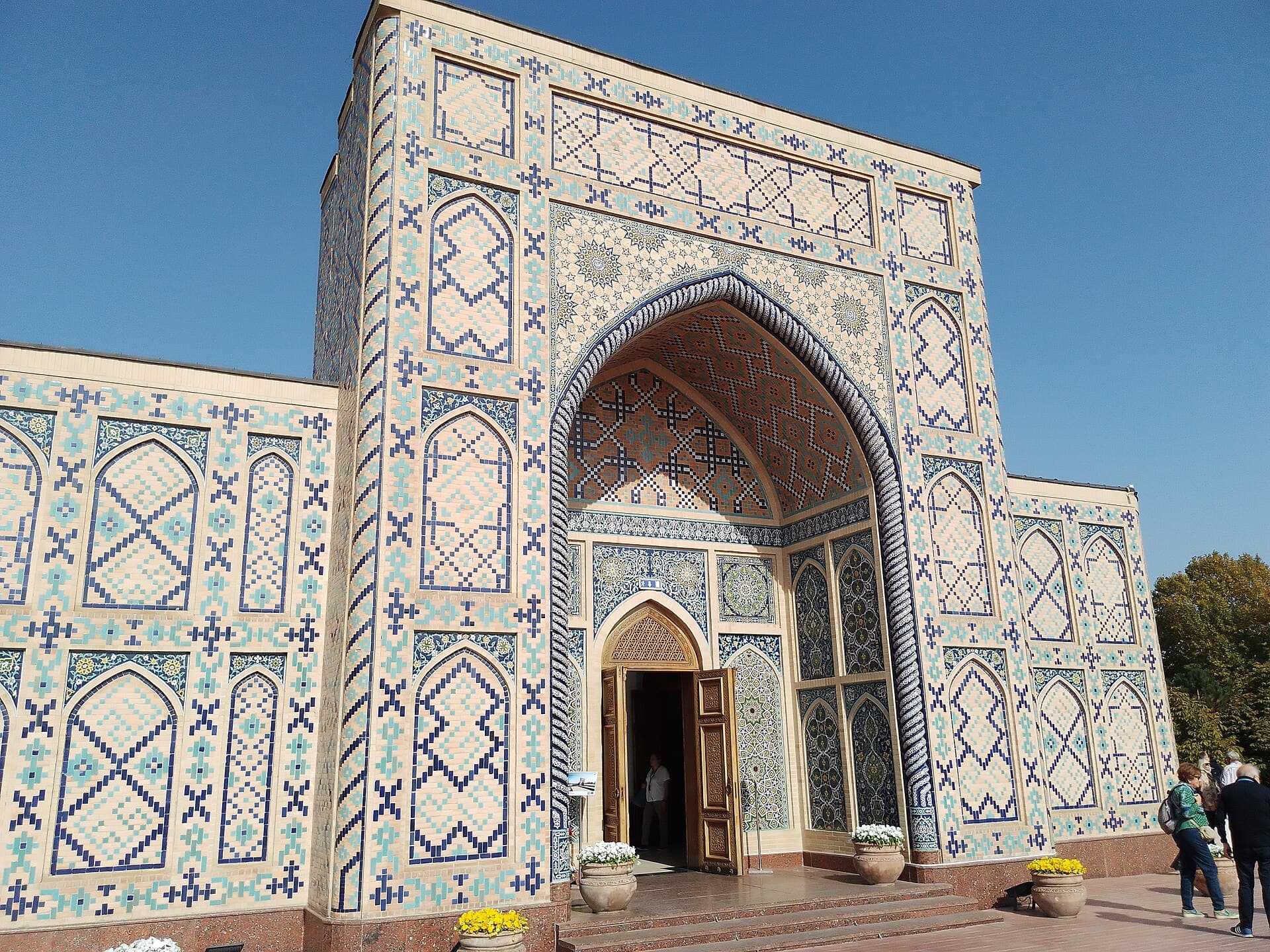 Ulugh Beg ObservatoryAn astronomical observatory built in the 1420s by Ulugh Beg, Timur's grandson an15 minutes walk4.4
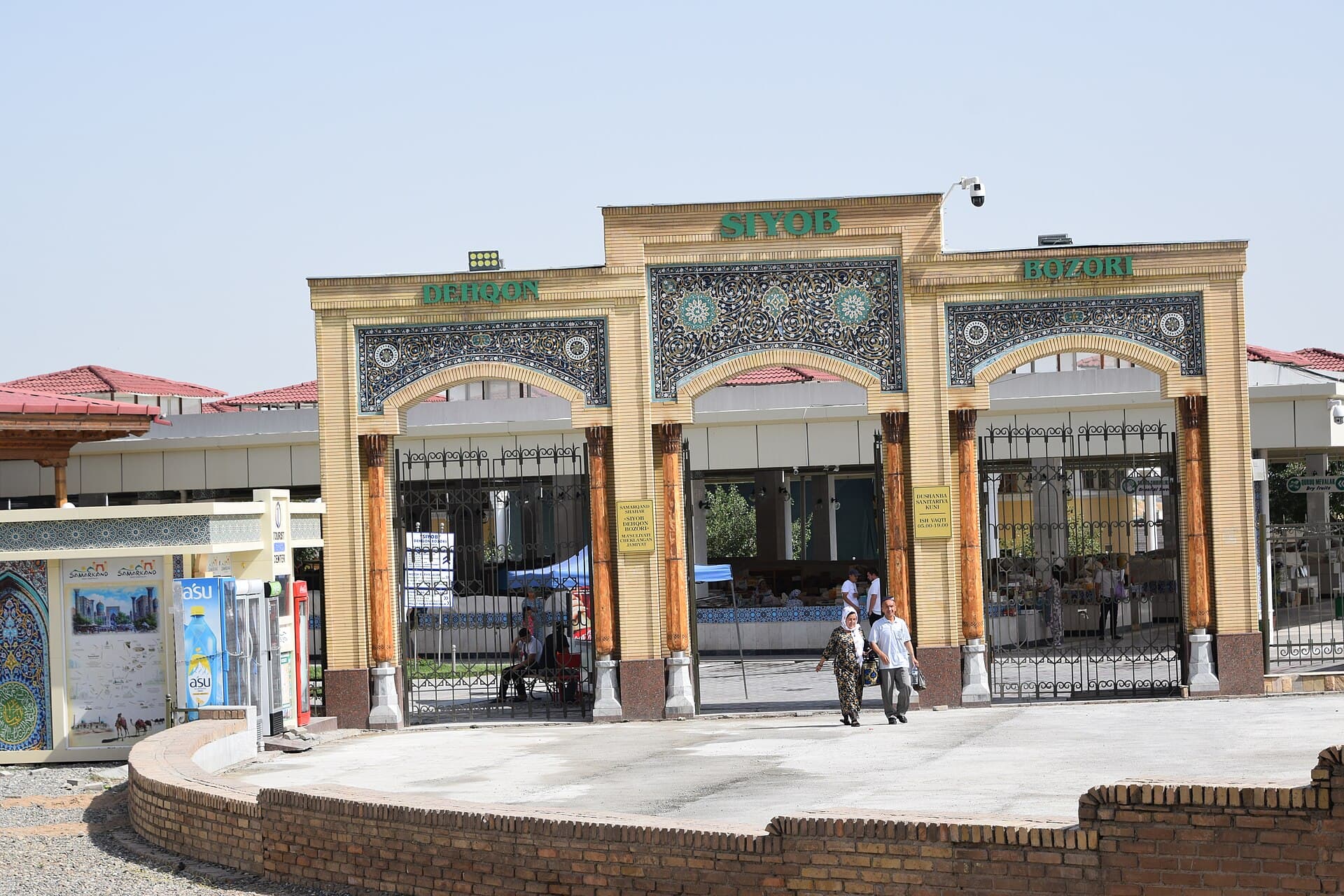 Siyob Bazaar, SamarkandSamarkand's largest bazaar, spreading over more than seven hectares in the old c18 minutes walk4.6
Sogdian wall paintings from the mid-7th century, found in 1965, showing embassies arriving at the court of Samarkand; they are the museum's greatest treasure.