
The lane
Between blue façades.
SAKRI — CC BY-SA 4.0 · Ogisa korea — CC0 · AIDEPCUL — CC BY 4.0 · Hasan Tohirov — CC BY-SA 4.0 · Arina Pan — CC BY-SA 4.0 · Arina Pan — CC BY-SA 4.0 · Hasan Tohirov — CC BY-SA 4.0 · BeshevI — CC BY-SA 4.0
A complex of mausoleums and religious buildings in northeast Samarkand whose Persian name means «the Living King». The name is tied to the tradition that Qutham ibn Abbas, a cousin of the Prophet Muhammad, who came to Samarkand in the 7th century to spread Islam, is buried here. The ensemble grew over eight centuries, from the 11th to the 19th, and has more than twenty buildings, most from the 14th and 15th centuries, in three groups, lower, middle and upper, linked by domed four-arched passages. Visitors climb a stairway and then walk a narrow lane lined with mausoleums whose façades are clad in glazed tiles in shades of blue and turquoise, with Arabic calligraphy and geometric and floral patterns, some of the finest architectural ceramics in the Islamic world. Tickets are about 80,000 som, per visitor guides. It is a place of pilgrimage where locals come to pray, so dress modestly and keep quiet; early morning is best for photos before the crowds.
Between blue façades.
Script and pattern.
Over the tombs.
Northeast Samarkand, by the Afrasiyab hills
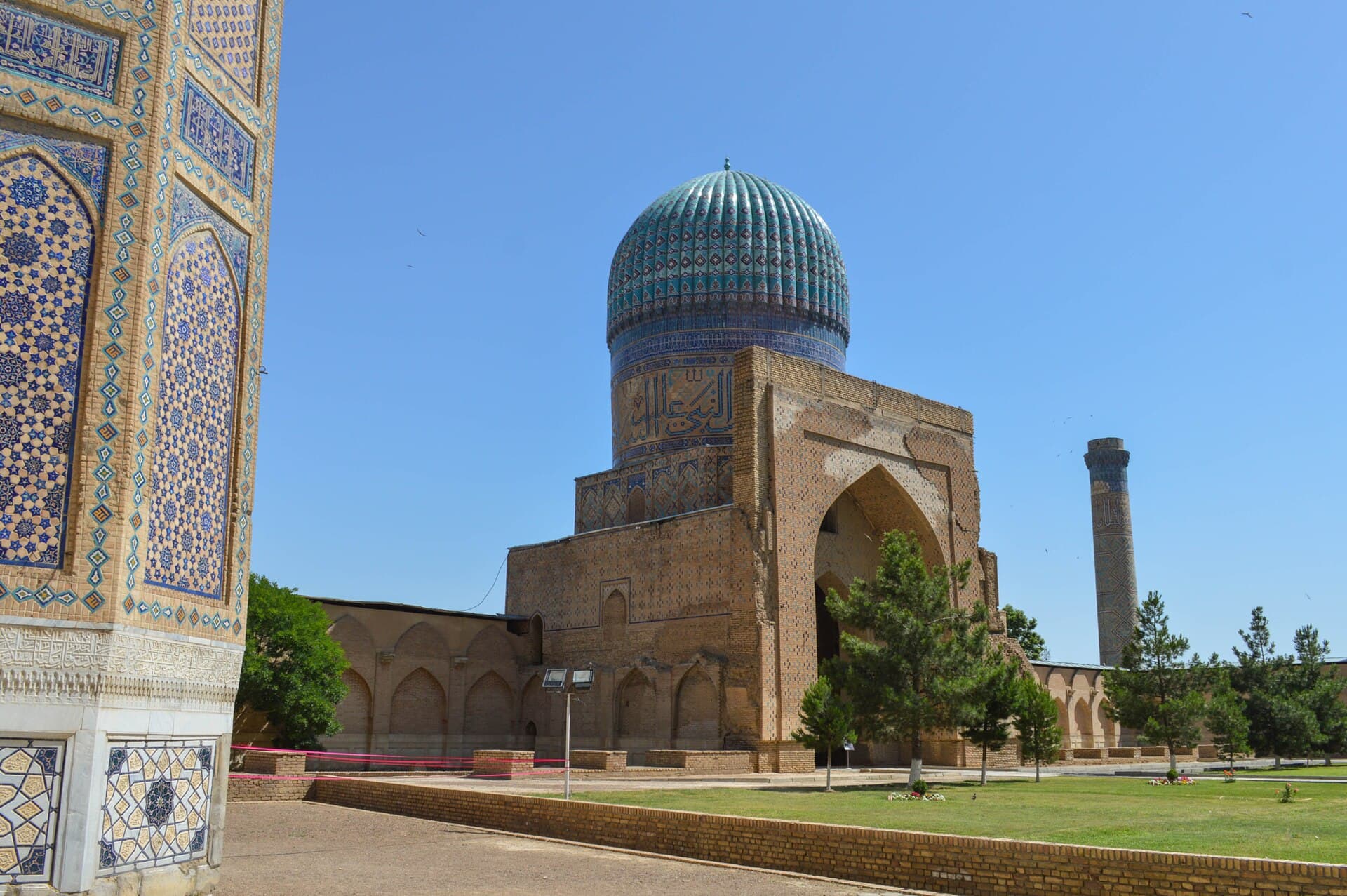 Bibi-Khanym MosqueOne of Samarkand's most important monuments and, in the 15th century, one of the8 minutes walk4.7
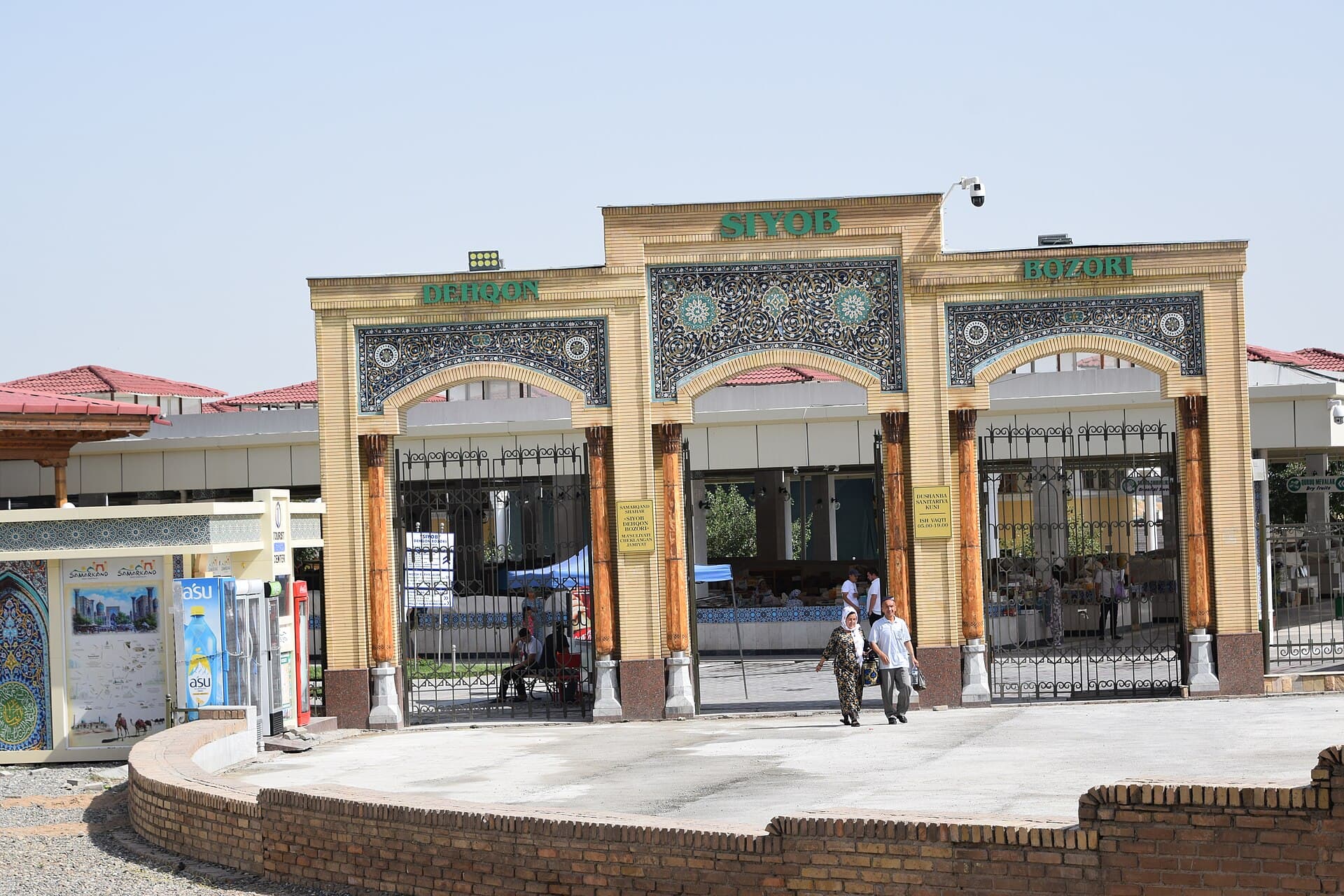 Siyob Bazaar, SamarkandSamarkand's largest bazaar, spreading over more than seven hectares in the old c9 minutes walk4.6
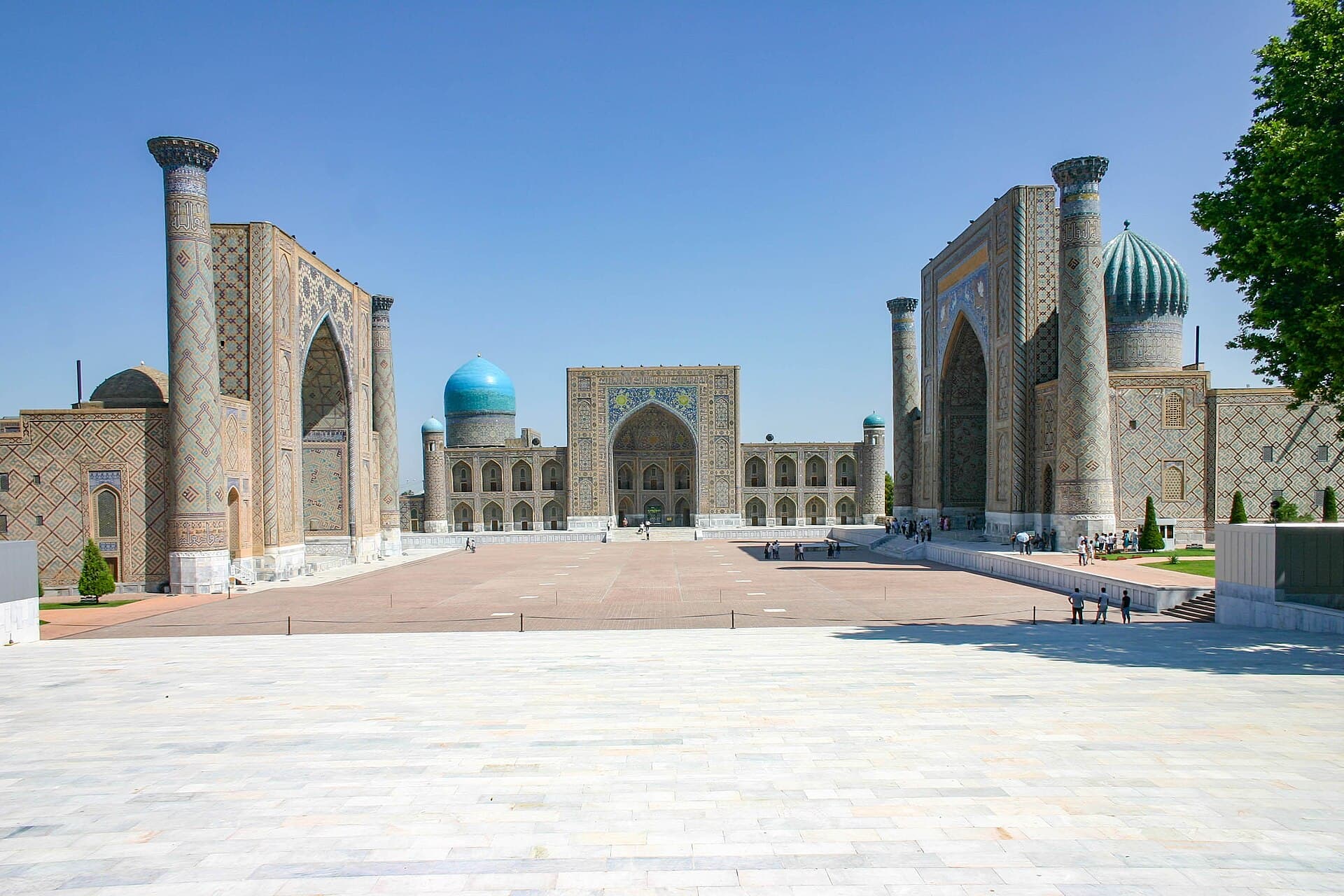 Registan SquareThe historic square at the heart of Samarkand, centre of the Timurid Empire and 17 minutes walk4.7
Tradition holds that Qutham ibn Abbas, a cousin of the Prophet Muhammad, is buried here, along with members of the Timurid family and Samarkand's notables.