
Non bread
Samarkand's own.
Jean Housen — CC BY-SA 4.0 · Ji-Elle — CC BY-SA 4.0 · Adam Harangozó — CC BY-SA 4.0 · Jean Housen — CC BY-SA 4.0 · Yoshi Canopus — CC BY-SA 3.0 · Mirzoulug'bek — CC BY-SA 4.0 · Jean Housen — CC BY-SA 4.0 · Jean Housen — CC BY-SA 4.0
Samarkand's largest bazaar, spreading over more than seven hectares in the old city next to the Bibi-Khanym Mosque. Its main entrance is a triple arch clad in blue tiles, and «Siyob», Persian for «black water», is the name of a small river that runs nearby. It has seven large covered halls plus pavilions of shops, and here visitors see the city's daily life: heaps of dried fruit and nuts, spices, Uzbek sweets, farm cheeses and honey. Its best-known product is Samarkand's round, stamped non bread, stacked on the stallholders' tables and so famous for its taste and keeping that travellers carry it home. In season the halls fill with pomegranates, grapes and melons. Entry is free; it is busiest in the morning with locals and usually winds down by late afternoon. Prices are negotiable, and paying cash in som is the norm.
Samarkand's own.
And nuts.
Three arches.
Corner of Tashkent and Shah-i-Zinda streets, old Samarkand
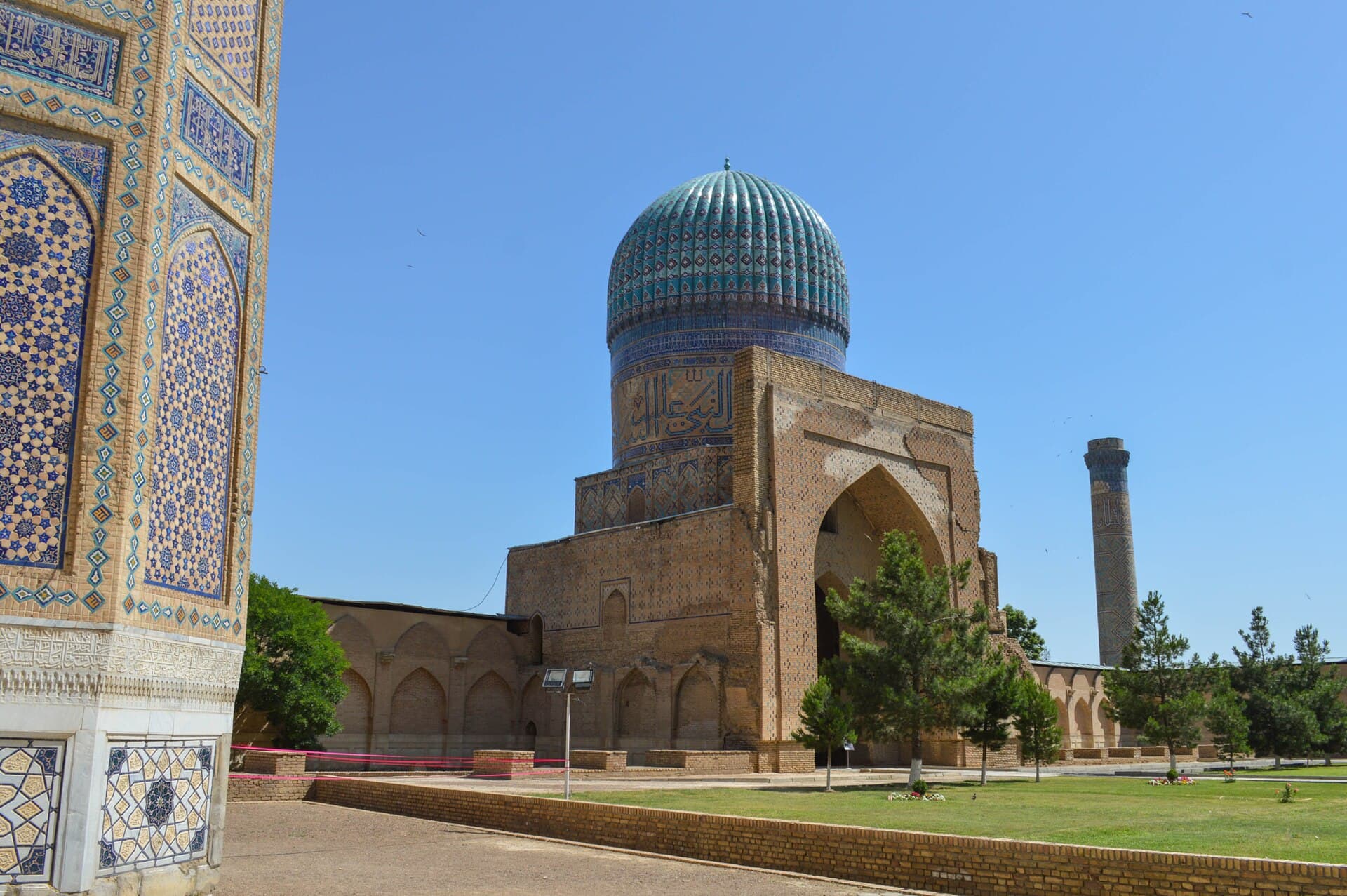 Bibi-Khanym MosqueOne of Samarkand's most important monuments and, in the 15th century, one of the2 minutes walk4.7
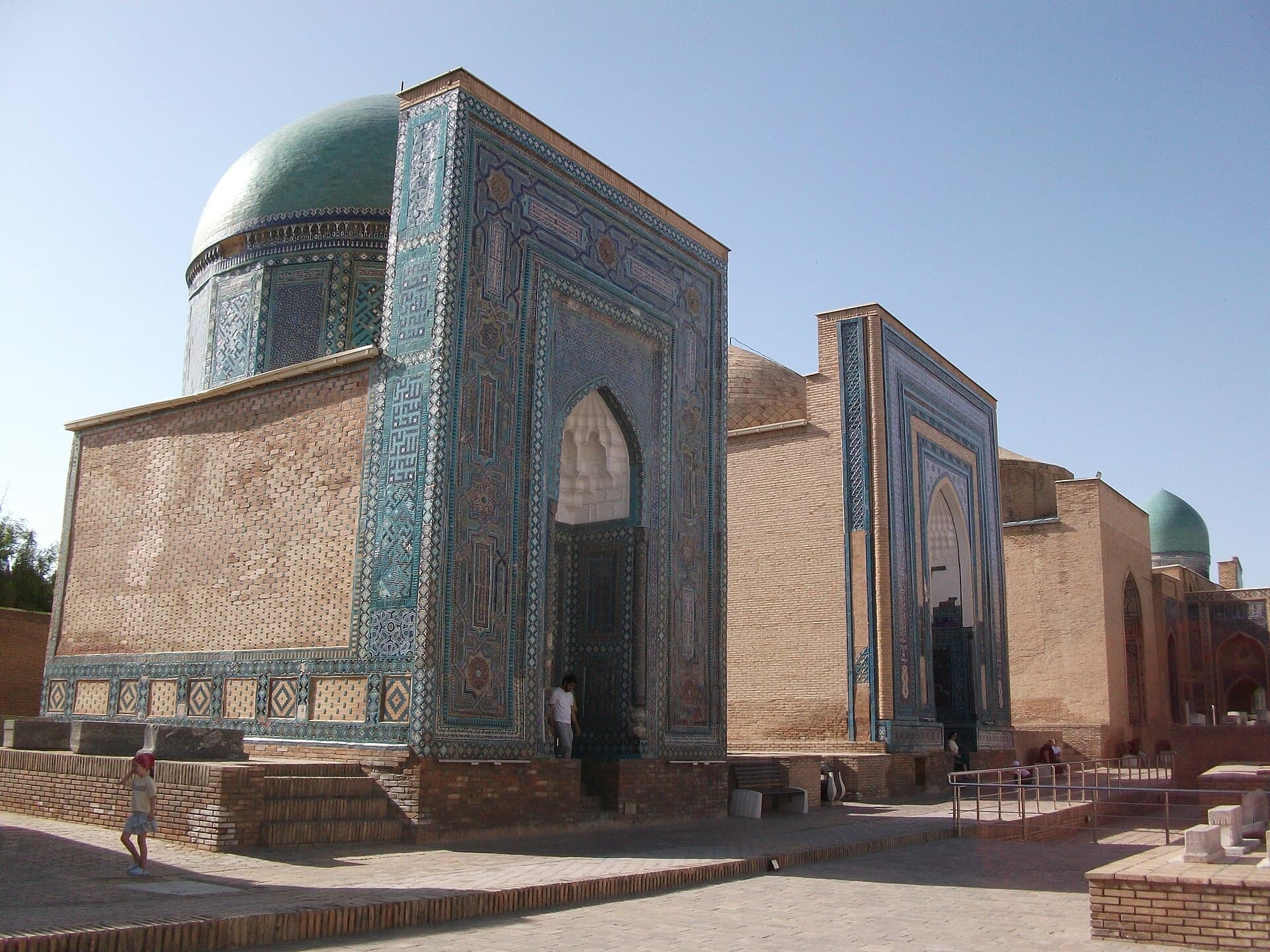 Shah-i-Zinda necropolisA complex of mausoleums and religious buildings in northeast Samarkand whose Per9 minutes walk4.7
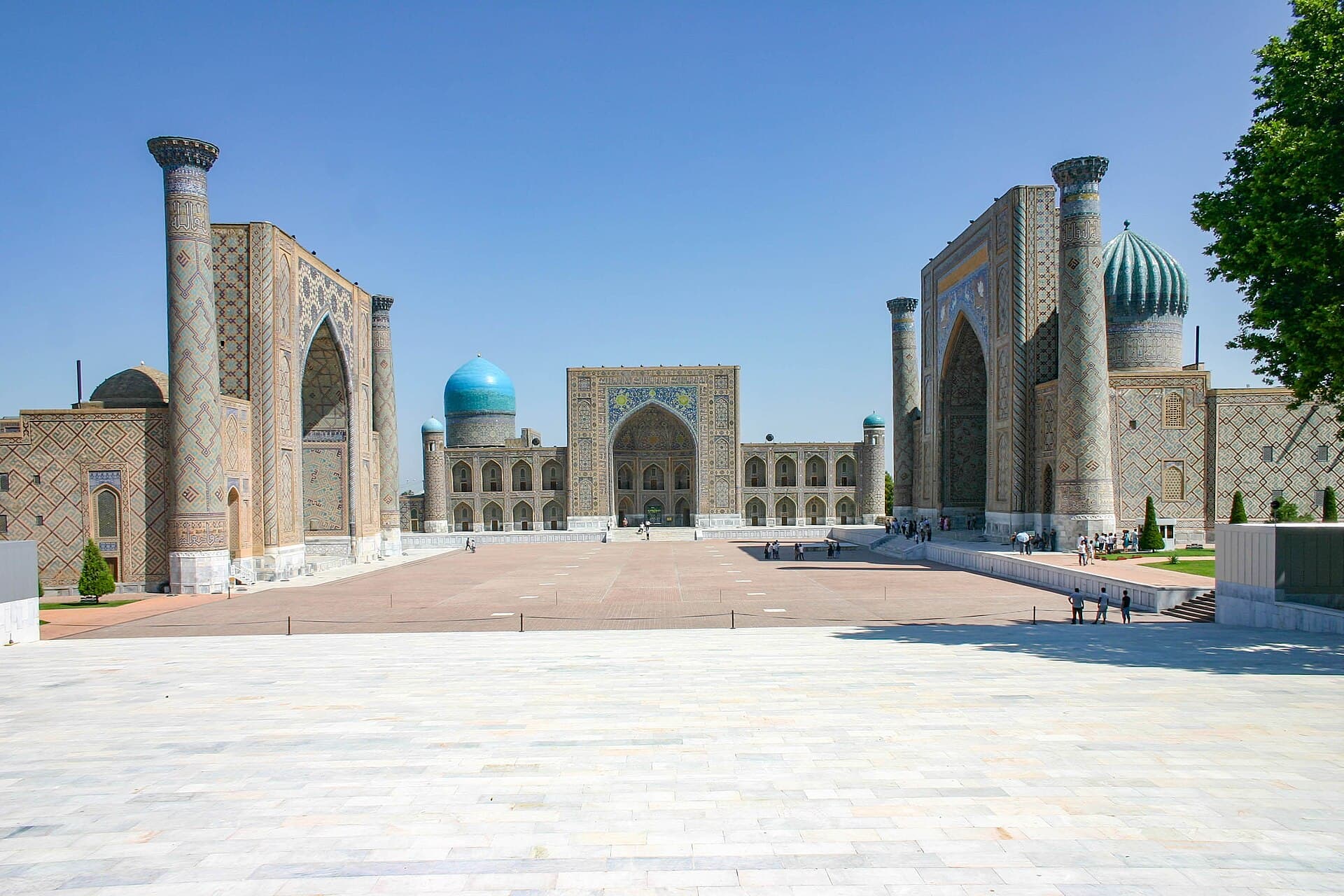 Registan SquareThe historic square at the heart of Samarkand, centre of the Timurid Empire and 11 minutes walk4.7
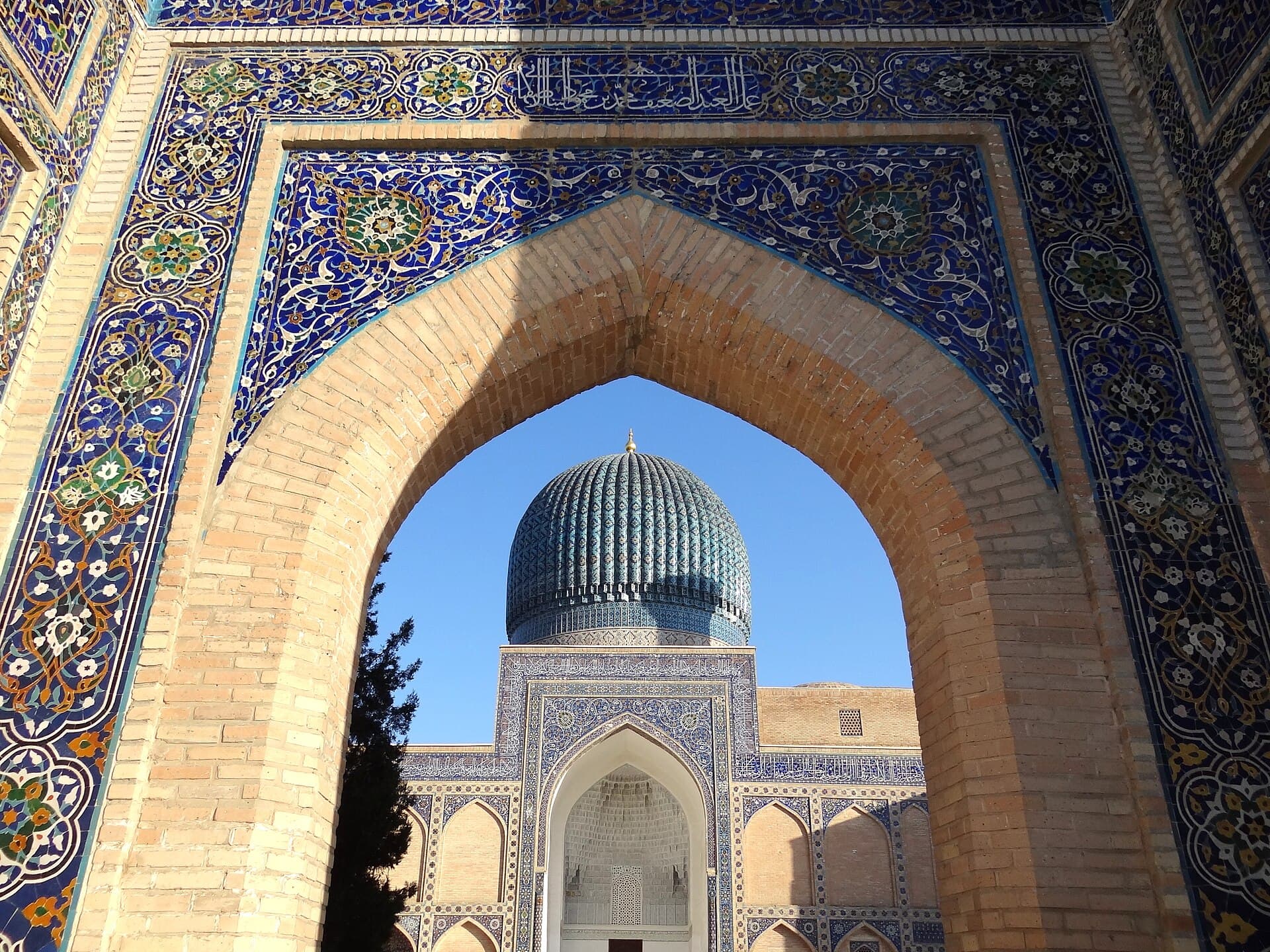 Gur-e Amir, Timur's MausoleumThe mausoleum of the Turco-Mongol conqueror Timur (Tamerlane) in Samarkand, whos22 minutes walk4.8
Samarkand non bread, dried fruit and nuts, spices and Uzbek sweets; prices are negotiable.