
Marble courtyard
A vast white court.
Salma osayou — CC BY-SA 4.0 · لا روسا — CC BY-SA 3.0 · Rehamwahid — CC BY-SA 3.0 · لا روسا — CC BY-SA 3.0 · لا روسا — CC BY-SA 3.0 · Samir I. Sharbaty — CC BY-SA 3.0 · Sailko — CC BY 3.0 · Abdullah Harby — CC BY-SA 4.0
The second largest Fatimid mosque in Cairo, begun by Caliph al-Aziz in 990 AD and completed by his son, Caliph al-Hakim bi-Amr Allah, in 1013. It stands at the northern end of al-Muizz Street, against the Fatimid wall between Bab al-Futuh and Bab al-Nasr. Its finest feature is the vast open courtyard paved in white marble and ringed by pointed-arch arcades, with a domed ablution fountain at its centre. It has two old minarets at its corners, whose bases were later wrapped in huge square stone blocks, so they look like towers. Over the centuries the mosque was put to many uses and long neglected, until a full restoration in 1980 clad its floor and walls in white marble and made it a working mosque again. Entry is free outside prayer times, in modest dress with a head covering for women. It sits at the start of an al-Muizz Street walk, a few steps from Bab al-Futuh.
A vast white court.
On tower-like bases.
Between the two gates.
Al-Muizz Street at Bab al-Futuh, Gamaliya
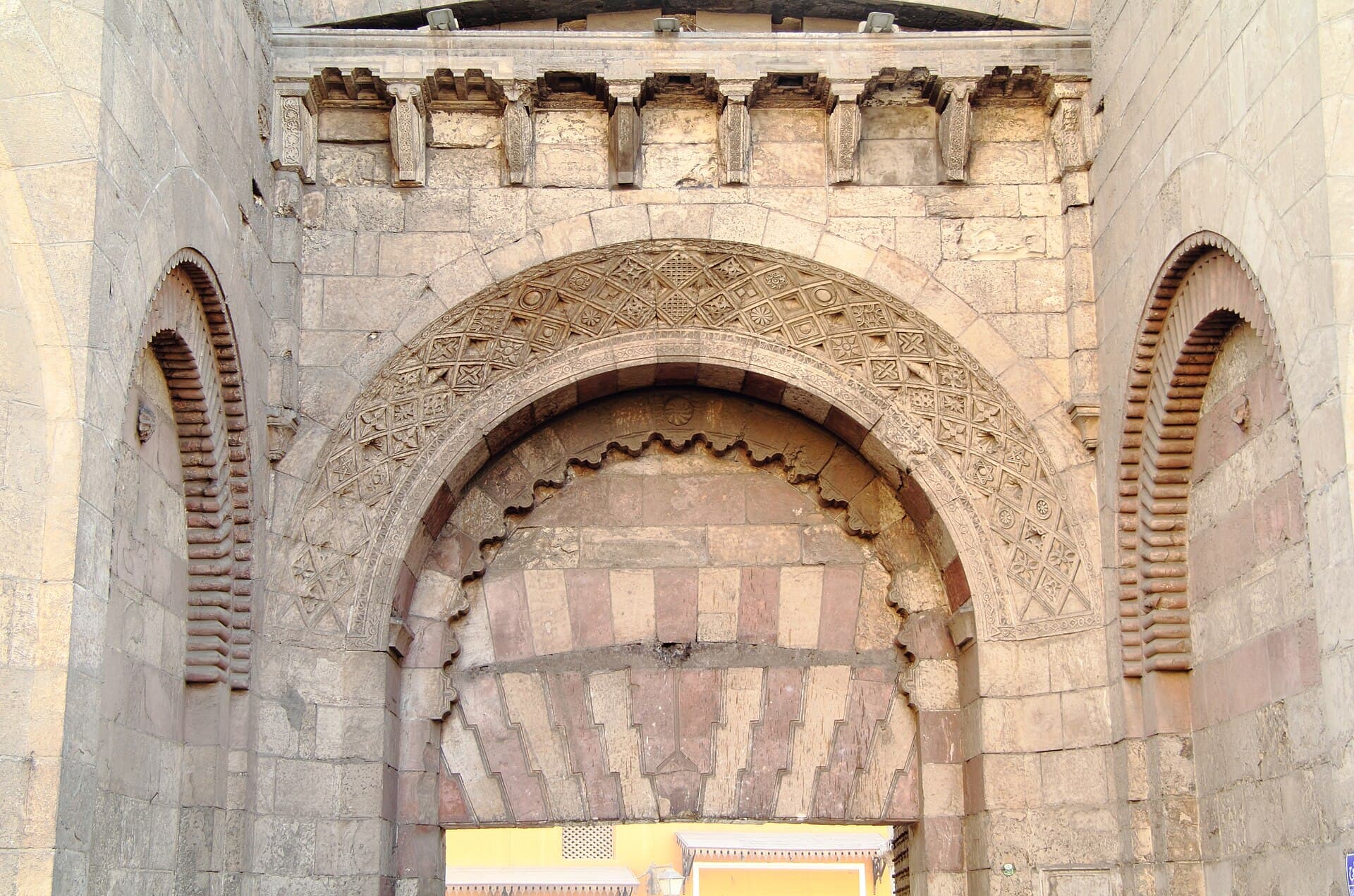 Bab al-Futuh and Bab al-NasrTwo massive stone gates in the northern wall of Fatimid Cairo, built by the vizi1 minute walk
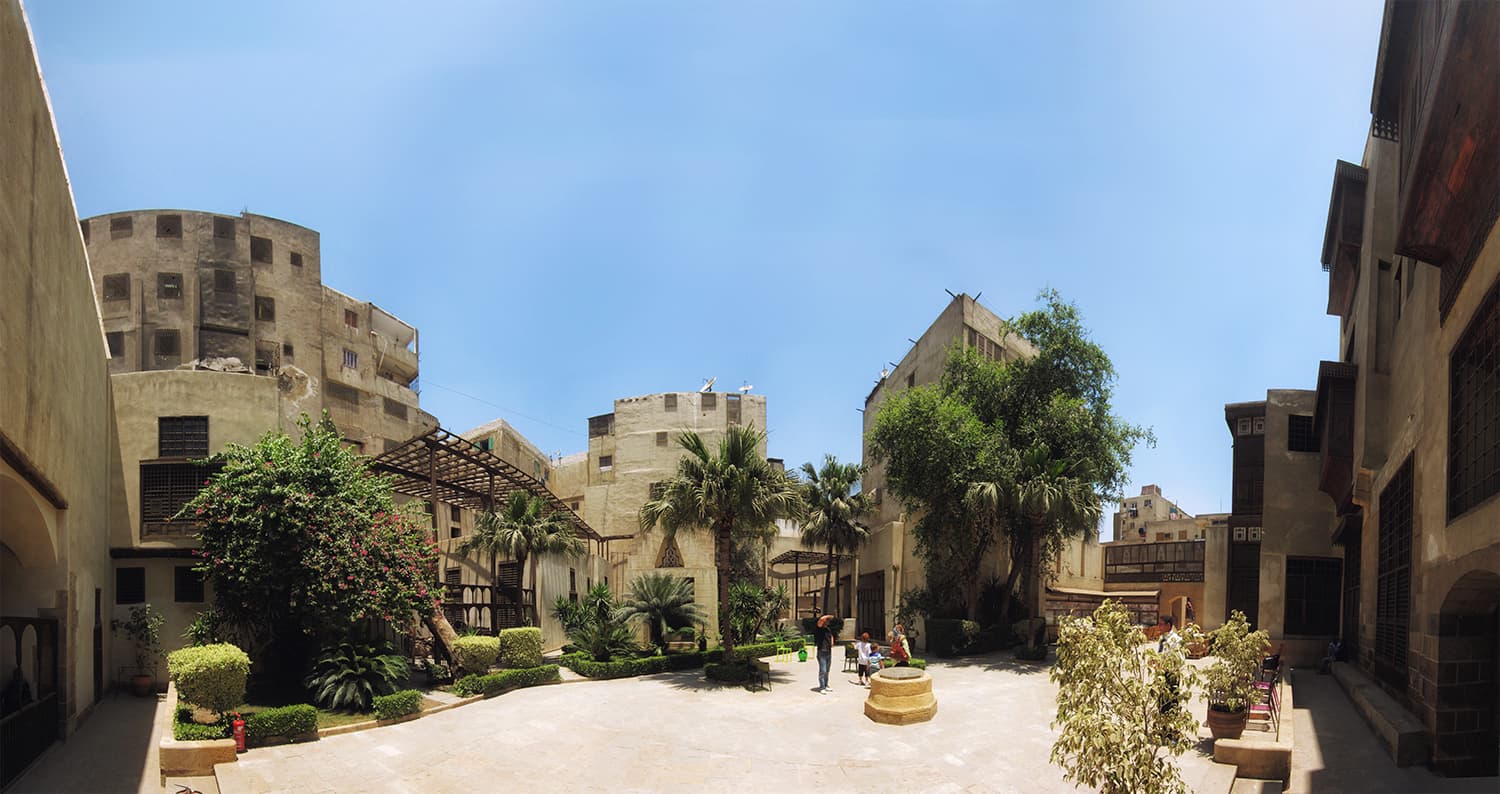 Bayt al-SuhaymiA complete Ottoman house in an alley off Al-Muizz Street, and the best place in 4 minutes walk4.7
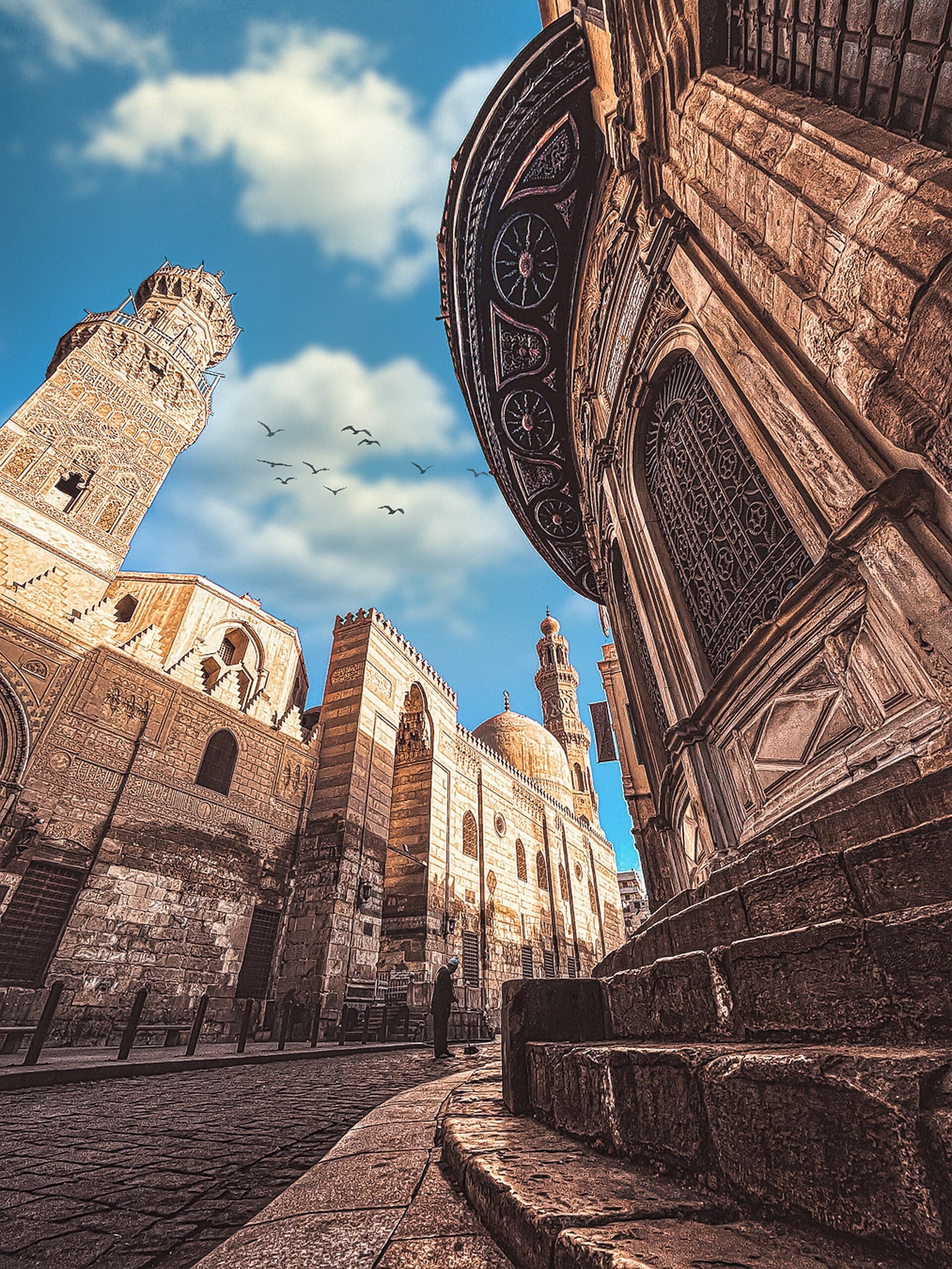 Al-Muizz StreetA single street said to hold the greatest concentration of Islamic architecture 6 minutes walk4.5
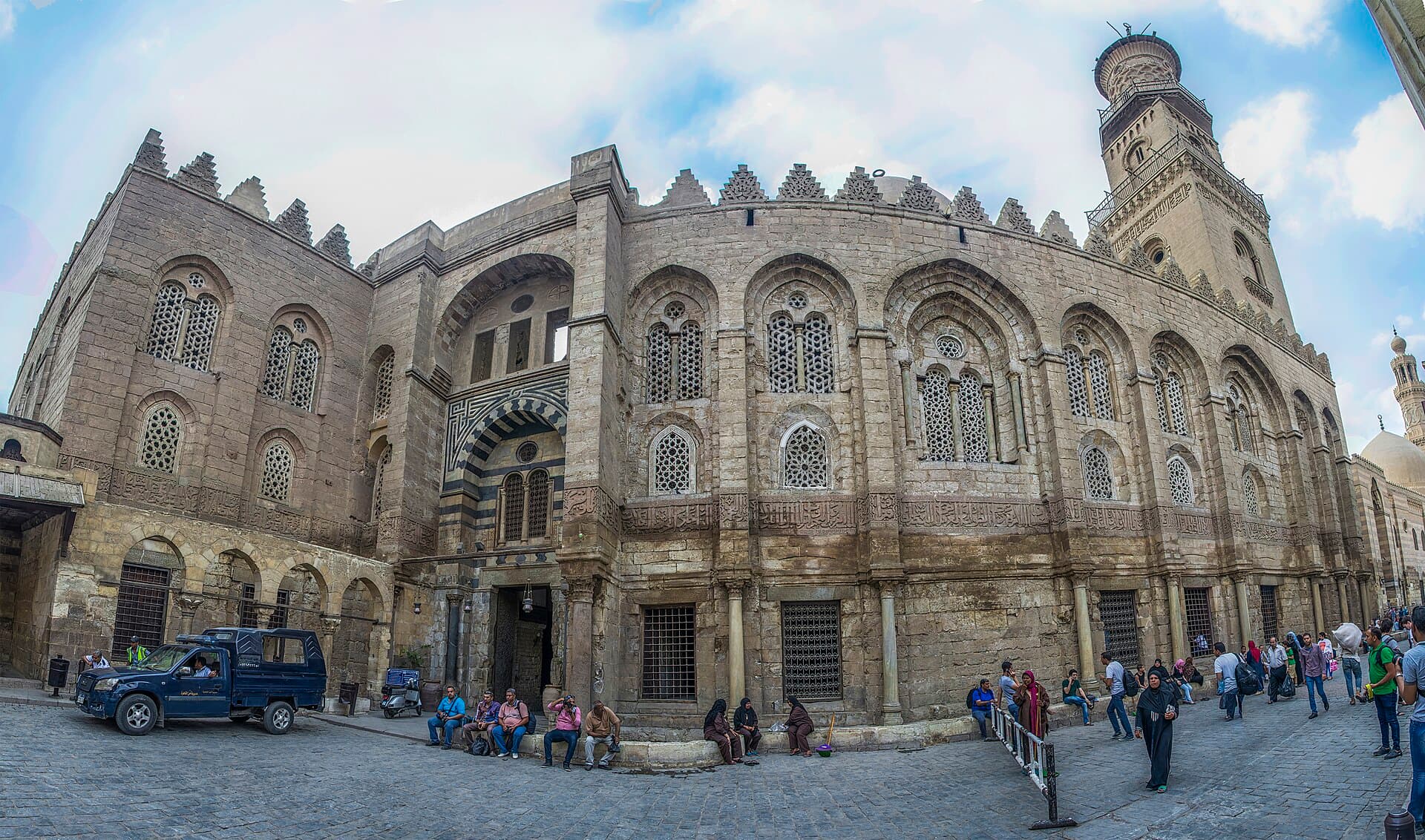 Qalawun ComplexA huge Mamluk complex in the heart of al-Muizz Street, built by Sultan al-Mansur8 minutes walk
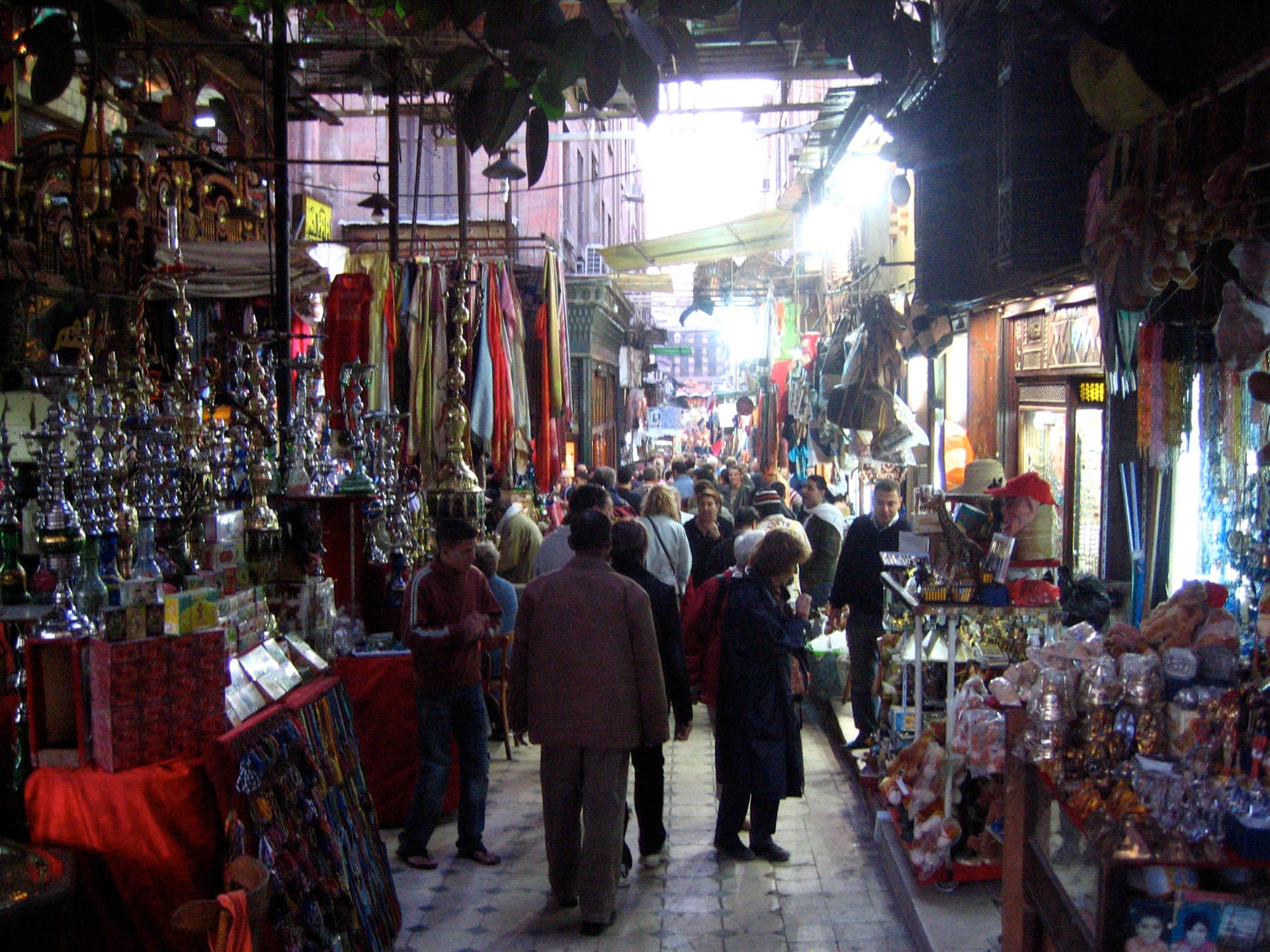 Khan el-KhaliliCairo's great bazaar since the fourteenth century, and still a working market ra10 minutes walk4.3
Morning or before sunset, when the marble is cooler and the arcades glow in low sunlight, avoiding prayer times.