
The mashrabiya screens
Turned wood you see through without being seen, cooling both air and water.
Ahmedalbadawy — CC BY-SA 4.0 · Aymanrefaat09 — CC BY-SA 3.0 · Sherif Louis Kamel — CC BY-SA 4.0 · Sherif Louis Kamel — CC BY-SA 4.0
A complete Ottoman house in an alley off Al-Muizz Street, and the best place in Cairo to see how a Cairene house was lived in rather than how a mosque was built. It went up in two stages — the southern part in 1648, the northern in 1796 — and the two were then joined into one house, which is why the levels and stairs inside do not line up. The whole architectural logic turns on the inner courtyard: the house is closed almost blindly against the street and opens entirely onto a central court with a fountain and planting. The privacy and the coolness both come from that one arrangement. Its most famous feature is the mashrabiya — turned wooden screens of fine interlocking spindles that let those inside see without being seen, break the sun, pass air, and cool the water jars set behind them. It is a climatic and a social device at once, and the examples here are among the finest surviving. The division explains itself as you walk: the salamlik for male guests below, the haramlik for the family above with its screens looking down into the reception hall, and an internal bathhouse with a pierced dome of coloured glass letting the light fall through. Concerts and storytelling evenings are sometimes held here. An hour covers it, and it is the building to go into if there is time for only one on Al-Muizz Street.
Turned wood you see through without being seen, cooling both air and water.
Closed to the street and open onto a fountain court — the source of both privacy and cool.
A dome pierced with coloured glass dropping light onto the stone.
Darb al-Asfar, off Al-Muizz Street
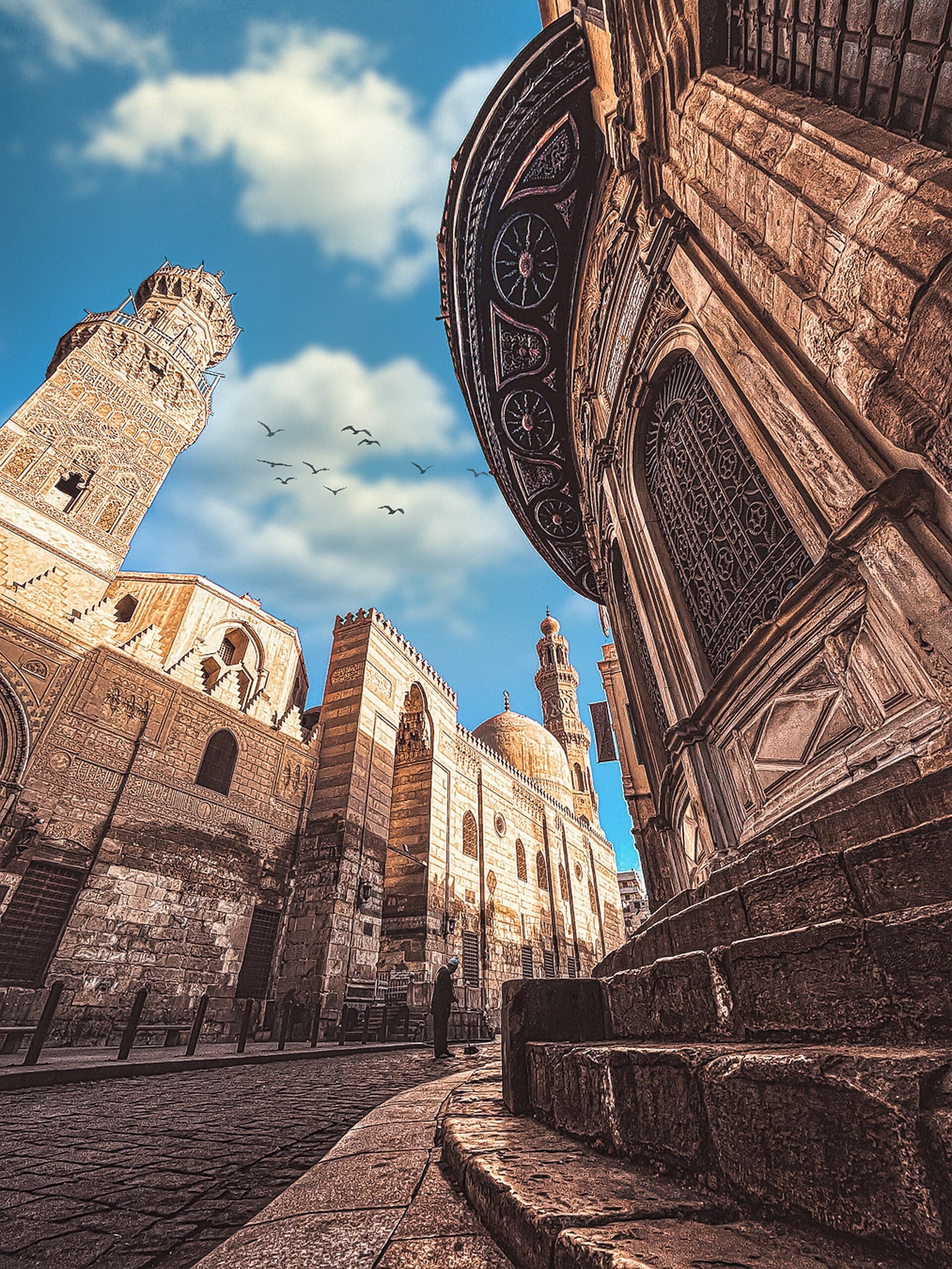 Al-Muizz StreetA single street said to hold the greatest concentration of Islamic architecture 2 minutes walk4.5
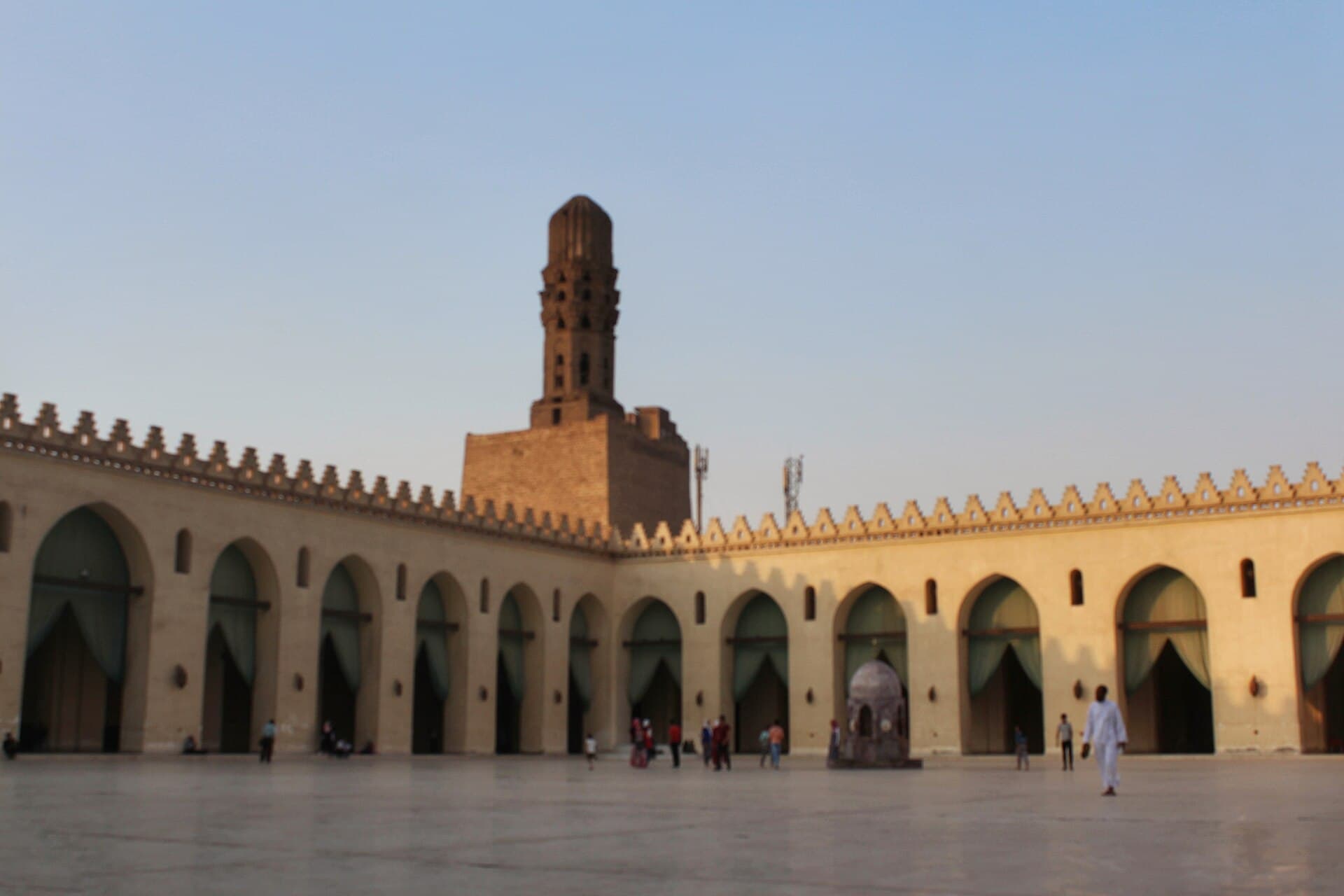 Mosque of al-HakimThe second largest Fatimid mosque in Cairo, begun by Caliph al-Aziz in 990 AD an4 minutes walk4.6
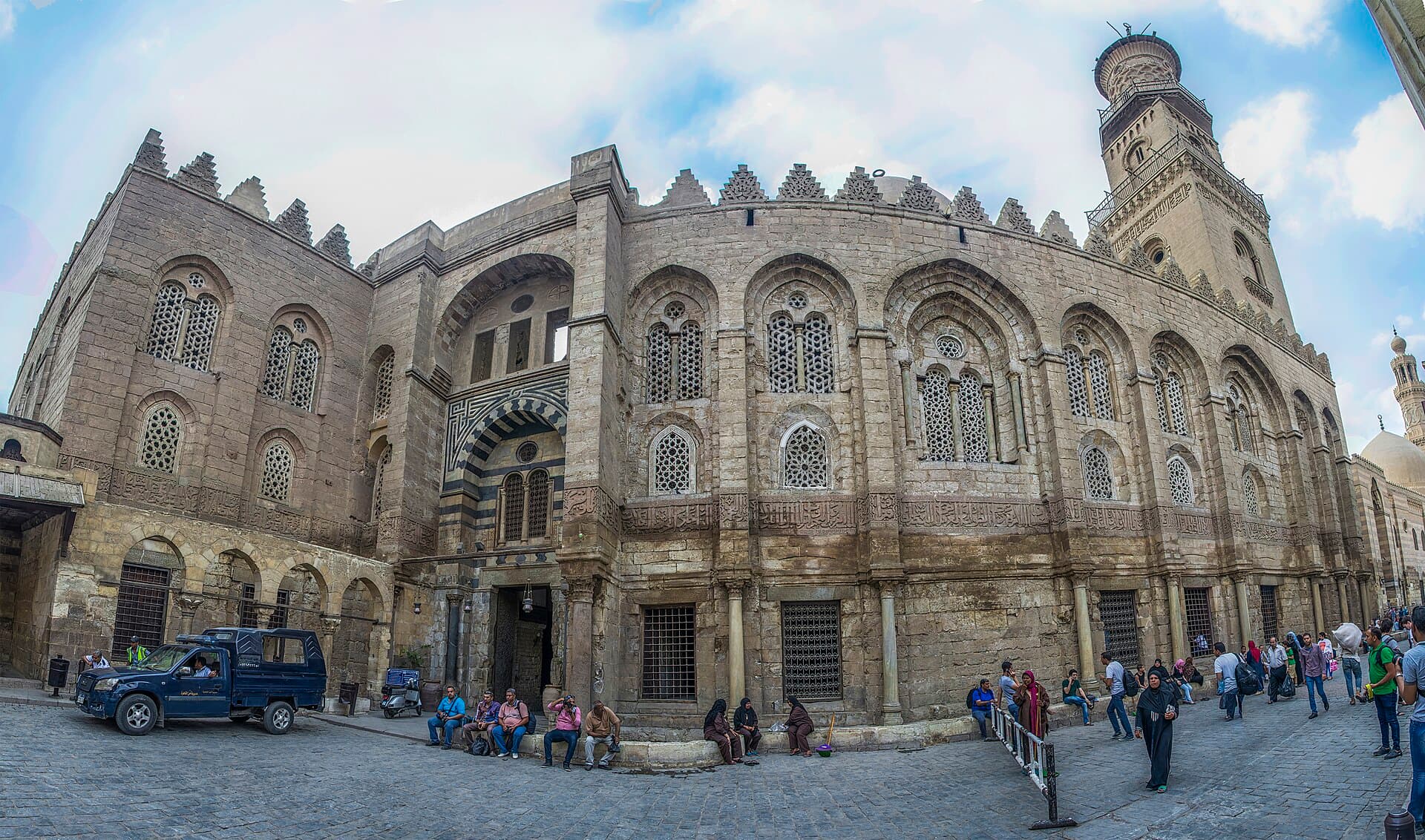 Qalawun ComplexA huge Mamluk complex in the heart of al-Muizz Street, built by Sultan al-Mansur4 minutes walk4.6
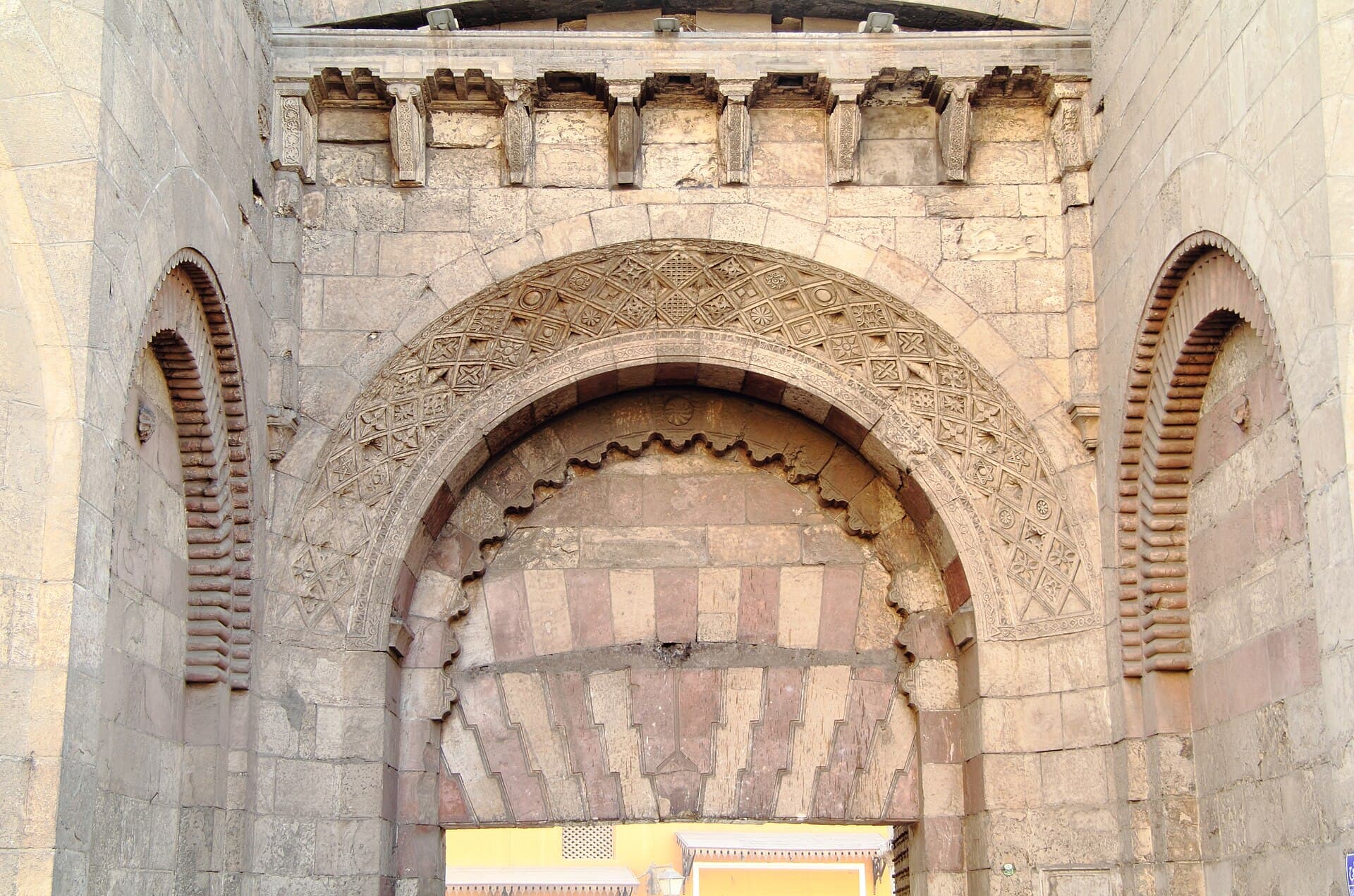 Bab al-Futuh and Bab al-NasrTwo massive stone gates in the northern wall of Fatimid Cairo, built by the vizi5 minutes walk4.5
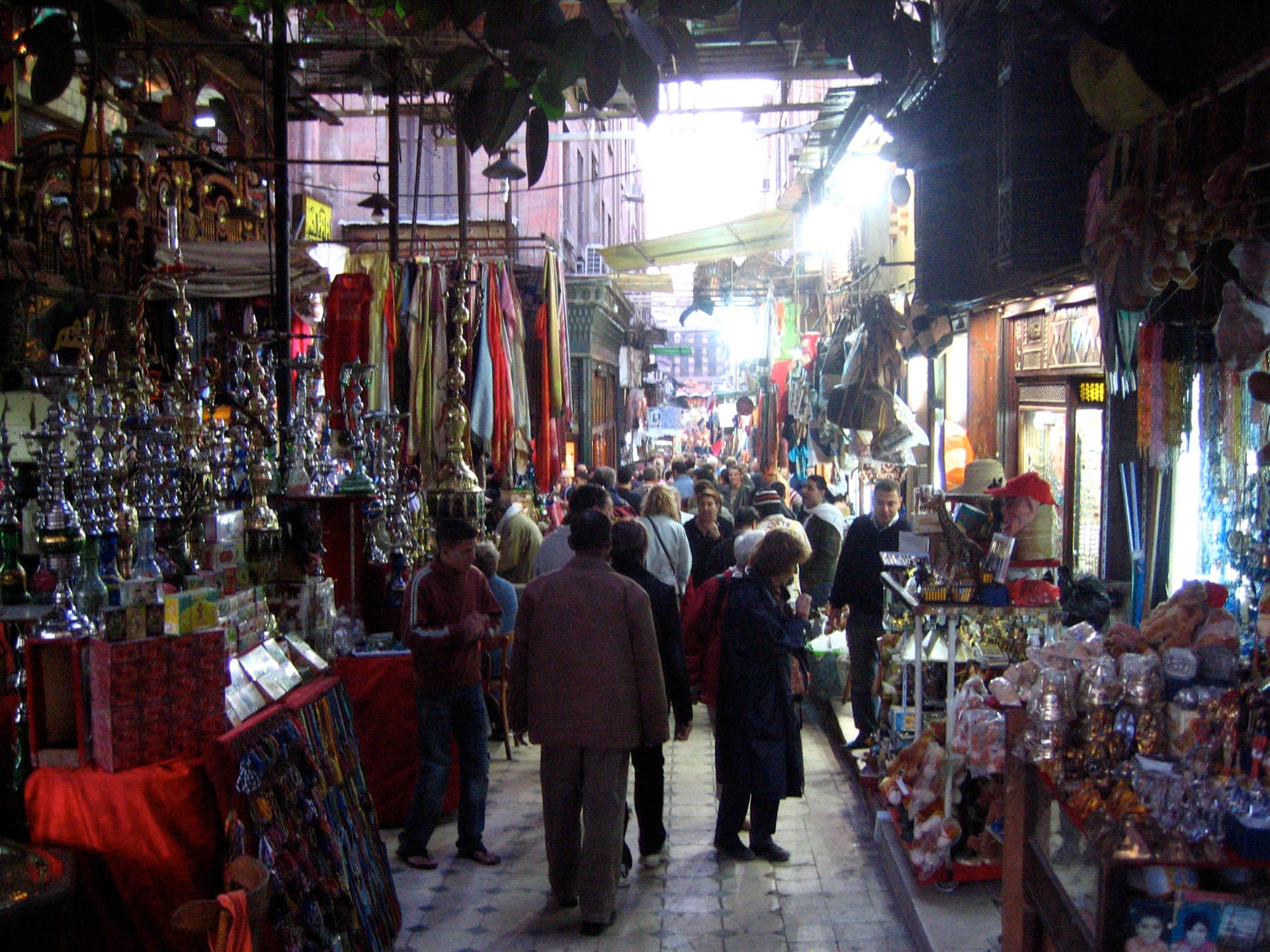 Khan el-KhaliliCairo's great bazaar since the fourteenth century, and still a working market ra6 minutes walk4.3
Both are old Cairene houses open to visitors. Gayer-Anderson, beside the Ibn Tulun Mosque, is two joined houses furnished by a British officer with his own collections, so it reads more as a collector's house. Bayt al-Suhaymi is larger, architecturally purer and less furnished, and the plan itself reads more clearly. For the architecture, choose al-Suhaymi.
From Al-Muizz Street near Bayt al-Qadi, turn east into the Darb al-Asfar alley and the house is a few metres along on your left. The alley is narrow and its sign small, and many people walk past it — asking for «Bayt al-Suhaymi» gets you there at once.