
The Qalawun complex
Madrasa, hospital and tomb dome in one building, among the greatest Mamluk works.
Yasser.mahmoud — CC BY-SA 4.0 · Mohamedwardany — CC BY-SA 4.0 · Mohammad Gamal Salama — CC BY-SA 4.0 · Mohammad Gamal Salama — CC BY-SA 4.0
A single street said to hold the greatest concentration of Islamic architecture anywhere in one place — running about a kilometre from Bab al-Futuh in the north to Bab Zuweila in the south. It was the main street of Fatimid Cairo when the city was founded in 969, and remained its artery for centuries, so every ruler built along it something to carry his name. The result is an unbroken row of mosques, madrasas, fountains and merchant houses — Fatimid, Ayyubid, Mamluk and Ottoman, side by side. The street was restored end to end in the 2000s and closed to cars along its historic stretch, so it is now walked. The night lighting of the façades is the best thing about it, and walking after sunset is an entirely different experience from the day. The major buildings along it: the Qalawun complex with its madrasa, hospital and domed tomb; the Fatimid al-Aqmar Mosque; Bayt al-Suhaymi, a complete Ottoman house with its furnishings and mashrabiya screens; and the Sabil of Abd al-Rahman Katkhuda. Walking it costs nothing, and each individual building has its own ticket if you want to go in. Most visitors walk and enter only one or two, which is enough. The southern end finishes at Bab Zuweila, whose two minarets can be climbed on a ticket for a view back down the whole street.
Madrasa, hospital and tomb dome in one building, among the greatest Mamluk works.
A complete Ottoman house with its mashrabiya screens and inner court — the best place to see how people lived.
The southern end, with two climbable minarets overlooking the whole street.
From Bab al-Futuh to Bab Zuweila, Historic Cairo
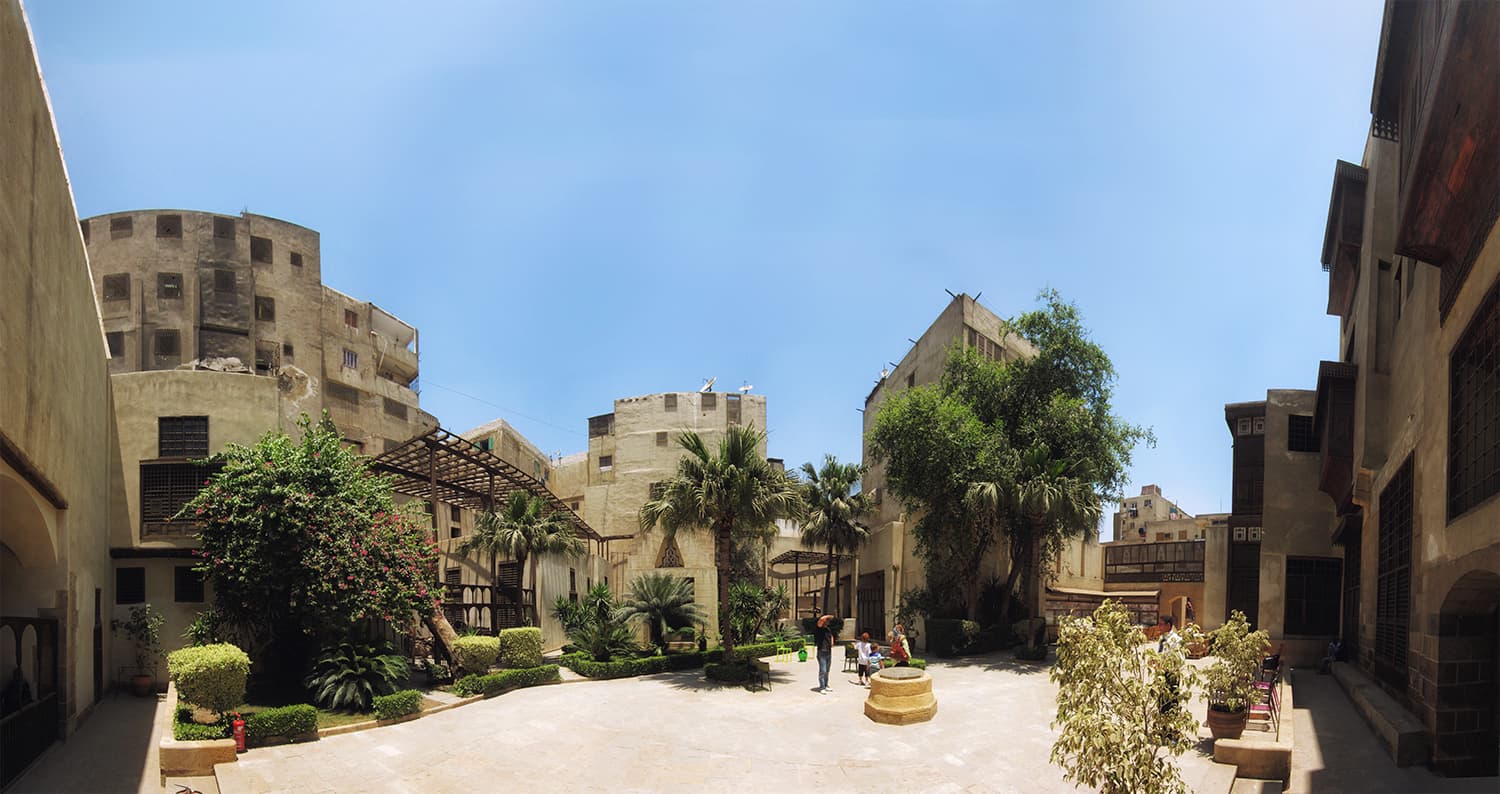 Bayt al-SuhaymiA complete Ottoman house in an alley off Al-Muizz Street, and the best place in 2 minutes walk4.7
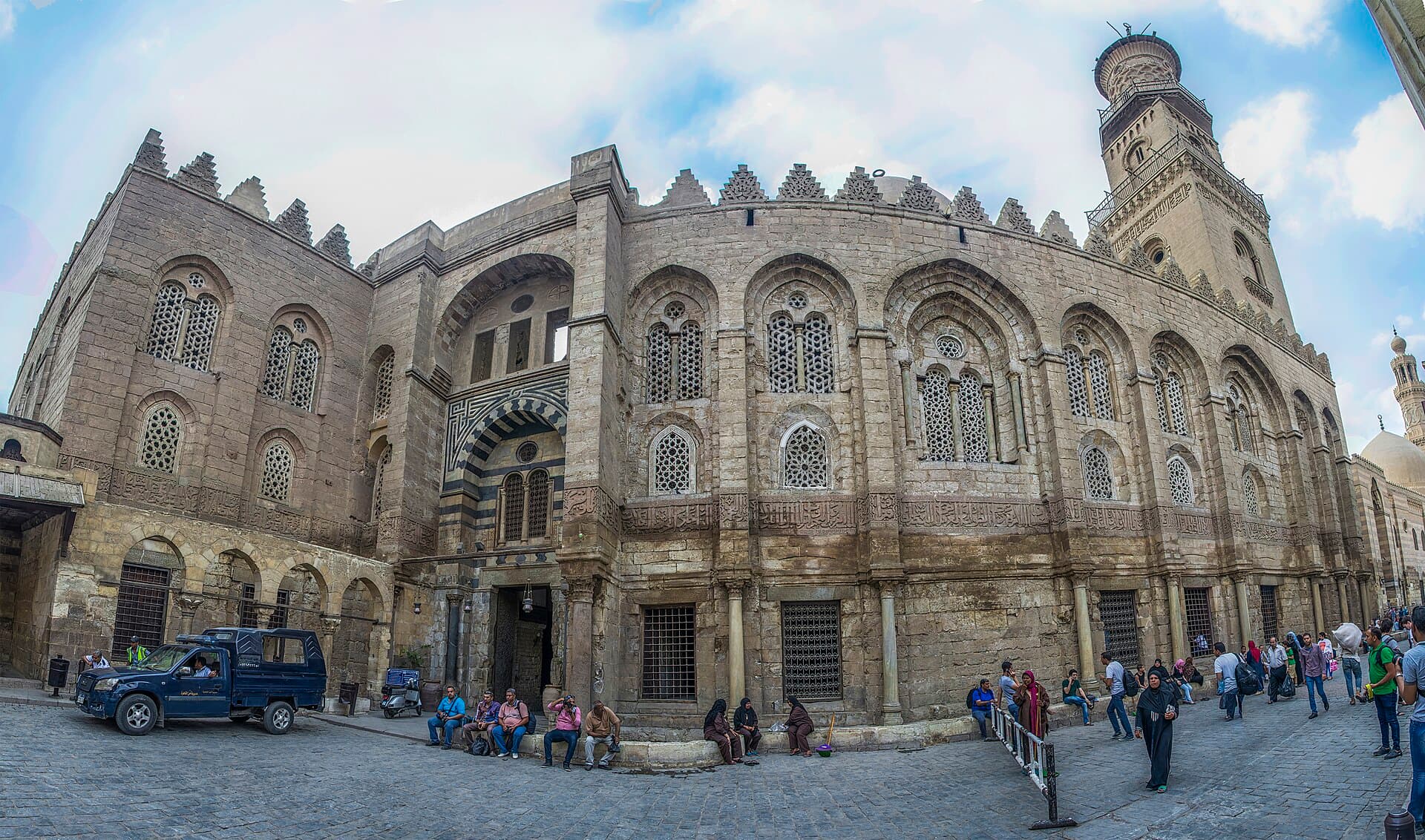 Qalawun ComplexA huge Mamluk complex in the heart of al-Muizz Street, built by Sultan al-Mansur2 minutes walk4.6
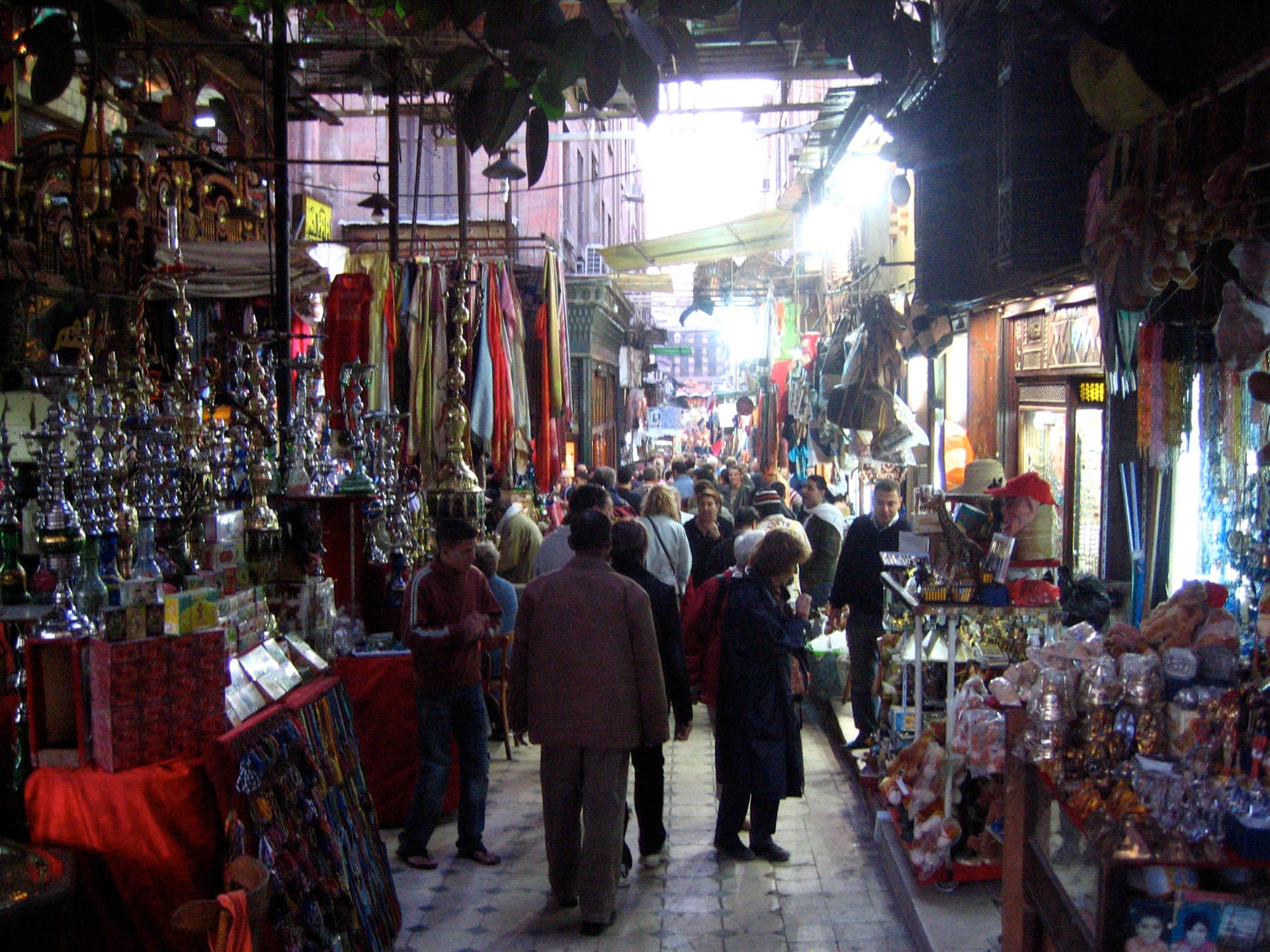 Khan el-KhaliliCairo's great bazaar since the fourteenth century, and still a working market ra5 minutes walk4.3
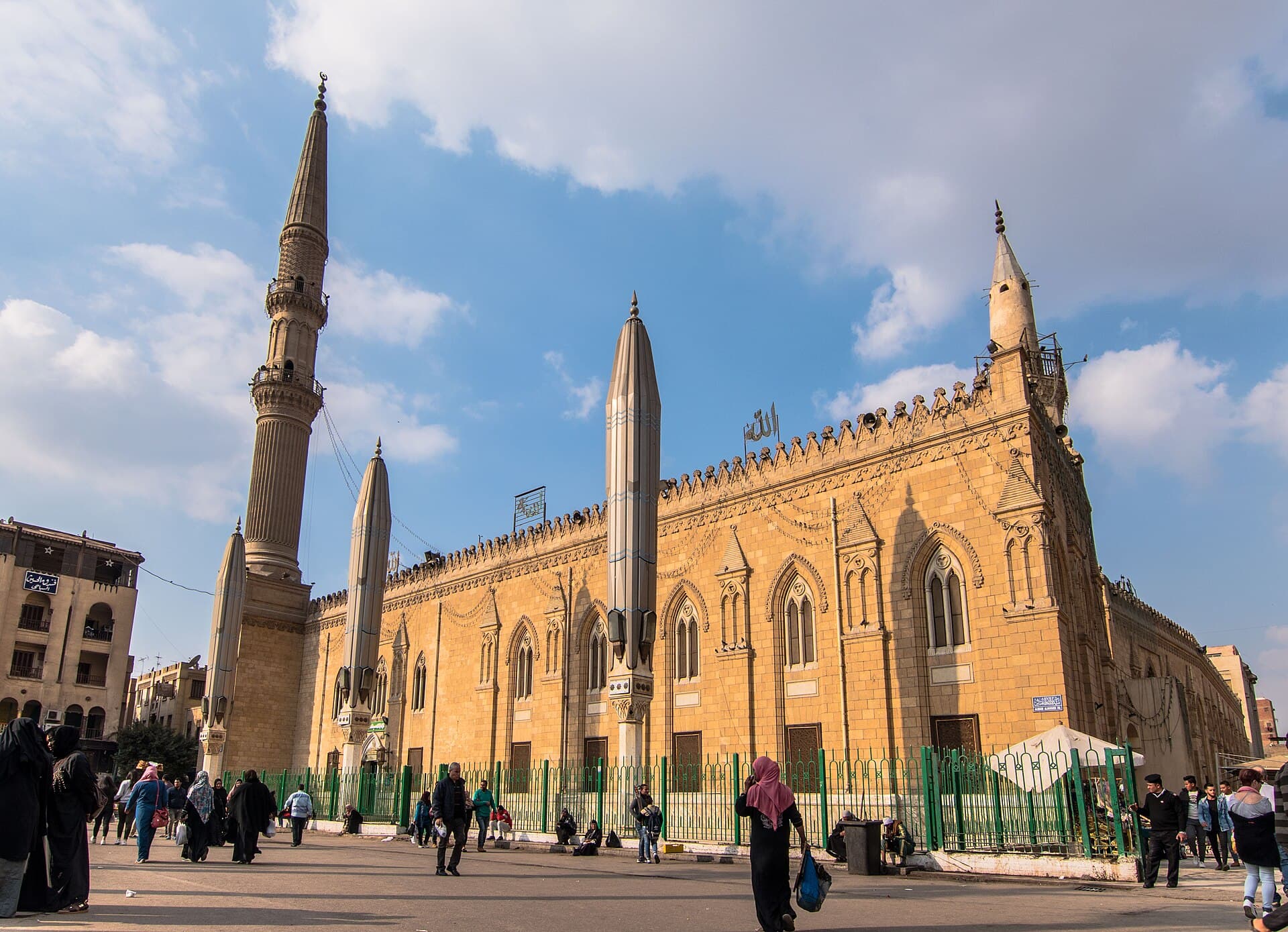 Al-Hussein MosqueOne of the holiest and best-loved mosques in Egypt, on al-Hussein Square at the 5 minutes walk4.9
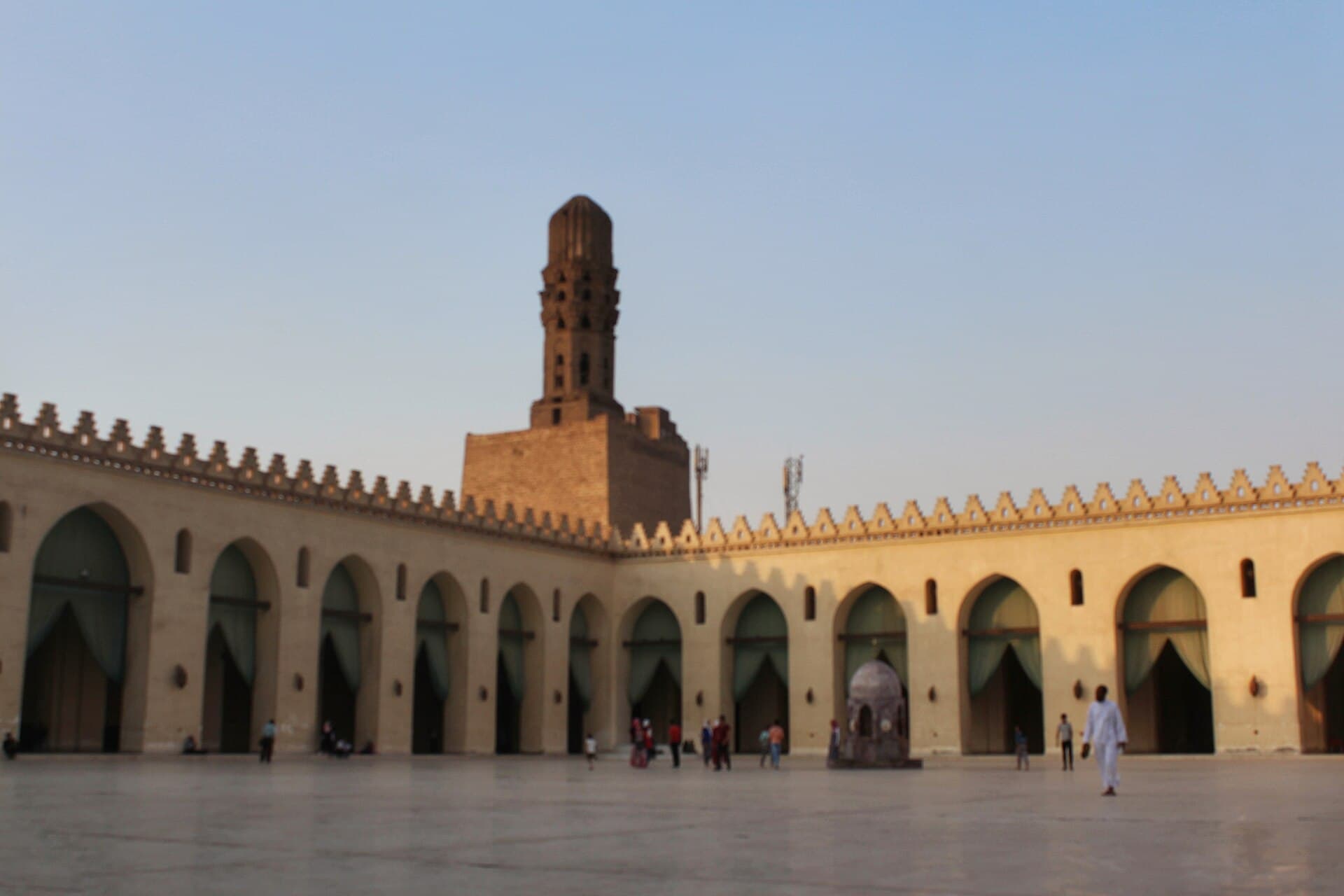 Mosque of al-HakimThe second largest Fatimid mosque in Cairo, begun by Caliph al-Aziz in 990 AD an6 minutes walk4.6
From Bab al-Futuh in the north walking down to Bab Zuweila — the slight slope runs that way, and finishing at Bab Zuweila lets you climb the minarets and look back over what you walked. The whole route is about a kilometre.
The Qalawun complex for great religious architecture, and Bayt al-Suhaymi to see a house as it was lived in. The two plus the walk make a comfortable three hours.
Yes — the khan adjoins the street's middle stretch near Hussein, minutes apart on foot. Most people combine the two in one evening.