
The terraced gardens
Terraces with long pools, fountains and citrus — a clearly Andalusi design.
Pixels4Free — CC0 · Tony Makepeace from UK — CC BY 2.0 · Tony Makepeace from UK — CC BY 2.0 · Chabe01 — CC BY-SA 4.0
The Alcázar de los Reyes Cristianos is a fortress-palace in Córdoba built in the fourteenth century over the remains of an older Umayyad palace. Ferdinand and Isabella used it as their base for years during their war on Granada, and planned that campaign from here. It was in this palace that Columbus met the monarchs to put his westward voyage to them, a meeting commemorated by statues in the garden. It also has a harsher chapter: it became the seat of the Inquisition for more than three centuries, and instruments from that period are displayed in its cellars. Its finest feature is the gardens: stepped terraces with long pools, fountains, citrus trees and cypress — a clearly Andalusi design, despite the palace being a Christian building. From the towers there is a view over the river and the Roman bridge.
Terraces with long pools, fountains and citrus — a clearly Andalusi design.
Roman floor mosaics found in the city and displayed in one of the palace halls.
A view from the towers over the river, the Roman bridge and the Great Mosque.
Statues of Columbus meeting the monarchs here, before his voyage.
Plaza Campo Santo de los Mártires, 14004 Córdoba
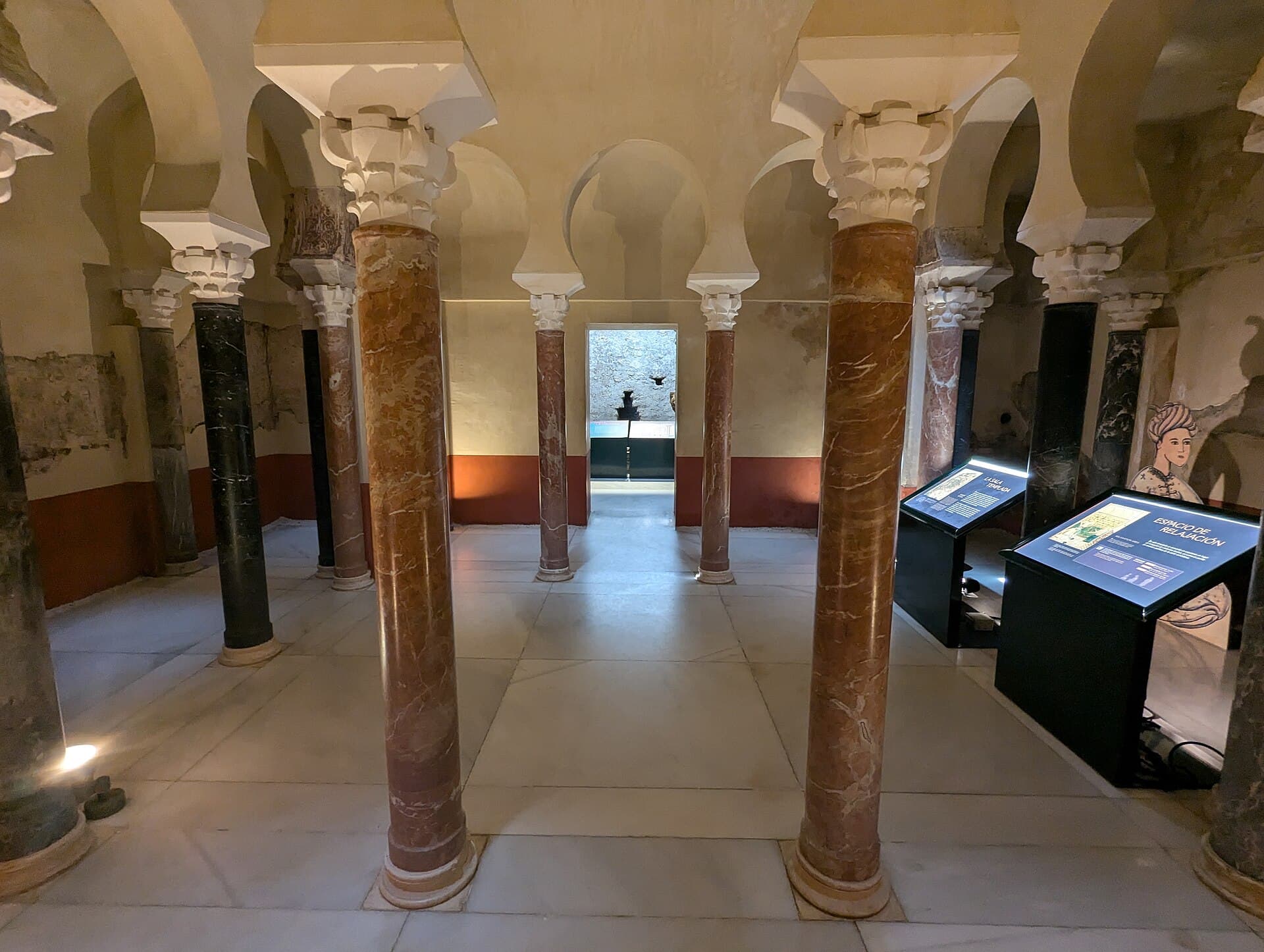 Caliphal BathsThe Caliphal Baths served the palace of the caliphs of Córdoba, and date in orig2 minutes walk4.1
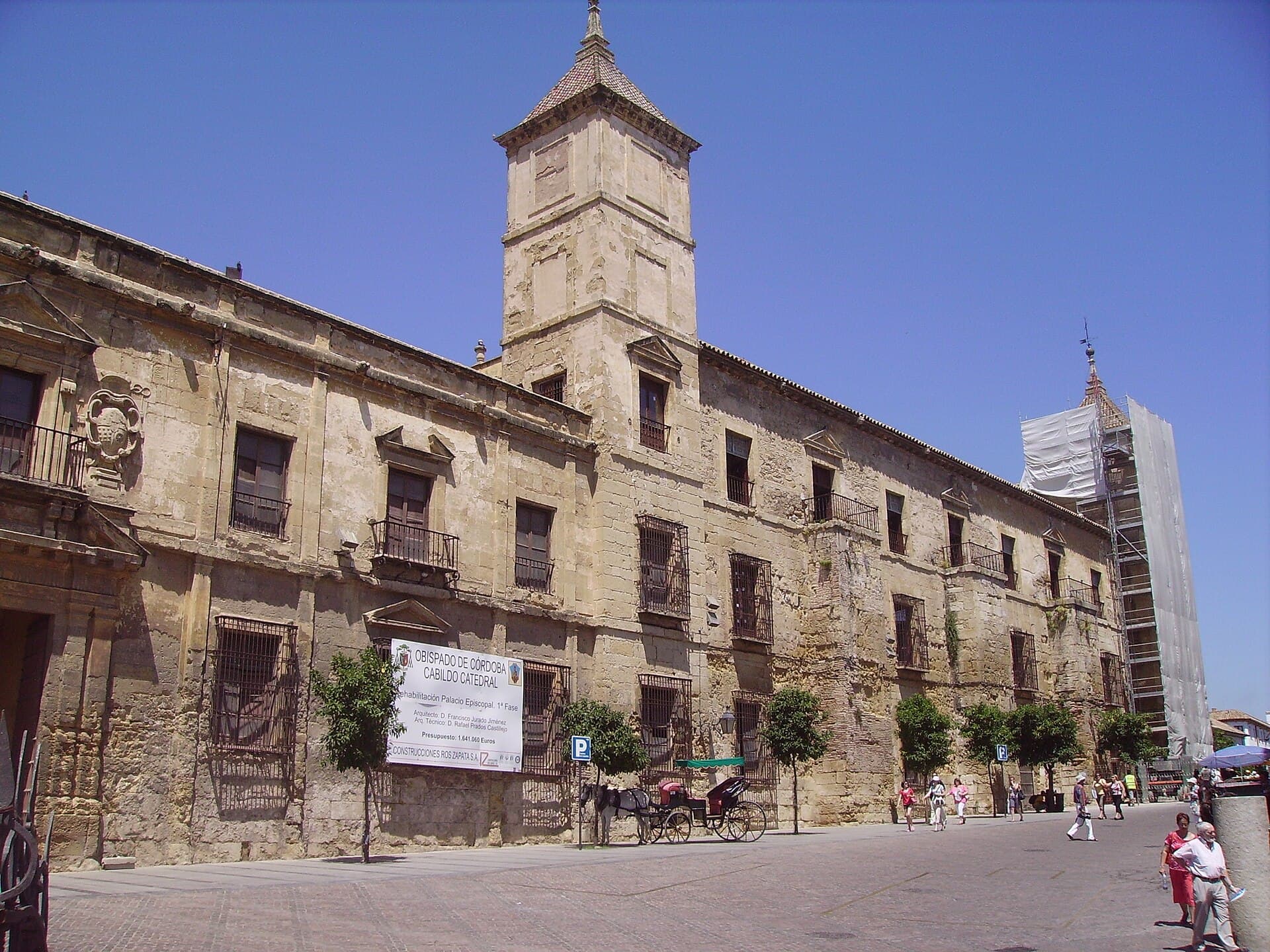 Episcopal PalaceA palace standing directly across the street from the Mosque of Córdoba, the sea3 minutes walk3.8
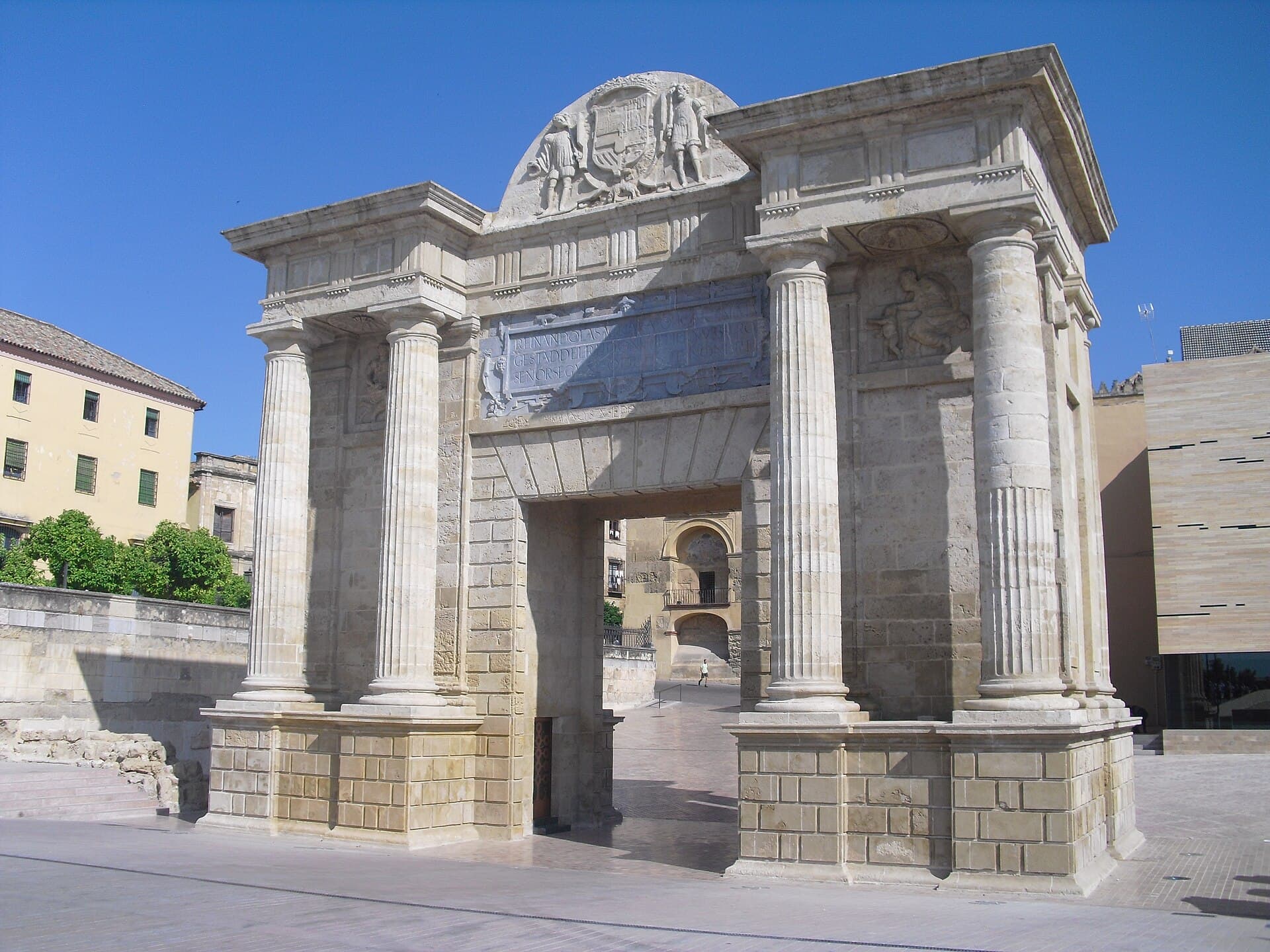 Puerta del PuenteThe Puerta del Puente is a stone triumphal gate at the northern end of the Roman3 minutes walk4.5
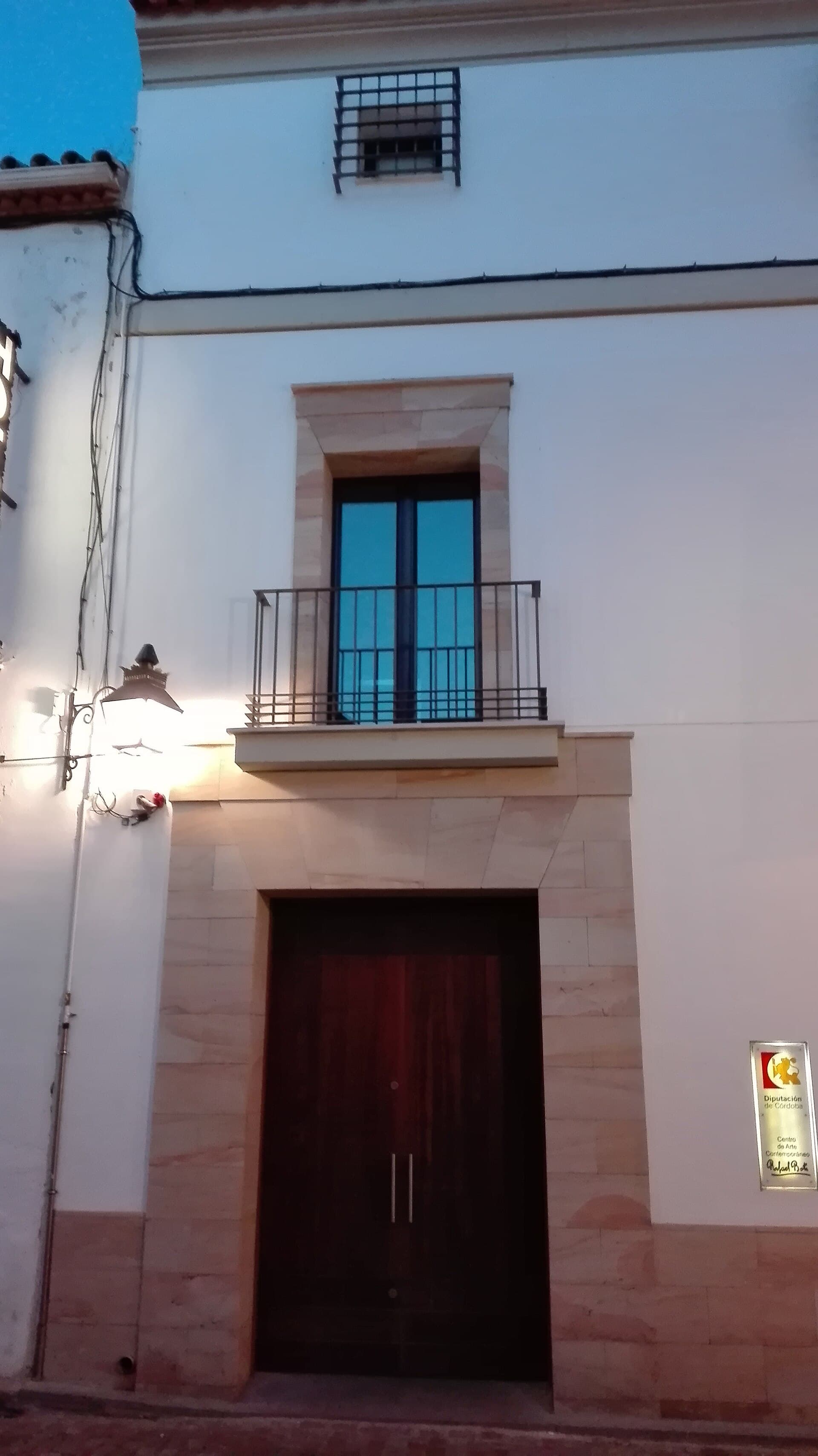 Centro de Arte Rafael BotíAn art centre in central Córdoba named after the painter Rafael Botí, a son of t3 minutes walk4.3
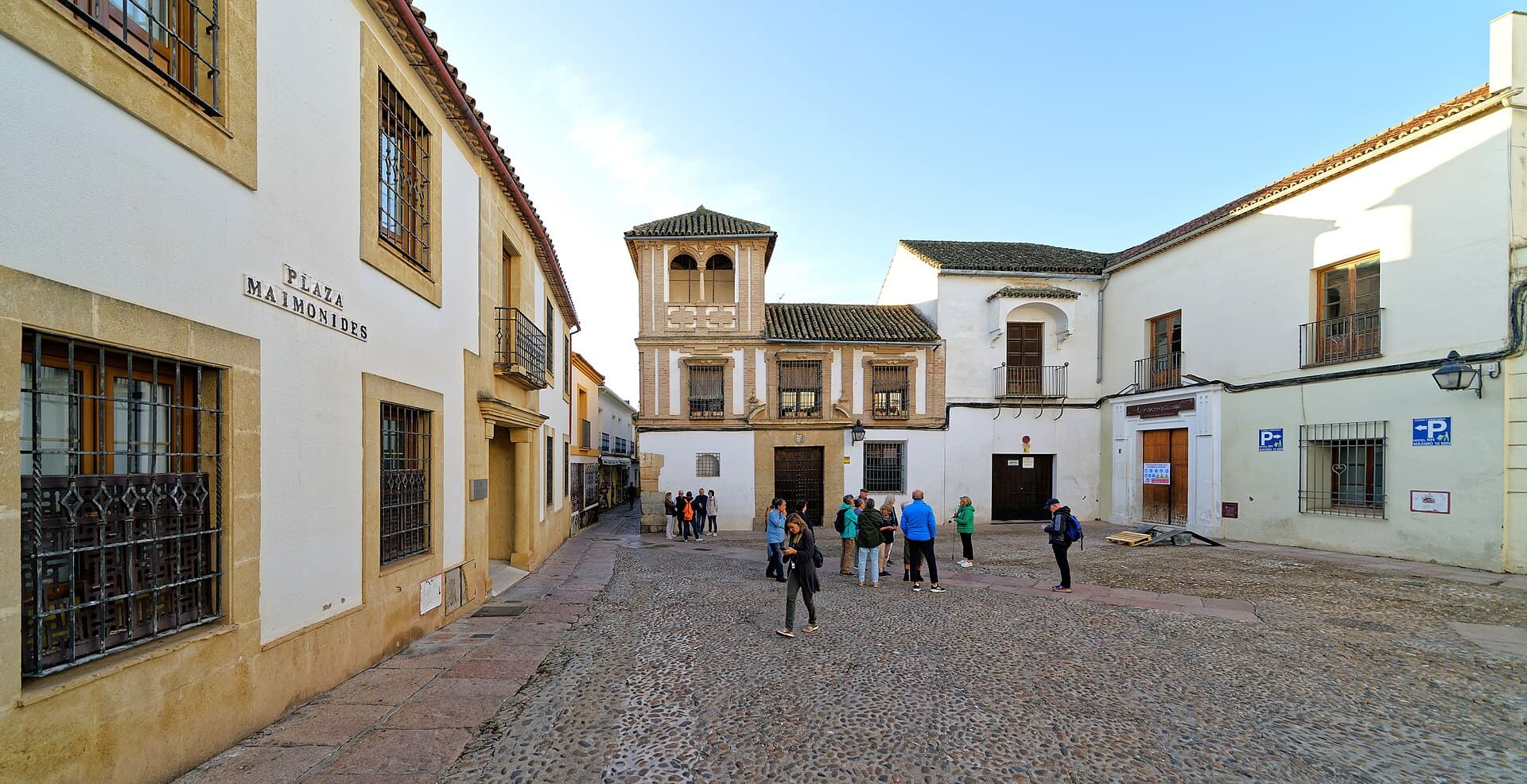 Judería, the Old Jewish QuarterA web of narrow lanes west of the Mosque-Cathedral, the heart of old Córdoba and3 minutes walk4.8
Not as it stands. The present palace was built in the fourteenth century by a king of Castile over the remains of an older Umayyad one. But the garden design, with its long pools and citrus, is plainly Andalusi — the style continued after the rulers changed.
An hour to an hour and a half, most of it in the gardens. The building itself is not large and has few rooms. Do it straight after the Mezquita — they are minutes apart.
The Mezquita is five minutes away, the Roman bridge and the Calahorra tower are in front of you on the river, and the Jewish quarter with its lanes is behind. Old Córdoba is small and everything is walkable.