
An Arabic name
Almudín from al-makhzan, the storehouse — its origin in Islamic Valencia.
Joanbanjo — CC BY-SA 3.0 · Dorieo — CC BY-SA 4.0 · Dorieo — CC BY-SA 4.0 · Dorieo — CC BY-SA 4.0
A medieval grain store in the heart of old Valencia, used today as an exhibition hall. The name itself is Arabic: almudín from al-makhzan, the storehouse, pointing to the building's origin and function in the city that was Islamic Valencia. The present store is fourteenth century but stands on an earlier site from the Islamic period. What distinguishes the interior is its scale: a single great hall on stone columns with a high timber roof, built to store the wheat distributed to the city in years of drought. Its walls are covered in sixteenth- and seventeenth-century paintings made by merchants and farmers in thanks for surviving famine. Those paintings are unusual: not official art but popular votive offerings painted on a warehouse wall. Today the building is used for temporary exhibitions and entry is normally free. The programme rotates — check what is on, though the building itself is worth entering regardless.
Almudín from al-makhzan, the storehouse — its origin in Islamic Valencia.
Murals made by merchants and farmers in thanks for surviving famine.
Stone columns and a high timber roof built to store the city's wheat.
Near the cathedral, old central Valencia
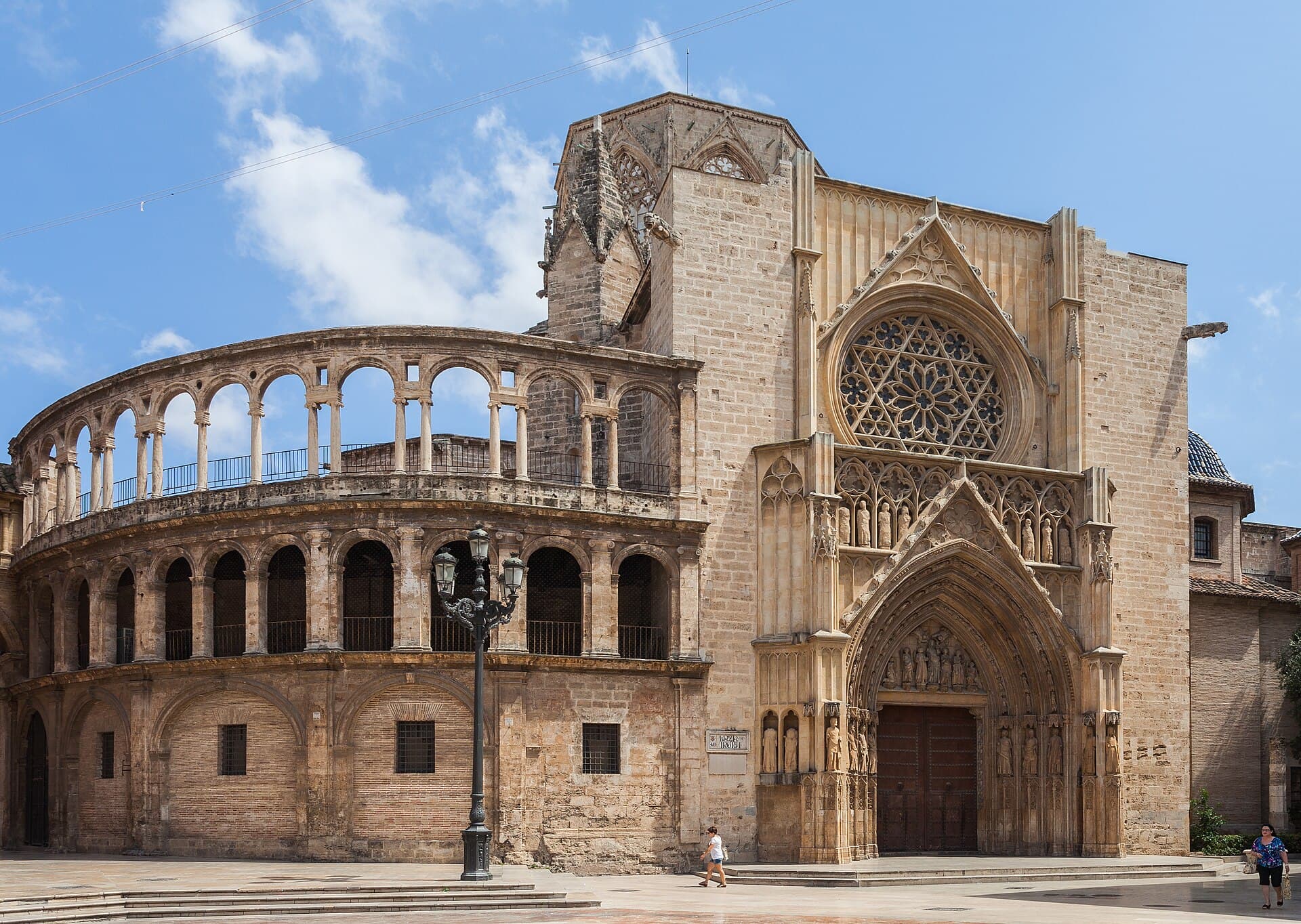 Valencia Cathedral & the MicaletValencia's cathedral rose over the great mosque after 1238 and gathered all the 2 minutes walk4.5
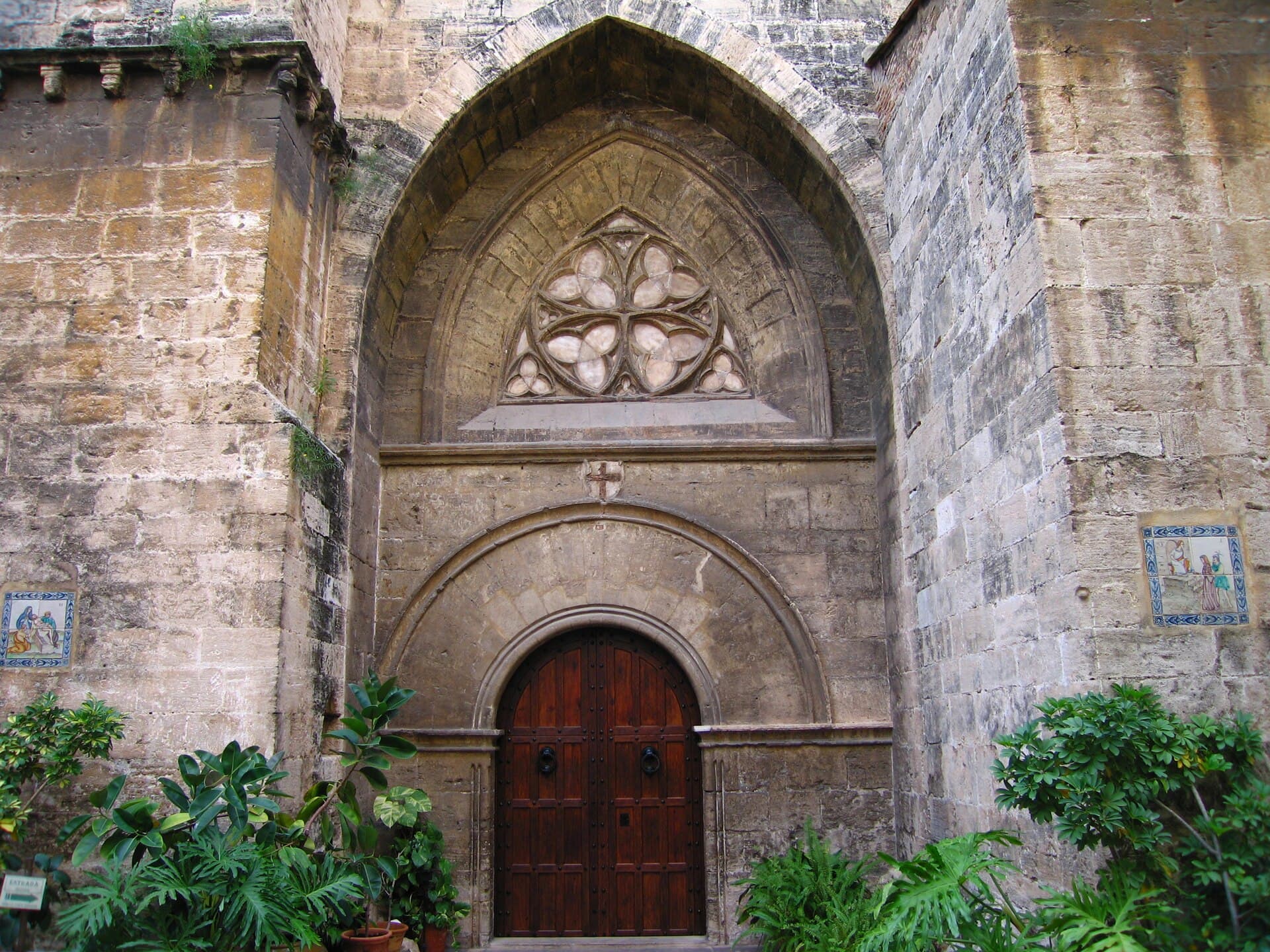 Church of San Juan del HospitalThe oldest standing church in Valencia. Its ground was granted to the Knights Ho3 minutes walk4.8
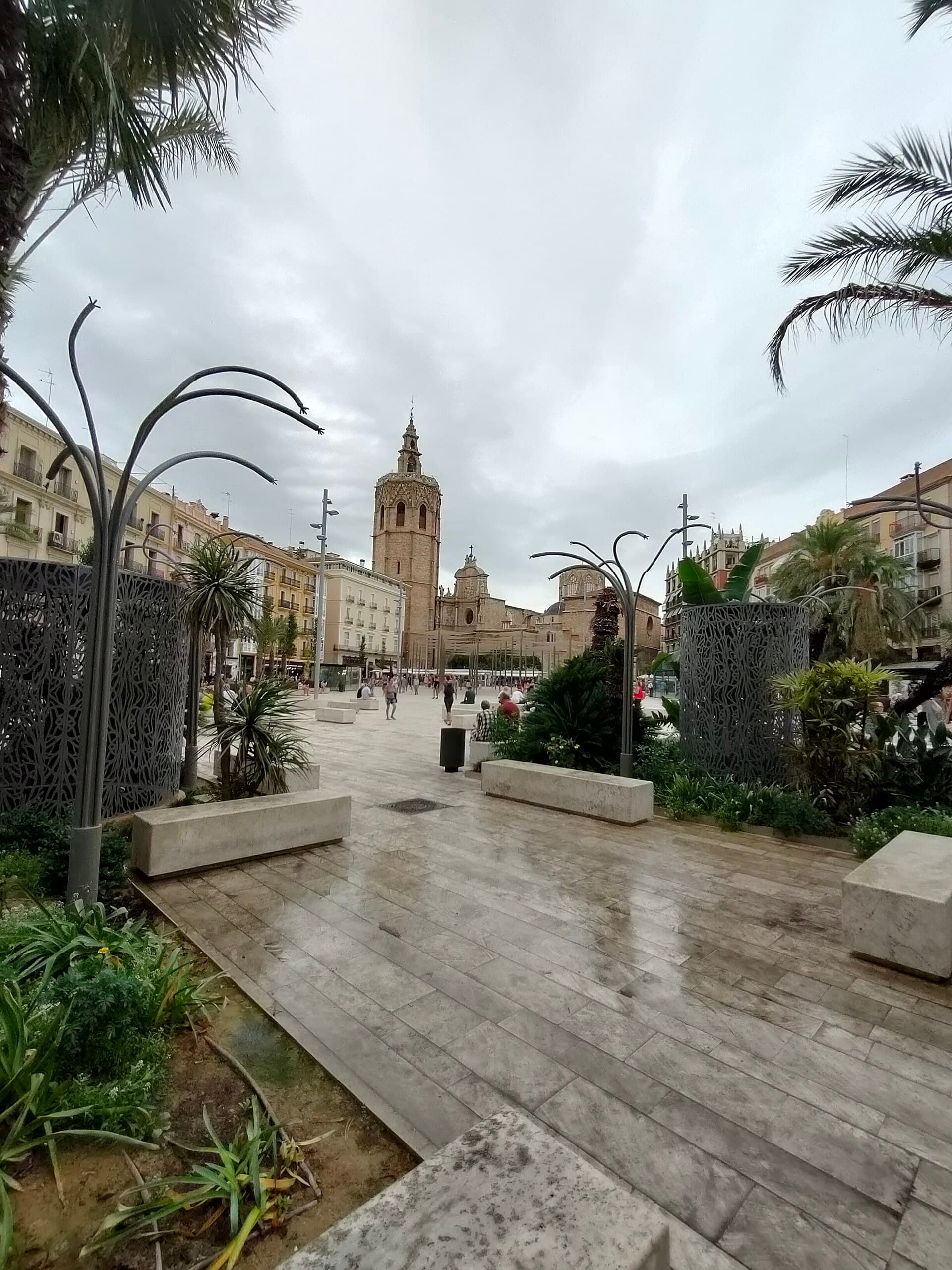 Plaza de la ReinaThe main square in front of Valencia cathedral in the heart of the old city, and4 minutes walk4.8
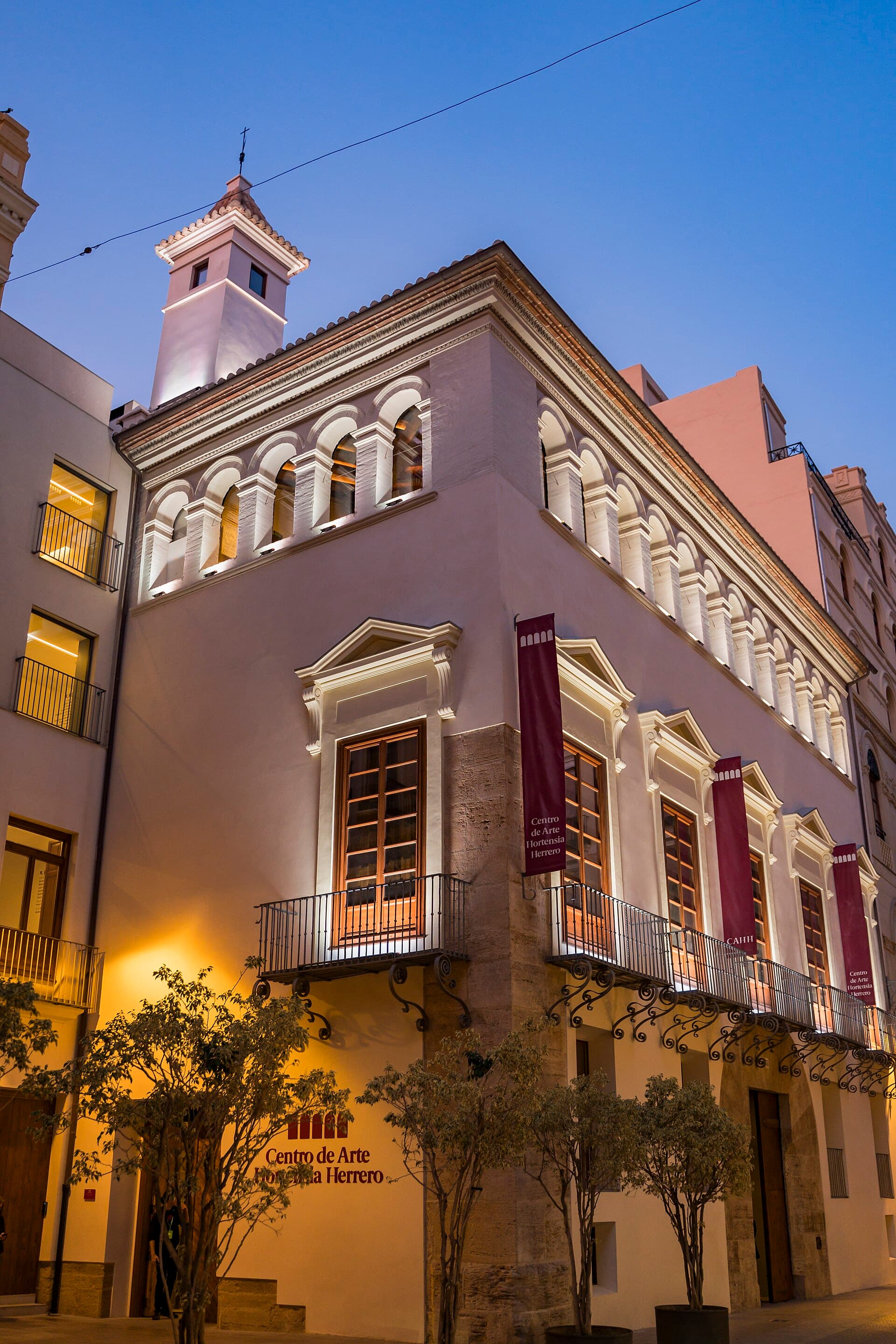 Hortensia Herrero Art CentreA contemporary art centre opened in 2023 in the Palacio Valeriola in old central4 minutes walk4.9
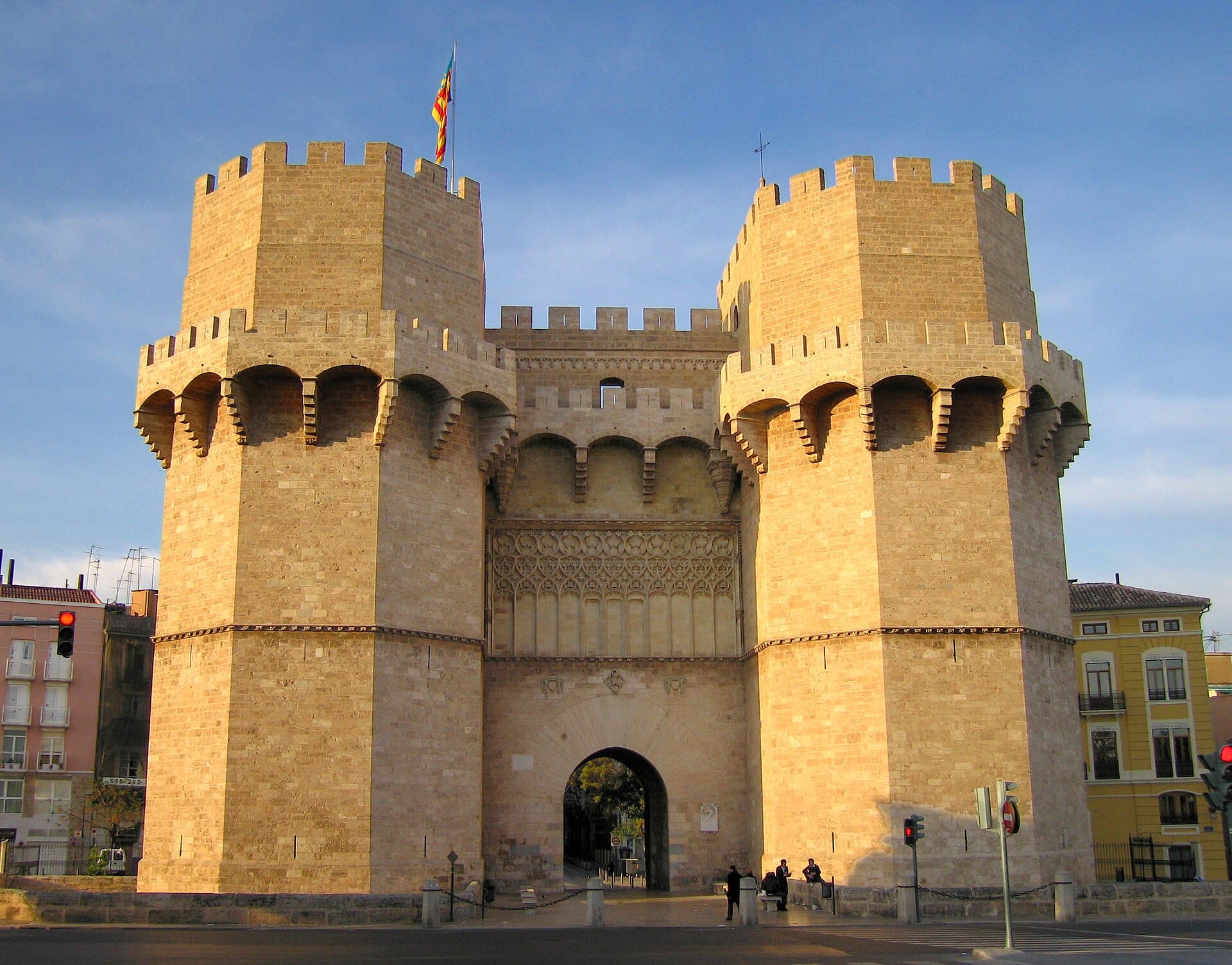 Torres de SerranosThe Serranos Towers have been Valencia's gate of honour since 1398: Europe's mig5 minutes walk4.7
Valencia cathedral is minutes away and holds a chalice attributed to the Last Supper, the Miguelete tower is climbed for the view, and the Serranos and Quart gates are what remains of the city walls. The whole area is walked in half a day.
Less than in Córdoba, Seville or Granada, as Valencia was much rebuilt, but the trace is in names and layout: the Almudín, the Albufera lagoon, and the irrigation network in the surrounding countryside still running on the Islamic system — with the Water Court meeting outside the cathedral every Thursday for centuries to settle irrigation disputes.