
The view
The whole of Bamberg below you, with the Franconian plain beyond.
Public domain · Tilman2007 — CC BY-SA 4.0 · Tilman2007 — CC BY-SA 4.0 · Tilman2007 — CC BY-SA 4.0
A castle on **the highest of Bamberg''s seven hills** (about 386 metres), first recorded in **1109**. It was the seat of Bamberg''s bishops in the Middle Ages, and later their refuge under siege. The castle is **partly ruined** by its history: the Swedish army burned it during the **Thirty Years'' War**, and it stood a ruin for two centuries. In the early nineteenth century a physician named **Adalbert Friedrich Marcus** bought it and restored the tower, and the Romantic writer **E. T. A. Hoffmann** — who worked in Bamberg for years and wrote there — lived in it for a time afterwards. What can be visited today: the **keep**, which can be climbed, a courtyard and walls, and a restaurant in the restored buildings. Note: the real point is **the view**: from the walls you see the whole of Bamberg with its hills and cathedral below you, and beyond it the Franconian plain and the Steigerwald forest. It is by far the best view of the city. Note: reached **by bus** from the centre and a short walk, or by a **45-minute climb on foot** through vineyards and woodland — a fine route but a demanding one.
The whole of Bamberg below you, with the Franconian plain beyond.
The main tower, and the highest point you can stand on.
45 minutes through vineyards and woodland from the centre.
Altenburg 1, Bamberg — about 3 km south-west of the centre
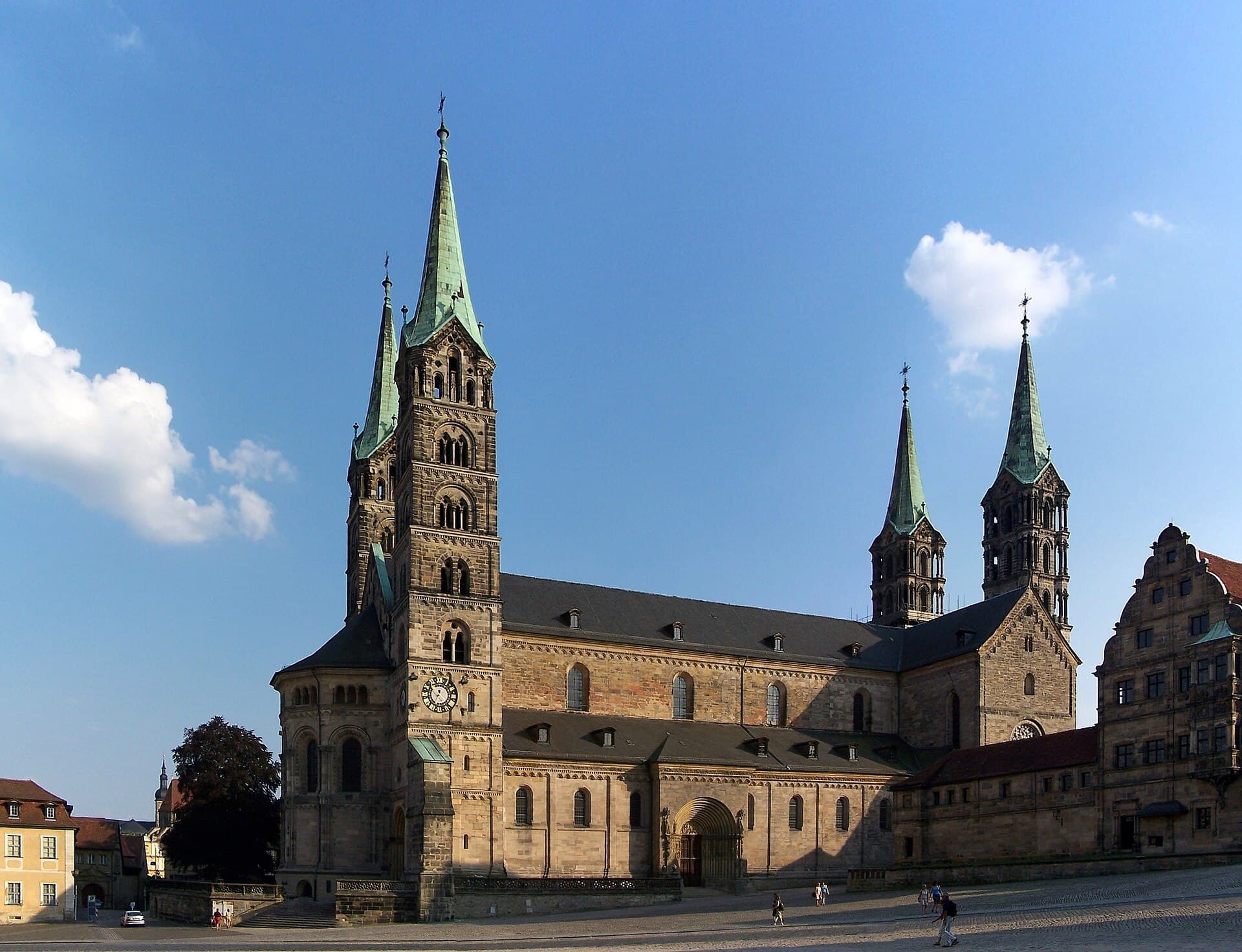 Bamberg CathedralA four-towered cathedral on a hill above the city, founded by Emperor **Henry II18 minutes walk4.8
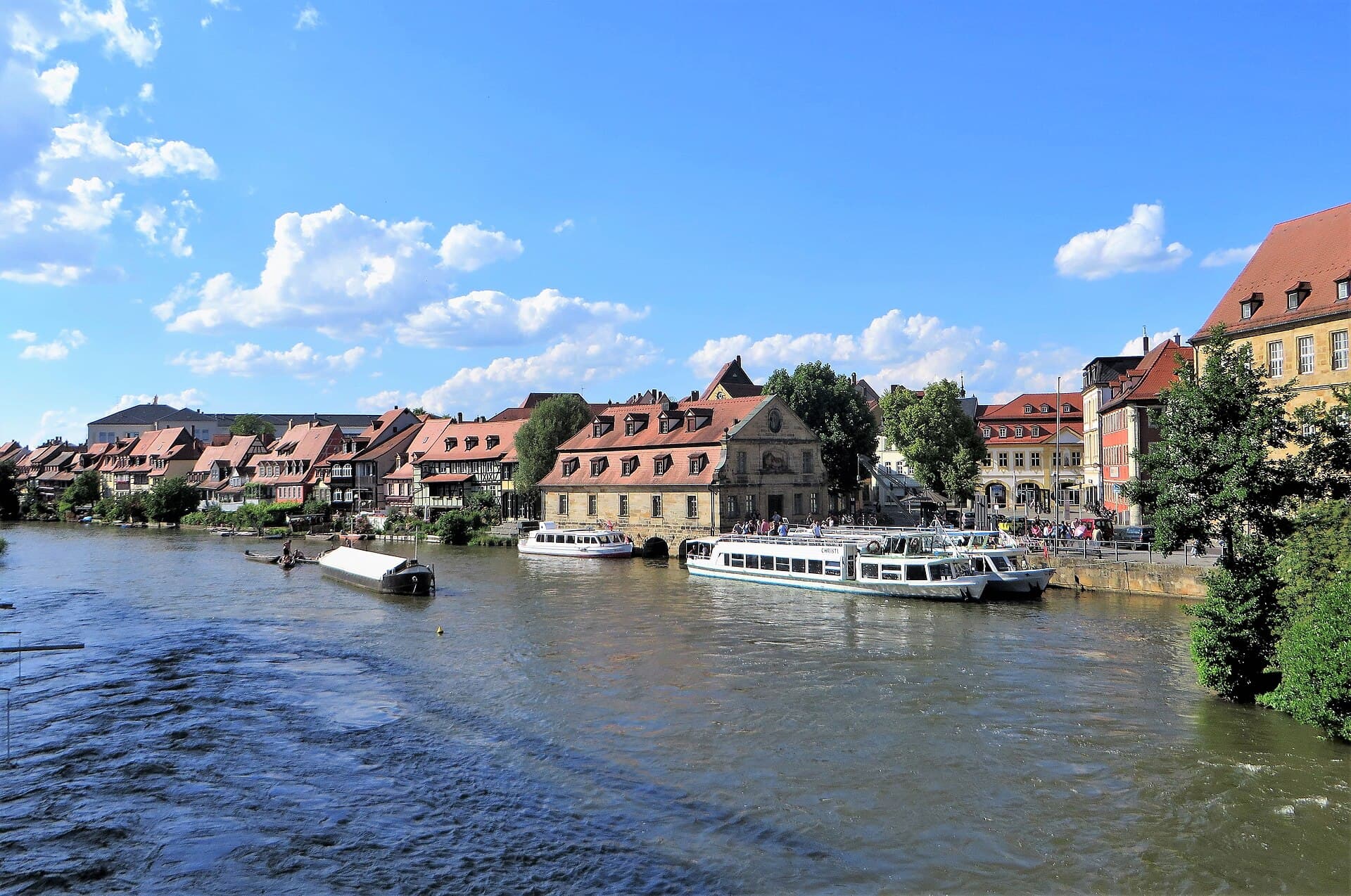 Little VeniceA row of seventeenth to nineteenth-century **fishermen''s houses** standing dire22 minutes walk4.6
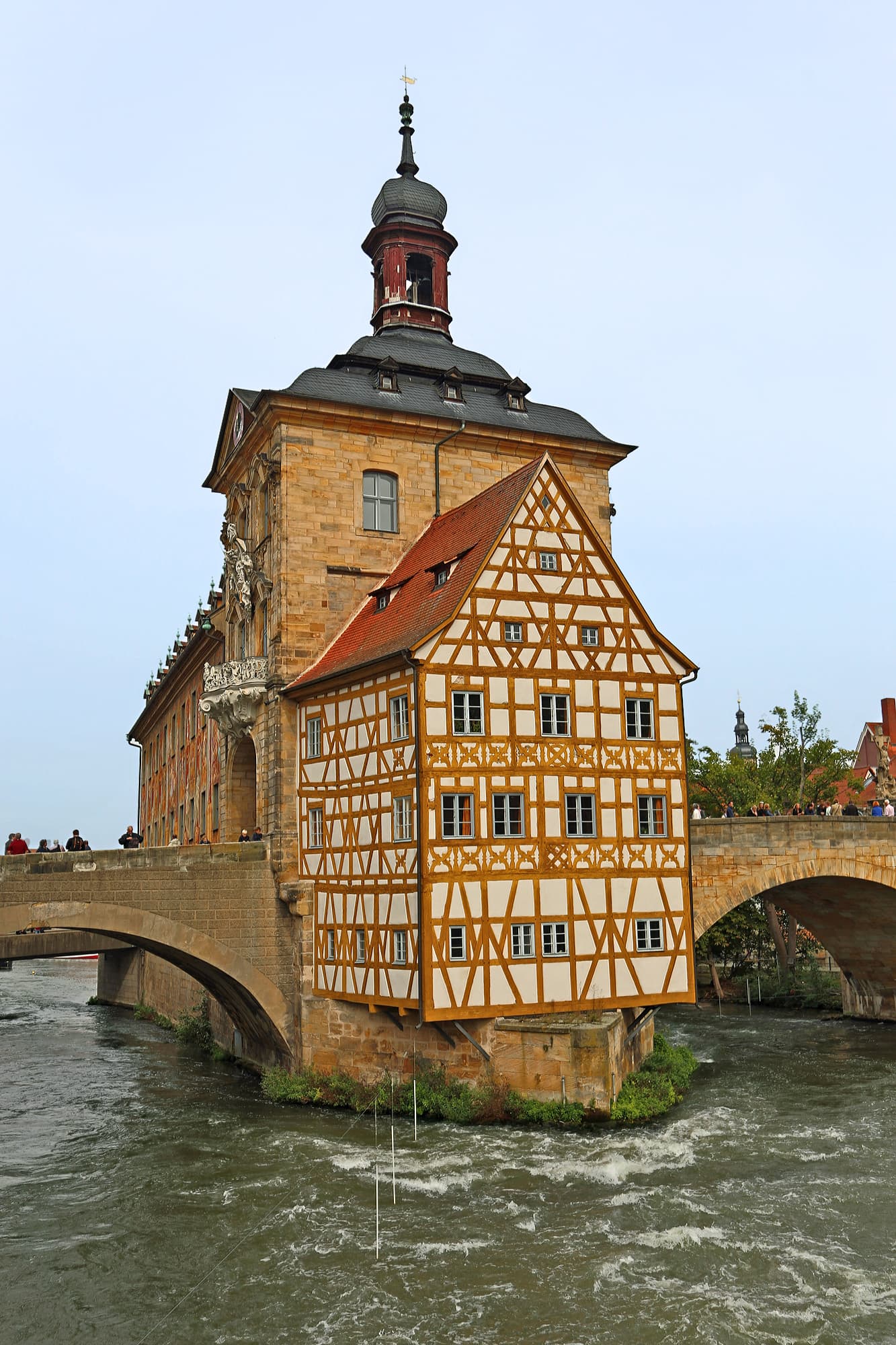 The Old Town HallA building standing on an **artificial island in the middle of the Regnitz**, cr22 minutes walk4.7
The part **almost every visitor misses**, and a third of the inscription. East of Bamberg''s centre lies the **Gärtnerstadt**, where **vegetable fields are still genuinely cultivated inside the city boundary** — between the houses, on long narrow strips, in the same way since the Middle Ages. Bamberg''s market gardeners were a guild in their own right with their own houses, plots and church, and their produce — including **liquorice and the Bamberg onion** — was exported across Europe. UNESCO inscribed the city as a threefold entity: the **bishop''s town** on the hills, the **merchants'' town** on the plain, and the **gardeners'' town** with its fields — and the survival of all three together is what makes it exceptional. ⚠ The quarter is half an hour''s walk from the centre and has a **small horticulture museum** explaining it.