
The Bamberg Horseman
Carved about 1235, and his identity still unsettled.
Berthold Werner — CC BY-SA 3.0 · W. Bulach — CC BY-SA 4.0 · Berthold Werner — CC BY-SA 3.0 · Heraldikbamberg — CC BY-SA 4.0
A four-towered cathedral on a hill above the city, founded by Emperor **Henry II** in **1002**, the present building thirteenth century after two fires. Its style is transitional: **Romanesque at the east end and early Gothic at the west** — so you watch one style turn into the other as you walk through it. It holds three things without parallel: **The Bamberg Horseman** (*Bamberger Reiter*) — a life-size stone rider on horseback of about 1235, carved against a pier inside the cathedral. Nobody knows **who he is** with certainty: proposals include St Stephen of Hungary, Constantine, or an idealised knight. He is among the most important medieval sculptures in Europe because he is **the first free-standing equestrian statue since Roman times**. **The tomb of Pope Clement II** — the only pope buried north of the Alps. **The tomb of Henry II and his wife Kunigunde** — carved by **Tilman Riemenschneider**, the greatest German sculptor of the late Middle Ages, and fourteen years in the making. Note: **entry is free**, and the cathedral is in use.
Carved about 1235, and his identity still unsettled.
Henry II and Kunigunde, fourteen years of carving.
Romanesque east and Gothic west in a single building.
Domplatz, Bamberg
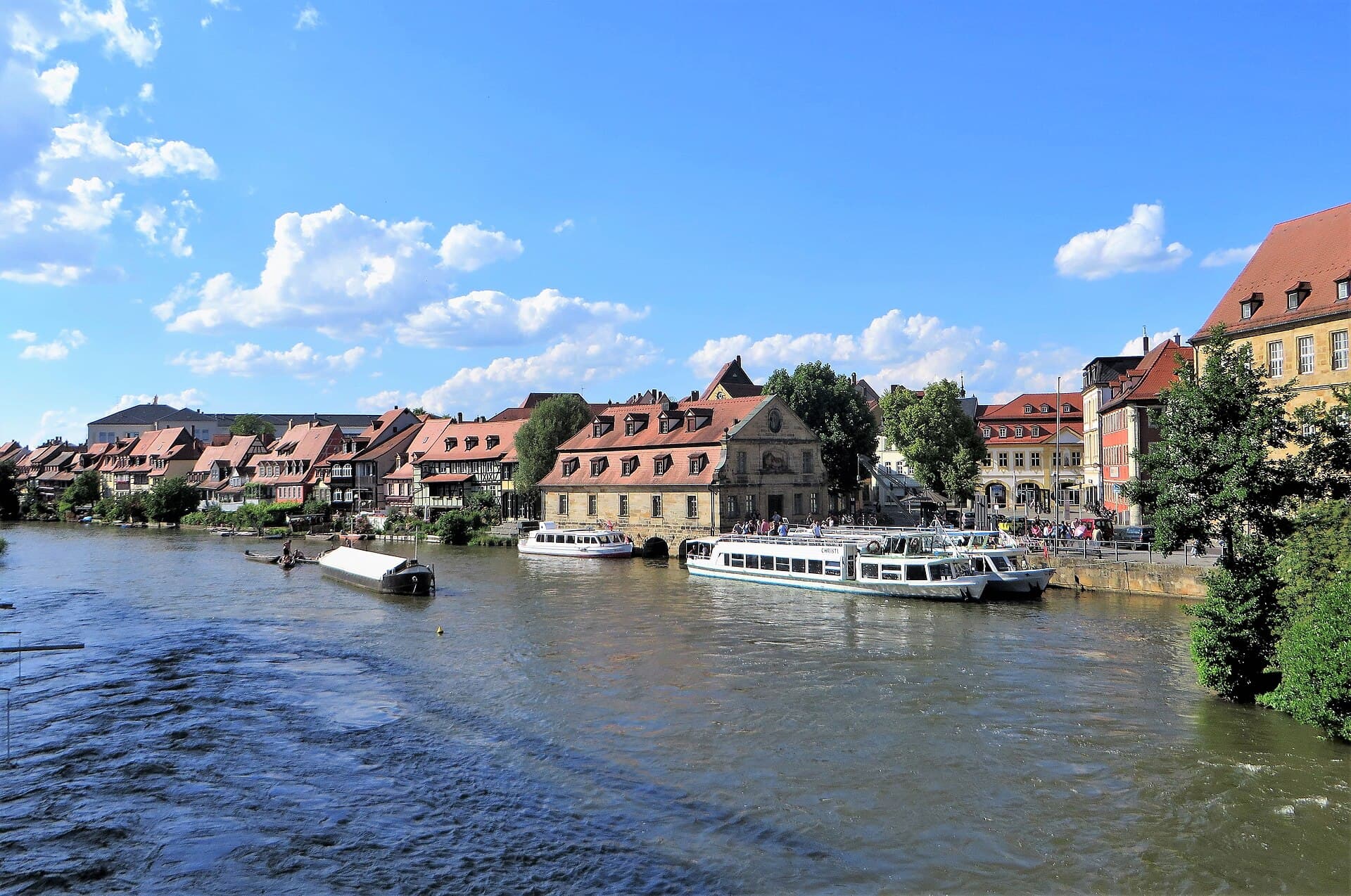 Little VeniceA row of seventeenth to nineteenth-century **fishermen''s houses** standing dire3 minutes walk4.6
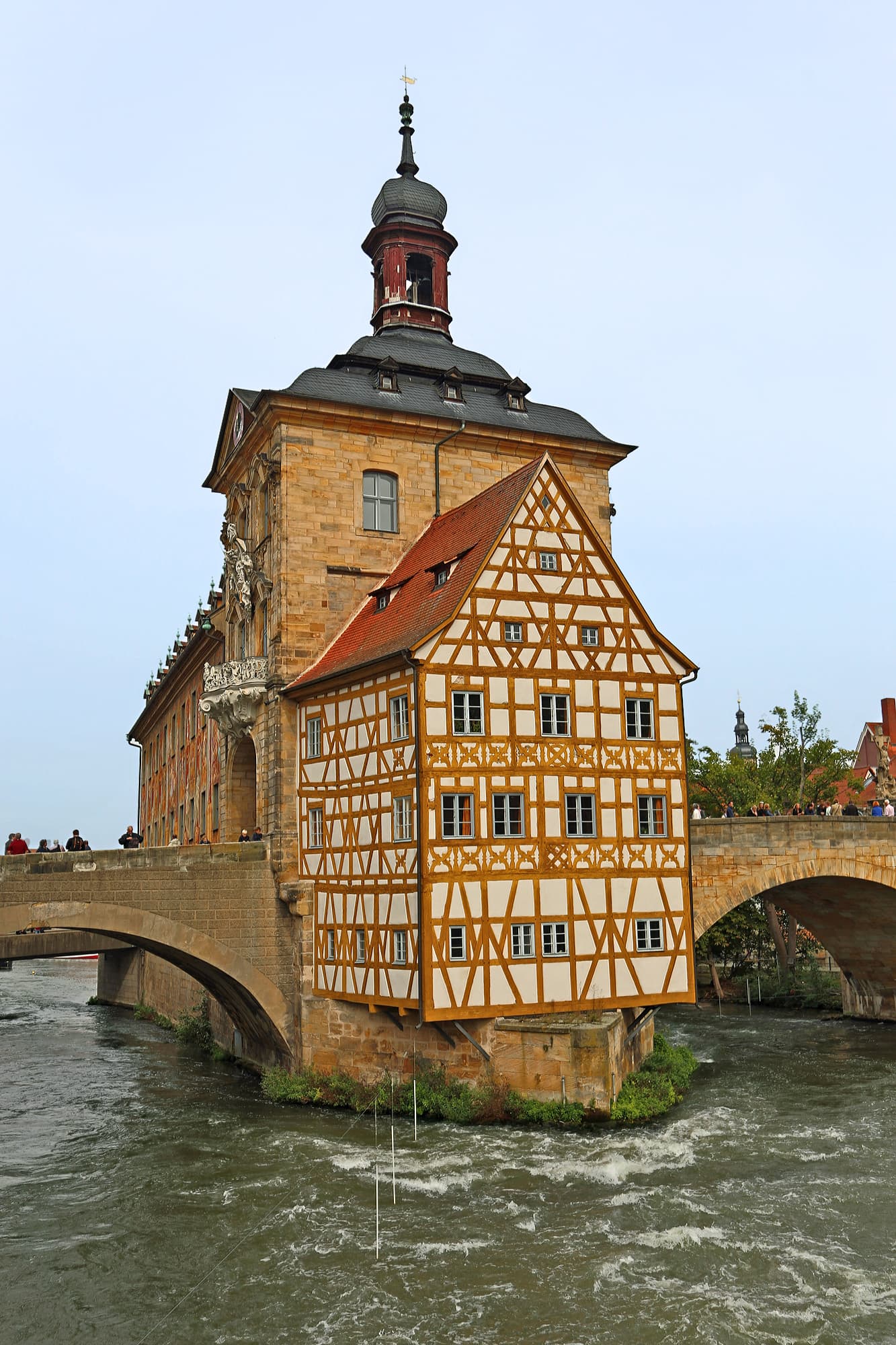 The Old Town HallA building standing on an **artificial island in the middle of the Regnitz**, cr4 minutes walk4.7
 Altenburg CastleA castle on **the highest of Bamberg''s seven hills** (about 386 metres), first 18 minutes walk4.7
Because what is protected is not a building but **the entire urban fabric**. Bamberg **was not bombed** to any significant degree in the Second World War — one of the few large German cities to escape — so more than **2,400 historic buildings** still stand on their original plan, without the extensive reconstruction Dresden, Nuremberg and Cologne went through. Add its rare threefold structure: the **bishop''s town** on the hills with its cathedral and monasteries, the **burghers'' town** on the plain, and the **market gardeners'' quarter**, whose fields are still cultivated inside the city boundary. UNESCO inscribed it in **1993** as an example of a central European town whose plan survived unbroken from the Middle Ages through the baroque. ⚠ The practical comparison: Bamberg is **original** where Rothenburg is **40% rebuilt**.