
A realistically carved ox
The figure above the portal gave the building its local name.
A Renaissance building in central Nuremberg put up in the early seventeenth century as the butchers' hall — a covered meat market where goods were displayed on fixed benches. Its best-known feature is its portal: a stone entrance surmounted by a large and realistically carved ox, from which the local name, the ox portal, comes. Beneath the figure a Latin inscription observes that the animal which serves man in life serves him in death also — a piece of direct moral instruction of the kind carved on public buildings in that period. The craft context matters in Nuremberg particularly: in the fifteenth and sixteenth centuries the city was among Europe's most important centres of craft and manufacture, and its ordinances regulated every trade precisely — where goods could be sold, who was entitled to sell them, and how quality was inspected. A central meat hall was an instrument of sanitary and commercial control rather than merely a building. A practical point: the building is in current use and is not visitable as a museum. The visit is minutes in front of the portal on a walk through the centre.
The figure above the portal gave the building its local name.
A Latin inscription on the animal serving man in life and in death.
Nuremberg's ordinances set where each good could be sold and by whom.
Near the Fleischbrücke, central Nuremberg
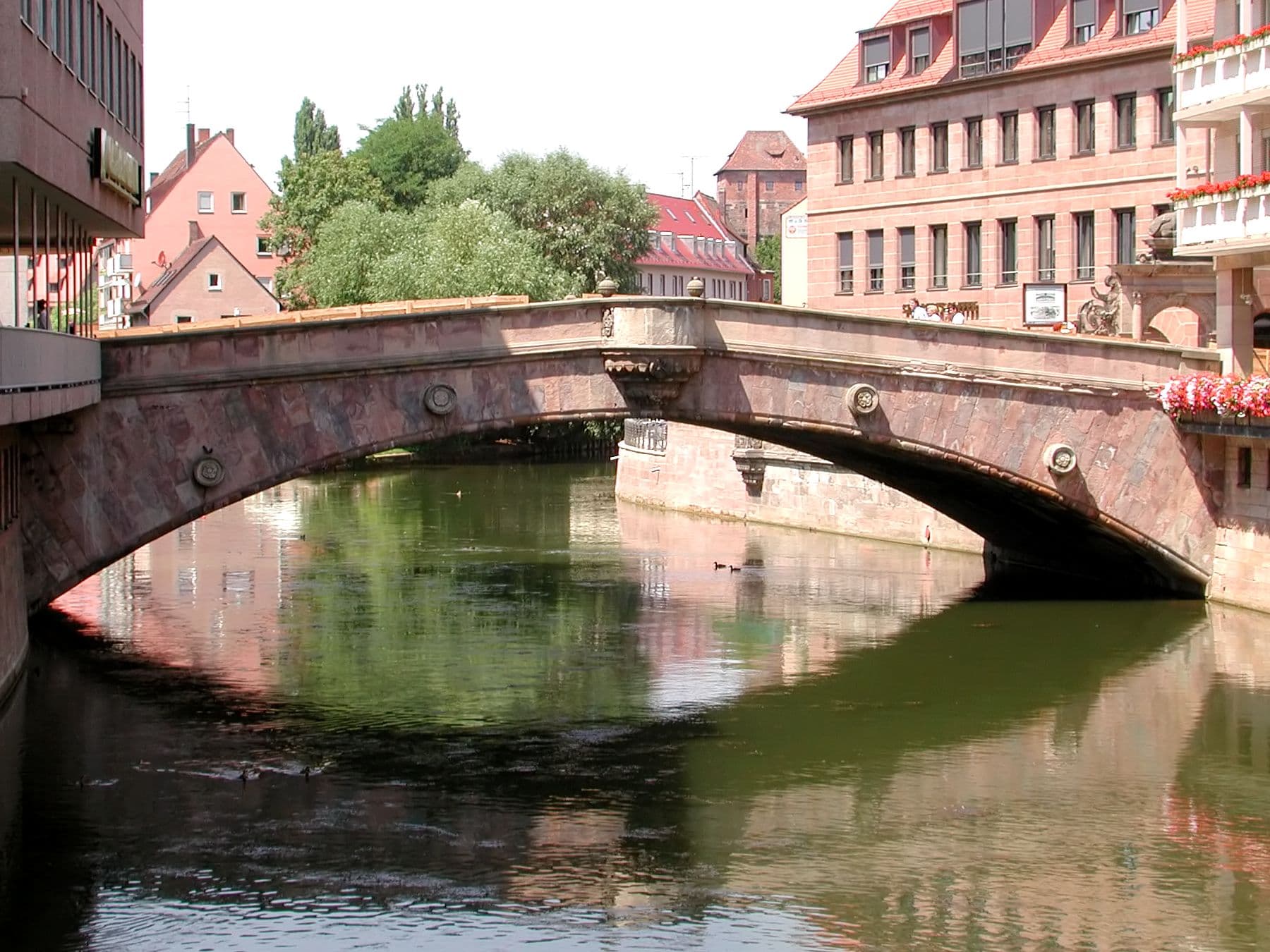 FleischbrückeThe Fleischbrücke is a single-arch stone bridge over the river Pegnitz in centra1 minute walk4.5
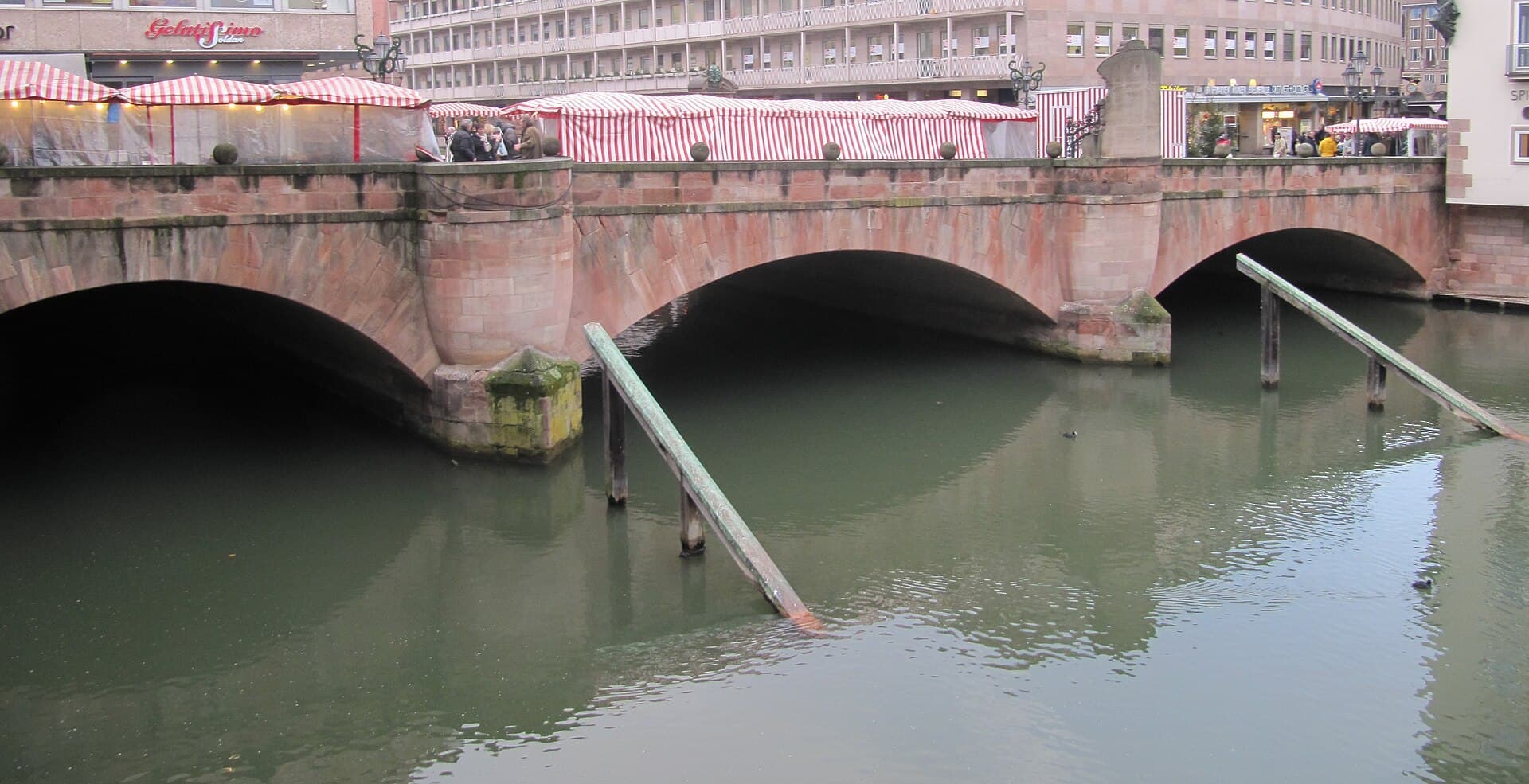 MuseumsbrückeThe Museumsbrücke is a short stone bridge over the river Pegnitz in the middle o1 minute walk4.8
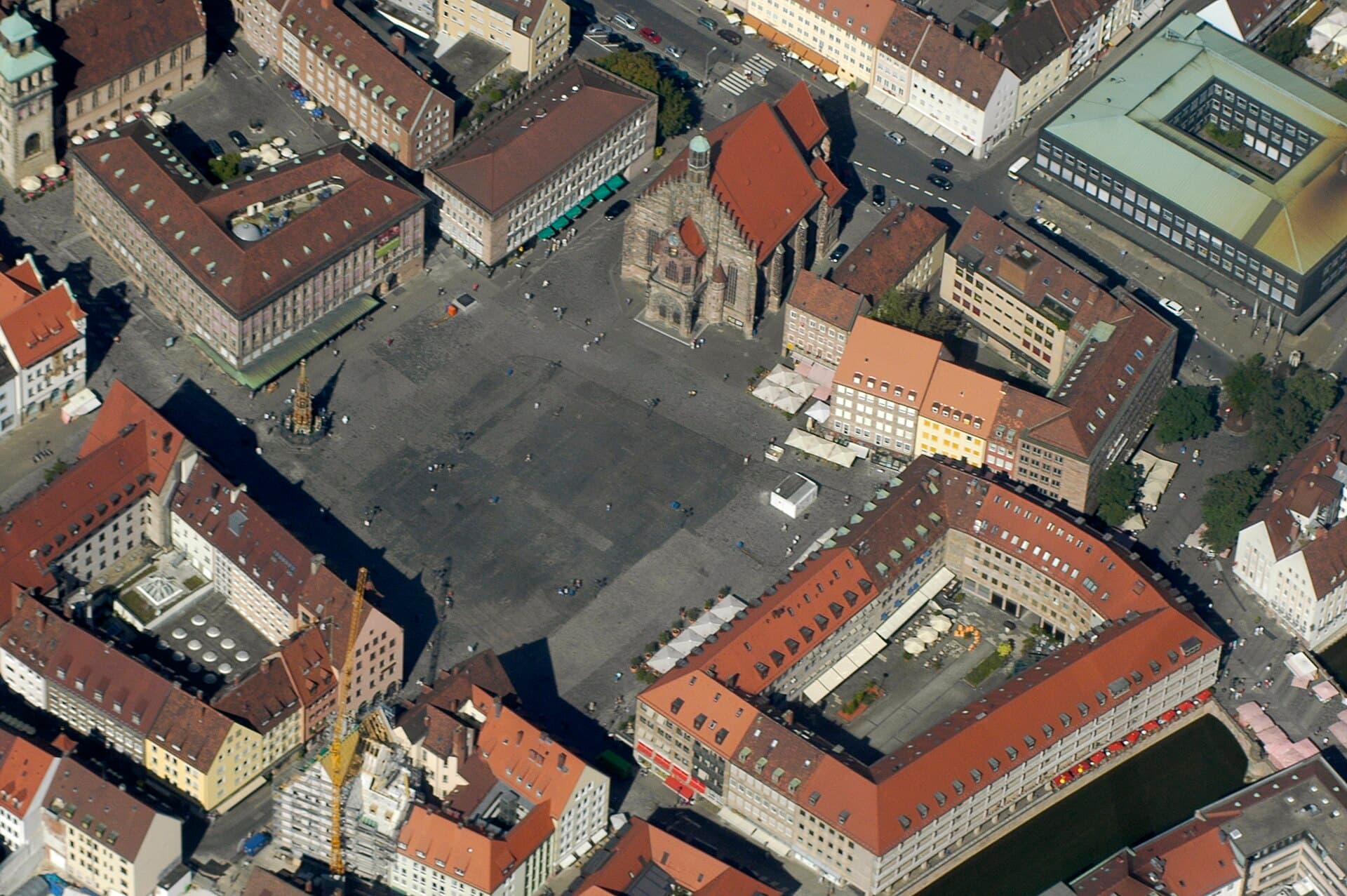 Nuremberg Main Market SquareThe commercial heart of Nuremberg since the middle of the fourteenth century, an1 minute walk4.5
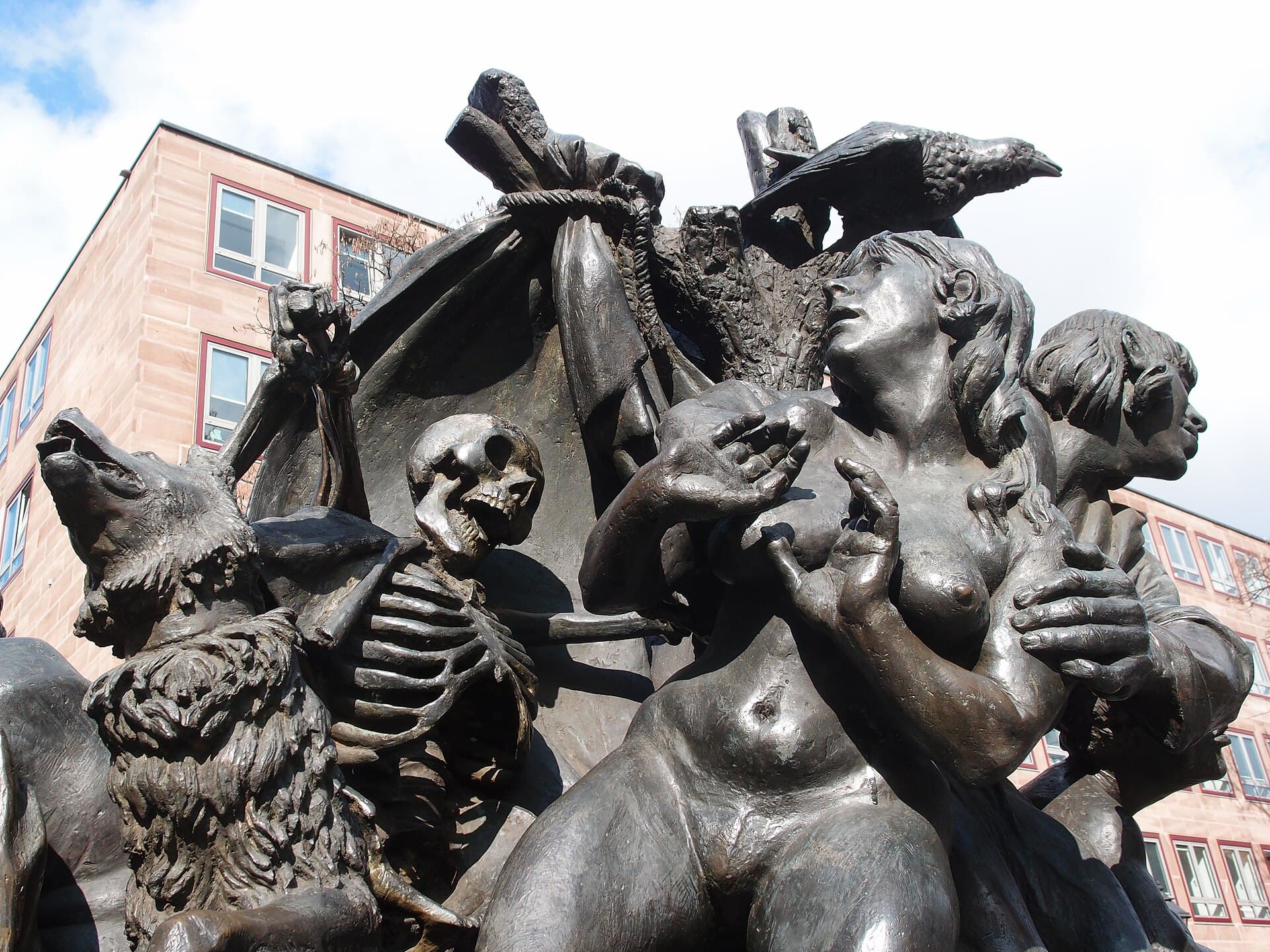 Ship of Fools FountainA strange bronze fountain in central Nuremberg, near the Museumsbrücke. The arti1 minute walk4.4
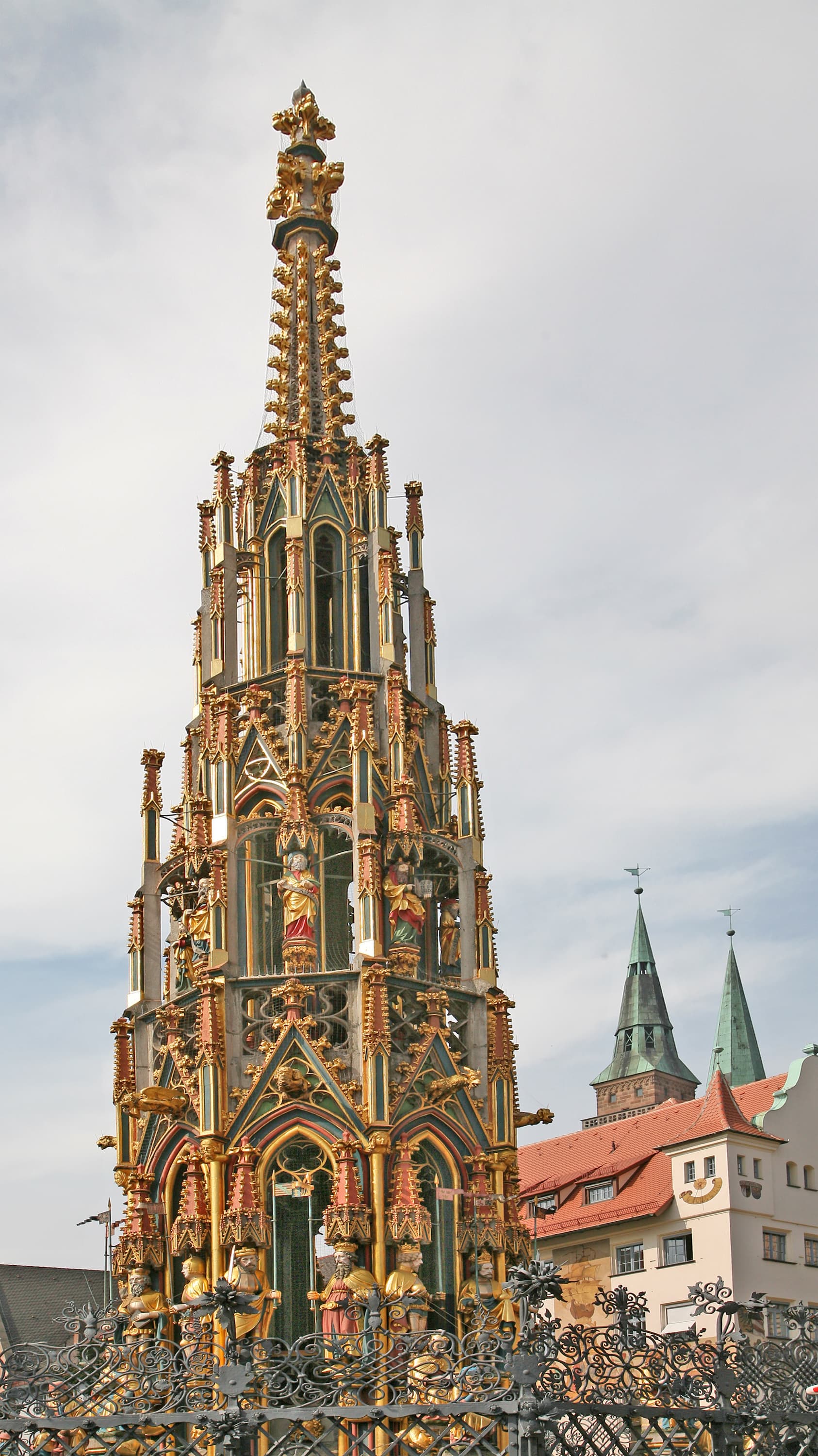 Schöner BrunnenThe Schöner Brunnen is a tall Gothic fountain on Nuremberg's main market square,2 minutes walk4.6
Because it was a Free Imperial City answering directly to the emperor rather than a territorial prince, and it sat at the crossing of major trade routes between northern Europe and Italy. Combining a commercial position with skilled craftsmen, it became a centre for precision manufacture: clocks, scientific instruments, arms and printing. The earliest surviving terrestrial globe was made here in 1492, as was the first pocket watch.
A walk through the historic centre: the nearby Fleischbrücke, the oldest single-arch stone bridge north of the Alps; the main market square with its Schöner Brunnen fountain and the Frauenkirche; then the climb to the castle. The centre is small and walkable in half a day.