
The single arch
A wide stone arch crossing the river without supports — an engineering feat in 1598.
jailbird — CC BY-SA 2.0 de · AnonymousUnknown author — Public domain · Diego Delso — CC BY-SA 3.0 · DALIBRI — CC BY-SA 3.0
The Fleischbrücke is a single-arch stone bridge over the river Pegnitz in central Nuremberg. Built between 1596 and 1598, its design took inspiration from the Rialto in Venice. Its single wide arch was an engineering achievement in its day, crossing the river without supports in the middle. The bridge survived the Second World War bombing that destroyed most of old Nuremberg, and is one of the few original pieces left. From it there is a fine view along the river and the old buildings on both banks, the best known being the Holy Spirit Hospital, built directly over the water.
A wide stone arch crossing the river without supports — an engineering feat in 1598.
A view along the Pegnitz and the old buildings on both banks.
A historic building standing directly over the water, seen from the bridge and worth the photograph.
Fleischbrücke, 90403 Nürnberg
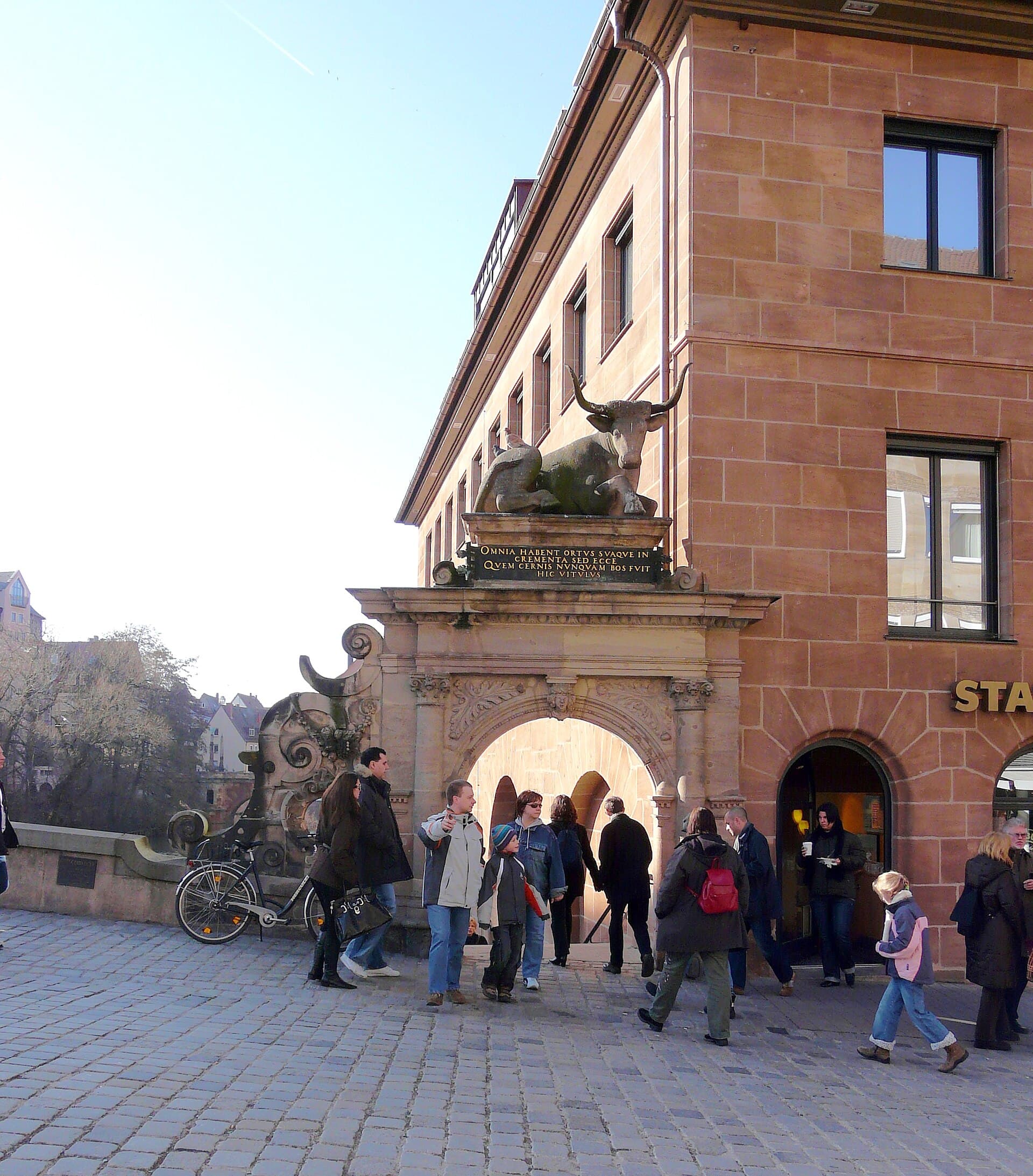 The Meat Hall and its Ox PortalA Renaissance building in central Nuremberg put up in the early seventeenth cent1 minute walk4.8
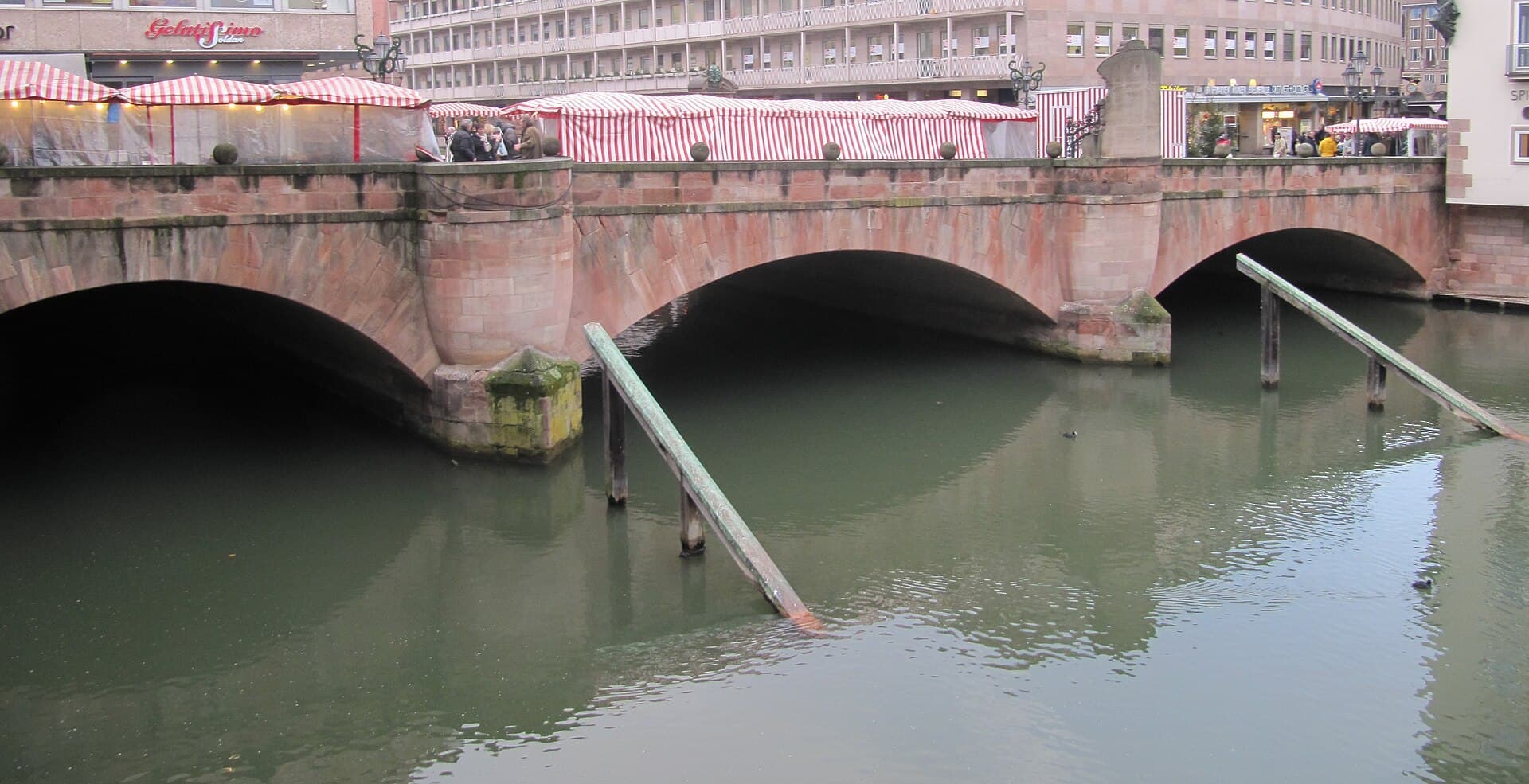 MuseumsbrückeThe Museumsbrücke is a short stone bridge over the river Pegnitz in the middle o1 minute walk4.8
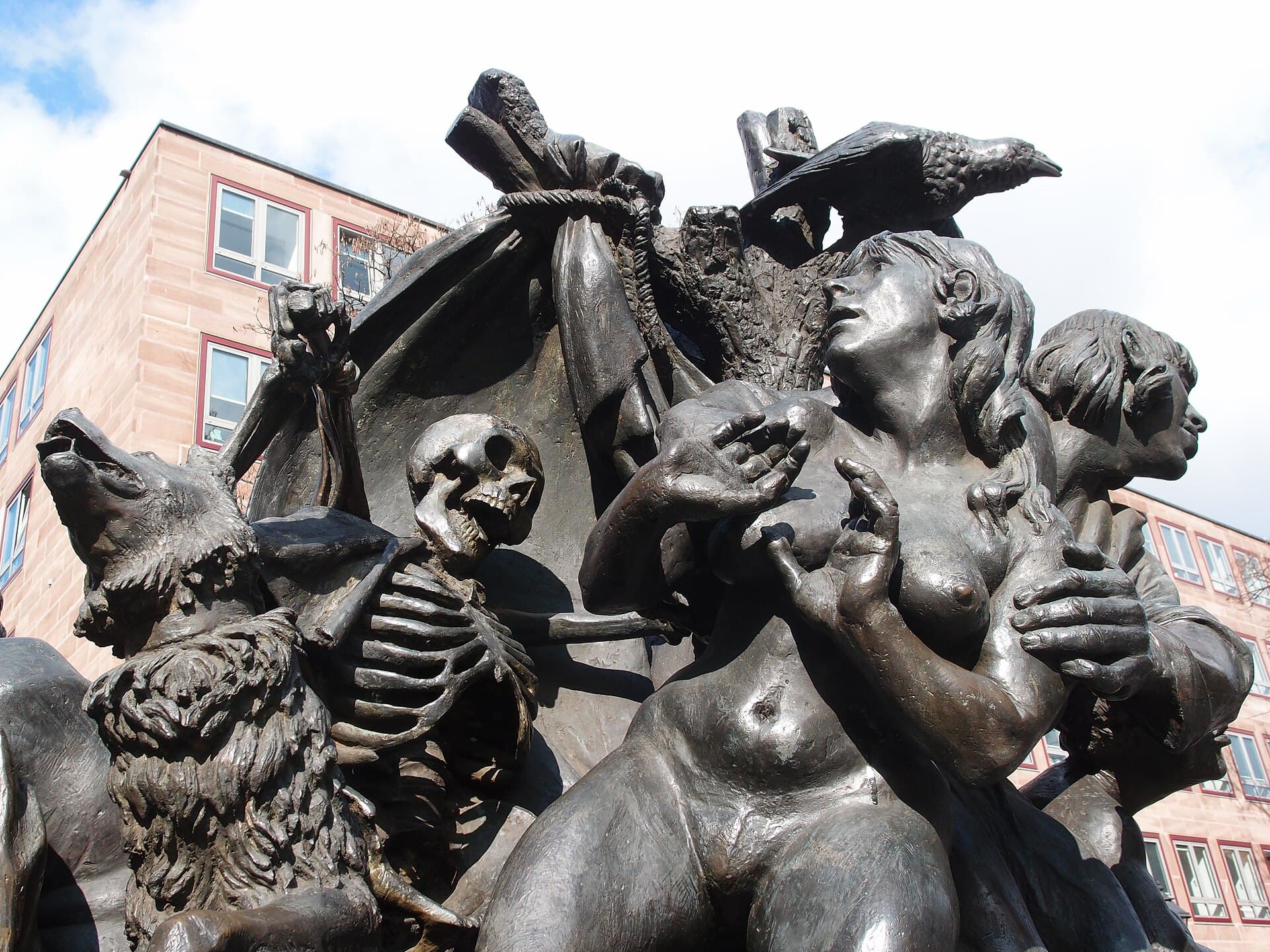 Ship of Fools FountainA strange bronze fountain in central Nuremberg, near the Museumsbrücke. The arti1 minute walk4.4
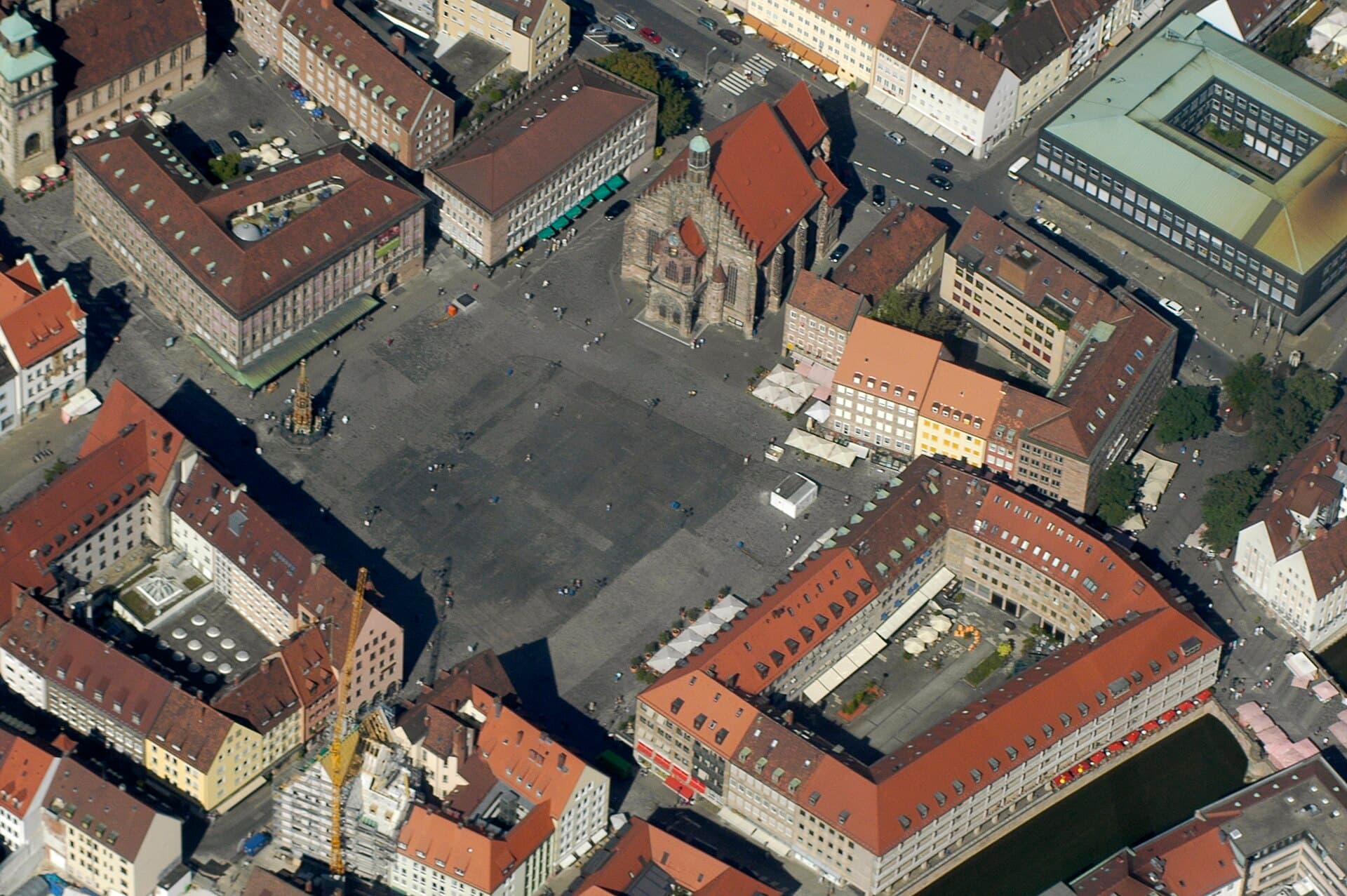 Nuremberg Main Market SquareThe commercial heart of Nuremberg since the middle of the fourteenth century, an1 minute walk4.5
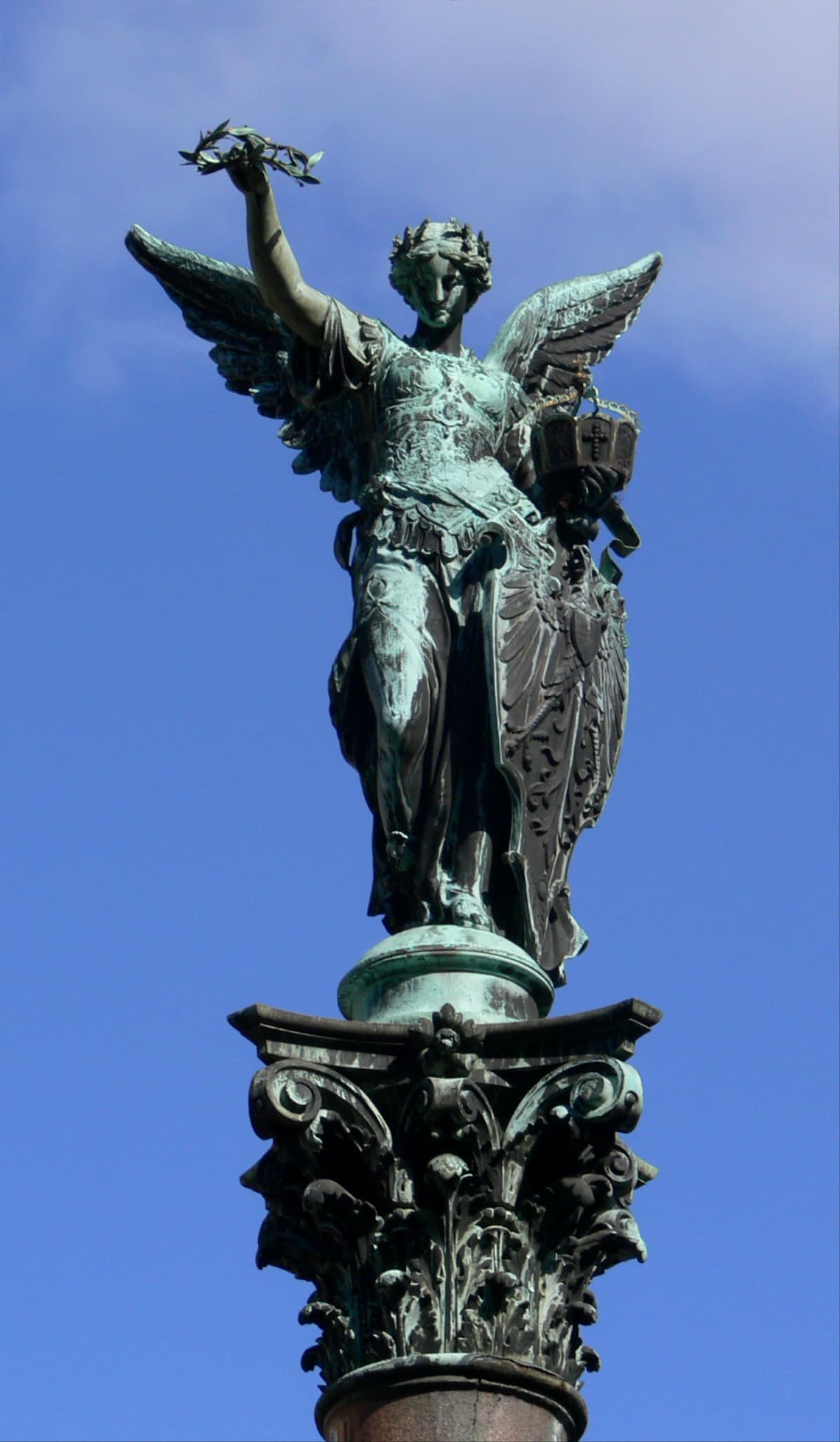 Köpfleinsberg War MemorialA war memorial in a quiet corner of Nuremberg's old town, raised after the Franc2 minutes walk4.3
Because its engineers took inspiration from Venice's Rialto Bridge, completed a few years earlier and famous across Europe at the time. The same idea: one wide arch crossing without supports in the water.
Ten minutes. It is a brief stop on the way, and the view is worth pausing a couple of minutes to photograph the river and the Holy Spirit Hospital.
The main market square and the Frauenkirche to the north, St. Sebaldus nearby, and the castle above them. The bridge sits in the middle of nearly everything.