
Four faces
Above the gate.
Marcin Konsek — CC BY-SA 4.0 · This Photo was taken by Supanut Arunoprayote. Feel free to use any of my images, but please mention me as the author and may send me a message. (สามารถใช้ภาพได้อิสระ แต่กรุณาใส่เครดิตผู้ถ่ายและอาจส่ — CC BY 4.0 · Jakub Hałun — CC BY-SA 4.0 · Marcin Konsek — CC BY-SA 4.0
Angkor Thom, the great city, was the last and longest-lived capital of the Khmer empire, founded by King Jayavarman VII in the late 12th century over 9 square kilometres inside a wall and moat, with the Bayon at its centre. The city has five gates, each crowned by four huge stone faces looking to the four directions about 23 metres up, and the south gate is the best preserved. A causeway crosses the moat to it, lined by 54 carved gods on the left and 54 demons on the right, all hauling the body of a giant serpent in the myth of the Churning of the Ocean of Milk. Tuk-tuks, bikes and sometimes elephants squeeze through the narrow gate while visitors stop on the causeway for photos. You can walk along the earthen wall above the gate for a quiet view of the moat and forest. Entry is with the Angkor Pass: USD 37 for one day, USD 62 for three days within ten, and USD 72 for seven days within a month; children under 12 go free with a passport.
Above the gate.
Gods and demons.
A quiet walk.
South entrance of Angkor Thom, about 1.5 km north of Angkor Wat
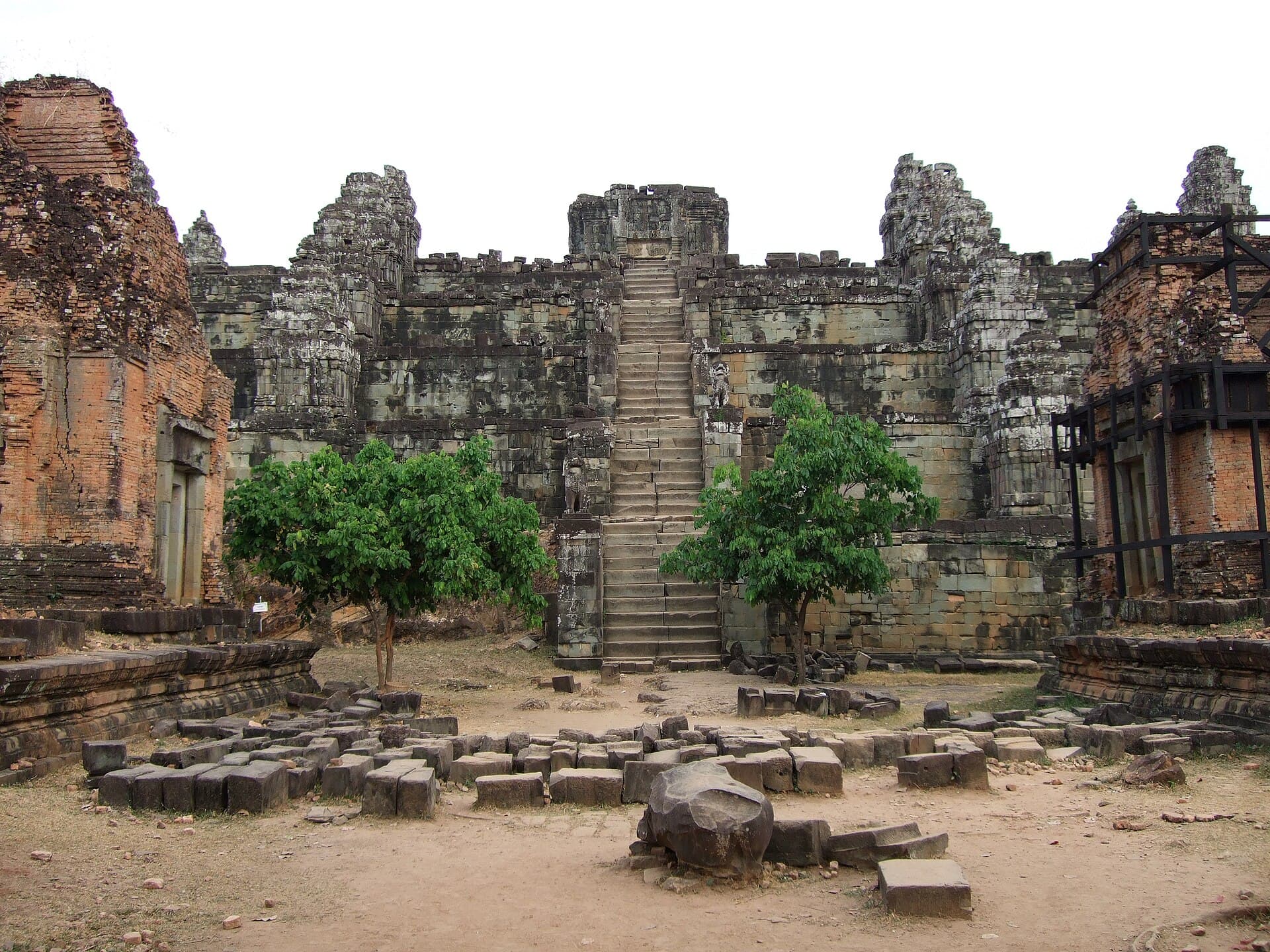 Phnom BakhengA temple mountain built at the end of the 9th century under King Yasovarman on a7 minutes walk4.5
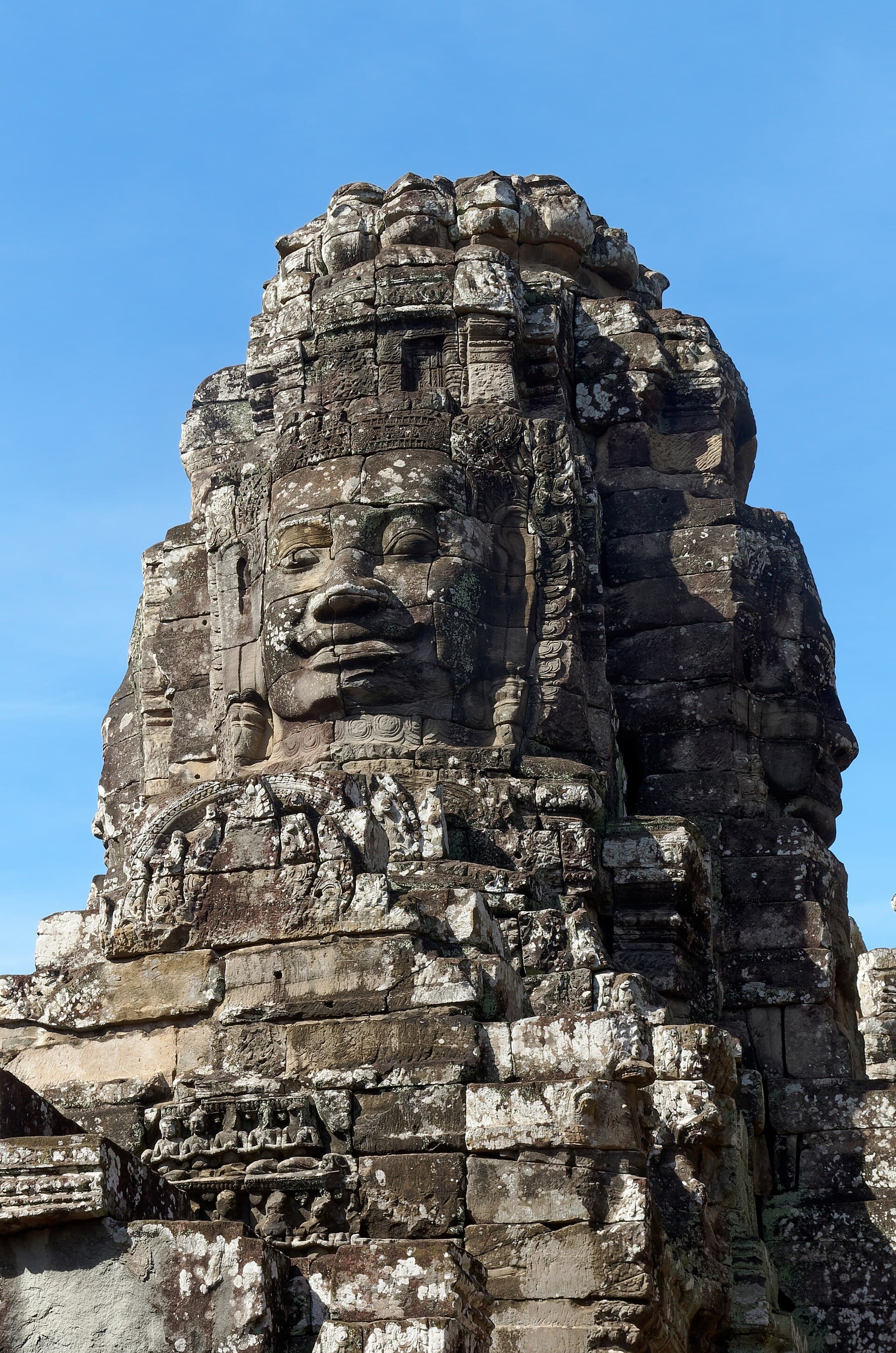 BayonThe state temple of King Jayavarman VII, built in the late 12th or early 13th ce19 minutes walk4.9
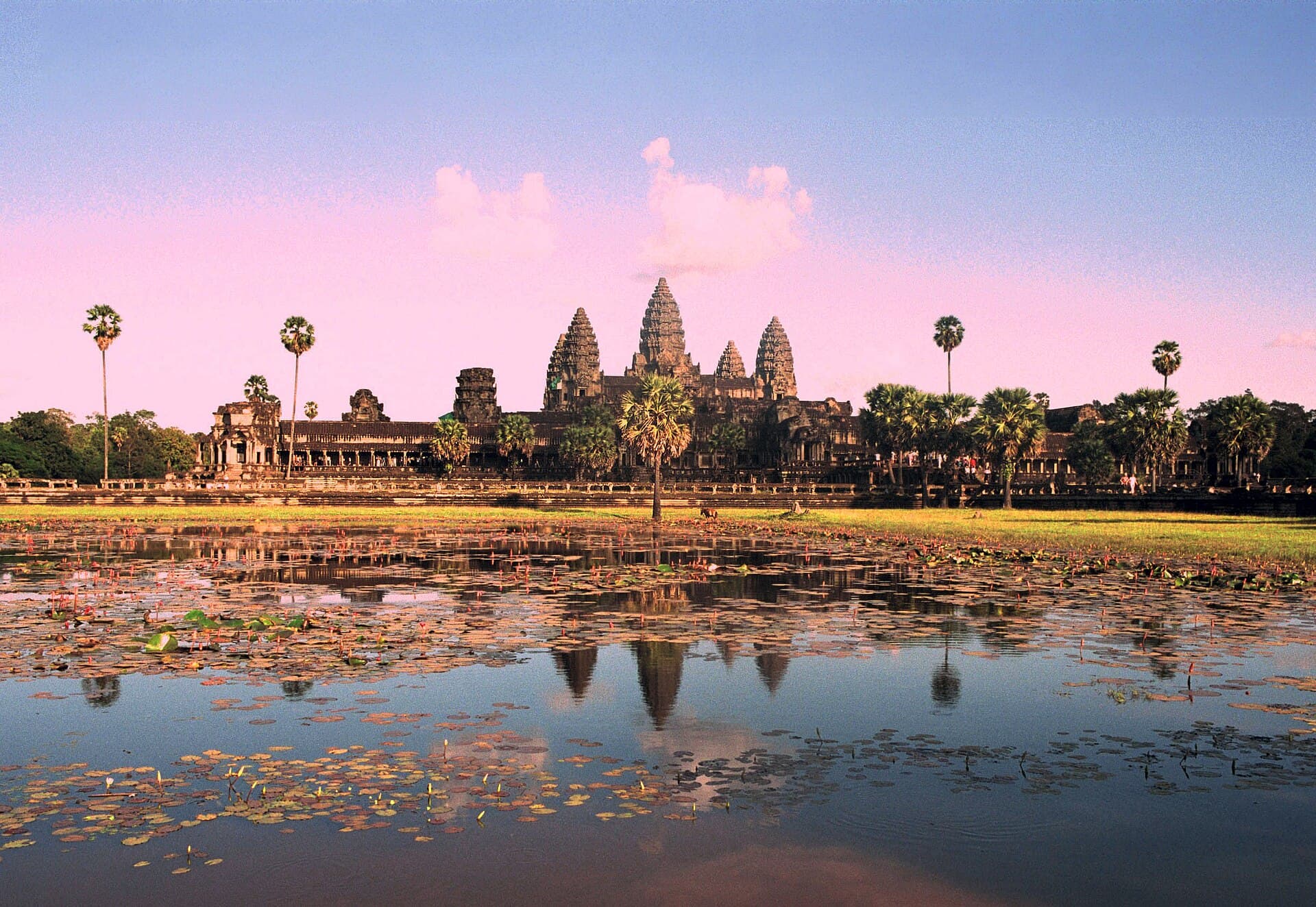 Angkor WatThe largest religious complex in the world, built between 1113 and 1150 under th23 minutes walk4.9
54 gods on the left and 54 demons on the right hauling a giant serpent, from the myth of the Churning of the Ocean of Milk.