
Sunset
Over the forest.
Helt — CC BY-SA 3.0 · Satdeep Gill — CC BY-SA 4.0 · LBM1948 — CC BY-SA 4.0 · Leon petrosyan — CC BY-SA 3.0
A temple mountain built at the end of the 9th century under King Yasovarman on a natural hill, more than two centuries before Angkor Wat. It was the centre and main temple of the first capital, Yasodharapura, rising as a pyramid of five terraces topped by stone towers. A winding path climbs about twenty minutes through trees to the top, where the wide forest opens out, Angkor Wat's towers appear a kilometre and a half away and the West Baray reservoir shines on the horizon. That has made it the park's best-known sunset spot. Because of the crowds, the number of people at the top is capped at sunset, so climb before five. The World Monuments Fund has been restoring and protecting the temple since 2004, and parts are under scaffolding. Entry is with the Angkor Pass: USD 37 for one day, USD 62 for three days within ten, and USD 72 for seven days within a month; children under 12 go free with a passport. Temples are living places of worship: cover shoulders and knees, remove your hat where asked and keep off roped-off stones. The heat is fierce most of the year, so carry water and start early.
Over the forest.
In the distance.
Five terraces.
Hill between Angkor Wat and the south gate of Angkor Thom
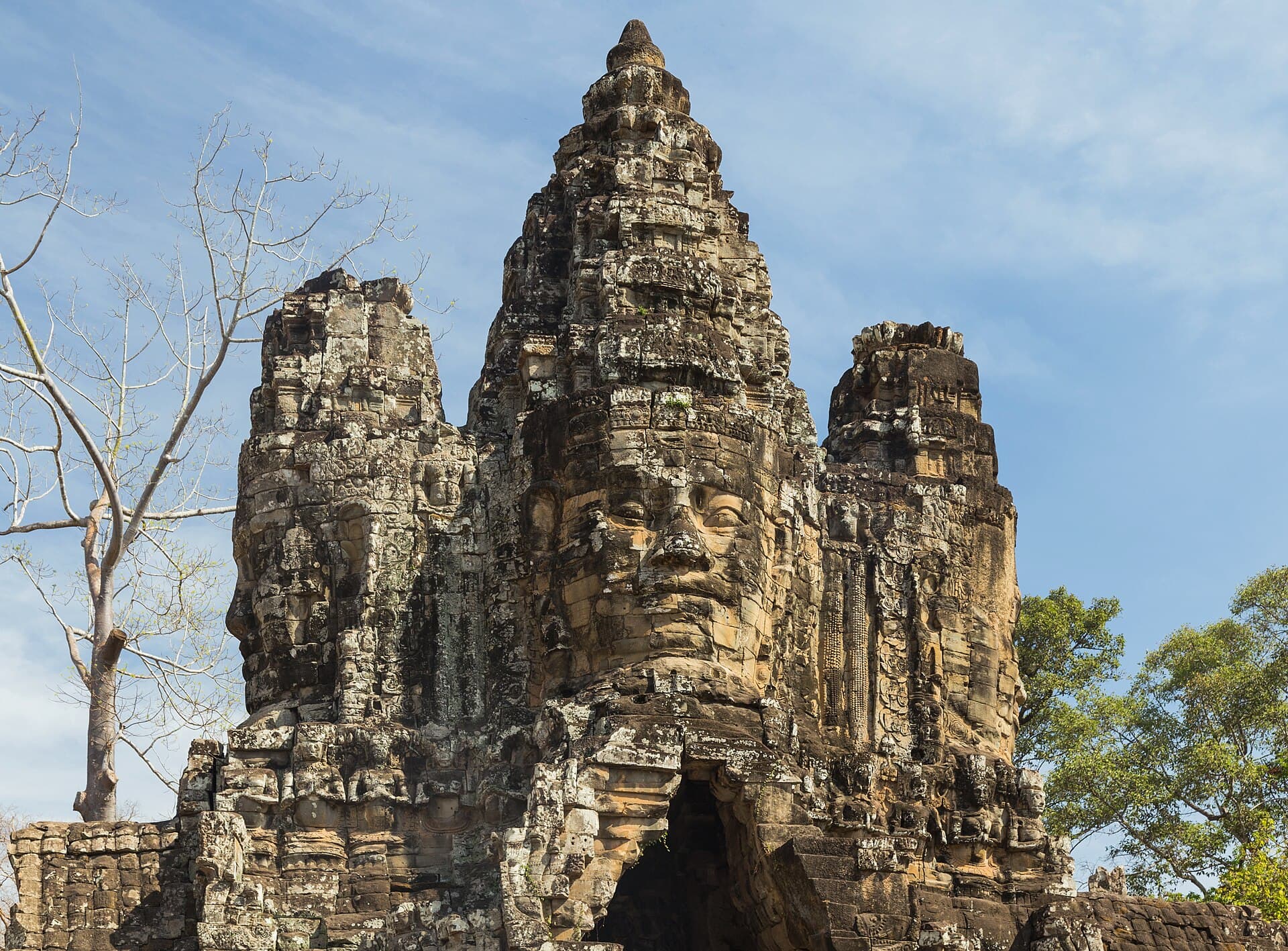 Angkor Thom South GateAngkor Thom, the great city, was the last and longest-lived capital of the Khmer7 minutes walk4.8
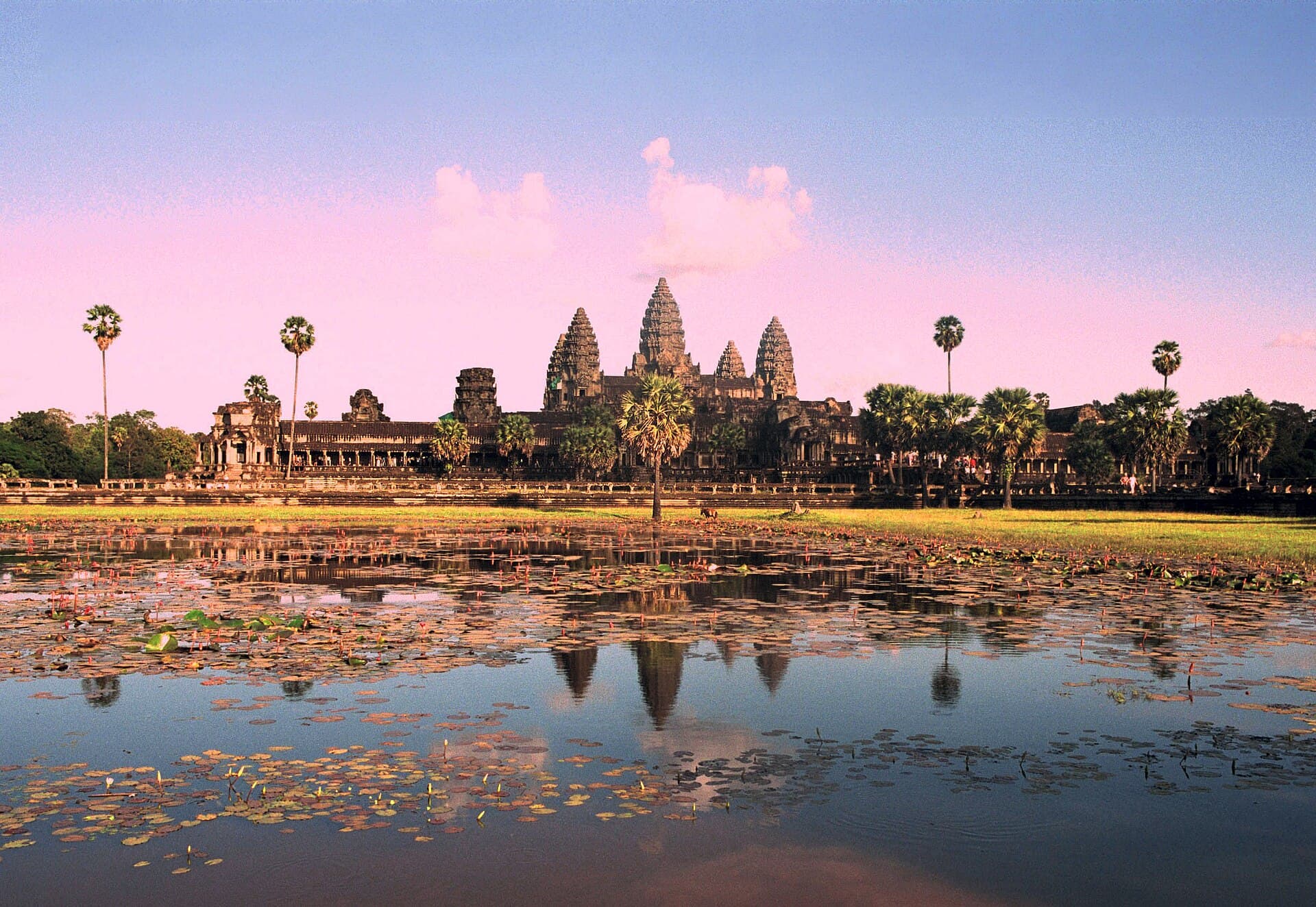 Angkor WatThe largest religious complex in the world, built between 1113 and 1150 under th22 minutes walk4.9
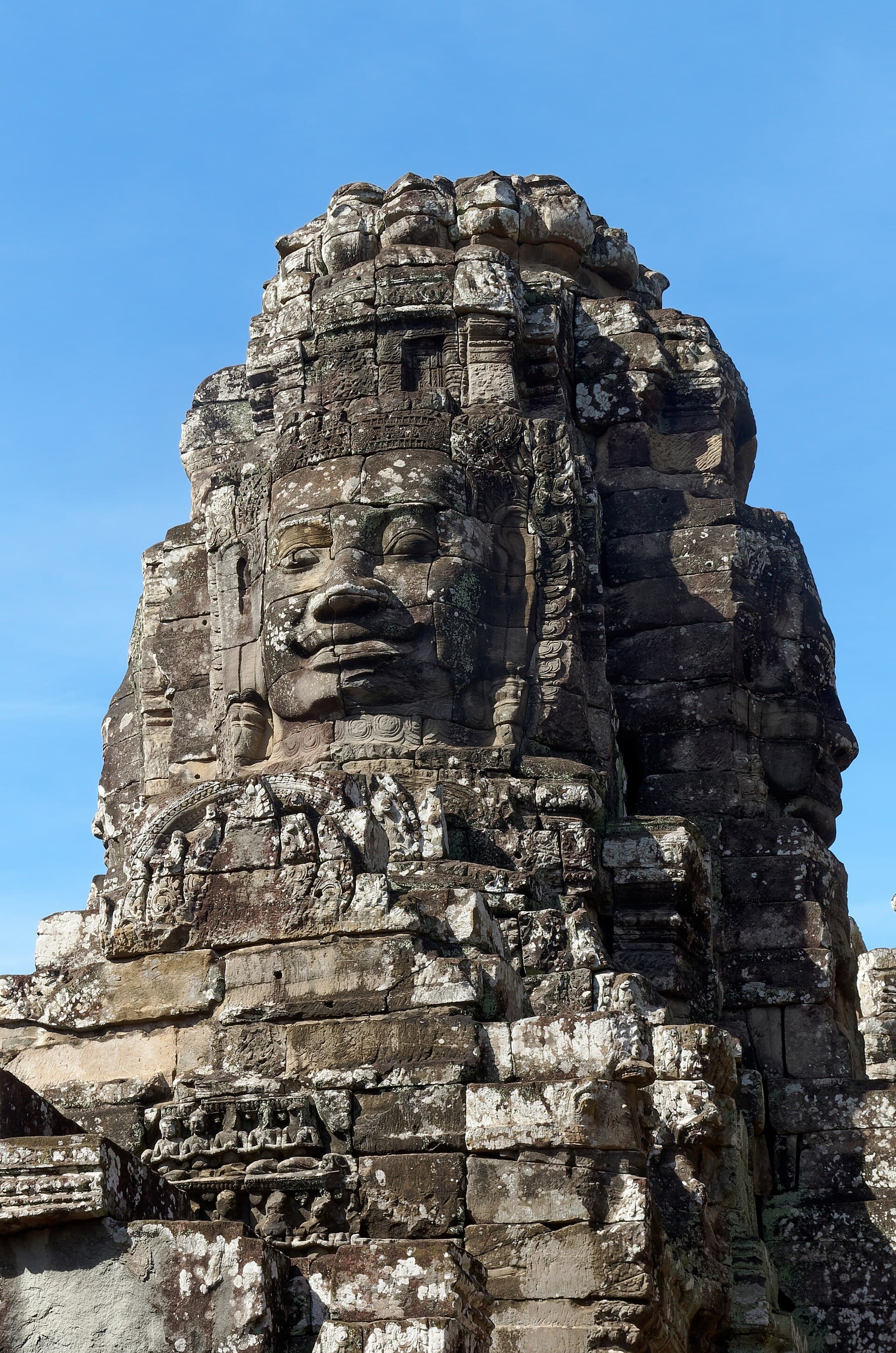 BayonThe state temple of King Jayavarman VII, built in the late 12th or early 13th ce24 minutes walk4.9
Before 5 pm, because the number at the top is capped and latecomers queue.