Smiling faces
On every tower.
Jakub Hałun — CC BY-SA 4.0 · Jakub Hałun — CC BY-SA 4.0 · Radosław Botev — CC BY 3.0 pl · Jakub Hałun — CC BY-SA 4.0
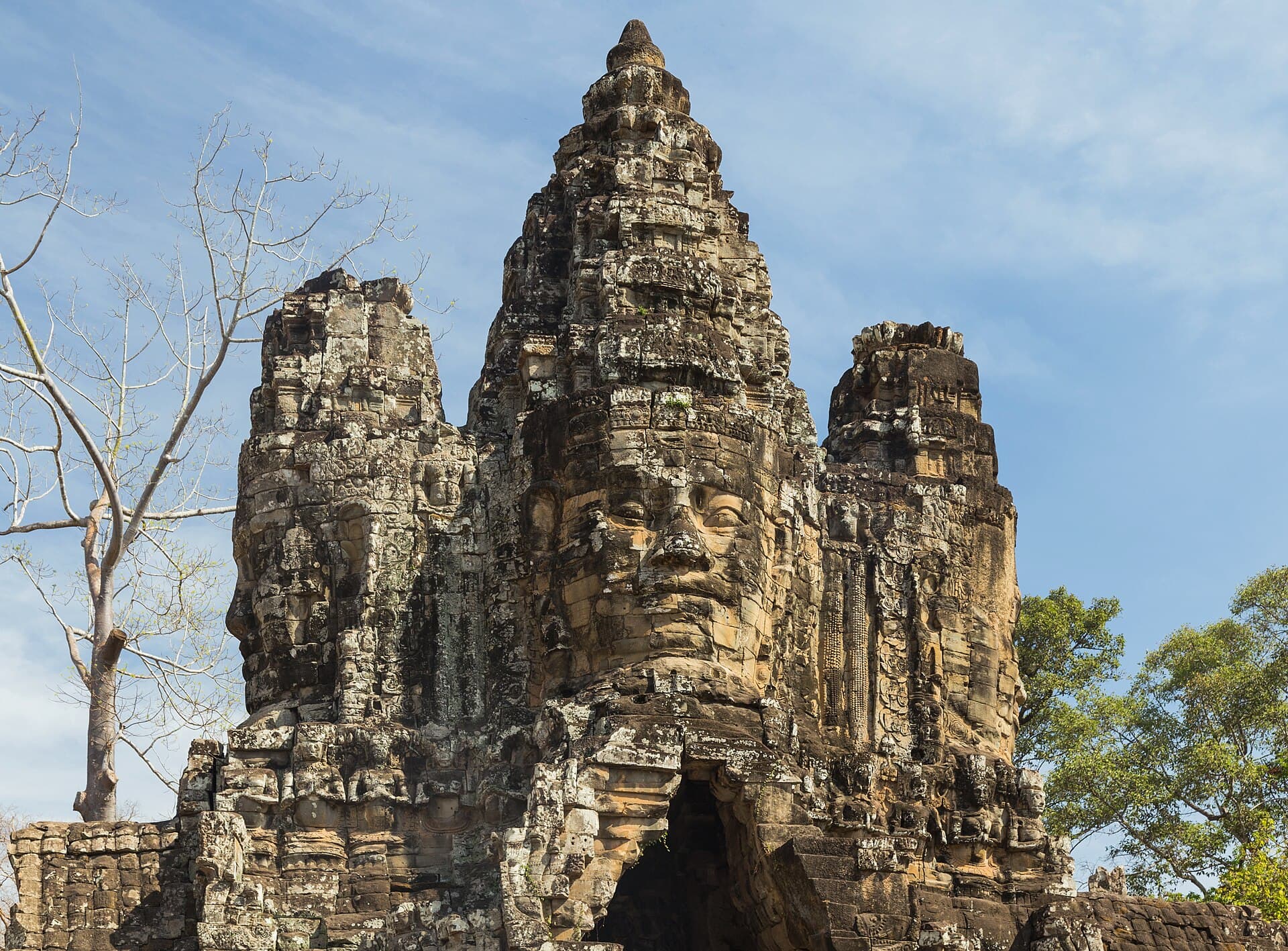
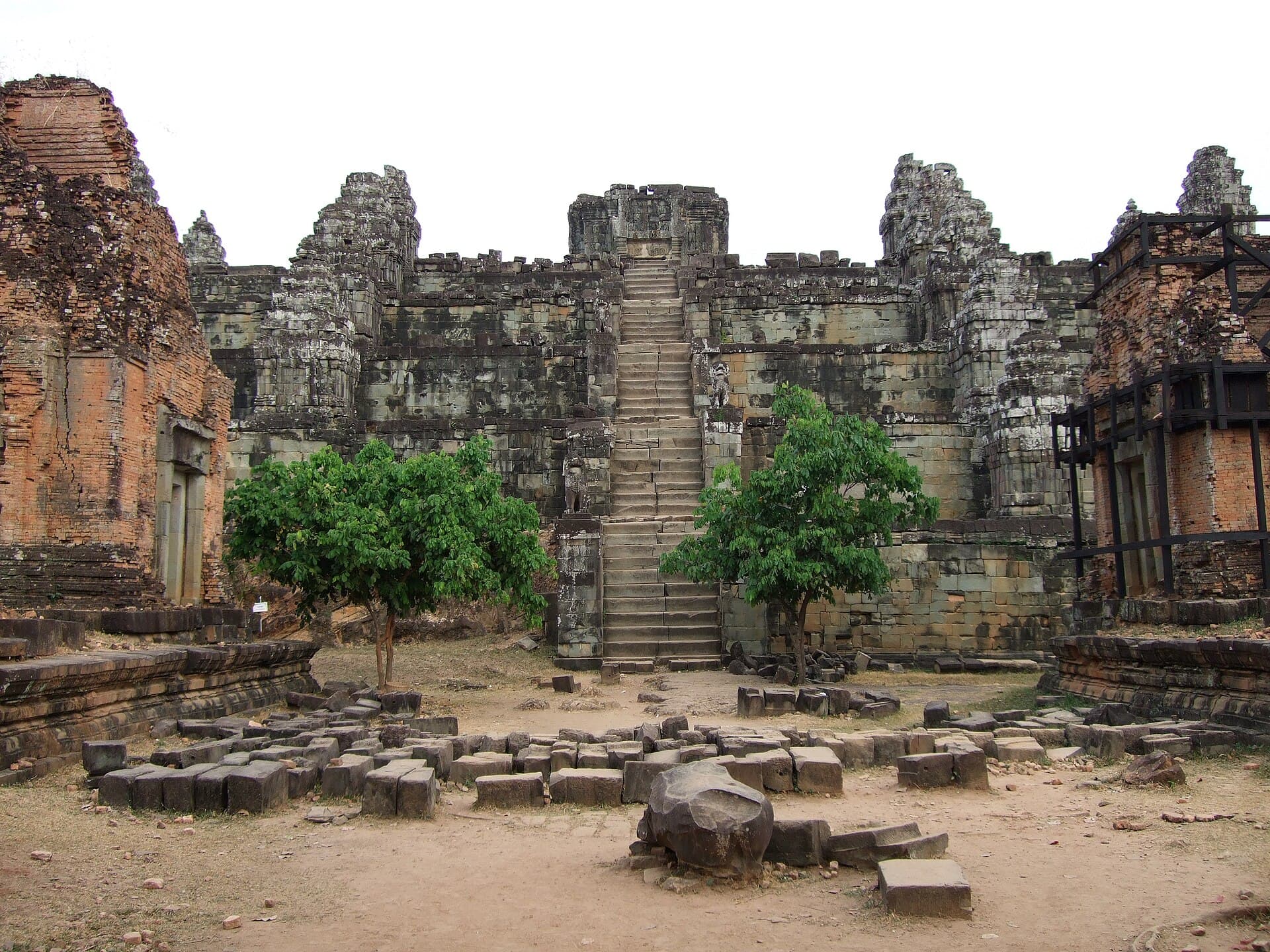
The state temple of King Jayavarman VII, built in the late 12th or early 13th century at the heart of his capital, Angkor Thom. After Angkor Wat it is the best-known temple of Angkor, thanks to stone towers carved with more than two hundred calm, smiling faces gazing in every direction. Visitors wander among tightly packed towers on several levels, the huge faces appearing from every angle, sometimes almost close enough to touch. Their look changes with the light, clearest early in the morning and late in the day. The outer gallery carries rare bas-reliefs of daily life in the Khmer empire: fishing on the lake, markets, cooking and cockfights, beside a naval battle against the Cham army on the Tonle Sap lake. Entry is with the Angkor Pass: USD 37 for one day, USD 62 for three days within ten, and USD 72 for seven days within a month; children under 12 go free with a passport. Temples are living places of worship: cover shoulders and knees, remove your hat where asked and keep off roped-off stones. The heat is fierce most of the year, so carry water and start early.
On every tower.
Markets and fishing.
Clearest faces.
Centre of Angkor Thom, Angkor Archaeological Park
Early morning after sunrise at Angkor Wat, before the coaches arrive, or late afternoon when the light softens on the faces.