
The central gable
Statues of Justice, Wisdom and the Virgin above Renaissance columns.
No machine-readable author provided. Klaus with K assumed (based on copyright claims). — CC BY-SA 3.0 · Alvesgaspar — CC BY-SA 4.0 · Klaus with K — CC BY-SA 3.0 · CEphoto, Uwe Aranas — CC BY-SA 3.0
Antwerp's City Hall is the first great Renaissance building in the Low Countries and influenced many town halls after it: designed by Cornelis Floris and completed in 1565 at the peak of Antwerp's wealth when it was Europe's richest city — a long façade joining the Italian Renaissance (columns and regular storeys) with a Flemish touch (the ornate central gable with statues of Justice, Wisdom and the Virgin). It burned only ten years later in the "Spanish Fury" (1576) and was rebuilt. Fully restored (2018–2022) and reopened with the world's flags on its façade (a city tradition) and a tourist office inside. The interior — nineteenth-century halls with historical murals (Hendrik Leys) and a grand staircase — is visited on limited tours via the tourist office. It occupies the west side of the Grote Markt — your first sight on the square, and its lit façade at night is among Antwerp's loveliest views.
Statues of Justice, Wisdom and the Virgin above Renaissance columns.
Antwerp's tradition on the City Hall façade.
Grote Markt 1, 2000 Antwerp
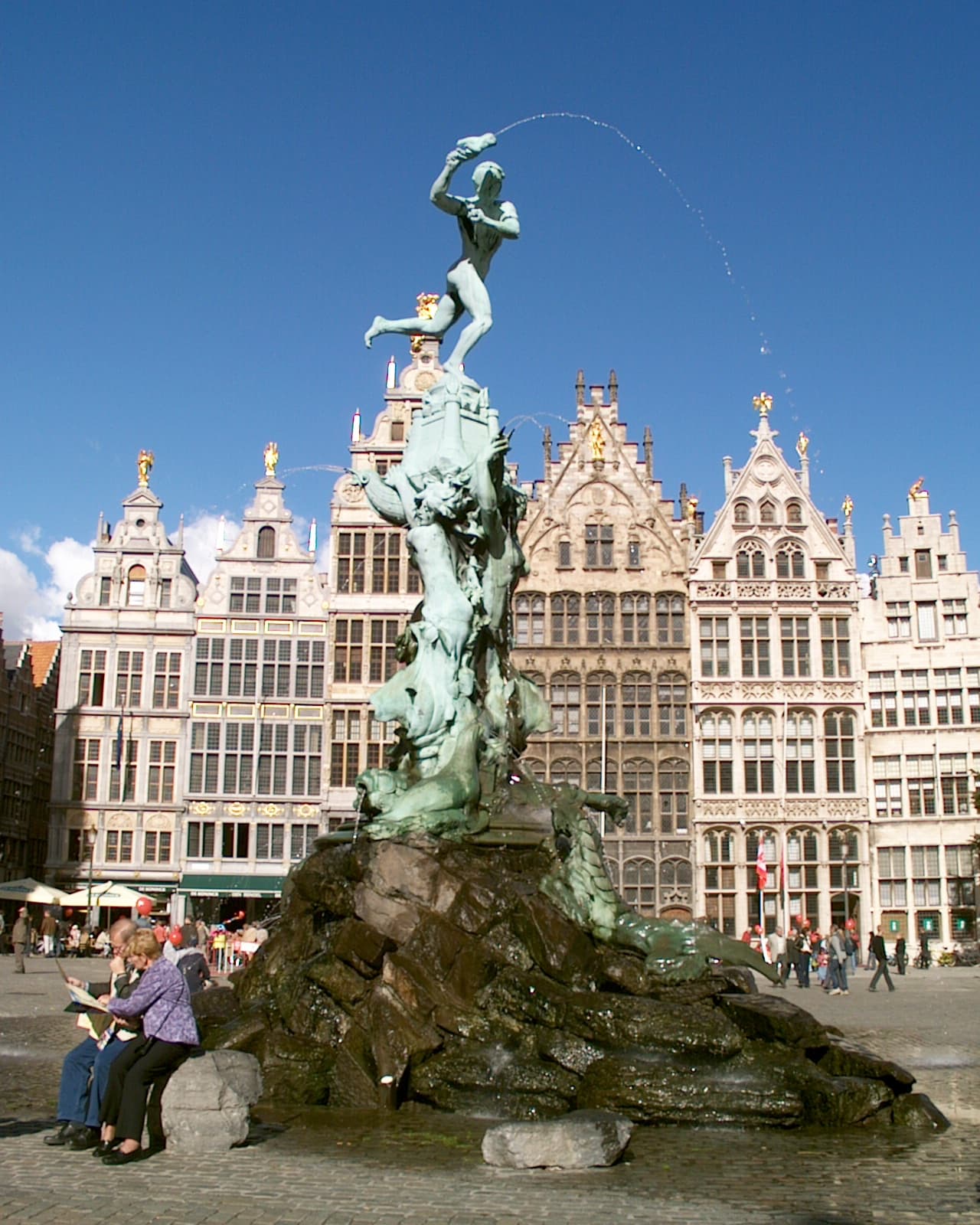 Grote Markt and Brabo FountainThe Grote Markt is Antwerp's great square and historic heart: an irregular trian1 minute walk4.5
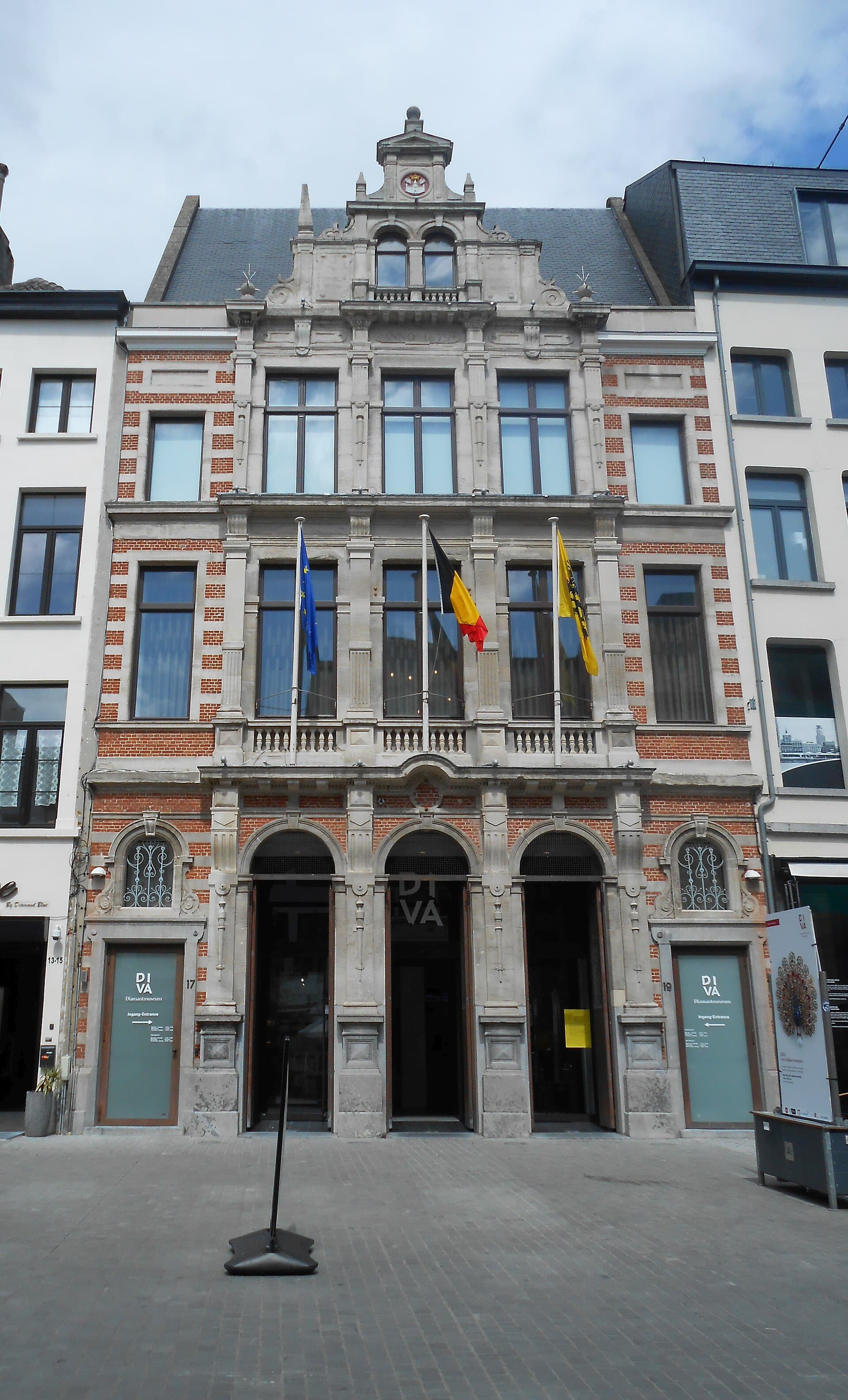 DIVA Diamond and Jewellery MuseumDIVA is Antwerp's museum of diamonds, jewellery and silver — the world's diamond1 minute walk4.2
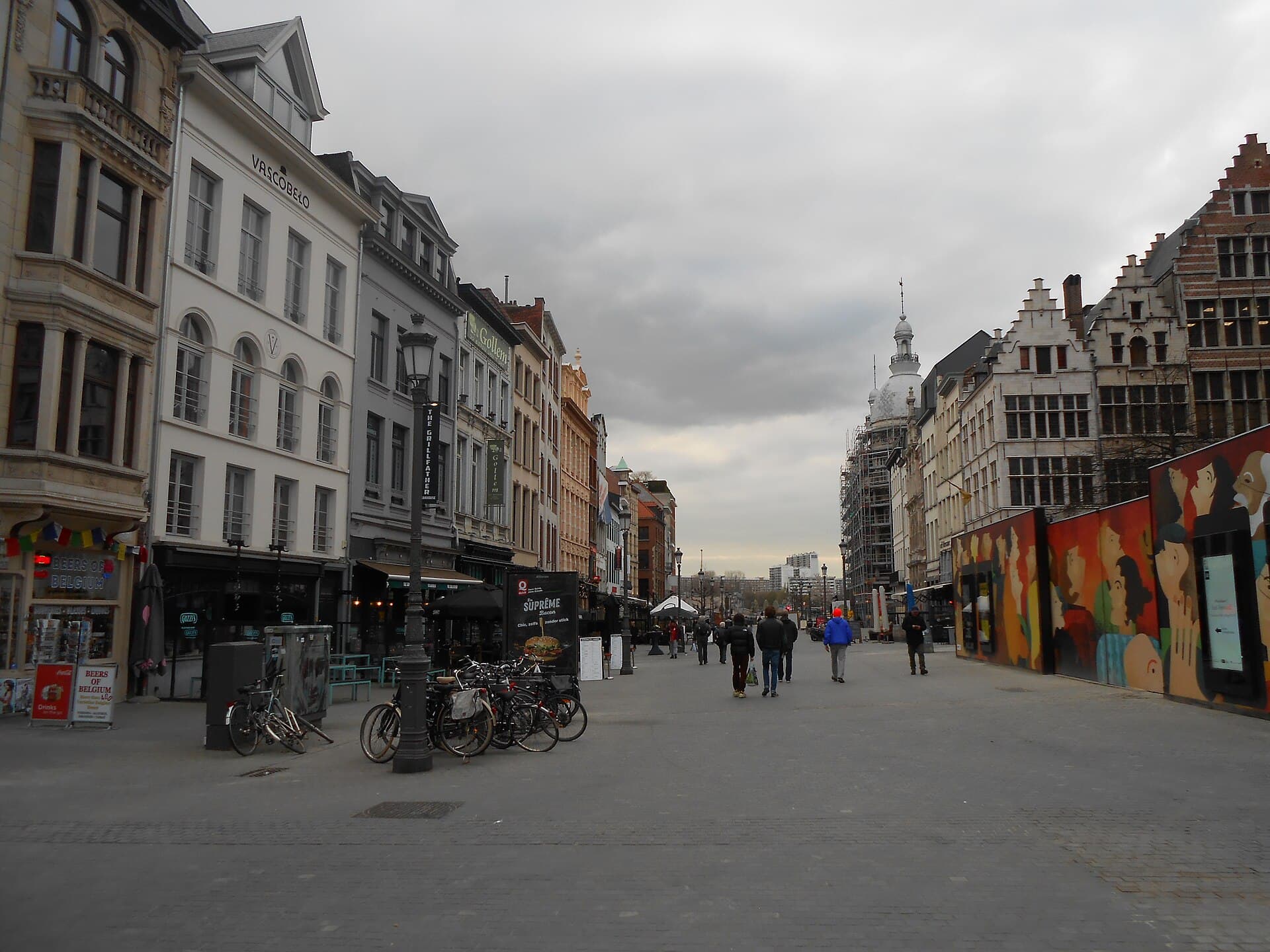 De Ruien (Underground Antwerp)De Ruien is Antwerp hidden underground: the network of medieval canals and strea1 minute walk4.1
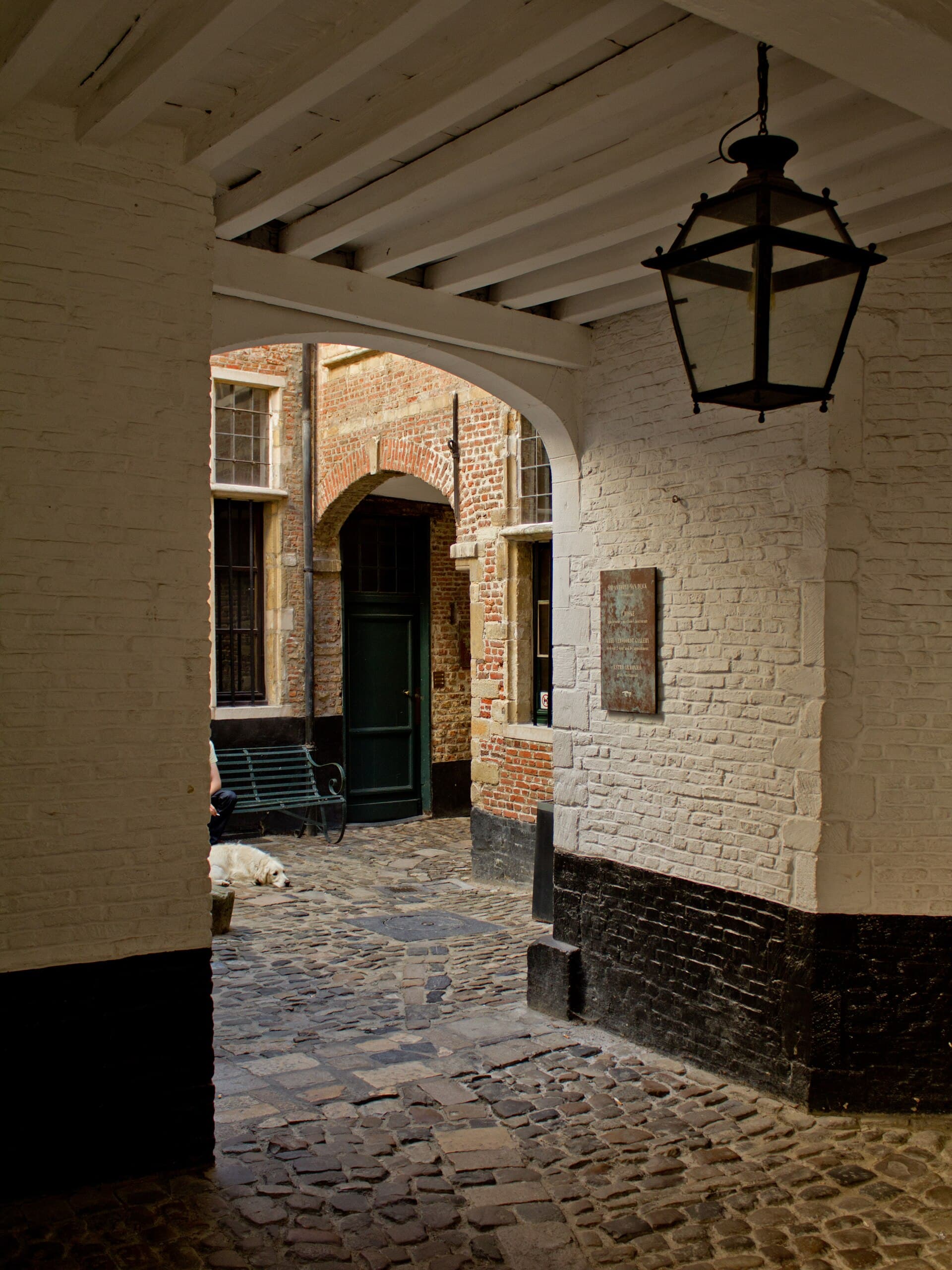 Vlaeykensgang AlleyThe Vlaeykensgang is a secret sixteenth-century alley steps from the cathedral: 1 minute walk4.7
 Eugeen Van Mieghem MuseumA small museum devoted to the Belgian painter Eugeen Van Mieghem (1875-1930), a 2 minutes walk4.3
In November 1576 unpaid Spanish soldiers mutinied and sacked Antwerp for three days: thousands were killed and hundreds of houses and the new City Hall burned — a catastrophe that began Antwerp's fall from Europe's commercial throne (the closing of the Scheldt in 1585 completed it). The City Hall was quickly rebuilt, and the story remained in the city's memory.