
The space is the artwork
Geometric forms running across floor, wall and ceiling alike.
Entertainment rooms in an eighteenth-century building on Place Kléber, decorated in 1928 with work counted among the most important European abstract art — then destroyed, forgotten and rebuilt. Three artists were commissioned to design the interior: Theo van Doesburg of the Dutch De Stijl movement, Hans Arp and Sophie Taeuber-Arp. They covered the walls and ceilings in coloured geometric forms running across every surface — floor, wall and ceiling — so that the space itself becomes the artwork rather than holding a picture on a wall. This was a serious attempt to make abstract art an environment people lived in rather than something looked at. It was called the Sistine Chapel of modernism. The public rejected it entirely at the time: it was thought cold and strange, the walls were painted over in the 1930s and the rooms put to other uses. Three rooms were precisely reconstructed in 2006 and opened to the public free of charge. Hours are very limited — often only a few days a week.
Geometric forms running across floor, wall and ceiling alike.
Thought cold and strange and covered in the 1930s.
Three rooms precisely reconstructed and opened free.
Place Kléber, central Strasbourg
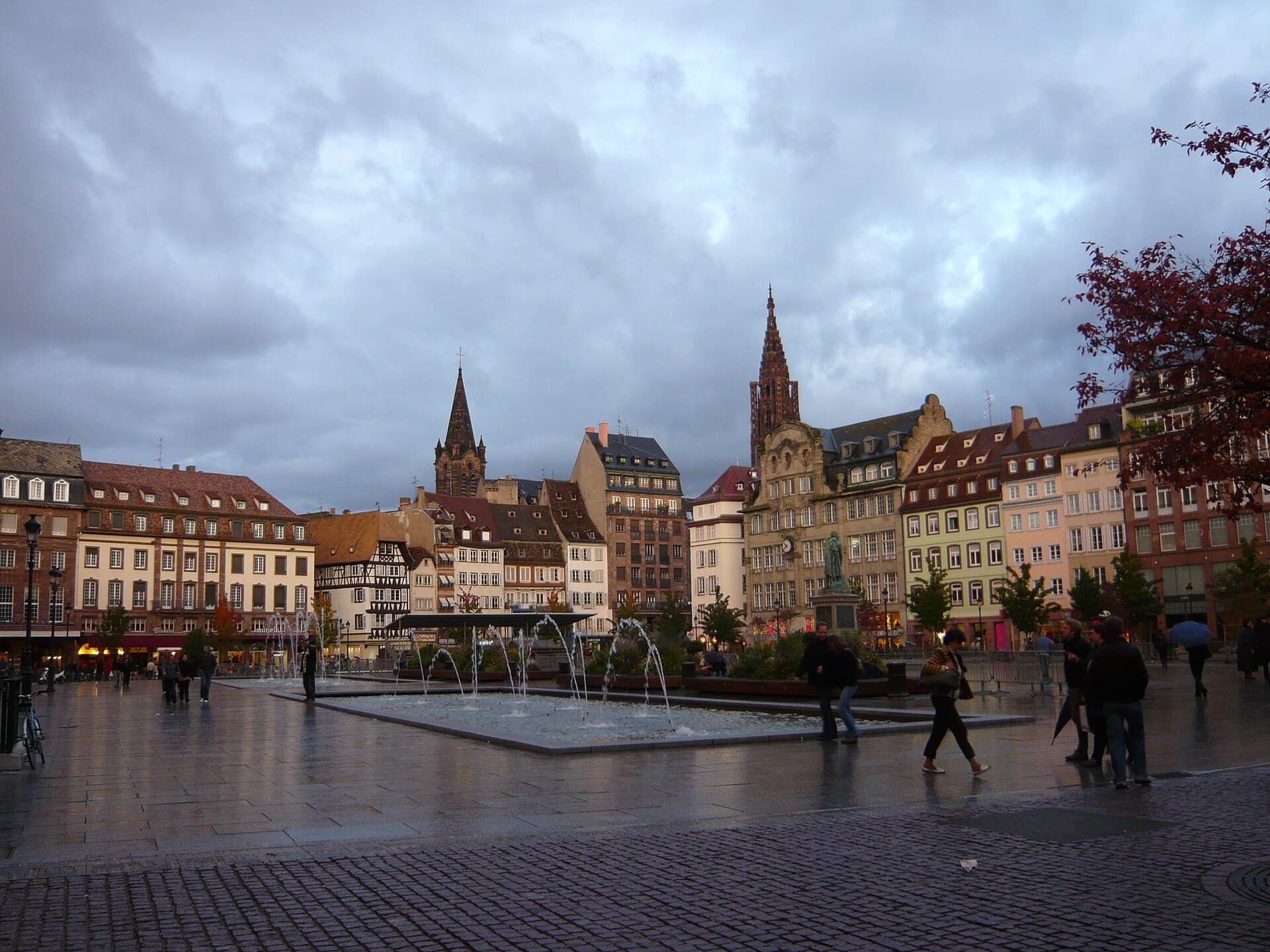 Place KléberPlace Kléber is Strasbourg's beating heart: the city's largest square, its meeti1 minute walk4.4
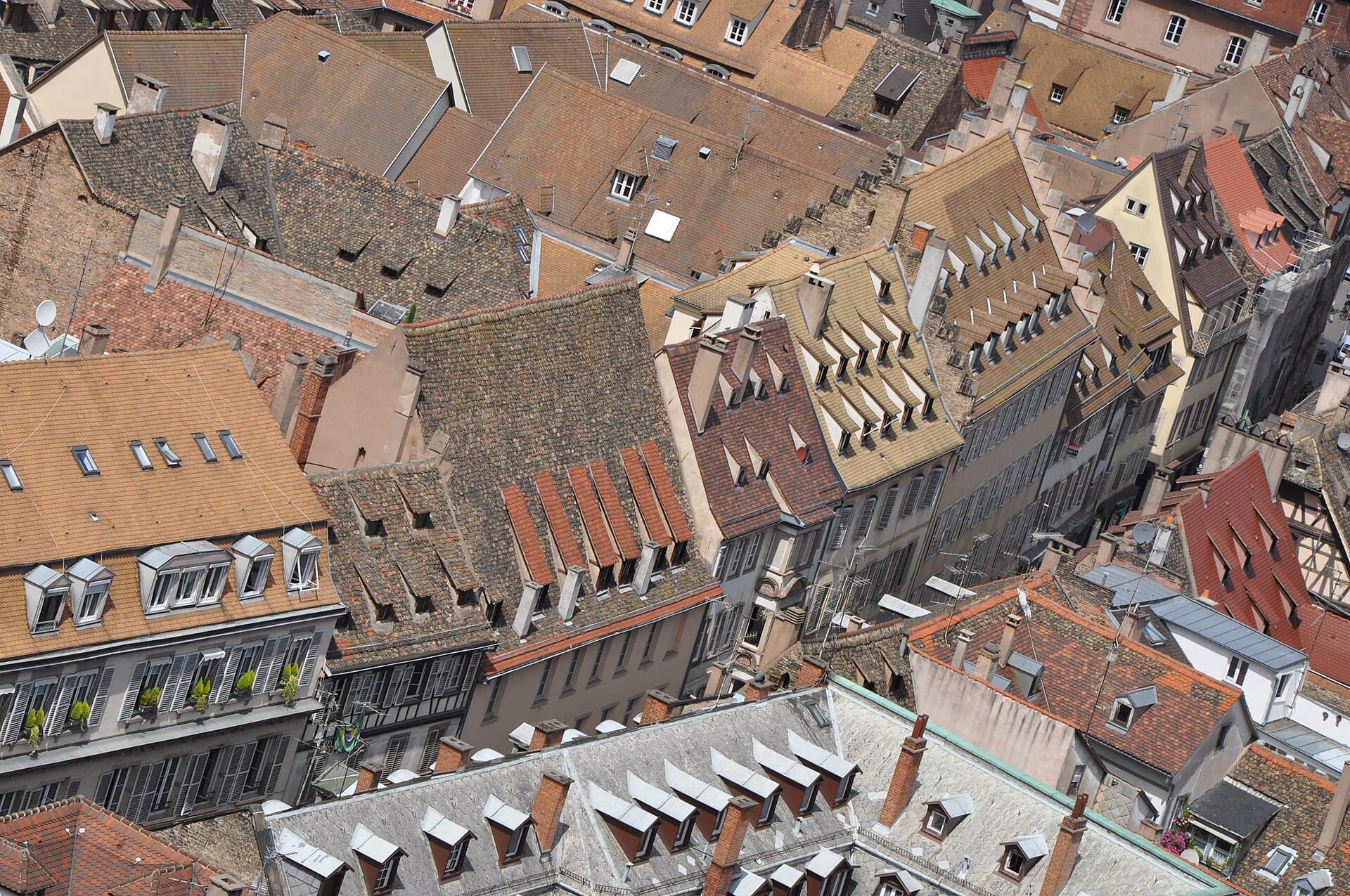 Grande ÎleThe Grande Île is all of historic Strasbourg: the city's core ringed by two arms2 minutes walk4.6
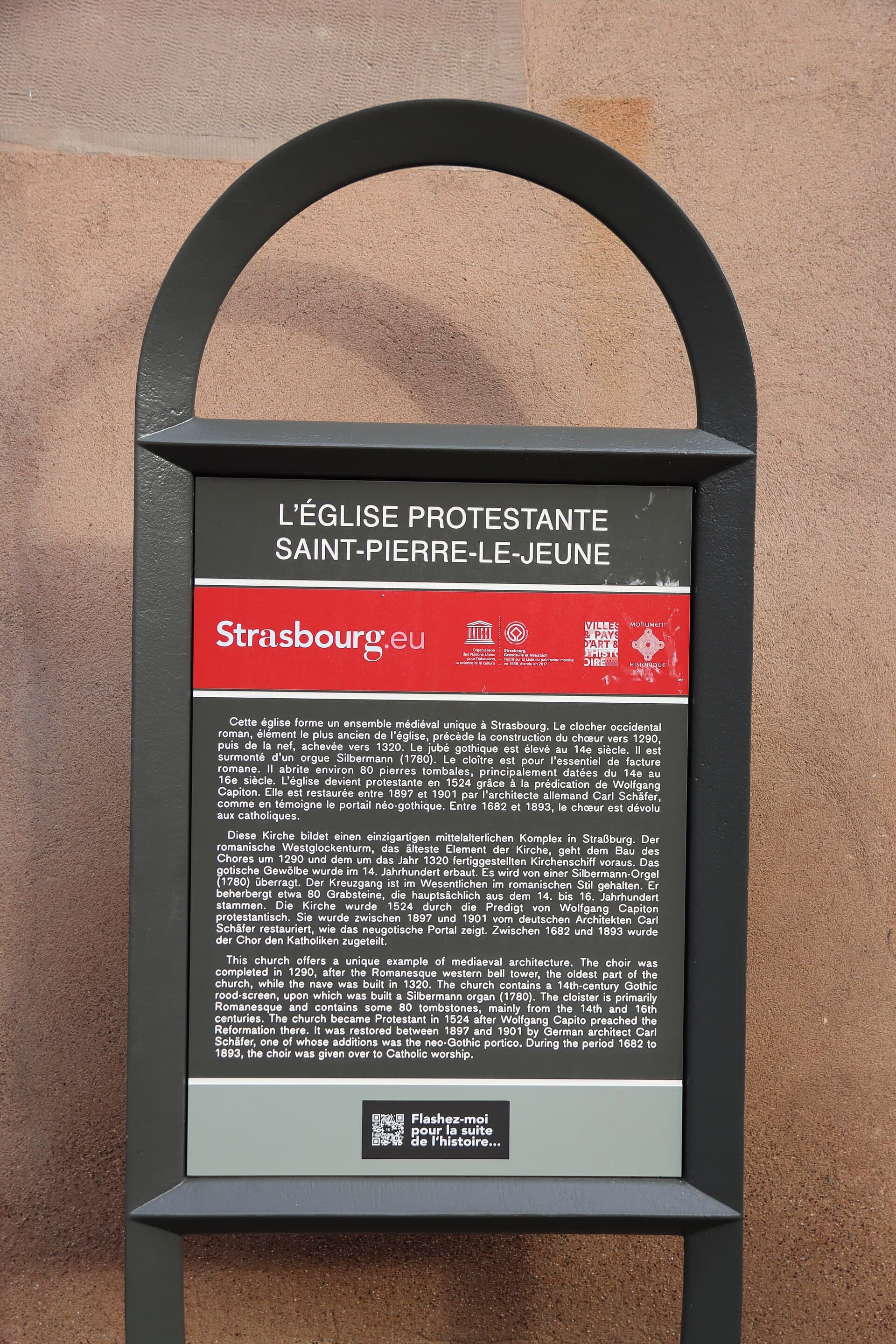 Saint-Pierre-le-Jeune Protestant ChurchA Protestant church north of the old town that gathers traces of at least five a2 minutes walk4.7
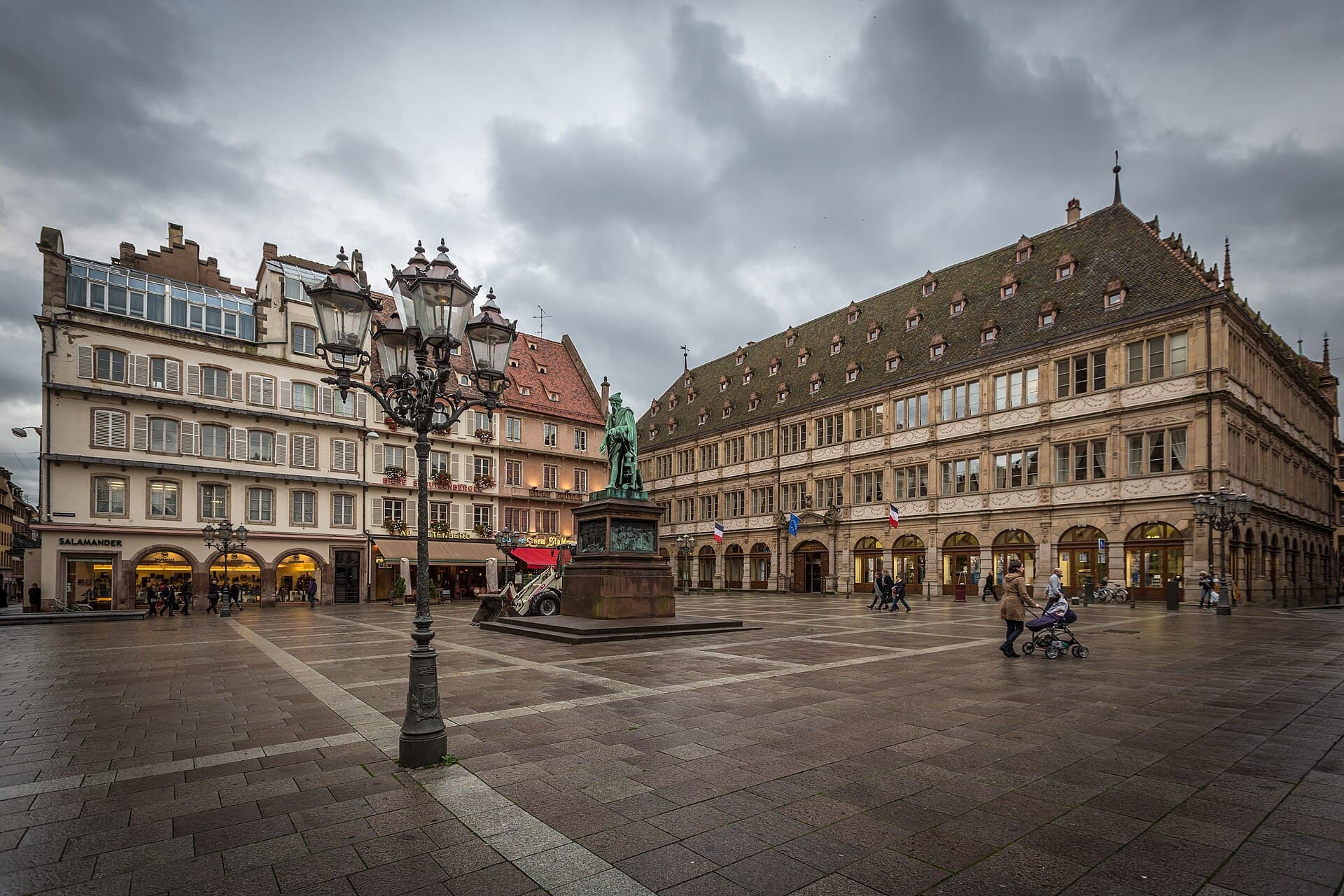 Place GutenbergA square in the heart of Strasbourg between the cathedral and the river, with a 4 minutes walk4.6
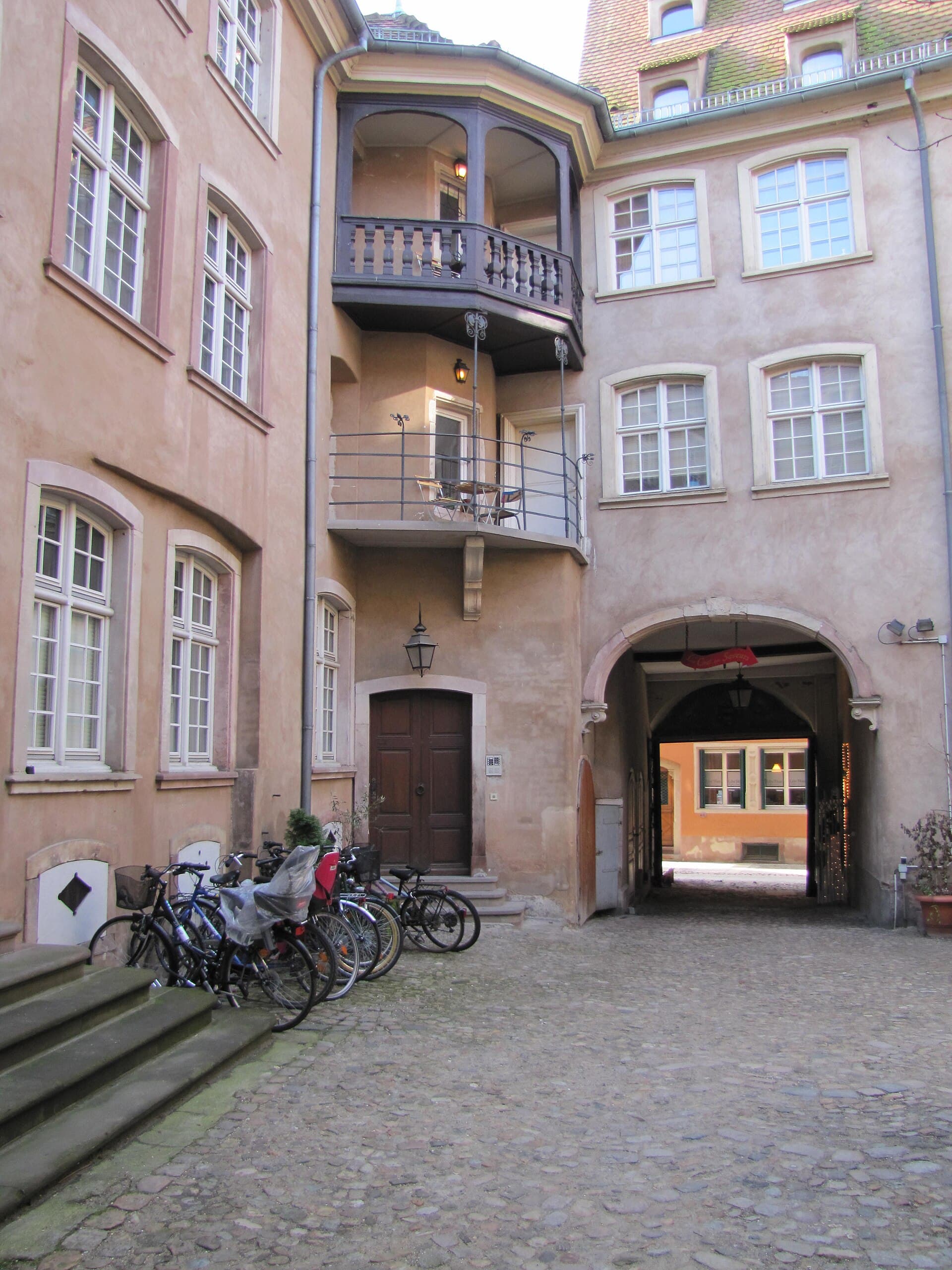 Hôtel de RathsamhausenA historic town mansion near the Petite France, built for the noble Alsatian fam5 minutes walk4.4
A Dutch artistic movement founded in 1917, its best-known members Piet Mondrian and Theo van Doesburg. Its principle was reducing art to its essential elements: straight horizontal and vertical lines only, and primary colours — red, yellow and blue — with white, black and grey. The aim was a universal visual language free of individuality and emotion. The movement influenced architecture and design more than painting, and its mark is visible across architectural modernism.
The cathedral first: Gothic in pink stone with a spire of a hundred and forty-two metres that was the tallest building in the world for centuries, holding an astronomical clock that performs at midday. The Petite France quarter with its canals and half-timbered houses — World Heritage listed along with the whole Grande Île. And the Palais Rohan with its three museums.