
Fourteenth-century murals
They survived by being whitewashed after the Reformation and uncovered later.
A Protestant church north of the old town that gathers traces of at least five architectural periods in one building, and is among the most historically dense structures in Strasbourg. The site has been used for worship since the late Roman period, and beneath it lies a crypt of the seventh century. The present church is Gothic of the thirteenth and fourteenth centuries, and it has a Romanesque cloister with arcades and round arches. Its most precious feature is the fourteenth-century wall painting on the rood screen, among the most important surviving medieval mural work in the region. Much of it was covered with paint after the Protestant Reformation and uncovered again in the nineteenth century. That last detail explains something: the Reformation changed what you see in the churches of Germany and Alsace — statues were removed and walls whitewashed, and what survived did so by accident beneath the paint. Practical points: entry is free and the church is in use, and hours may be seasonal and limited — check before going.
They survived by being whitewashed after the Reformation and uncovered later.
Arcades and round arches older than the Gothic church above.
Statues removed, walls whitewashed — what survived did so by accident.
North of the old town, Strasbourg
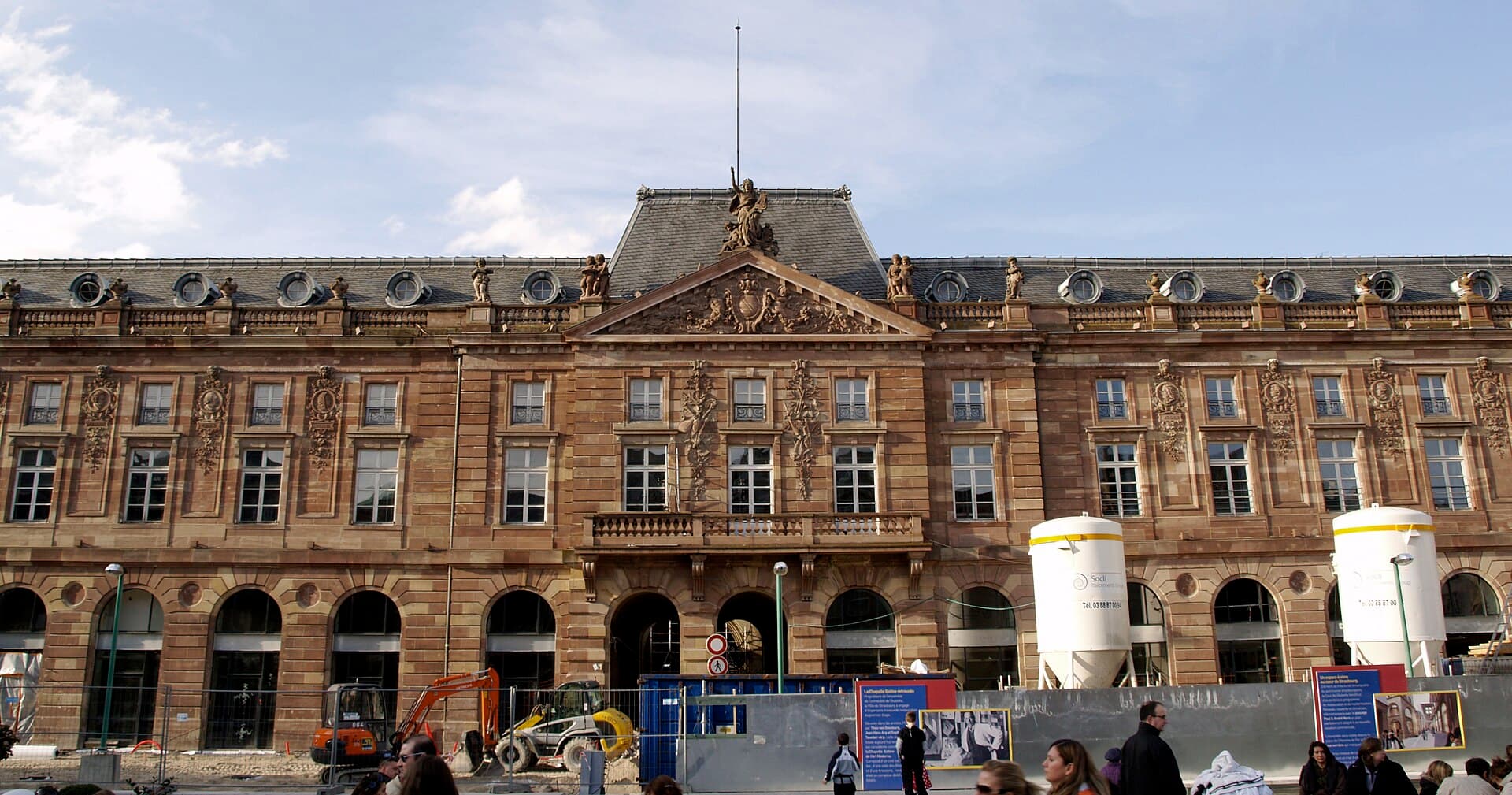 The Aubette 1928Entertainment rooms in an eighteenth-century building on Place Kléber, decorated2 minutes walk4.5
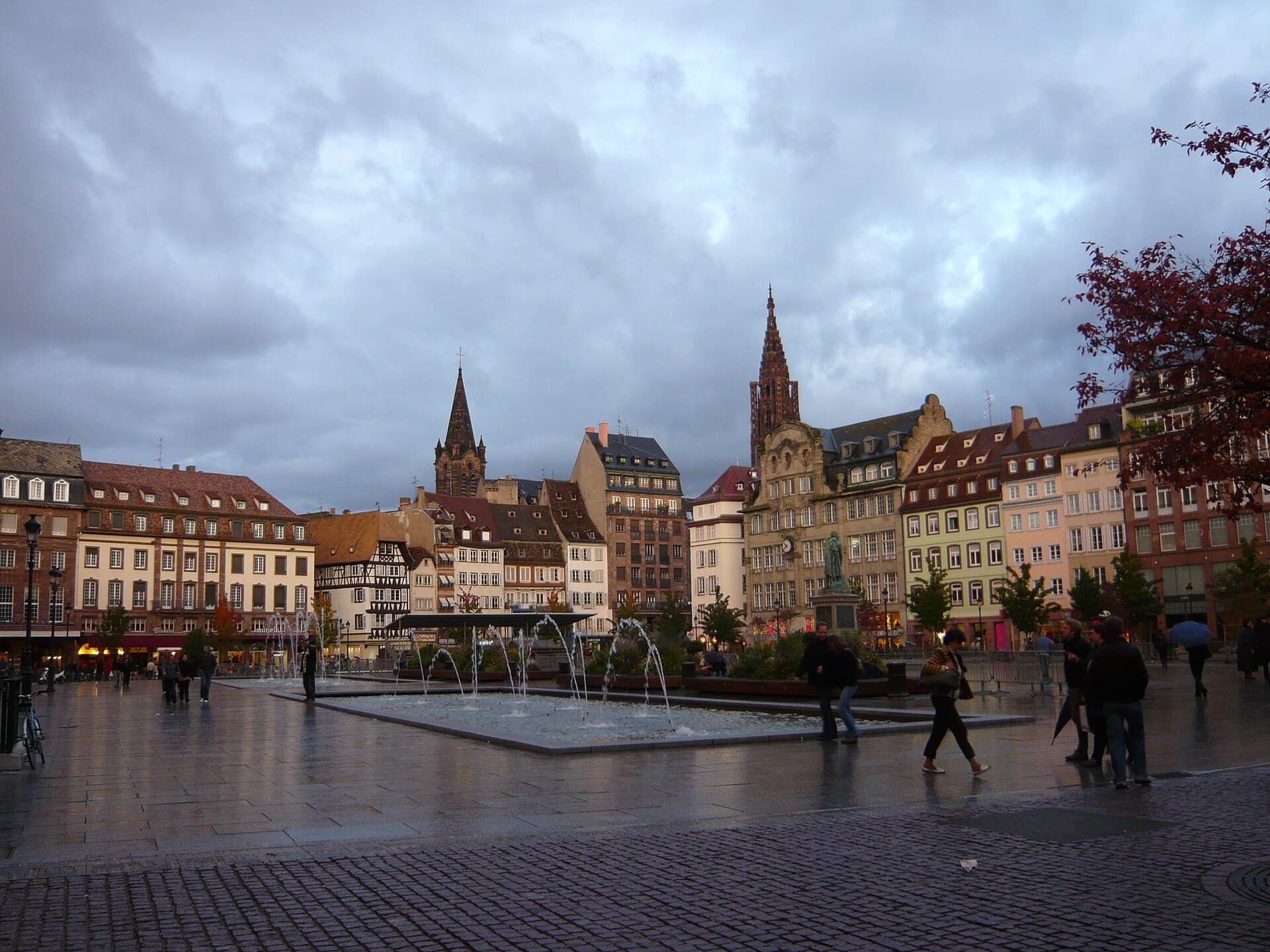 Place KléberPlace Kléber is Strasbourg's beating heart: the city's largest square, its meeti3 minutes walk4.4
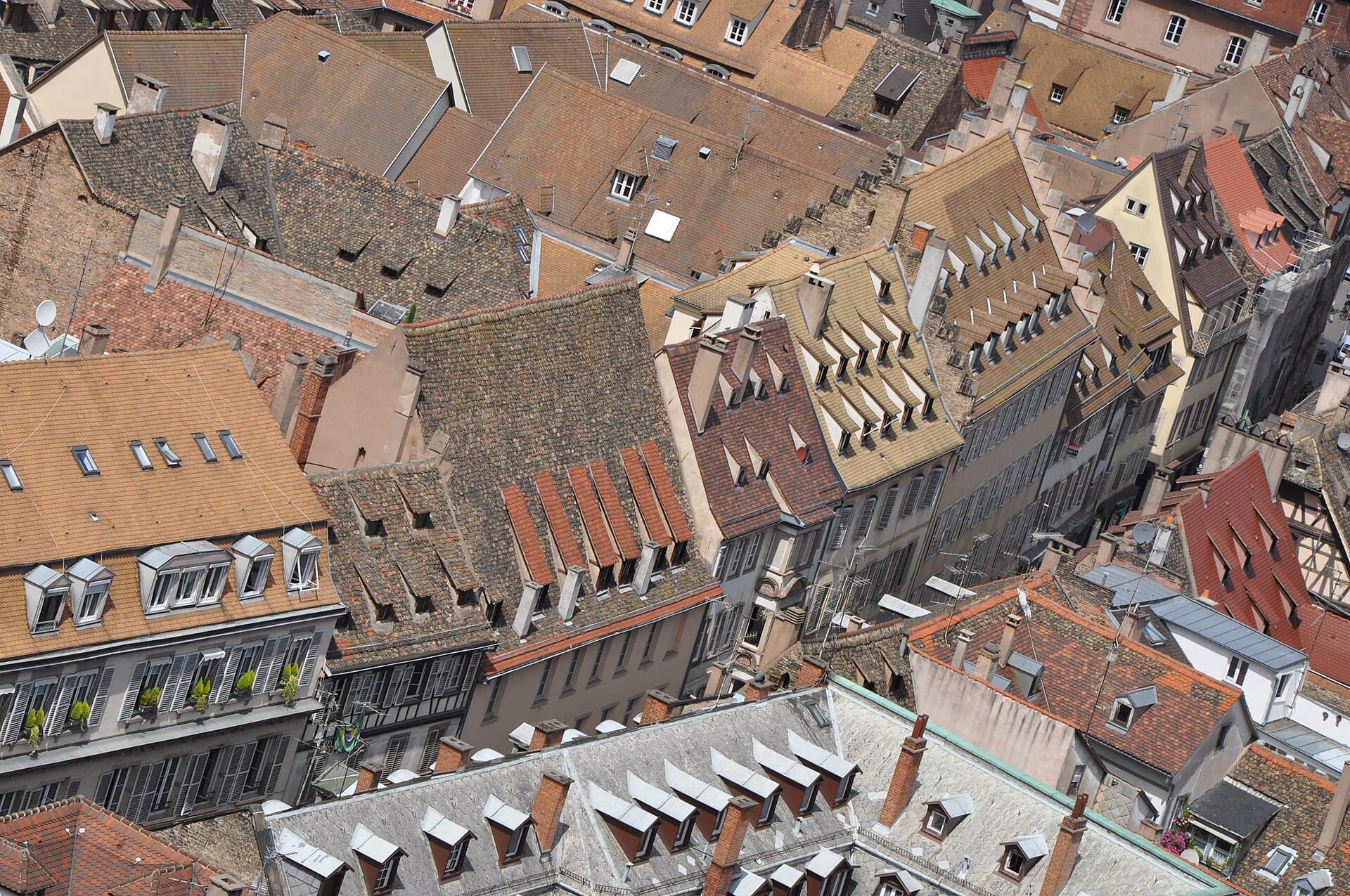 Grande ÎleThe Grande Île is all of historic Strasbourg: the city's core ringed by two arms4 minutes walk4.6
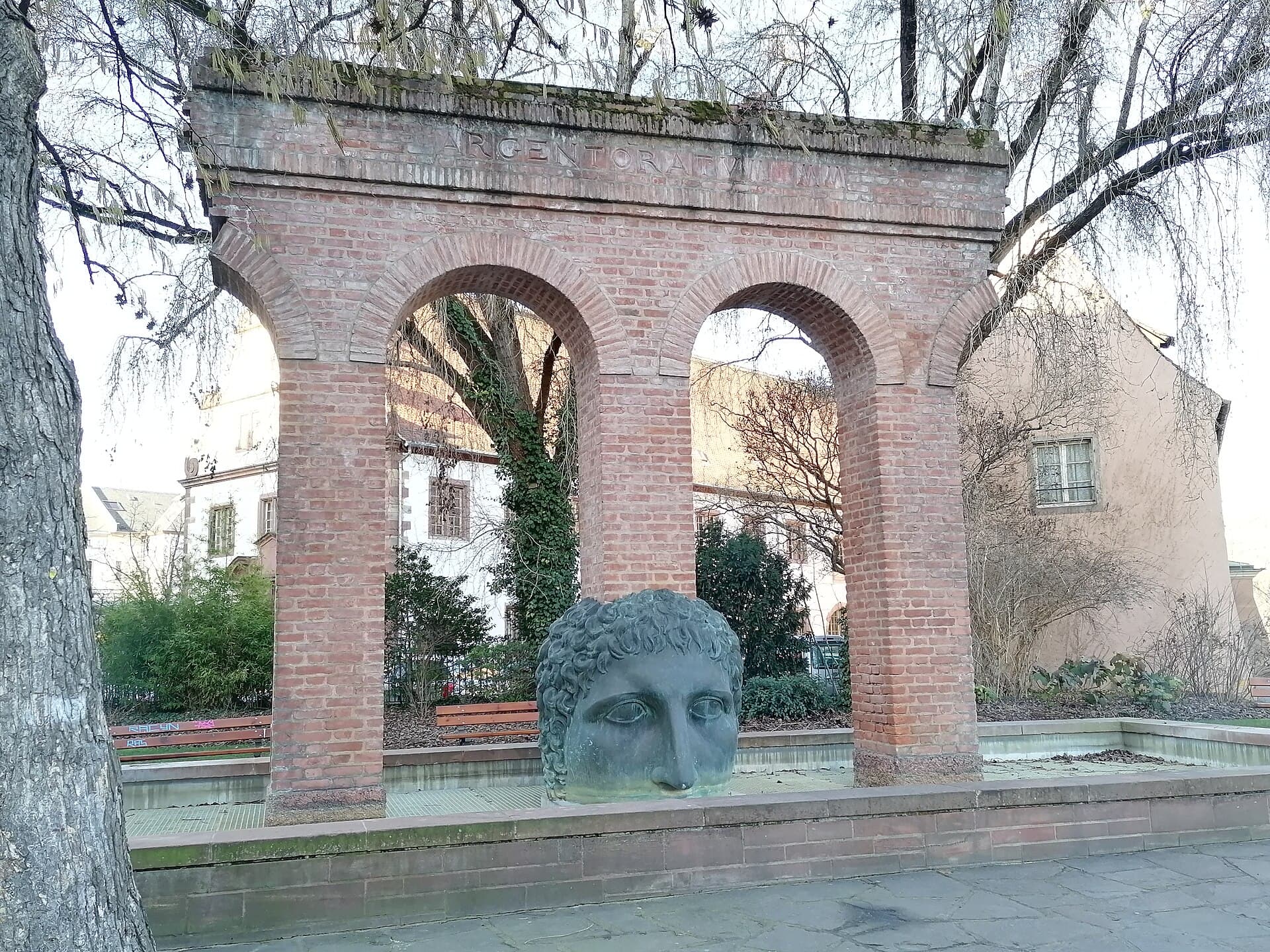 Janus FountainA contemporary fountain of 1988 designed by the artist Jean Tinguely to mark two5 minutes walk4.7
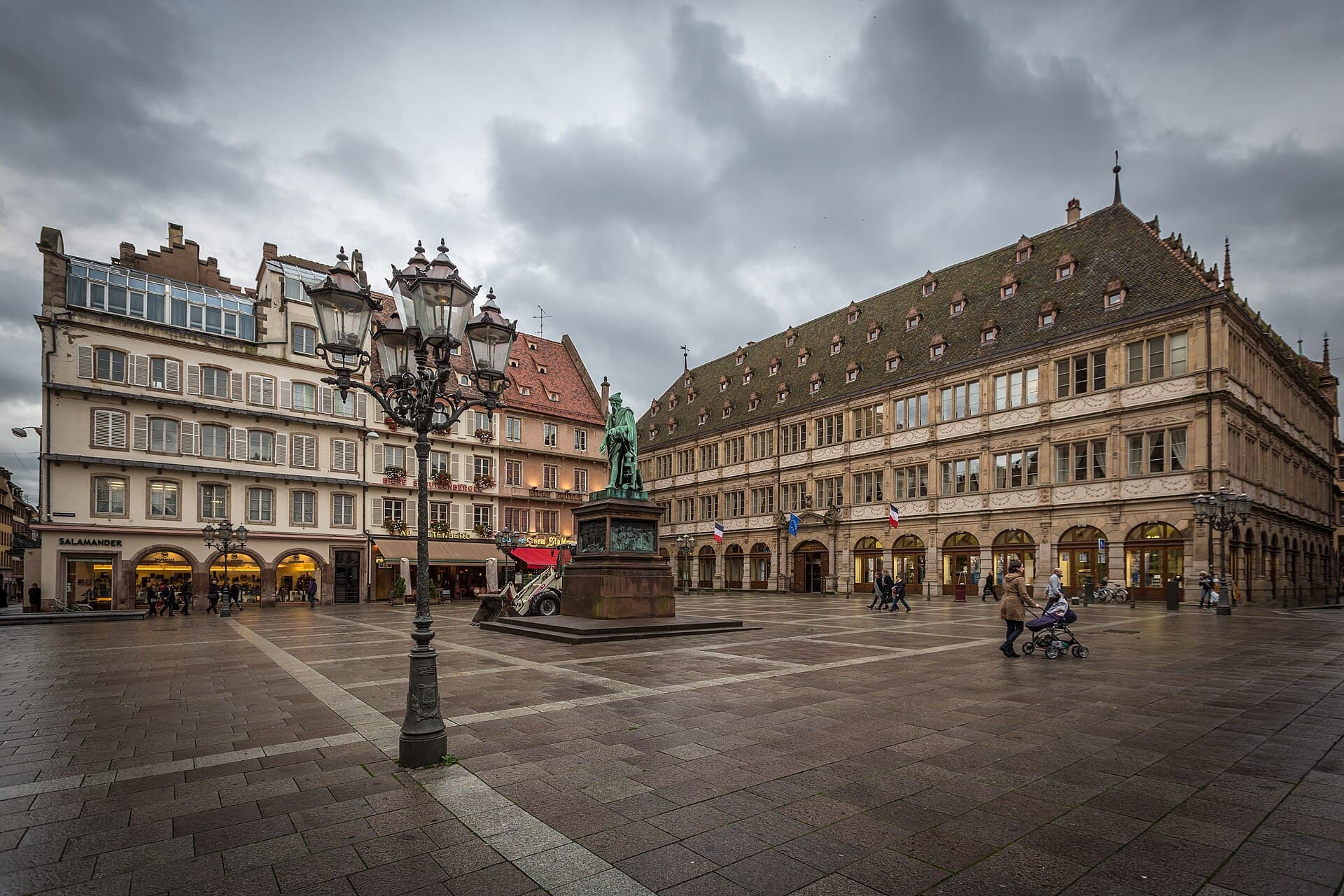 Place GutenbergA square in the heart of Strasbourg between the cathedral and the river, with a 6 minutes walk4.6
There are two churches of that name in Strasbourg: this Protestant one, which is older and historically richer, and a much later Catholic one of the nineteenth century nearby. Check which you are heading for — the confusion is common.
Because the city adopted the Reformation in the sixteenth century, and when France annexed it in 1681 a partial Catholic restoration was imposed while the Protestant presence was preserved. The result was a coexistence that lasted centuries, and a cathedral used by both confessions in some periods. That explains the number and variety of churches in a small city.