
Let there be light
The printed sheet in the statue's hand carries this phrase.
Photo Claude TRUONG-NGOC — CC BY-SA 3.0 · Ji-Elle — CC BY-SA 4.0 · Ji-Elle — CC BY-SA 4.0 · Ji-Elle — CC BY-SA 4.0
A square in the heart of Strasbourg between the cathedral and the river, with a statue at its centre of Johannes Gutenberg, inventor of printing with movable type in Europe. His presence here has a reason: Gutenberg lived in Strasbourg for about ten years in the 1430s and 1440s, and carried out his first experiments in printing there before returning to Mainz and producing his famous Bible around 1455. The statue is by David d'Angers, of 1840, and shows Gutenberg holding a printed sheet reading let there be light. Reliefs on the base depict the effect of printing on the four continents. The distinctive building on the square is the Chamber of Commerce of 1585, among the finest Renaissance buildings in Strasbourg. Seasonal markets are held on the square, and it holds an old wooden carousel. A public space, free to see.
The printed sheet in the statue's hand carries this phrase.
Reliefs on the base depict its effect on the world.
Among the city's finest Renaissance buildings.
Near the cathedral, the Grande Île
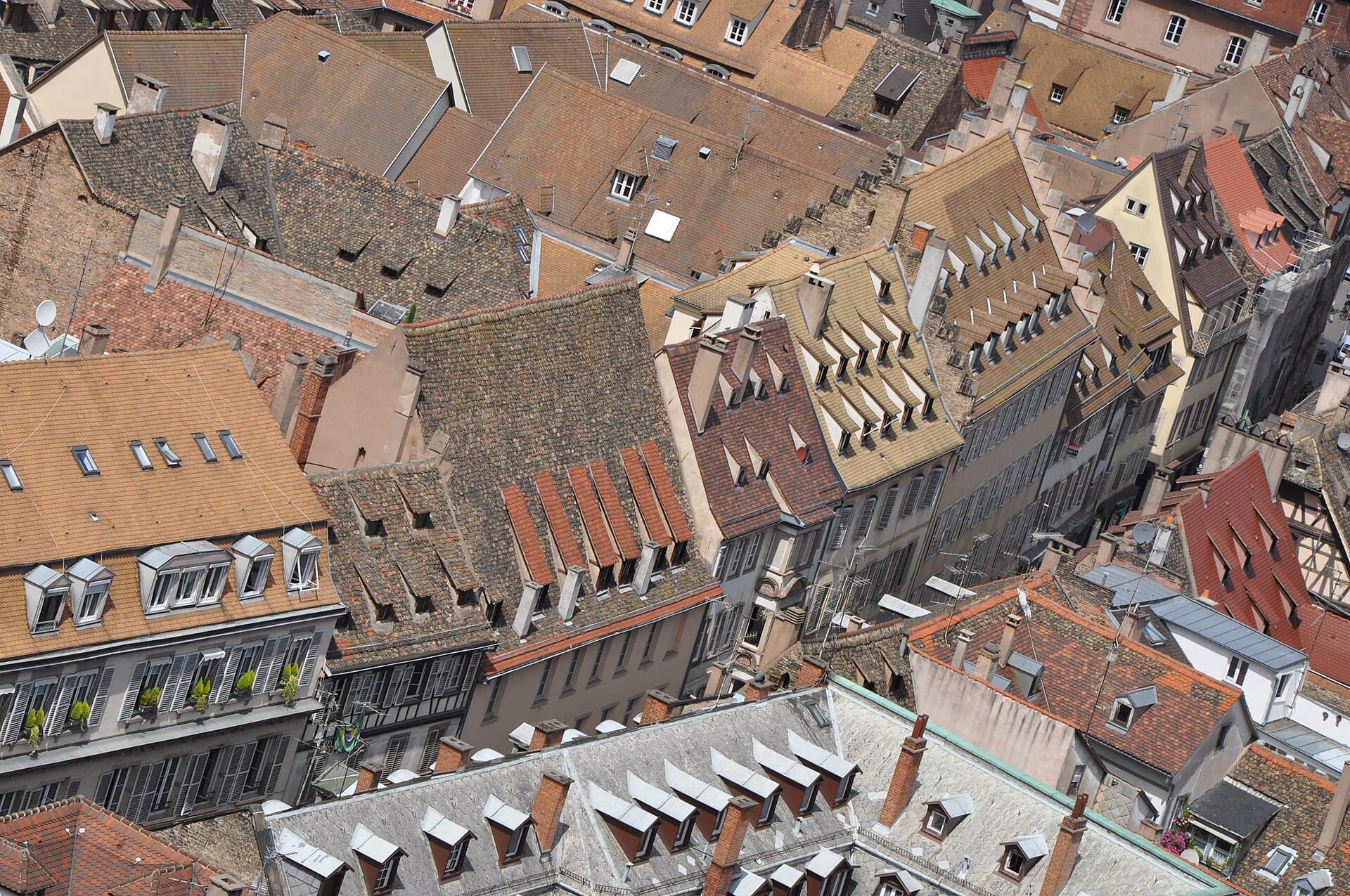 Grande ÎleThe Grande Île is all of historic Strasbourg: the city's core ringed by two arms2 minutes walk4.6
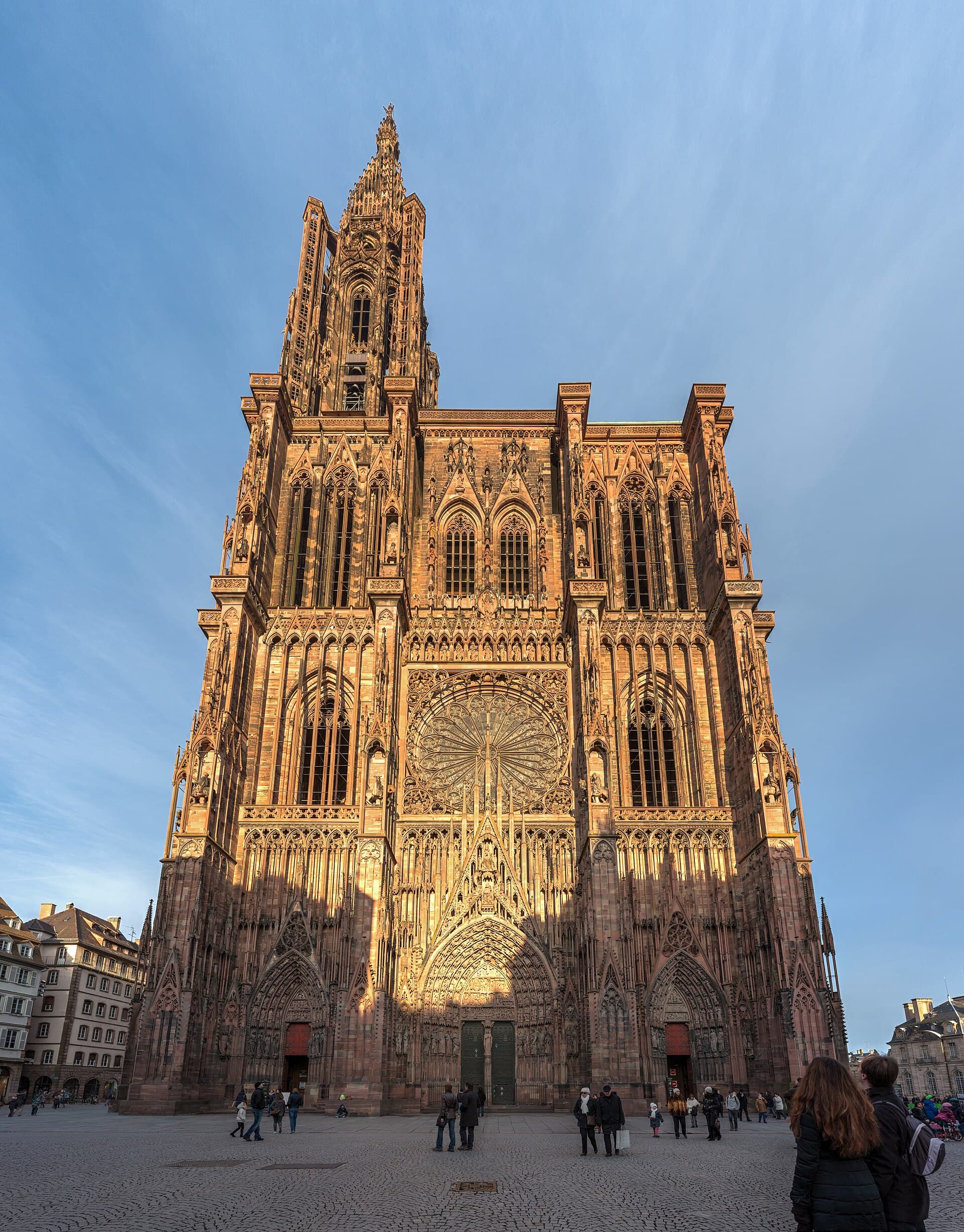 Strasbourg CathedralFor more than two centuries Strasbourg Cathedral was the tallest building on ear3 minutes walk4.7
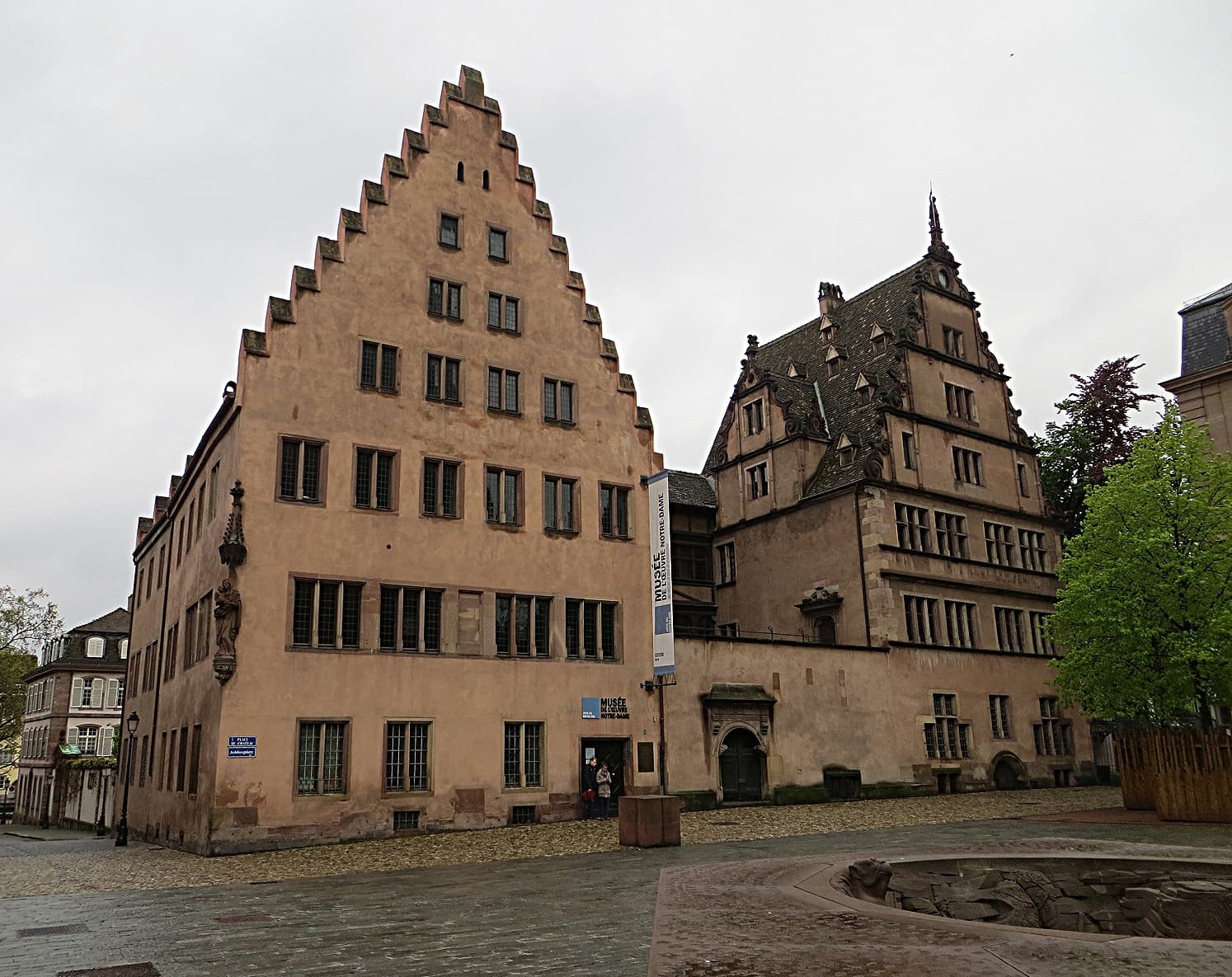 Musée de l'Œuvre Notre-DameThe 'Œuvre Notre-Dame' is the foundation that has built and repaired the cathedr3 minutes walk4.6
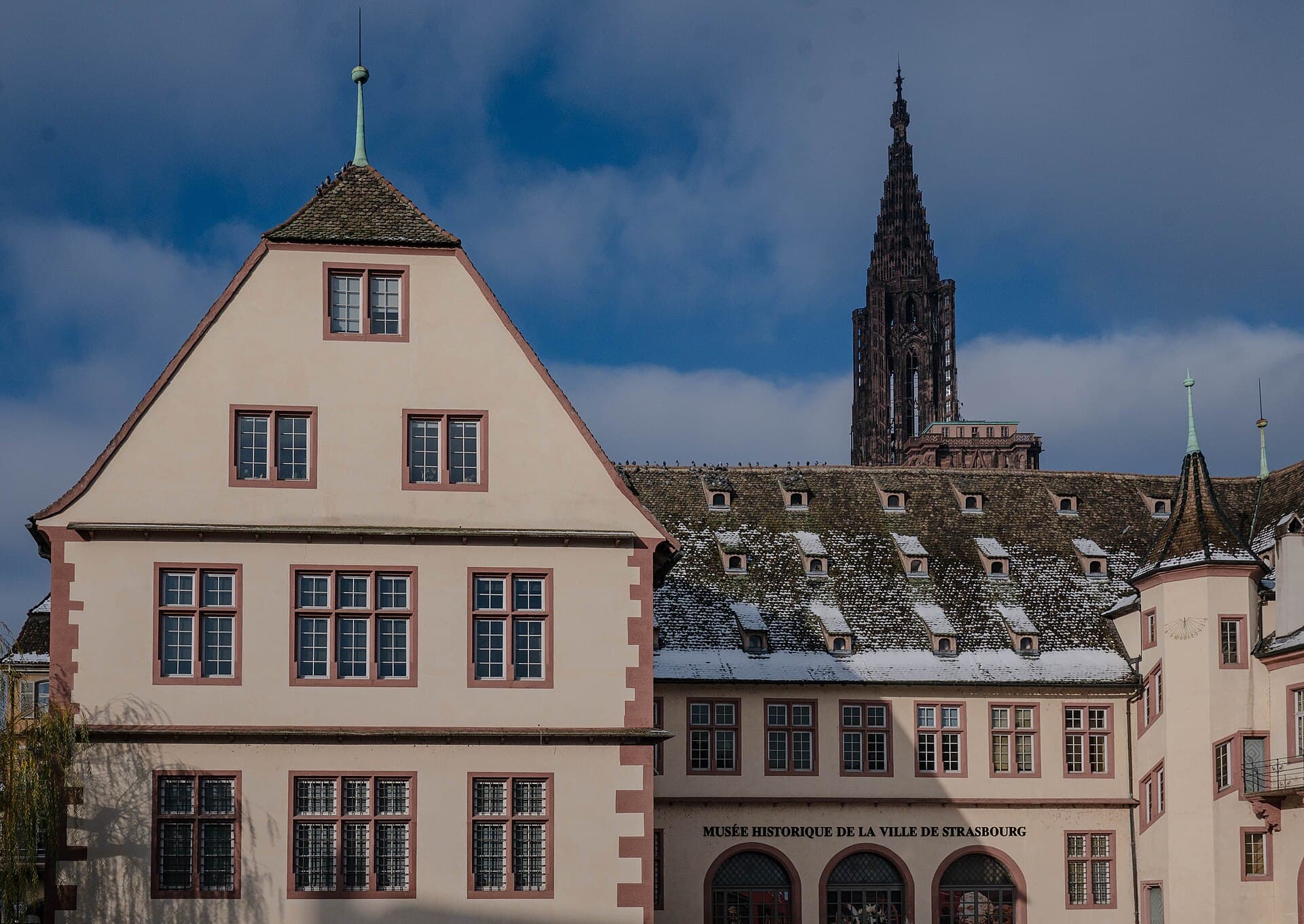 Historical Museum of StrasbourgThe Historical Museum tells Strasbourg's story from the Middle Ages: in a sixtee3 minutes walk4.4
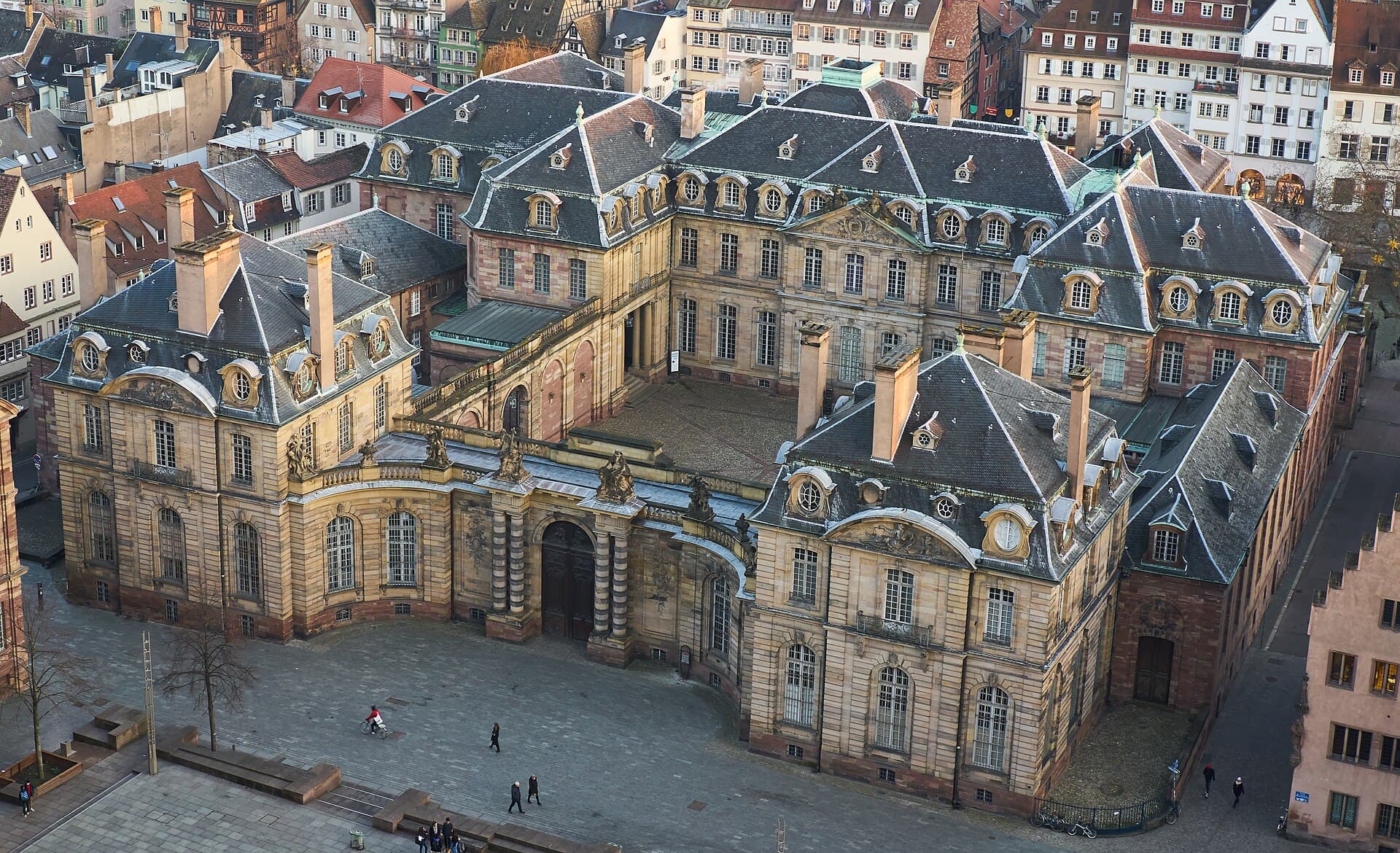 Palais RohanThe Palais Rohan is Strasbourg's eighteenth-century masterpiece: built by the po3 minutes walk4.5
Because it changed the cost of knowledge. Before him a book was copied by hand, taking months and costing a fortune, so reading remained confined to the Church and the nobility. Movable metal type allowed hundreds of copies to be printed quickly and cheaply. Within fifty years presses had spread to two hundred European cities and millions of books were printed. This shaped the Reformation, the scientific revolution and the standardisation of national languages — all of which needed the printed text to spread.
The oldest Christmas market in France, dating from 1570, and the city calls itself the capital of Christmas. It runs from late November to the end of December across several squares in the centre, with hundreds of stalls. Crowding is enormous, prices rise and hotels must be booked months ahead. If you want a quiet Strasbourg, avoid December entirely; if you come for the market, know that you will be sharing it with millions.