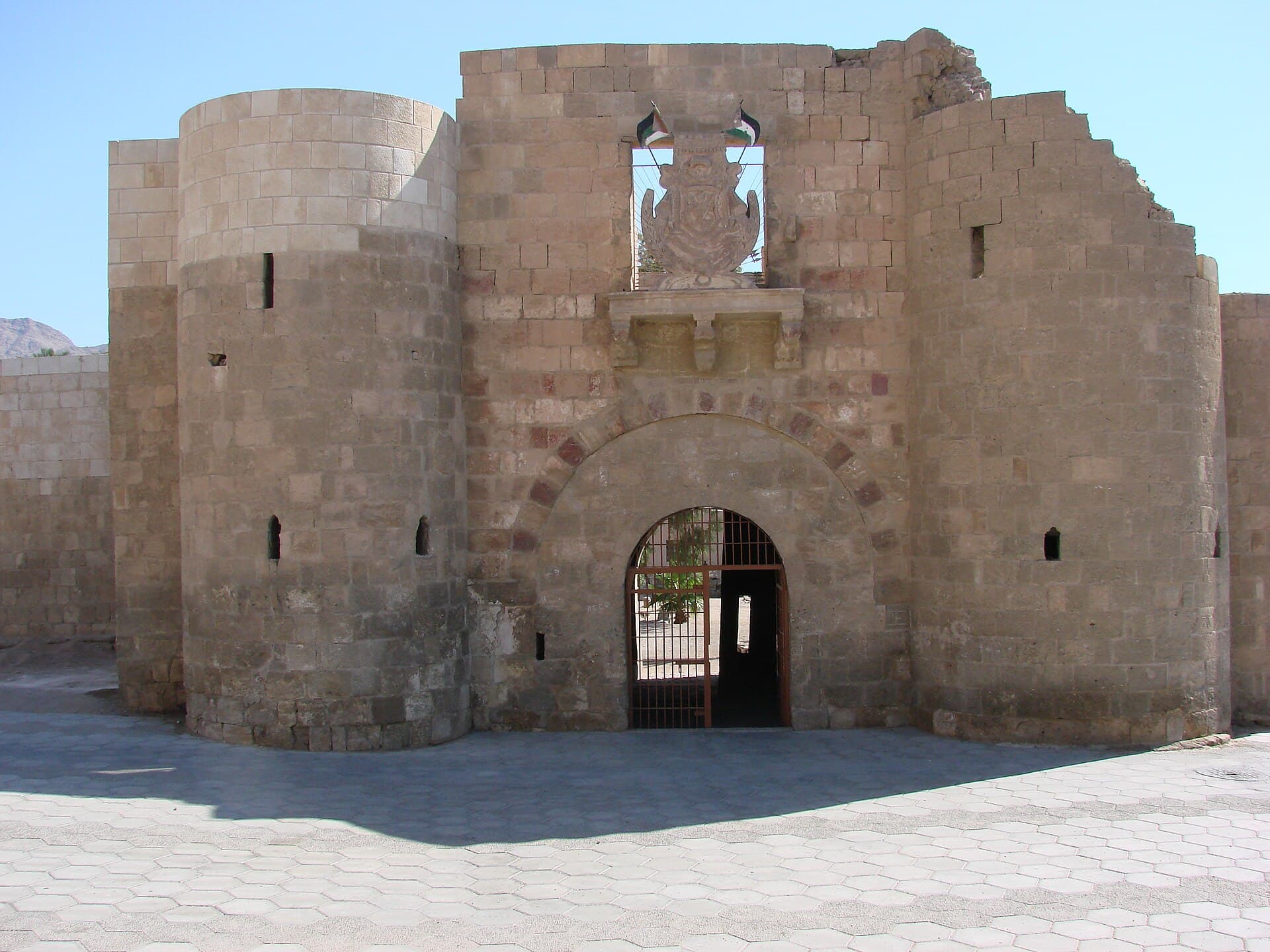
The Egyptian Gate
Its stone arch.
David Stanley from Nanaimo, Canada — CC BY 2.0 · عباد ديرانية — CC BY-SA 4.0 · Tarek7 — CC BY-SA 3.0 · Bel Adone — Public domain · fr:User:Bel Adone — Public domain · fr:User:Bel Adone — Public domain · Tarek7 — CC BY-SA 3.0 · Bel Adone — Public domain
The remains of an early Islamic city on the Aqaba shore, founded under the caliph Uthman ibn Affan, may God be pleased with him, around the middle of the seventh century, outside the walls of the older Roman and Byzantine town of Aila, and one of the first planned Islamic cities outside Arabia. A University of Chicago team has excavated it since 1986. The city was laid out as a rectangle 170 by 145 m, with walls 2.6 m thick and 4.5 m high, guarded by 24 towers and pierced by four gates facing the four directions. Its two main streets meet in the centre, a plan known as a misr that marks the first fortified Islamic towns. The Egyptian Gate still stands with its stone arch, along with the remains of the mosque, towers and houses. The open-air site sits on the Corniche and is free to walk around, per visitor guides, with panels explaining each part. Finds from it are shown in the Aqaba Archaeological Museum and the Jordan Archaeological Museum in Amman.
Its stone arch.
Around the city.
Near the centre.
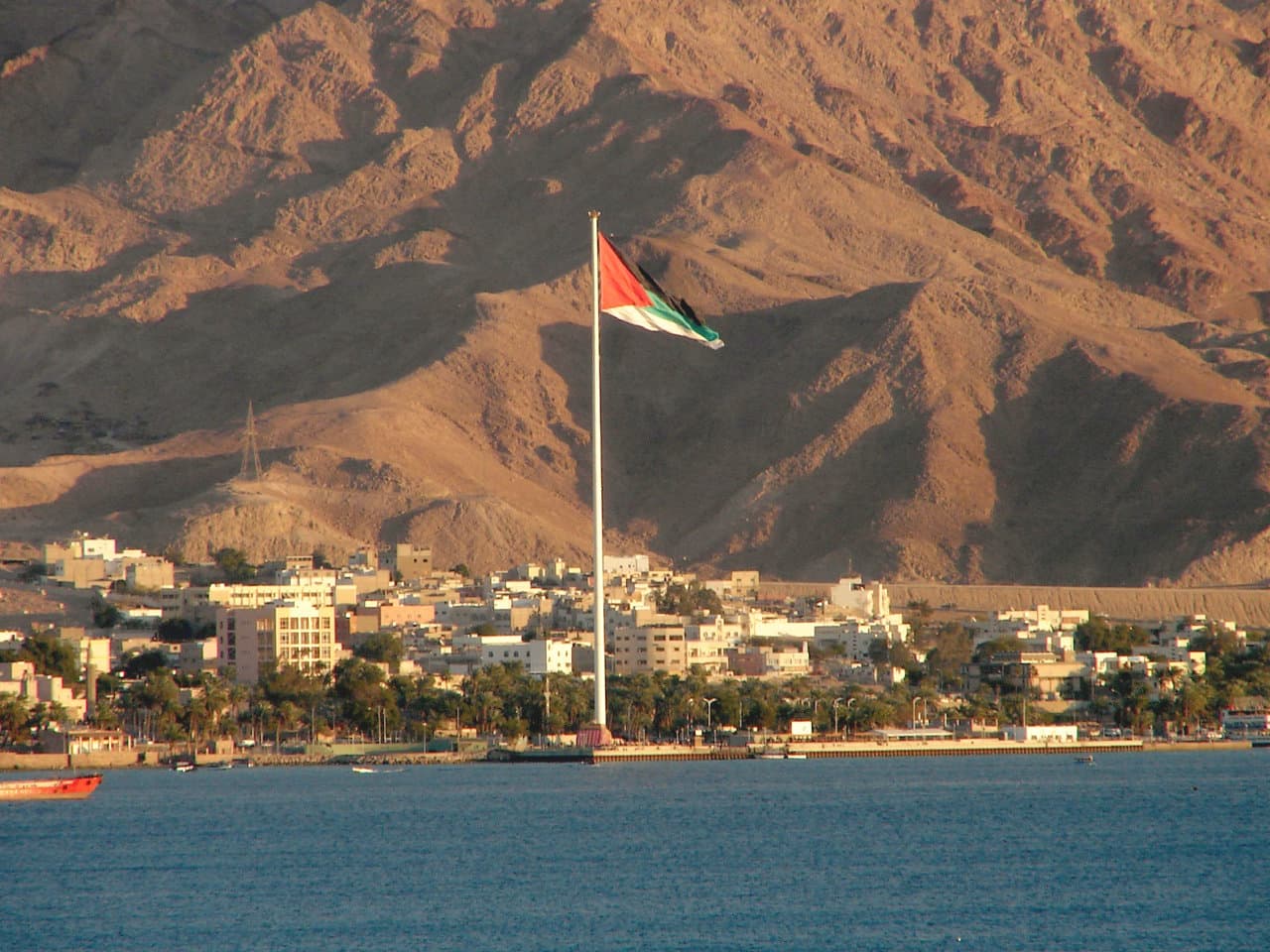
Seafront, Aqaba
Under the caliph Uthman ibn Affan, around the middle of the seventh century, outside the walls of the older Roman town of Aila.