
The Macedonian rooms
18th-century wood and gilt transplanted whole.
Dimboukas — CC BY-SA 3.0 · C messier — CC BY-SA 4.0 · Joyofmuseums — CC BY-SA 4.0 · Dimitris Legakis — CC BY-SA 4.0
The Benaki is Greece's only unbroken story: Stone Age pottery to the 1821 independence in a neoclassical family house — given by Antonis Benakis (1930) with the collection he built from Alexandria, where he was born to a wealthy Greek-Egyptian family: the museum itself a diaspora Greek's tale. Its strength lies where the archaeological museums fall silent: Byzantine, then Ottoman, then Revolution — gold icons, two complete carved-and-gilt Macedonian reception rooms transplanted whole (18th century), the treasury of regional wedding costumes in their silver, the swords of 1821's heroes and Byron's effects. The roof café overlooks the National Garden — and Thursday evening runs late on optional donation. It is the after-antiquity that completes understanding Athens.
18th-century wood and gilt transplanted whole.
The regions' silver and silk as a nation's wardrobe.
Revolution swords and Byron's effects.
Koumbari 1, 10674 Athens
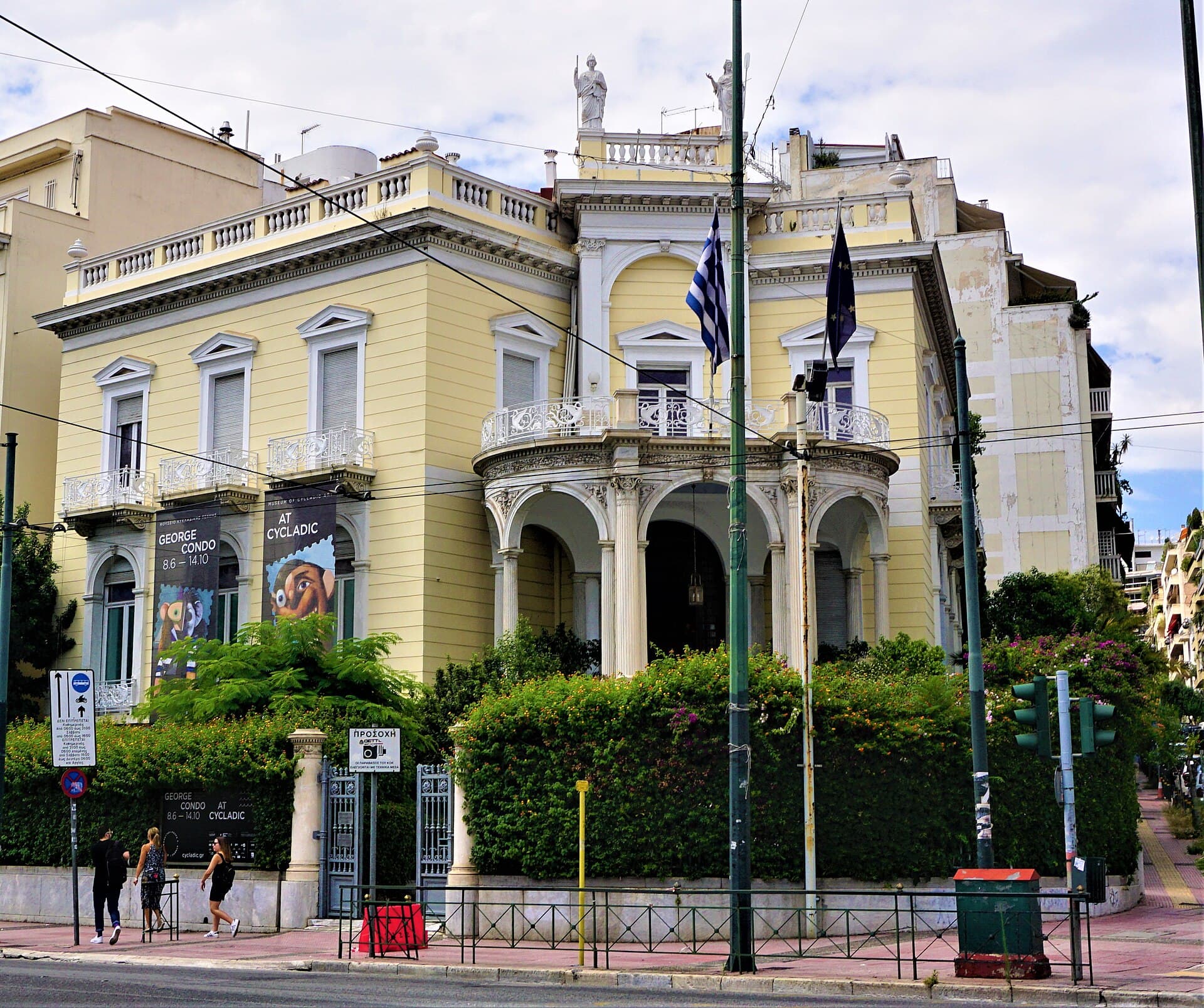 Museum of Cycladic ArtAn elegant private museum in the **Kolonaki** district, holding one of the most 2 minutes walk4.6
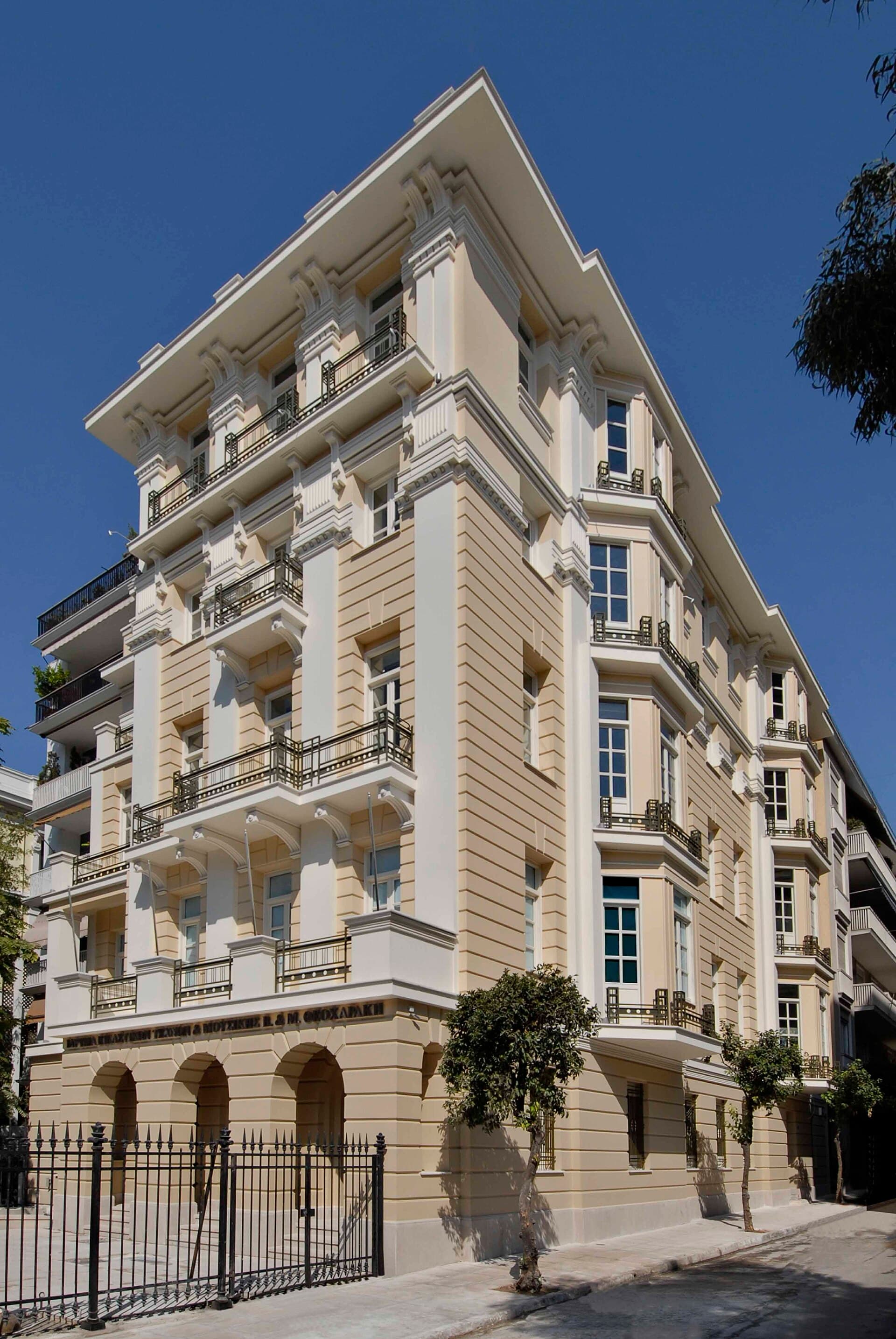 The Theocharakis Foundation for the Fine Arts and MusicAn arts centre in a neoclassical building on a prominent corner near Syntagma Sq2 minutes walk4.8
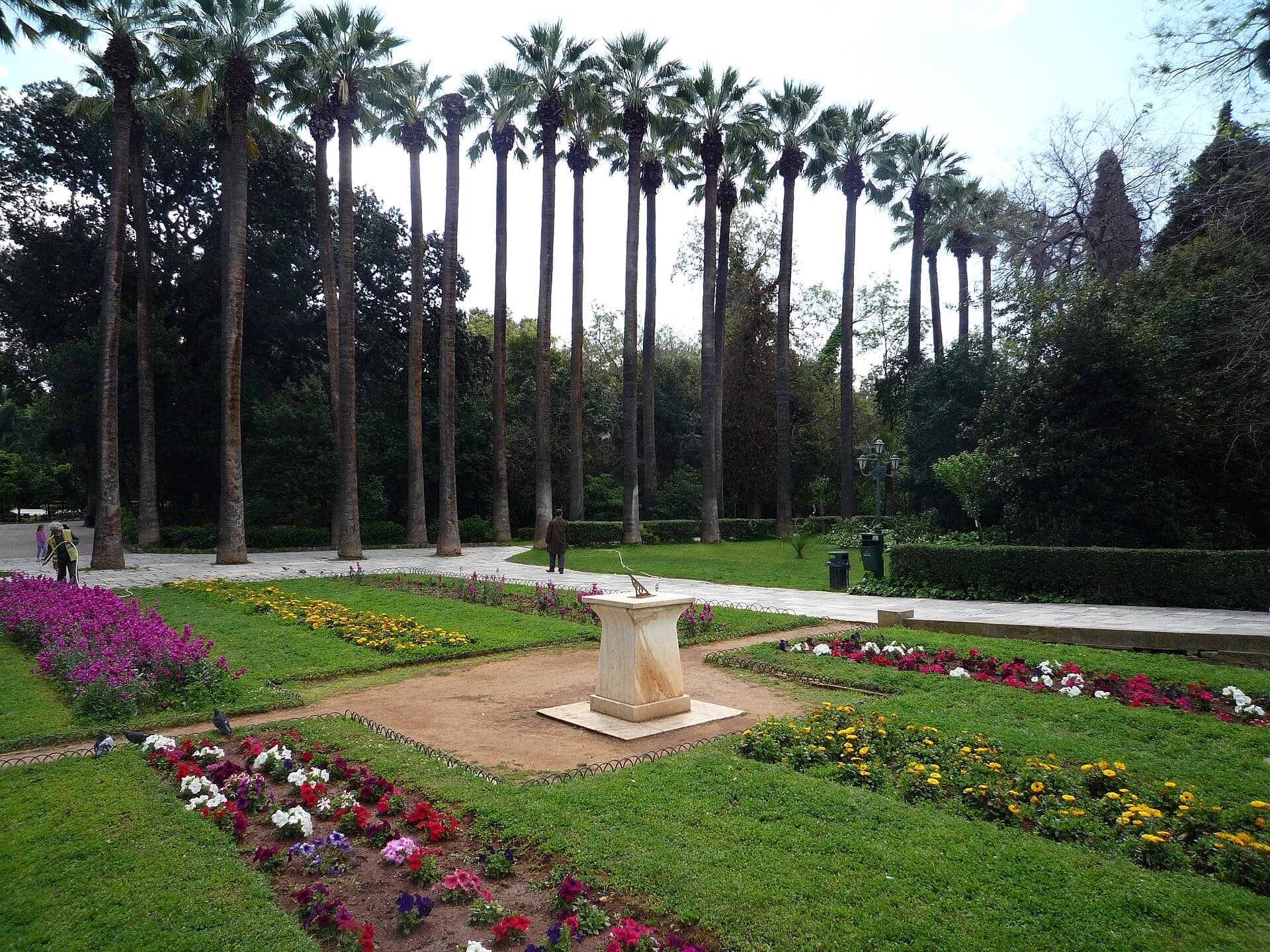 The National Garden & ZappeionThe National Garden is Athens' one shaded lung amid its stone: 15.5 hectares Que3 minutes walk4.5
 The Tomb of the Unknown SoldierA memorial set into a wall before the Greek Parliament on Syntagma Square, guard5 minutes walk4.6
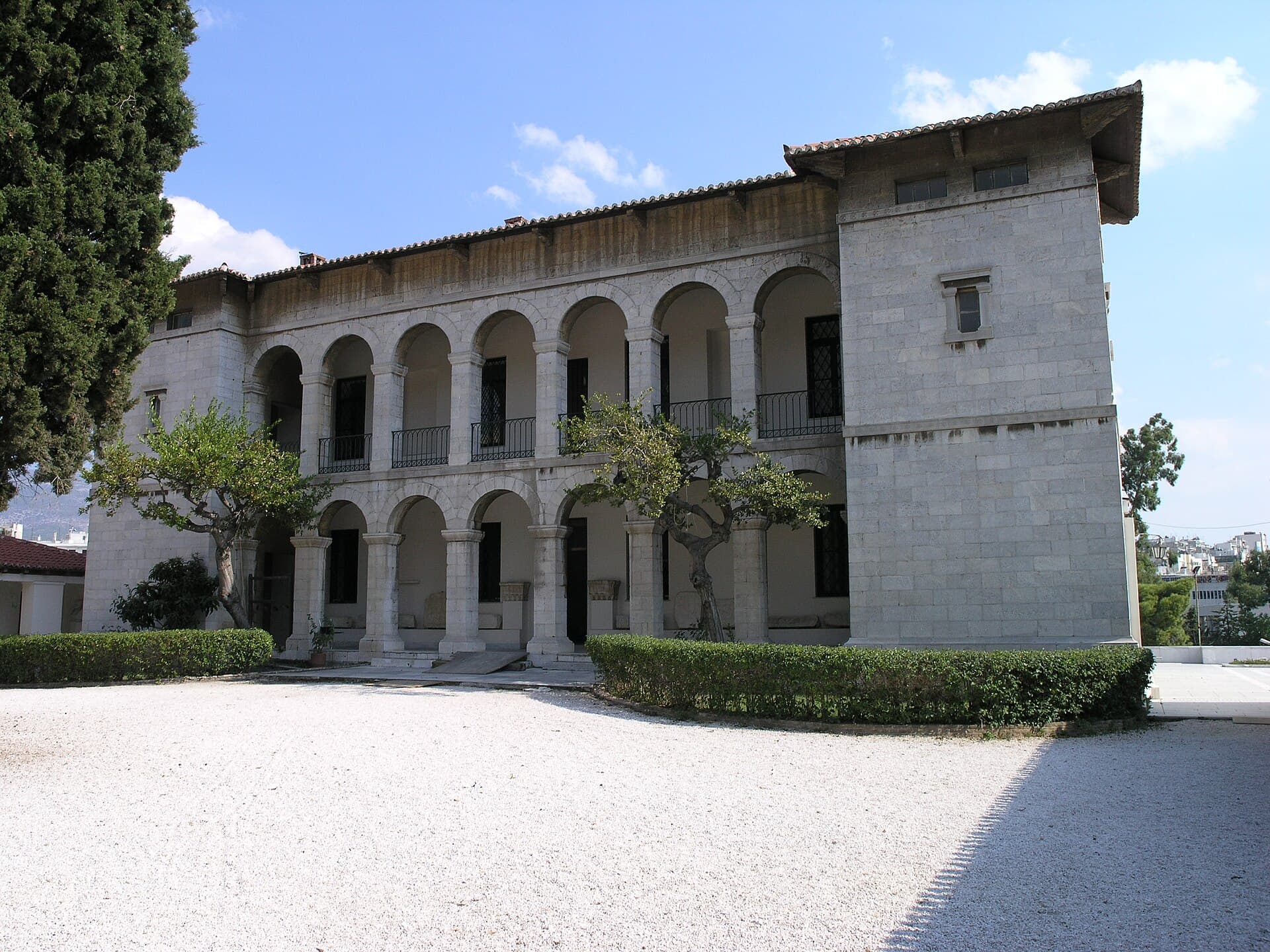 The Byzantine & Christian MuseumThe Byzantine Museum carries the thousand years the antiquities route drops: pag5 minutes walk4.5
A question of layers: the National is antiquity's summit (Agamemnon and his machines) — the Benaki everything after. For antiquities, the National; to understand living Greece (Byzantium, Ottomans, Revolution), the Benaki serves better — with Kolonaki's cafés next door after.