
The canals
The "Venice of the North" by small boats beneath the bridges.
Jean-Christophe BENOIST — CC BY 2.5 · Bybbisch94, Christian Gebhardt — CC BY-SA 4.0 · Bybbisch94, Christian Gebhardt — CC BY-SA 4.0 · Bybbisch94, Christian Gebhardt — CC BY-SA 4.0
The historic centre of Bruges is the most complete surviving medieval city in northern Europe, UNESCO-listed in its entirety (2000): an egg of cobbled lanes, canals, bridges, step-gabled houses and Gothic churches, ringed by a circular canal and windmills — it looks as if time stopped in the fifteenth century, when Bruges was Europe's richest trading city before its harbour silted up and it slept for centuries. That sleep is what saved it: never demolished, never modernised, it stayed as the early Flemish painters drew it. The canals (which earned it the name "Venice of the North") are toured by small boats from several landings, the two great squares (the Markt and the Burg) are its heart, and its quiet side lanes — Bonifaciusbrug, Groenerei, Jan van Eyckplein — its real magic away from the crowds. All the old town can be walked in a day, but at least one night reveals the true Bruges: when the day-trippers leave, the lamplit lanes and still canals return to their own people.
The "Venice of the North" by small boats beneath the bridges.
Groenerei and Jan van Eyckplein — the quiet Bruges.
The city's green edge with its windmills.
Old Town, 8000 Bruges
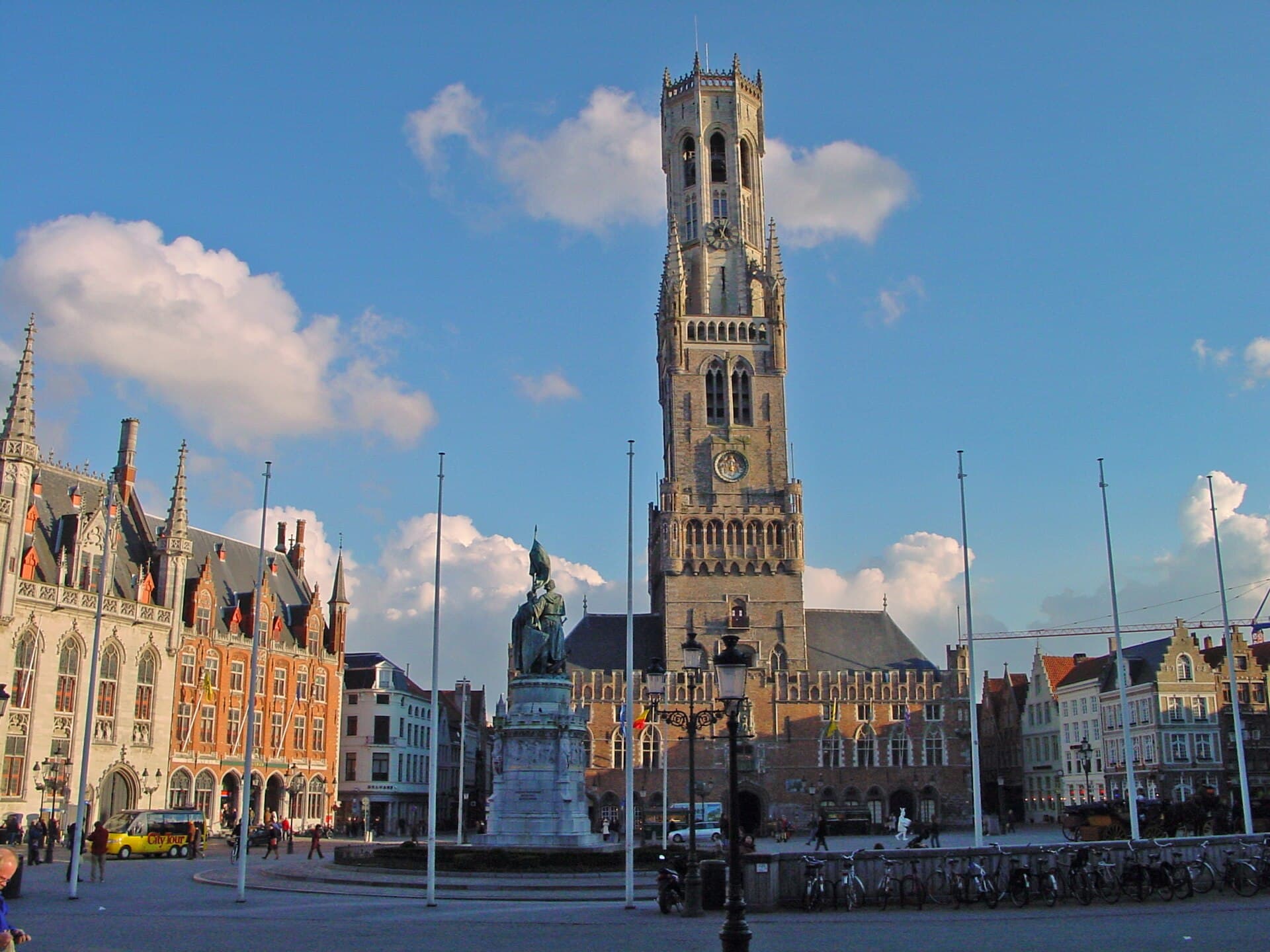 Markt (Market Square)The Markt is Bruges' great square and its beating heart since the tenth century:1 minute walk4.6
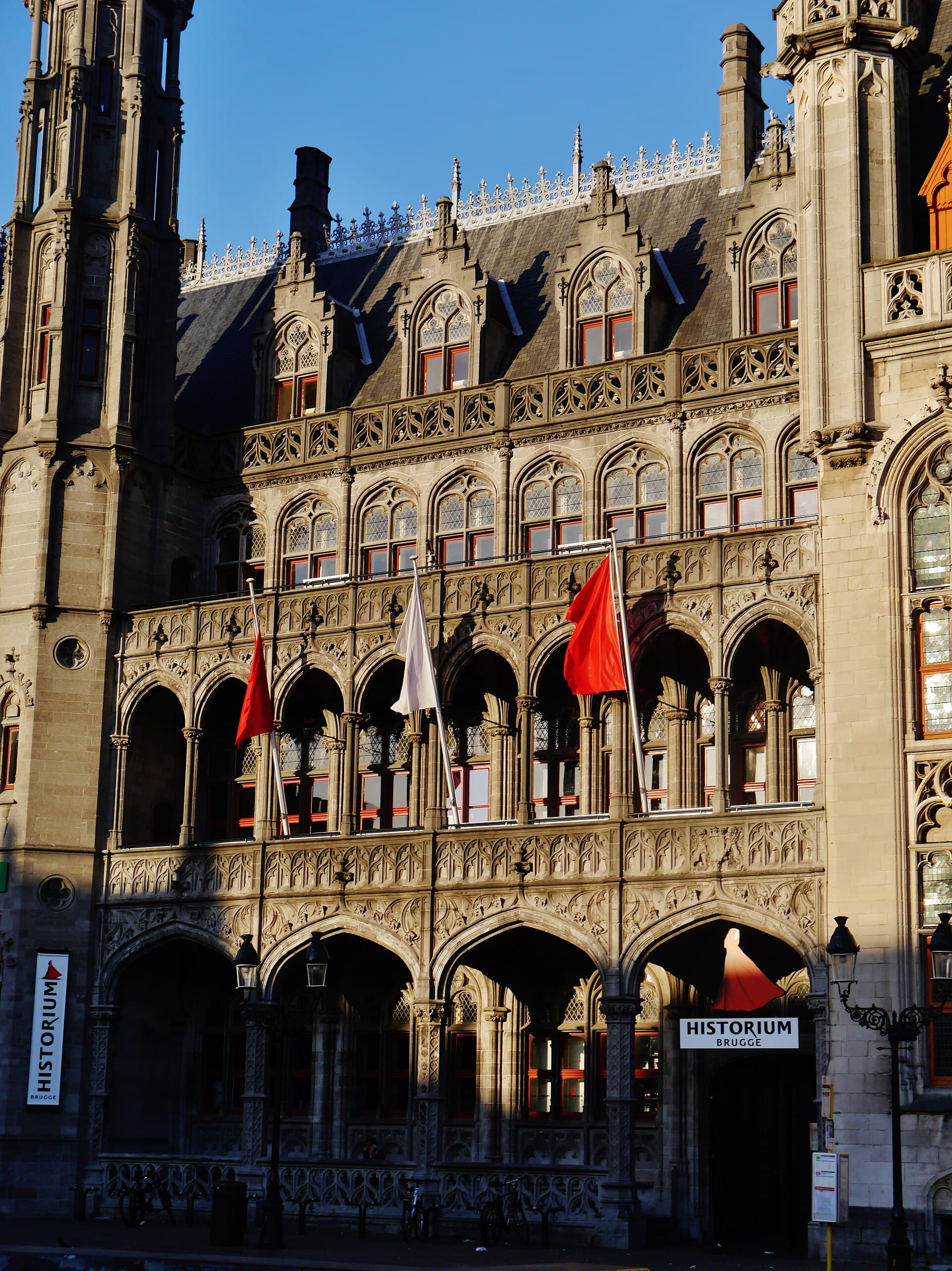 Historium BrugesThe Historium is an immersive experience on the Markt that returns you to Bruges1 minute walk4.2
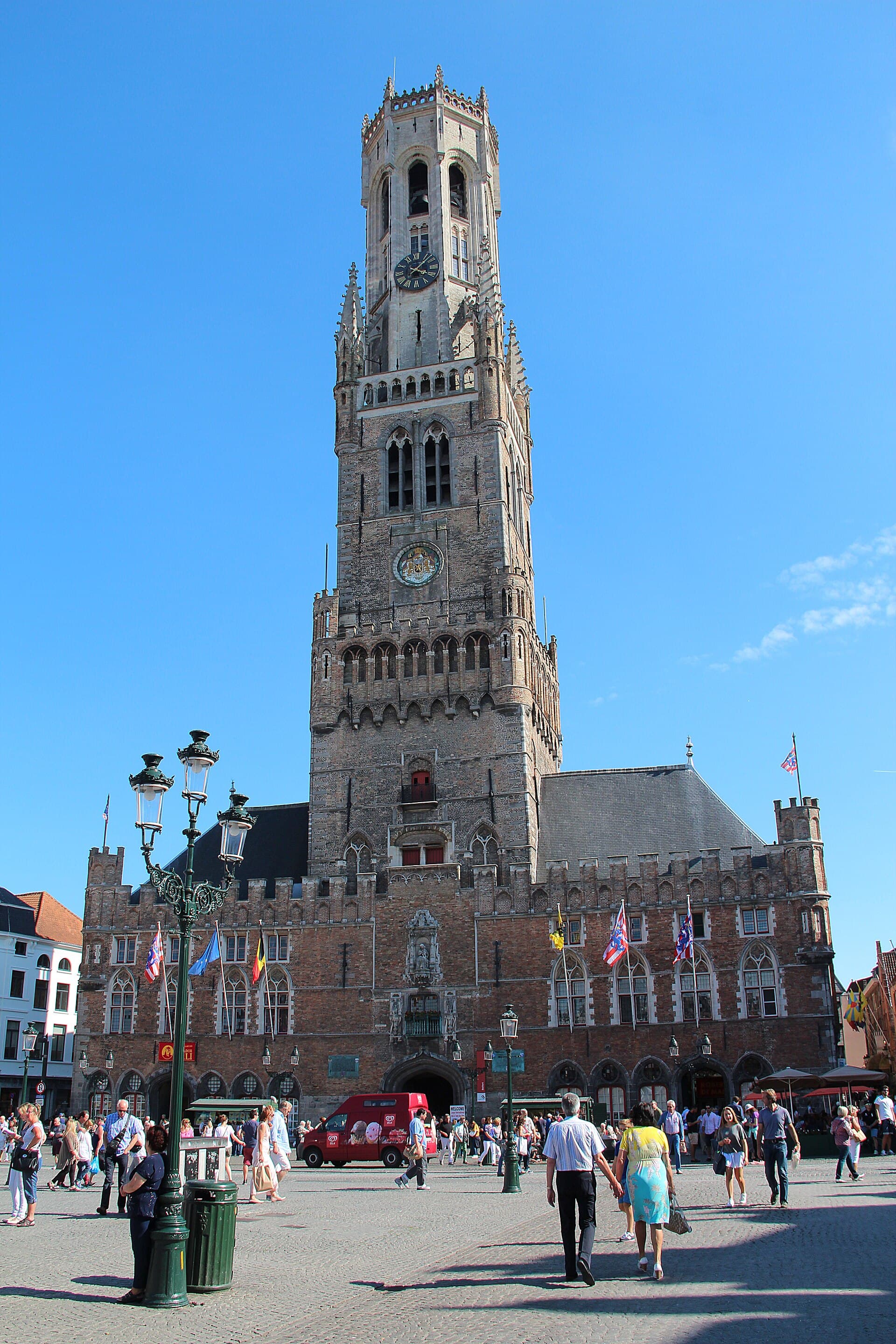 Belfry of BrugesThe Belfry is Bruges' symbol and first landmark: a thirteenth-century medieval t1 minute walk4.6
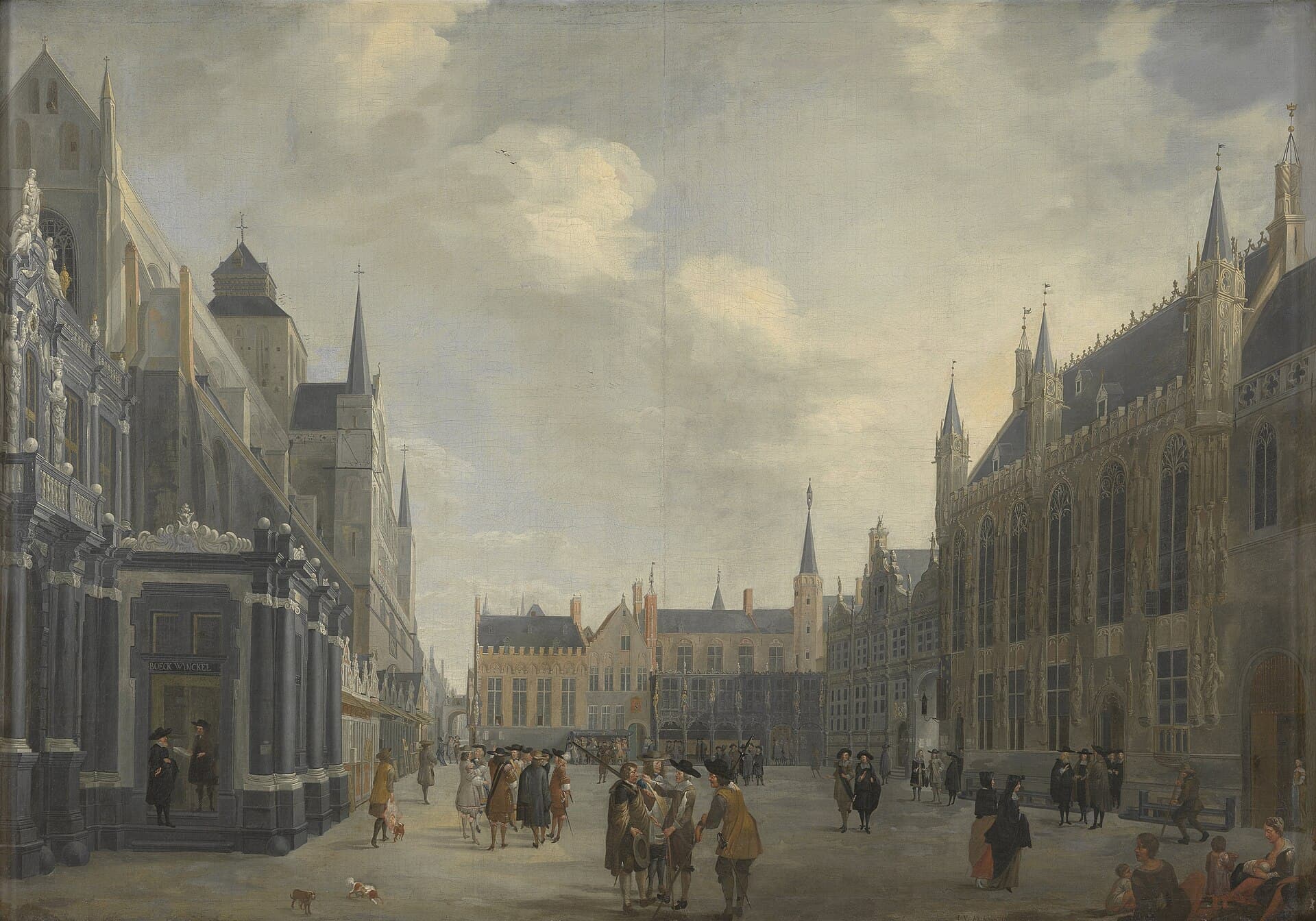 Burg SquareThe Burg is Bruges' second and oldest square: here the Count of Flanders built h2 minutes walk4.8
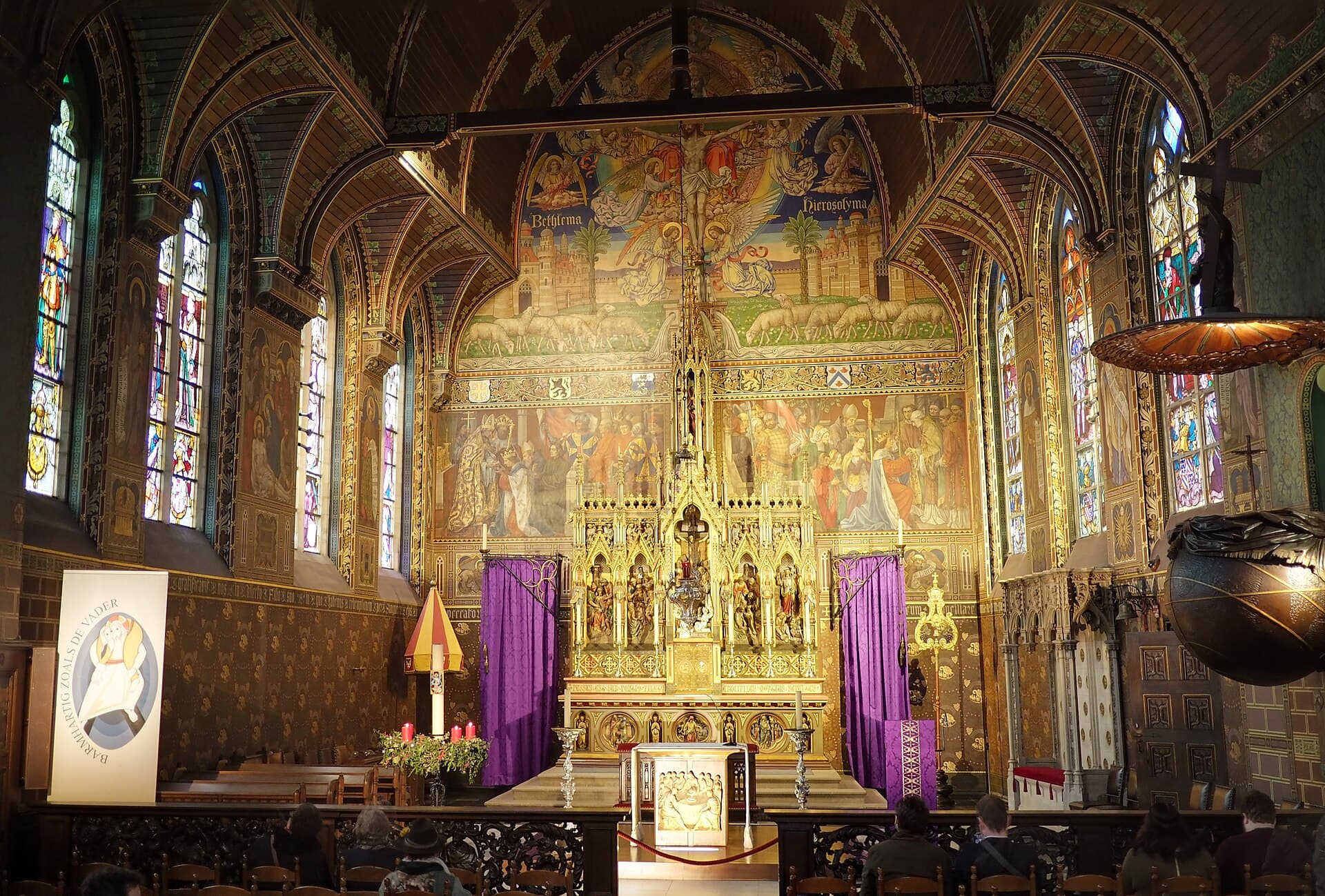 Basilica of the Holy BloodThe Basilica of the Holy Blood is two churches one above the other in a corner o3 minutes walk4.7
At least one night if you can: Bruges by day is crowded with day-trippers, but by evening and early morning it is another city, still and lamplit — the experience people remember. A day trip (one hour by train) is possible and covers the essentials: the Markt, the Burg, the Belfry, the canals and the Church of Our Lady. But the night is worth it.
Start early (before nine) at the Markt and Rozenhoedkaai, leave the museums for midday, and wander the quiet north (Jan van Eyckplein, Sint-Anna, the windmills) when the south is packed. Avoid summer weekends, and favour May, September and early December (Christmas markets without the summer crowds).