
The Venetian arsenals
Seven stone vaults on the water where ships were built.
dronepicr — CC BY 2.0 · Alejandro MezcuA — CC BY-SA 4.0 · dronepicr — CC BY 2.0 · Pedro Szekely from Los Angeles, USA — CC BY-SA 2.0
The finest old town in Crete, built around a horseshoe-shaped **Venetian harbour** of the fourteenth century — an arc of coloured buildings on the water ending at a lighthouse on the tip of the breakwater. Chania is a city of **layers**: the **Venetians** built the harbour, the arsenals, the walls and the mansions between the thirteenth and seventeenth centuries; the **Ottomans** added mosques, bathhouses and projecting wooden oriels; and before both there was Minoan and Roman **Kydonia** here. The lanes run between the two: a Venetian arch here, an Ottoman dome there, and a doorway with a wooden balcony in between. ⚠ Chania carries a wound: in **May 1941** German aircraft bombed the city during the **Battle of Crete**, destroying large parts of the old town. So what you see today mixes the original with the rebuilt. On the harbour stand the **Venetian arsenals** (the Neoria) — seven great stone vaults where ships were built and repaired, still standing on the water. Walking the back lanes — **Topanas** and **Splantzia** — is far more rewarding than the quay itself.
Seven stone vaults on the water where ships were built.
The back lanes — better and cheaper than the quay.
Projecting wooden balconies above Venetian lanes.
Old Town, 73100 Chania, Crete
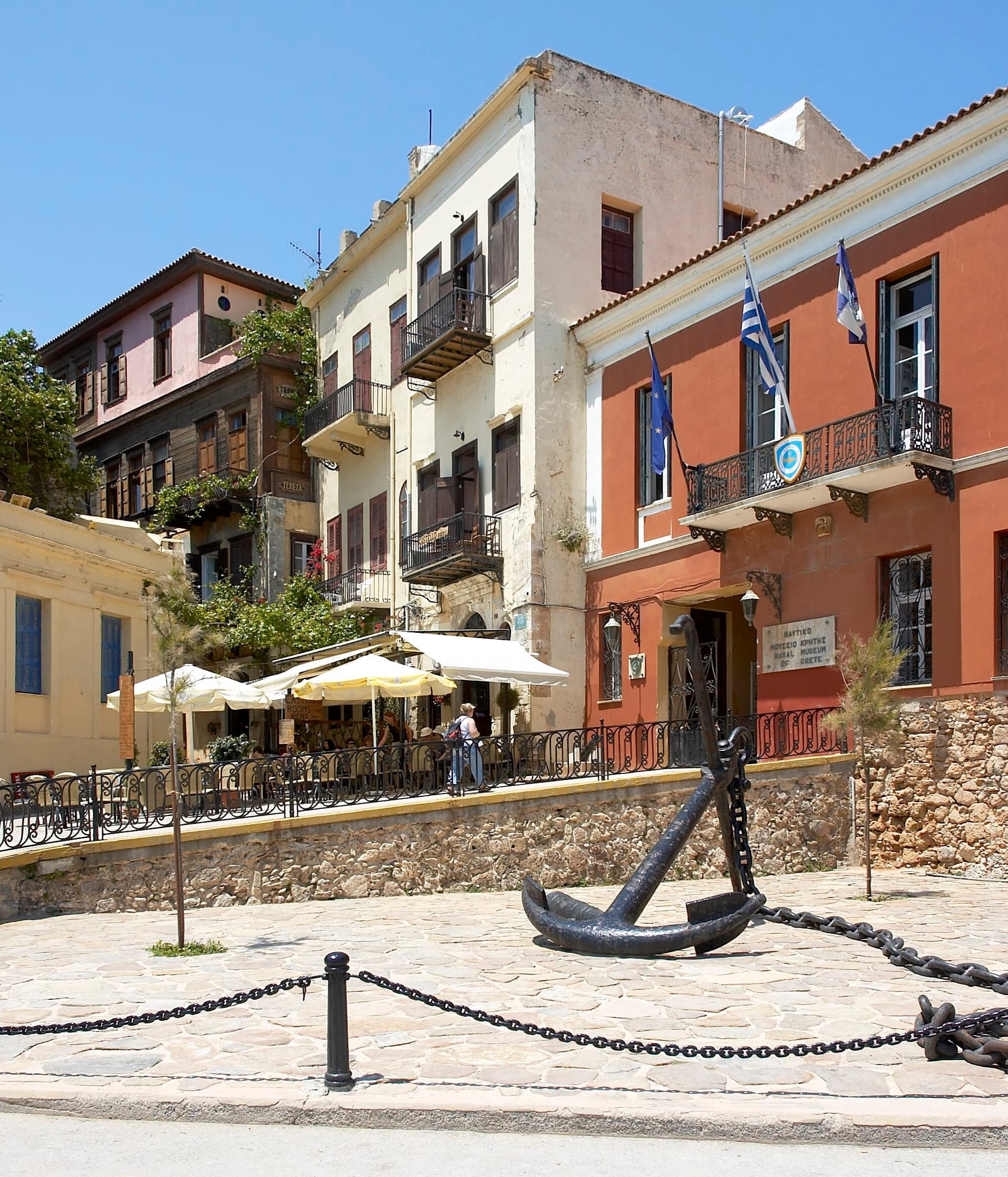 Nautical Museum of CreteIt occupies the Venetian **Firka Fortress** at the harbour mouth, and covers Gre2 minutes walk4.4
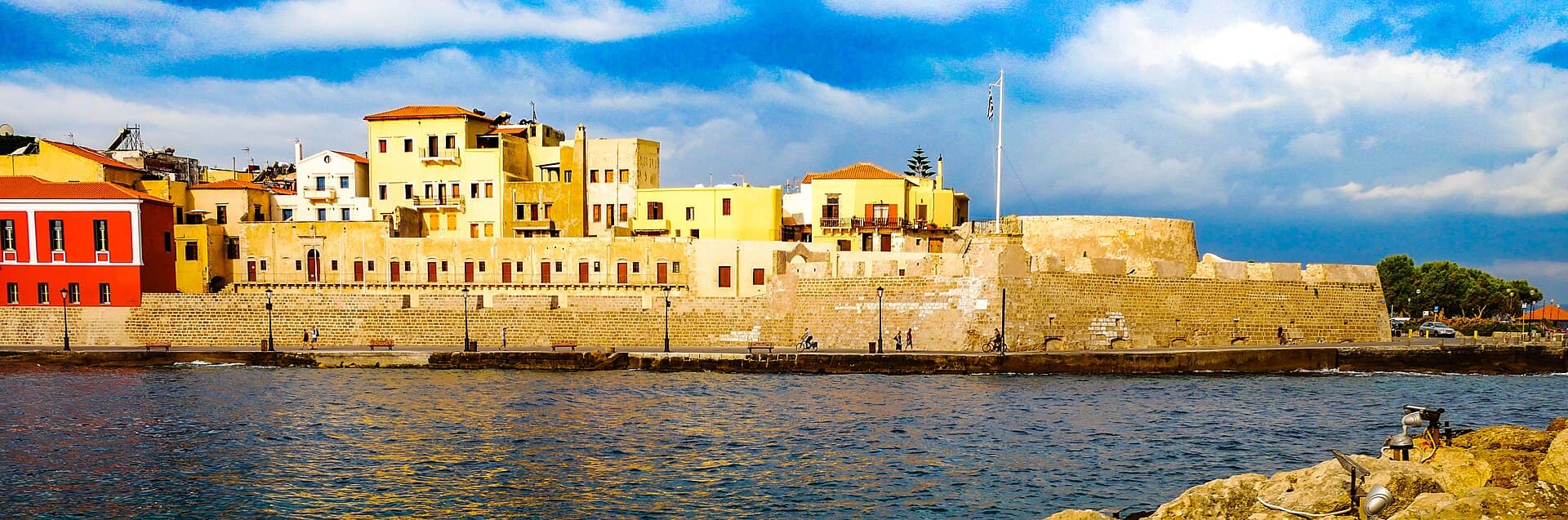 Firka FortressIt stands at the **mouth of the Venetian harbour** directly opposite the lightho3 minutes walk4.5
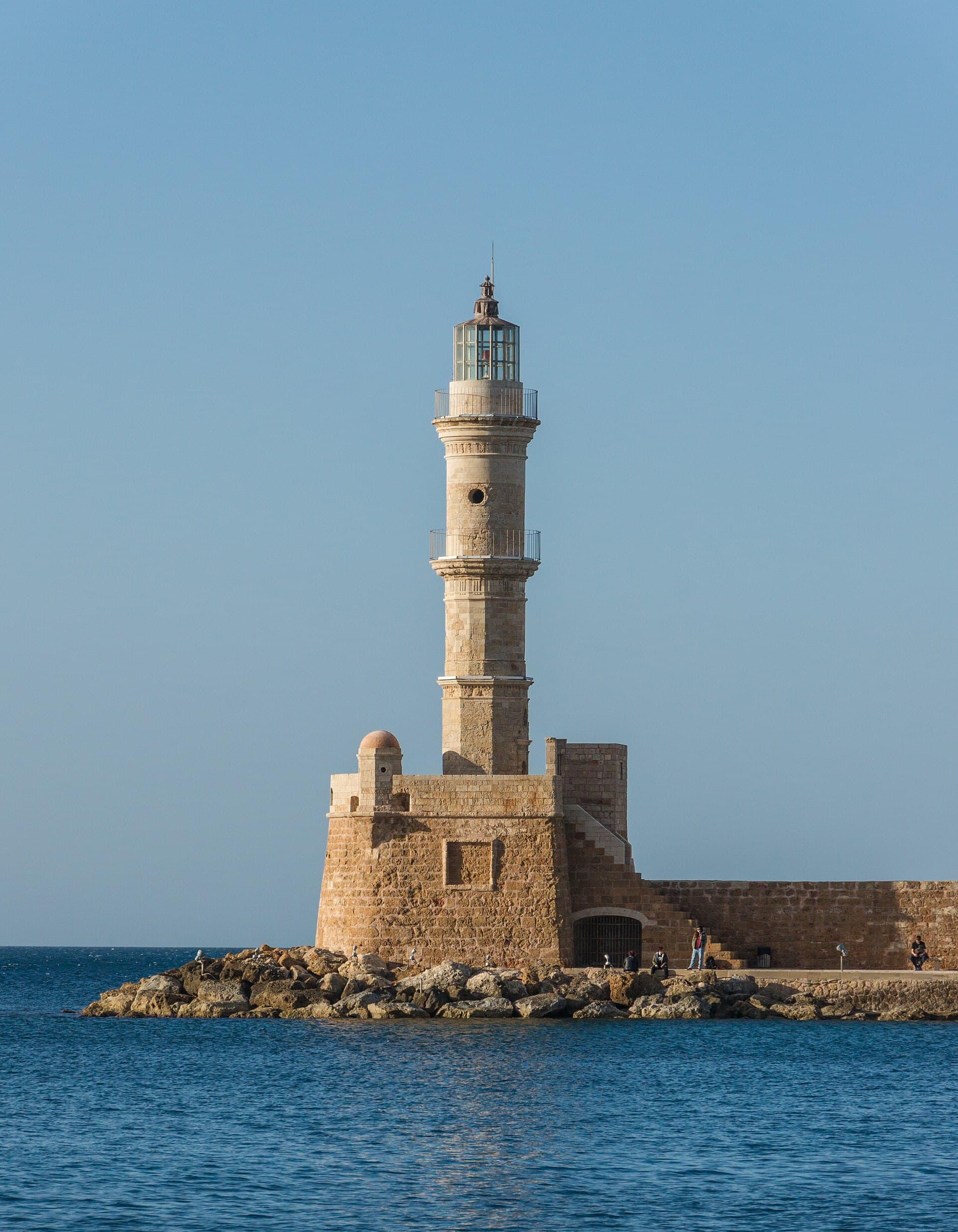 The Egyptian Lighthouse of ChaniaIt stands at the end of the **breakwater** closing the Venetian harbour, the emb4 minutes walk4.9
**Chania** is the finest without competition if the old town is the measure: its Venetian harbour and its lanes are the most complete and most layered in Crete, and it is the best of the three to stay in and walk. **Rethymno** second — smaller, quieter and cheaper, with a handsome old town and a huge Venetian fortress, and its central position makes it a practical base. **Heraklion** is the weakest as a town — a busy working capital rebuilt after the war — but the most important for **museums and antiquities**: Knossos and the Archaeological Museum have no substitute. The practical rule: sleep in Chania or Rethymno, and give Heraklion a day.
More than in any other Cretan town. Chief among it the **harbour mosque** (Küçük Hasan) with its cluster of domes directly on the quay — the first mosque built in Crete after the conquest, now an exhibition hall. In the **Splantzia** quarter — the Ottoman one — are the **Ahmet Aga mosque** with its surviving minaret, the quarter's square, and churches that were once mosques. In the lanes are **bathhouses**, projecting wooden oriels and carved doorways. ⚠ Many of these buildings are **unmanaged** with no opening hours — seen from outside, or when an event is held in them.