
The Minoan ship
A full-size replica built with Bronze Age tools and actually sailed.
Wouter Hagens — CC BY-SA 3.0 · C messier — CC BY-SA 4.0 · Unuplusunu — CC BY-SA 4.0 · Unuplusunu — CC BY-SA 4.0
It occupies the Venetian **Firka Fortress** at the harbour mouth, and covers Greek maritime history from the Bronze Age to the present in a building that is itself part of the story. Its collection: **ship models** across the ages — from Minoan craft to Greek triremes to Venetian and Ottoman vessels to twentieth-century steamers — with navigational instruments, charts, flags, guns and material from wrecks. Its two strongest sections concern two events in modern Cretan history: **The Battle of Crete** of May 1941, when Germany carried out the first large-scale airborne invasion in history, dropping paratroopers on the island, and the Allies and the Cretans — including civilians with primitive weapons — resisted for ten days. The section shows photographs, weapons, documents and testimony. And a **traditional shipbuilding section** in a separate building inside the Venetian arsenals (the Neoria) on the quay, holding a full-size reconstruction of a Minoan ship built with Bronze Age tools and actually sailed to Athens.
A full-size replica built with Bronze Age tools and actually sailed.
Photographs, weapons and documents from May 1941.
Usually included — a view over the harbour and the lighthouse.
Akti Kountourioti, Firka Fortress, 73100 Chania
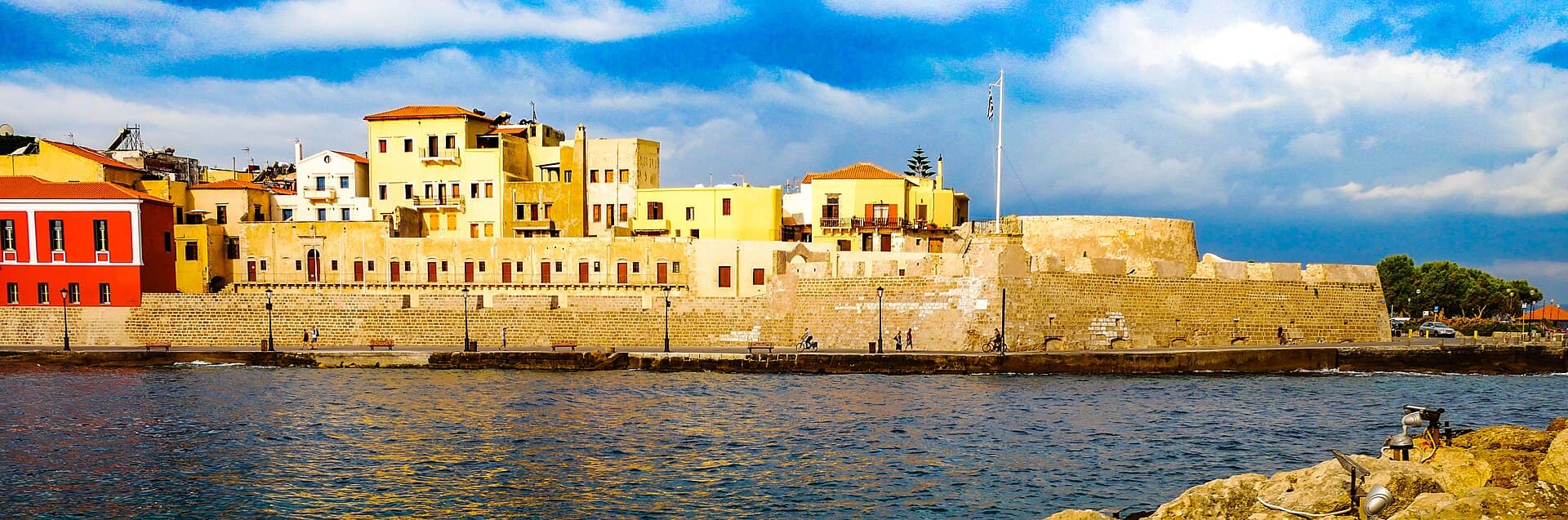 Firka FortressIt stands at the **mouth of the Venetian harbour** directly opposite the lightho1 minute walk4.5
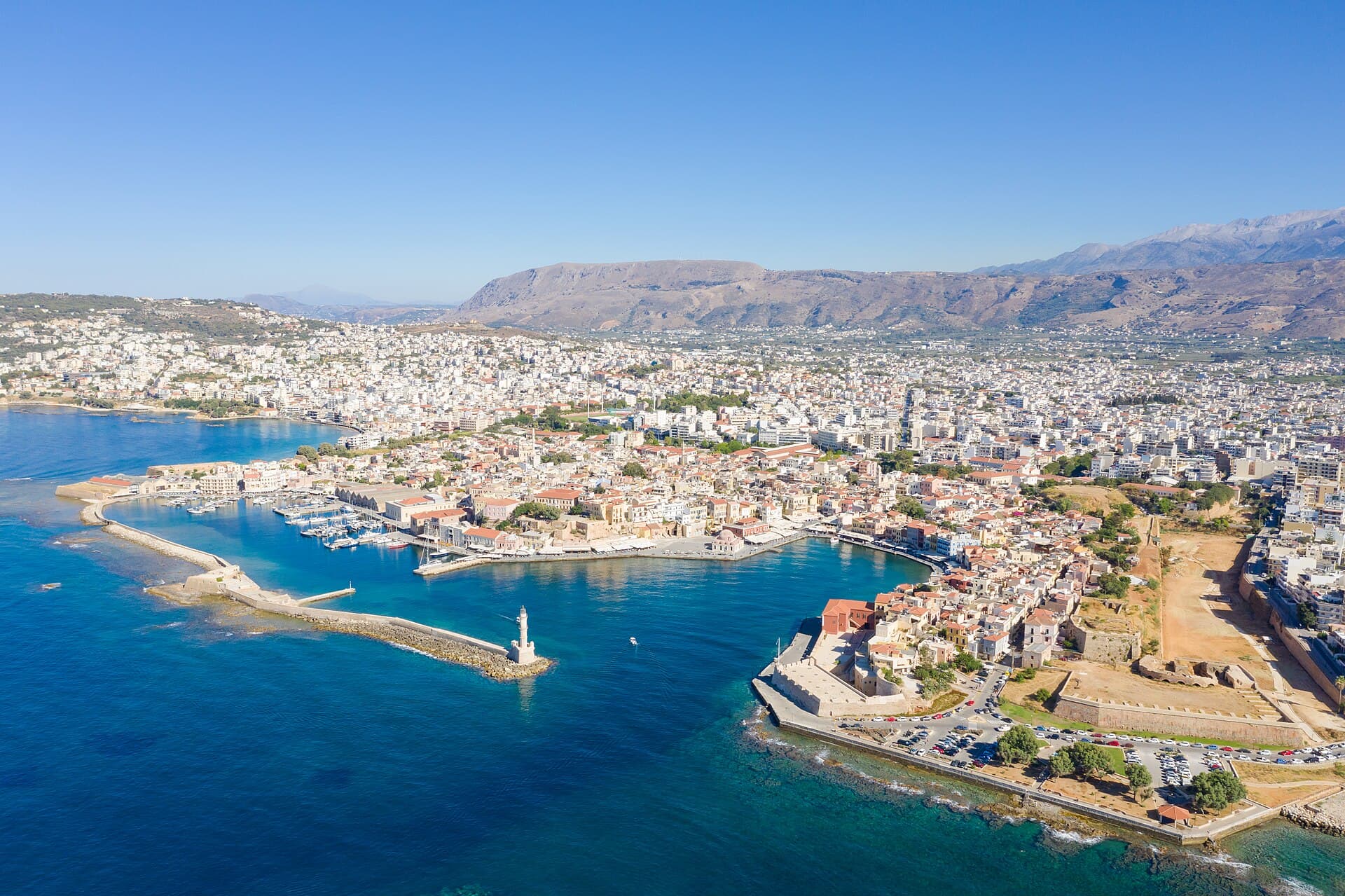 Chania Old Town and the Venetian HarbourThe finest old town in Crete, built around a horseshoe-shaped **Venetian harbour2 minutes walk4.9
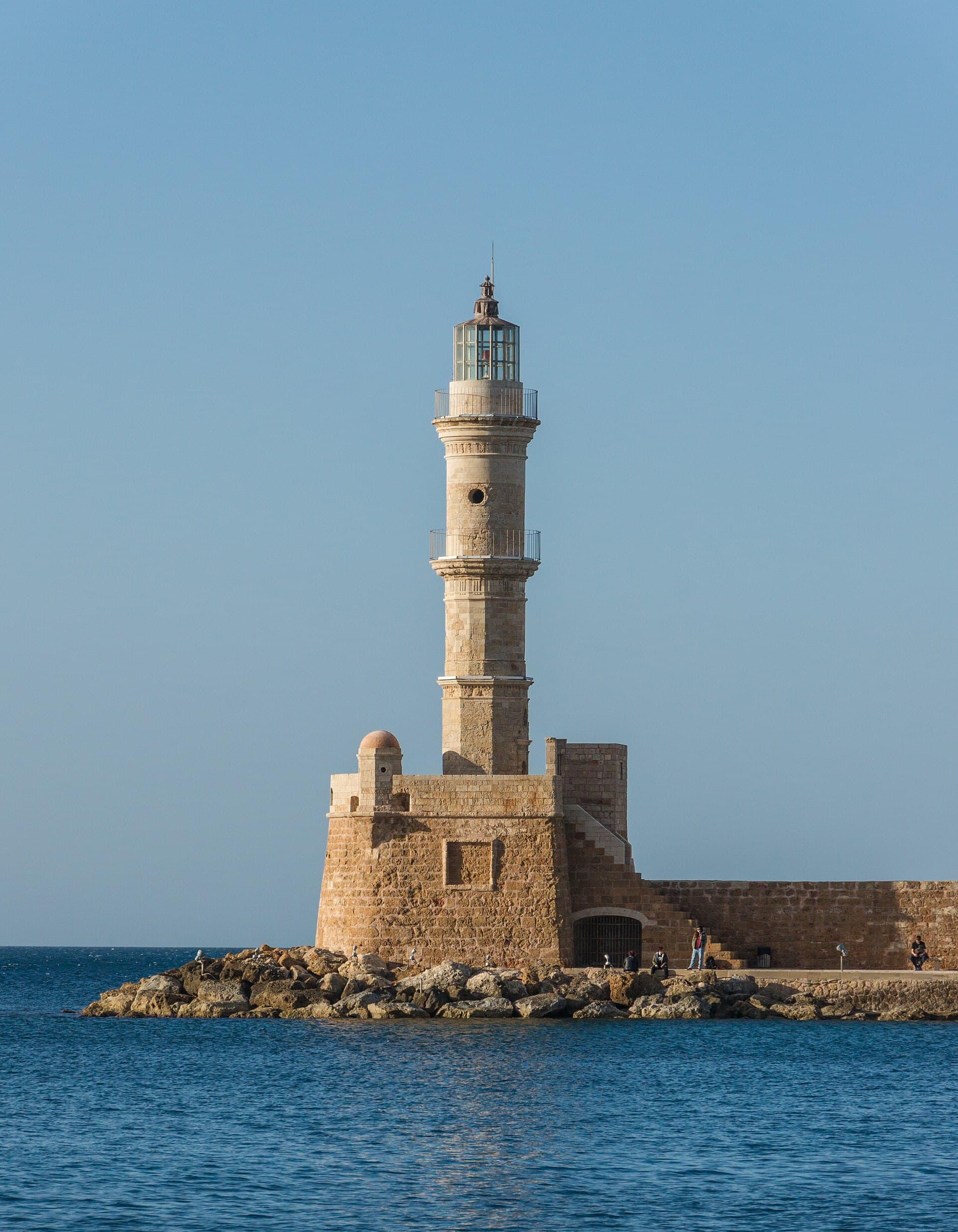 The Egyptian Lighthouse of ChaniaIt stands at the end of the **breakwater** closing the Venetian harbour, the emb2 minutes walk4.9
In **May 1941** Germany launched Operation Mercury: the first **large-scale airborne invasion** in history, dropping thousands of paratroopers on Crete to seize its airfields. They were resisted by British, Australian, New Zealand and Greek troops — and by **Cretan civilians** who came out with hunting guns and farm tools, a rare popular resistance that took the Germans by surprise. The island fell after about ten days, but **paratrooper losses were so heavy** that Hitler never again authorised a major airborne operation. A **harsh occupation** followed, with mass reprisal executions in the villages — something still present in Crete's memory today.
The **Venetian shipyards** on the harbour's eastern quay: a row of great stone vaults open to the water, built in the sixteenth and seventeenth centuries so that ships could be hauled in and built or repaired under cover, out of the weather. There were originally about **seventeen** and only **seven** survive — and those are among the best-preserved Venetian arsenals anywhere in the Mediterranean. Today they are used for events and exhibitions, and one holds this museum's traditional shipbuilding section. ⚠ Seeing them from outside along the quay is **free** and worth stopping for.