
The rampart view
The best view of the whole harbour, the lighthouse and the mountains.
Destinygreece — CC BY-SA 4.0 · C messier — CC BY-SA 4.0 · Jebulon — CC0 · Moonik — CC BY-SA 3.0
It stands at the **mouth of the Venetian harbour** directly opposite the lighthouse, built by the Venetians in the **seventeenth century** to defend the port — and an **iron chain** was drawn from it across the harbour entrance to the lighthouse to keep hostile ships out at night. Its name comes from the Turkish **firka**, a barracks or detachment: the Ottomans used it as a military barracks after the conquest, and later as a **prison**. It has a moment in Greek history: on this fortress's flagstaff the **Greek flag** was raised in **1913**, marking Crete's union with Greece after centuries of Venetian then Ottoman rule and then autonomy. The prime minister **Eleftherios Venizelos**, Cretan by birth, attended the ceremony. The flagstaff still stands. Inside are a courtyard, vaults and the Nautical Museum of Crete, and climbing its walls gives **the best view of the whole harbour**: the arc of buildings, the lighthouse and the white mountains. ⚠ Entry is normally on the **Nautical Museum ticket**.
The best view of the whole harbour, the lighthouse and the mountains.
Where the flag was raised at Crete's union with Greece.
Drawn across the harbour mouth to bar ships at night.
Akti Kountourioti, 73100 Chania
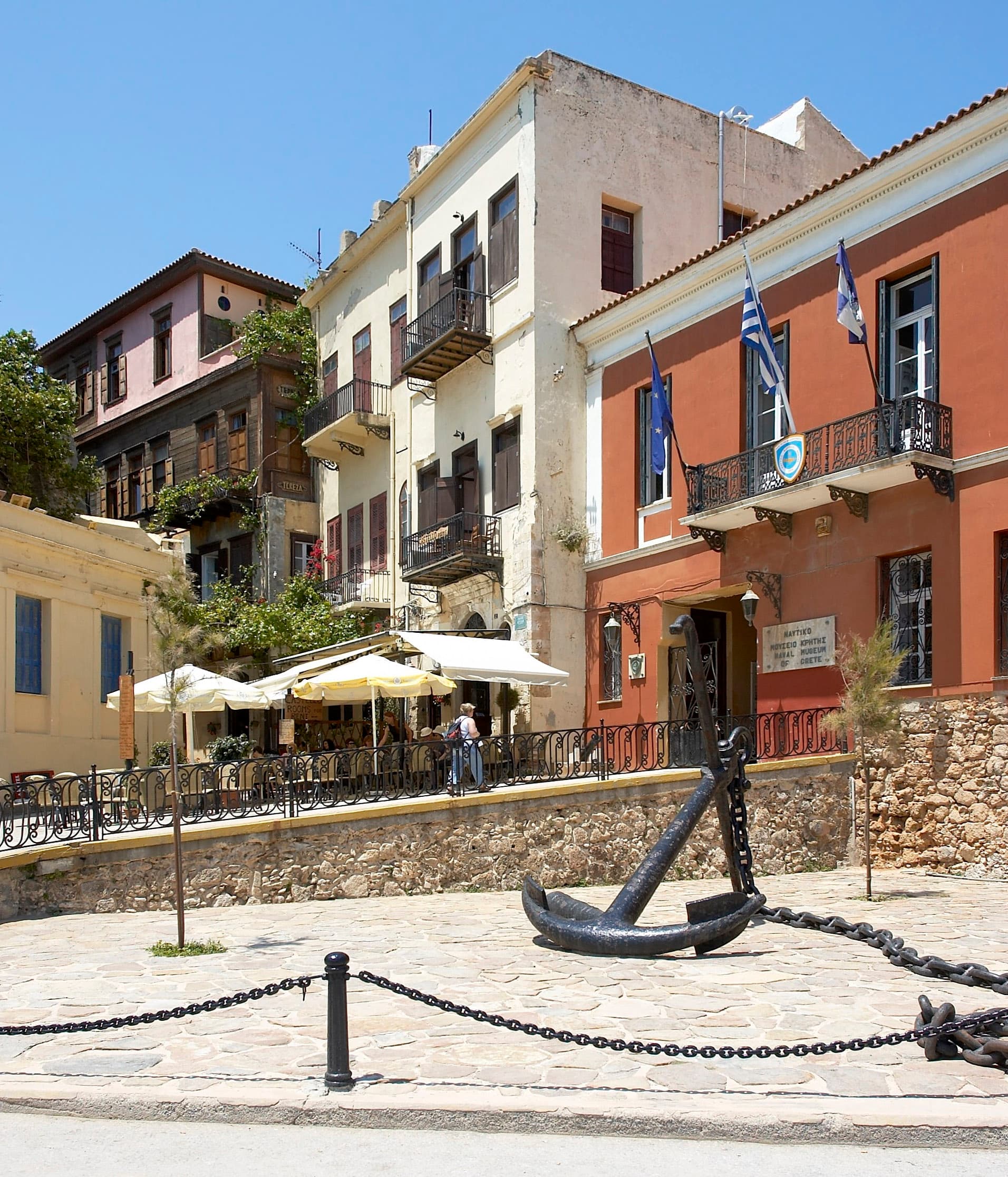 Nautical Museum of CreteIt occupies the Venetian **Firka Fortress** at the harbour mouth, and covers Gre1 minute walk4.4
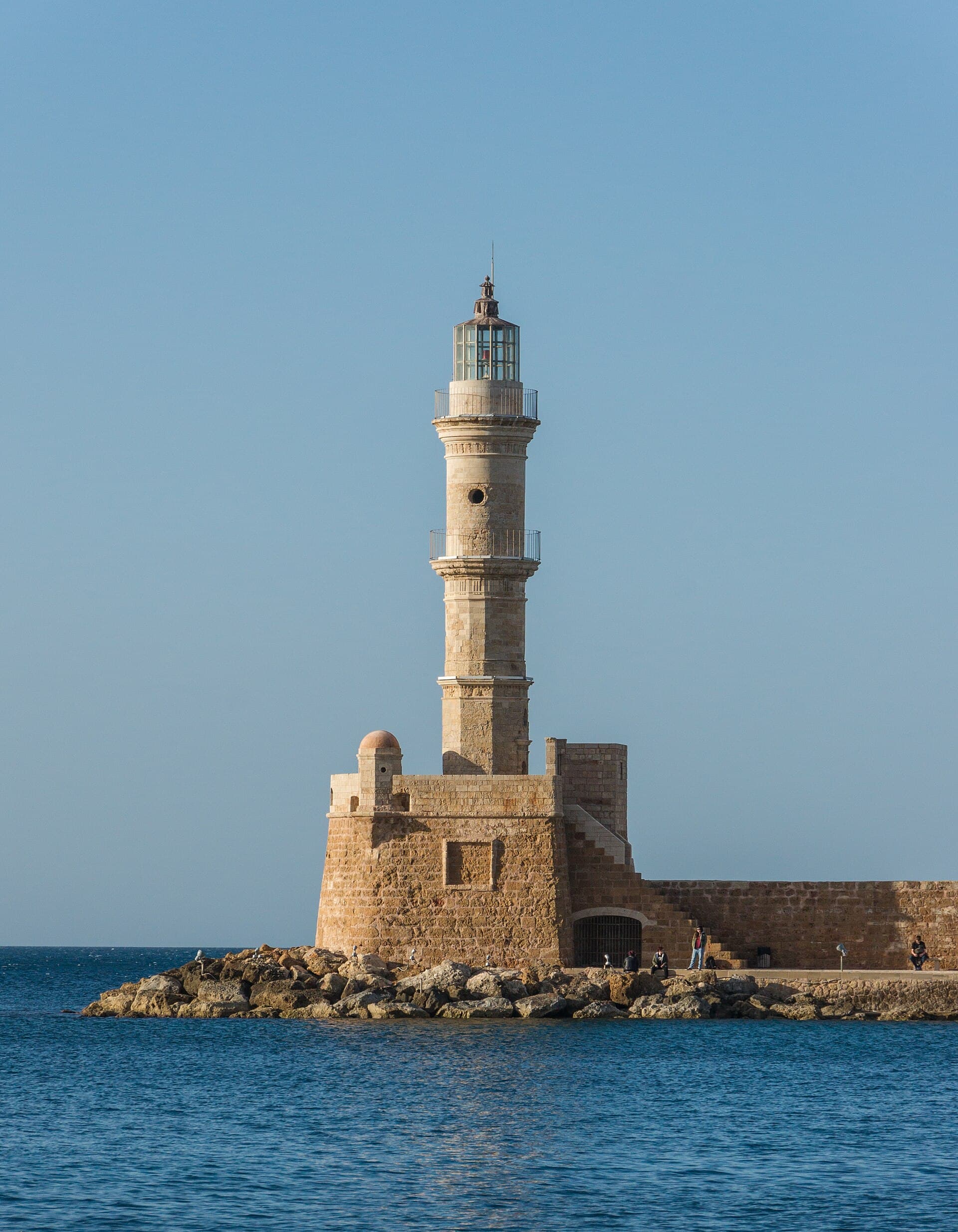 The Egyptian Lighthouse of ChaniaIt stands at the end of the **breakwater** closing the Venetian harbour, the emb2 minutes walk4.9
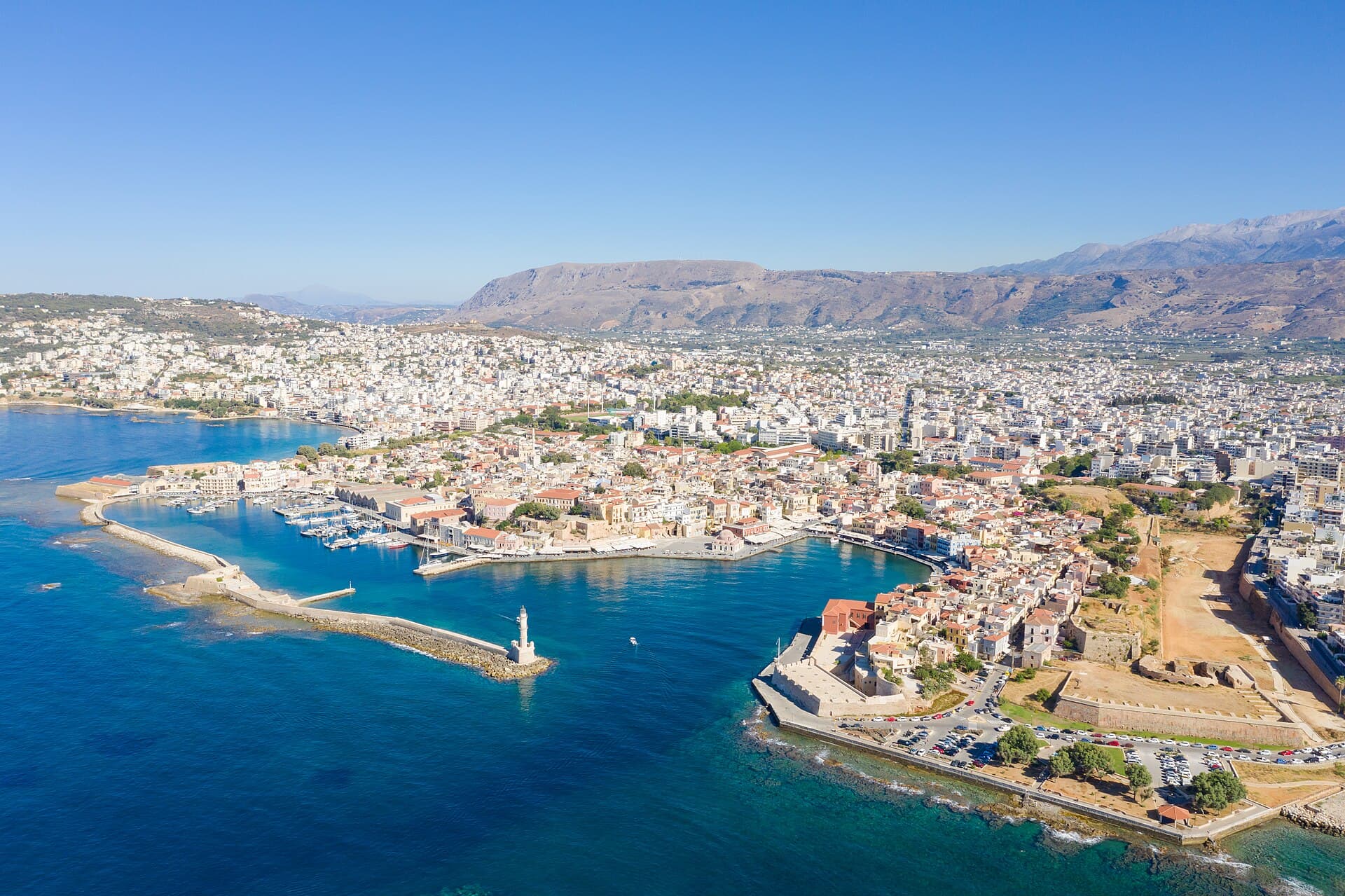 Chania Old Town and the Venetian HarbourThe finest old town in Crete, built around a horseshoe-shaped **Venetian harbour3 minutes walk4.9
**Eleftherios Venizelos** (1864–1936) was born near Chania and was the most important Greek politician of the twentieth century, seven times prime minister. He began as leader of the Cretan movement for union with Greece against Ottoman rule, then moved to Athens and led the country through the **Balkan Wars**, which roughly doubled its territory, and brought it into the First World War on the Allied side. Which is why his name is on **airports, streets and squares** across Greece, and his grave is on a hill at **Akrotiri** near Chania overlooking the city — the site is free and worth visiting.
**Go in** — for a practical reason: the ticket is cheap and covers both the **Nautical Museum of Crete** and the **fortress walls**, and the walls give **the best view of the whole Venetian harbour** available from anywhere else: the arc, the lighthouse and the white mountains in one frame. From outside you see only a stone wall. ⚠ Check the winter hours, and that the courtyard is not shut for an evening event — that happens in summer.