The gilded dome
Above a calligraphic facade.
Alikmandal — CC BY-SA 4.0 · AJ12119 — CC BY-SA 4.0 · Aounaqvi — CC BY-SA 4.0 · Syed Iqbal21 — CC BY-SA 4.0 · Sankalp — CC BY-SA 4.0
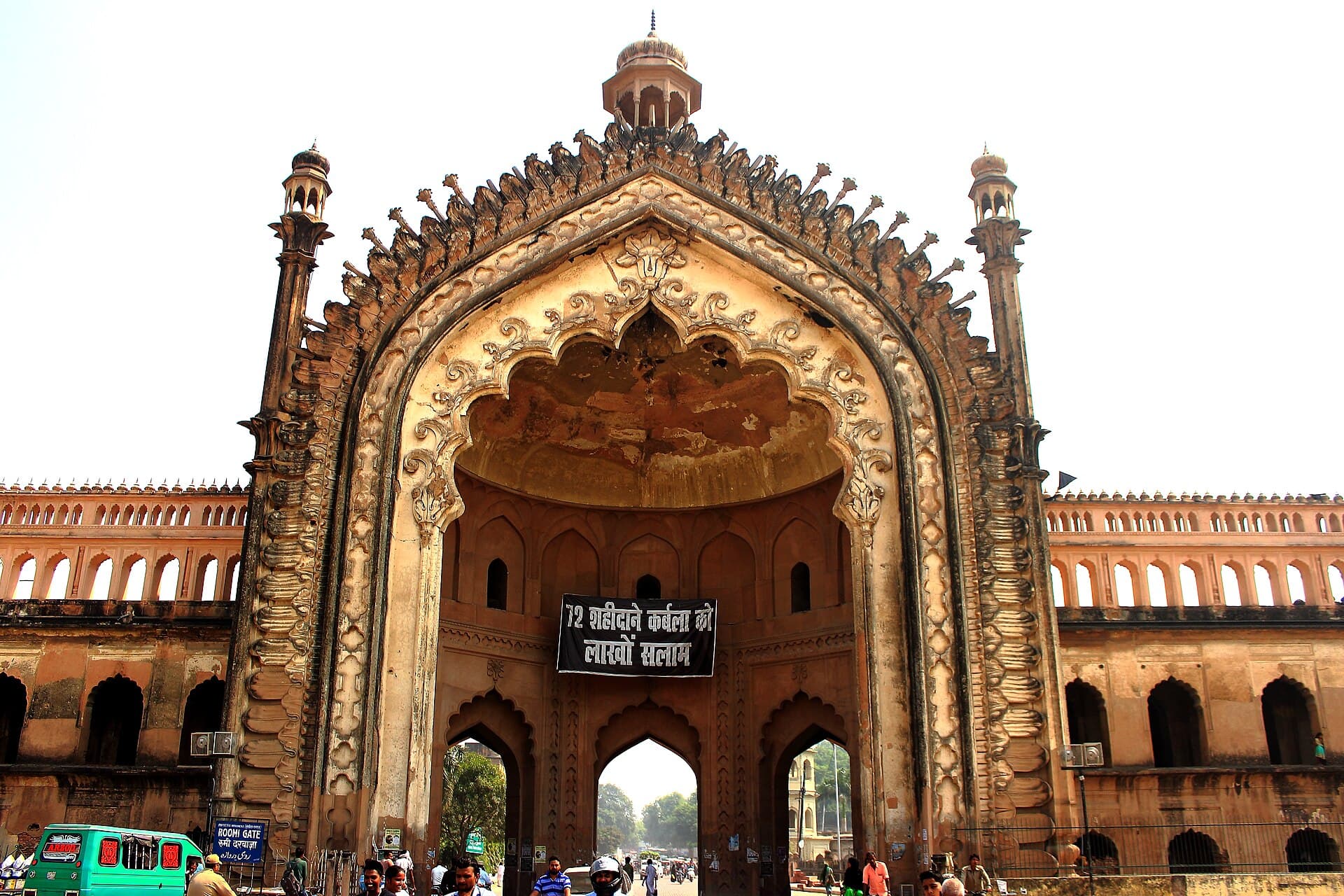
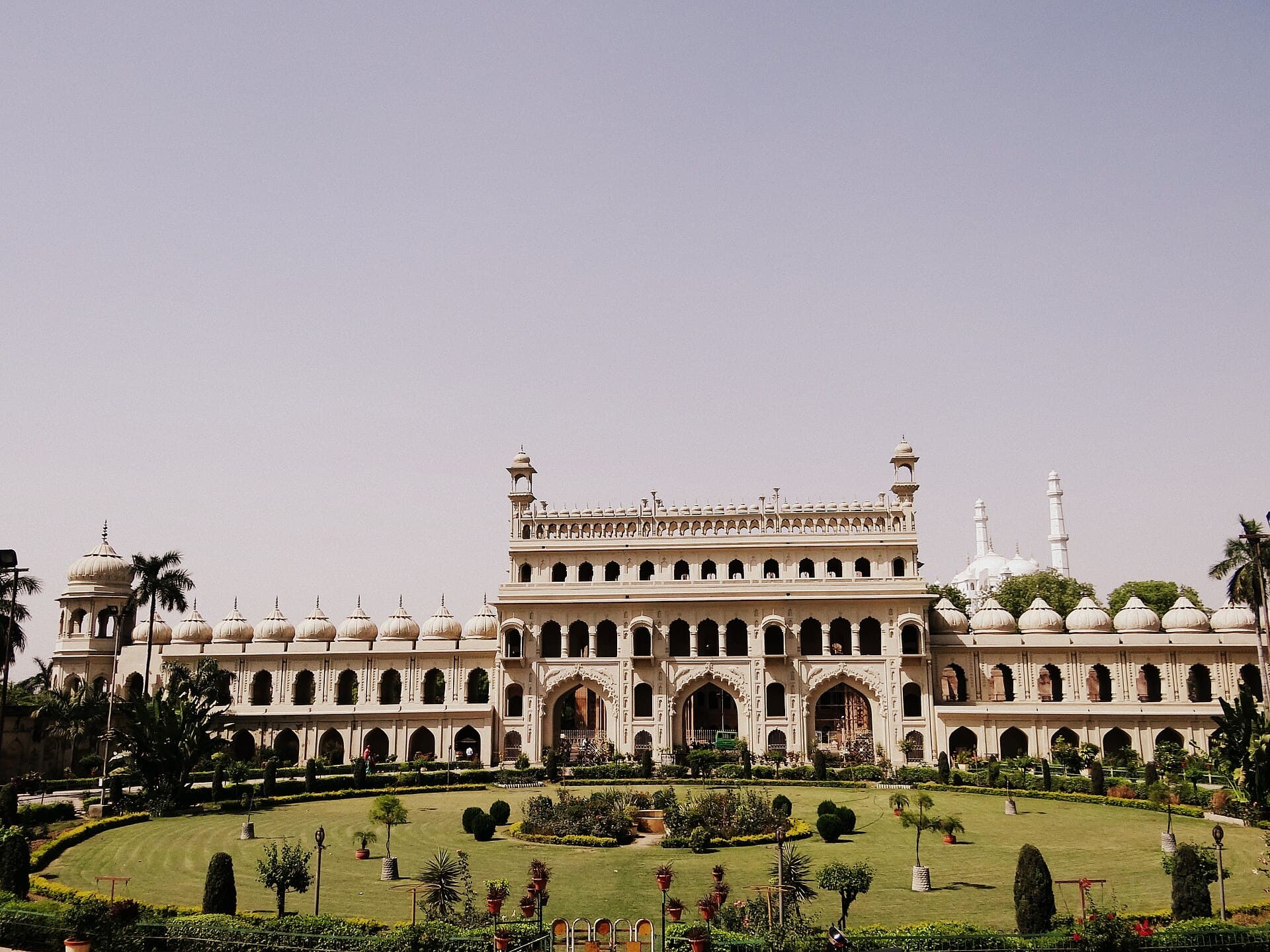
The Chota Imambara, officially Imambara Hussainabad Mubarak, is a Shia congregation hall and mausoleum in Lucknow, built by Muhammad Ali Shah, Nawab of Awadh, in 1838 as a resting place for himself and his mother. Europeans called it the «Palace of Lights» for its crystal chandeliers and festive decoration. The building has two halls and a platform holding a replica of the shrine of Imam Husain at Karbala, with five main doorways recalling the holy five. Thousands of labourers worked on it for famine relief. The chandeliers came from Belgium, and it also keeps the Nawab's crown and ceremonial items. It is topped by a gilded dome, turrets and minarets, with Quranic verses in fine Arabic calligraphy on the facade. A long water channel runs in front, with two matching white buildings at the sides: one, like a small Taj Mahal, is the tomb of Princess Asiya Begum, and the other was a treasury. Nearby are the Husainabad Mosque and the unfinished Satkhanda tower. It is 1 km in a straight line from the Bara Imambara, so pair the two. Evening is the loveliest time, when the facade is lit and reflected in the water. Shoes come off in the hall, modest dress is needed, and women should cover their hair in the religious areas. The hall is richly dressed for Muharram, when access may change.
Above a calligraphic facade.
Behind the name Palace of Lights.
A small likeness of the Taj.
Husainabad, Old Lucknow
A hall where Shia Muslims hold gatherings of mourning, especially in Muharram.
Evening is loveliest, when the facade is lit and reflected in the water.