The great arch
With a half-dome above.
Aryadeep Bhattacharya — CC BY-SA 4.0 · Dhruvaeng — CC BY-SA 4.0 · Mukeshforest — CC BY-SA 3.0 · Dhruvaeng — CC BY-SA 4.0 · Saqy Buzz — CC BY-SA 4.0
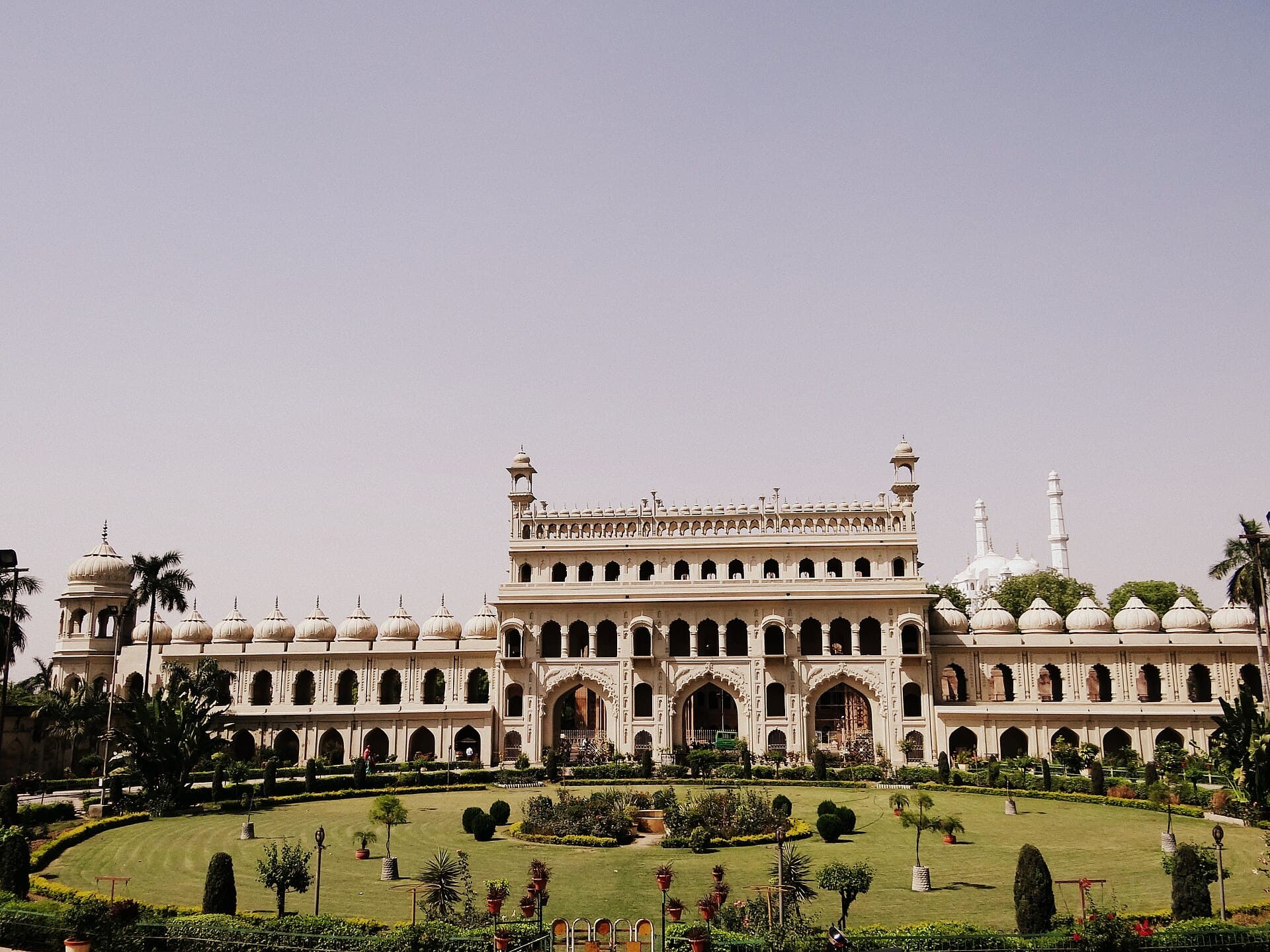
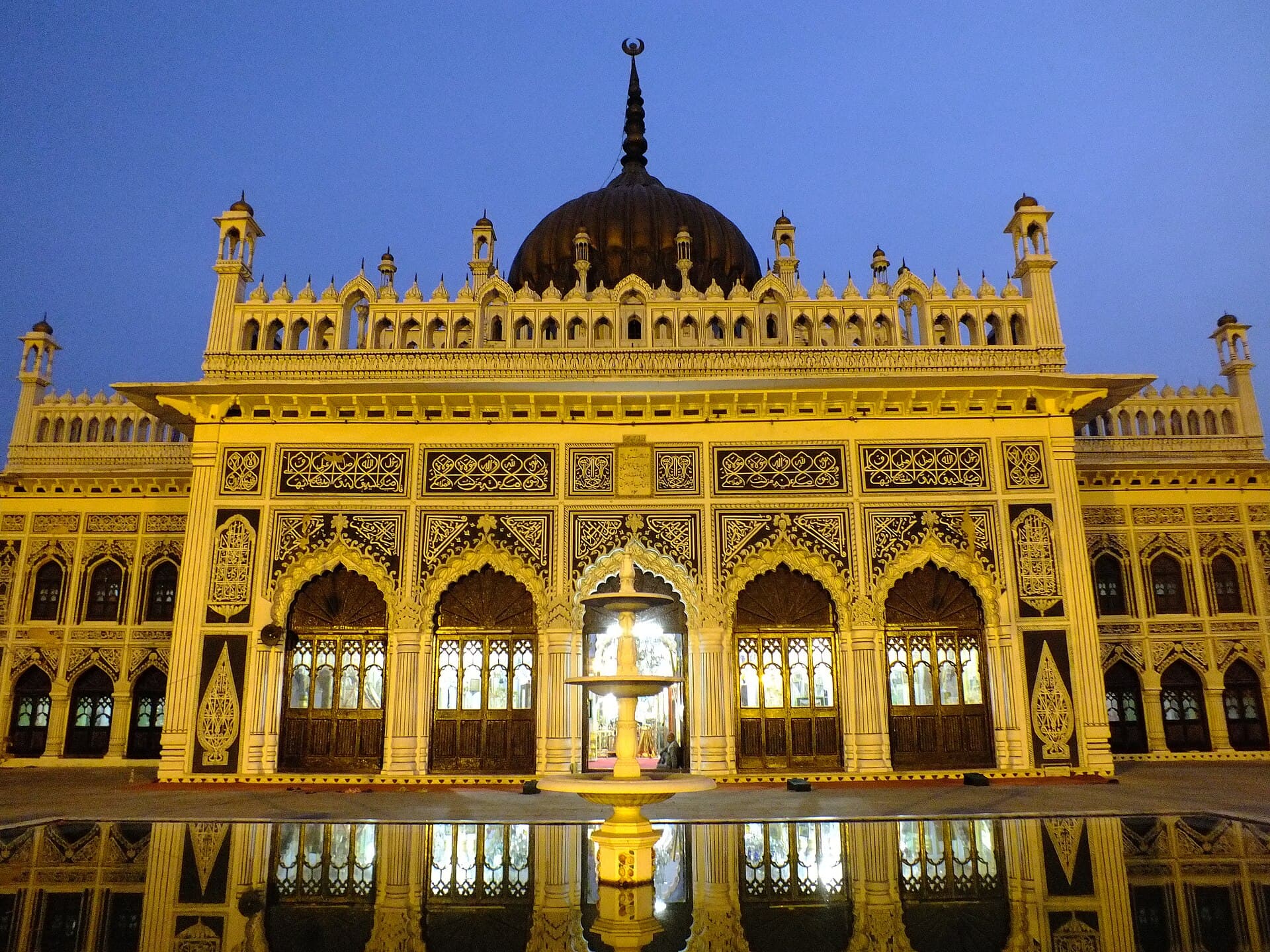
The Rumi Darwaza is a huge gateway in Old Lucknow rising about 18 m, a symbol of the city and a fine example of Awadhi architecture. Its name means «Turkish Gate», as Rum refers to Anatolia, and daily traffic still passes beneath it. Nawab Asaf-ud-Daula built it in 1784, modelled on the Sublime Porte in Istanbul. It marked the entrance to Old Lucknow and was the west-facing entrance of the Bara Imambara. As the city grew it became the way into a palace that the British later demolished after the events of 1857. It differs from Mughal work in style and materials, built of thin burnt clay bricks and a mortar of lime and crushed brick, as was common under the Nawabs. A big arch carries a half-dome on a half-octagonal plan, covered in fine petal-like ornament. Its colour changes with the light, turning warm at sunset. It stands right beside the Bara Imambara and needs no more than a quarter of an hour. The best pictures come from the nearby park or the Imambara side. Watch for cars and carts if photographing from the road, which is usually busy. Early morning is calmest, and evening adds the lights.
With a half-dome above.
Decorated brick and mortar.
A warm glow on the gate.
Husainabad, Old Lucknow
Rum meant Anatolia, and the gate was modelled on the Sublime Porte in Istanbul.
No. It stands on a public road and can be seen at any time.