The round towers
Brick above the city.
S.K. Vemmer (U.S. Department of State) — Public domain · MSgt Kevin Wallace — Public domain · Artacoana — Public domain · S.K. Vemmer (U.S. Department of State) — Public domain · S.K. Vemmer (U.S. Department of State) — Public domain
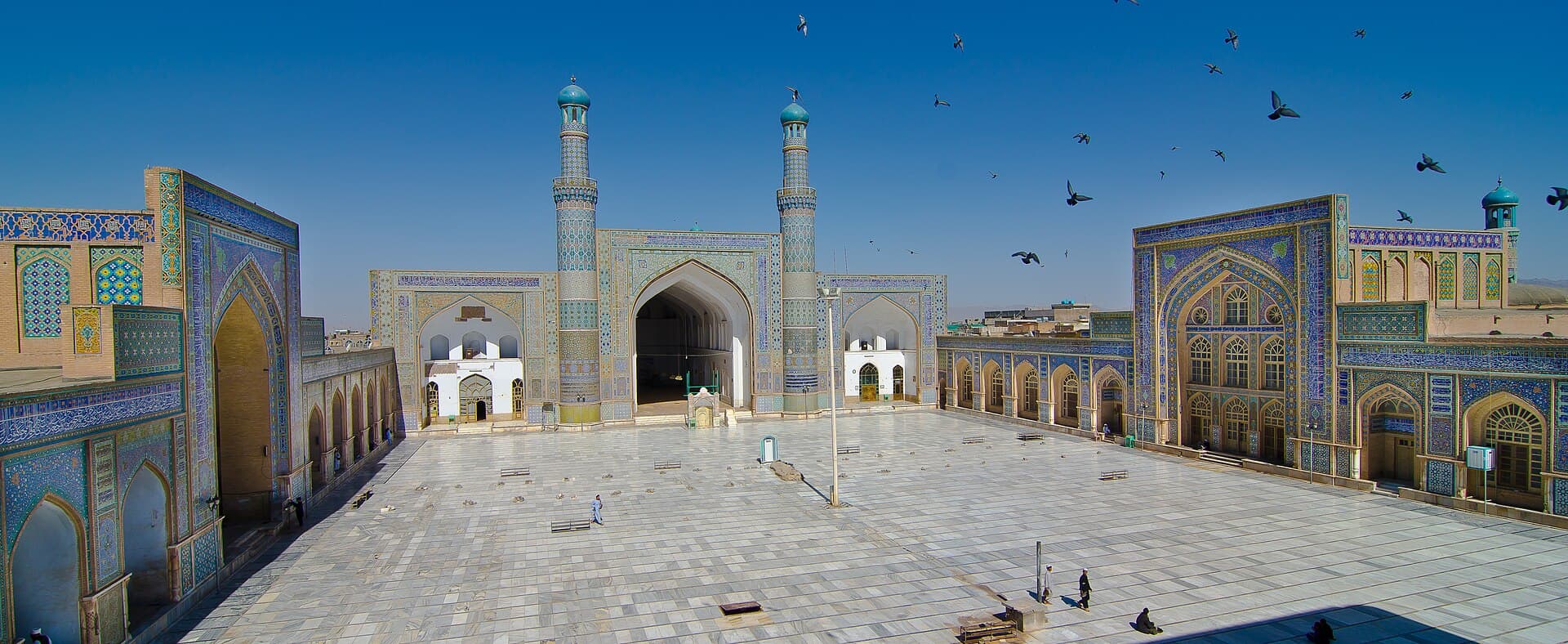
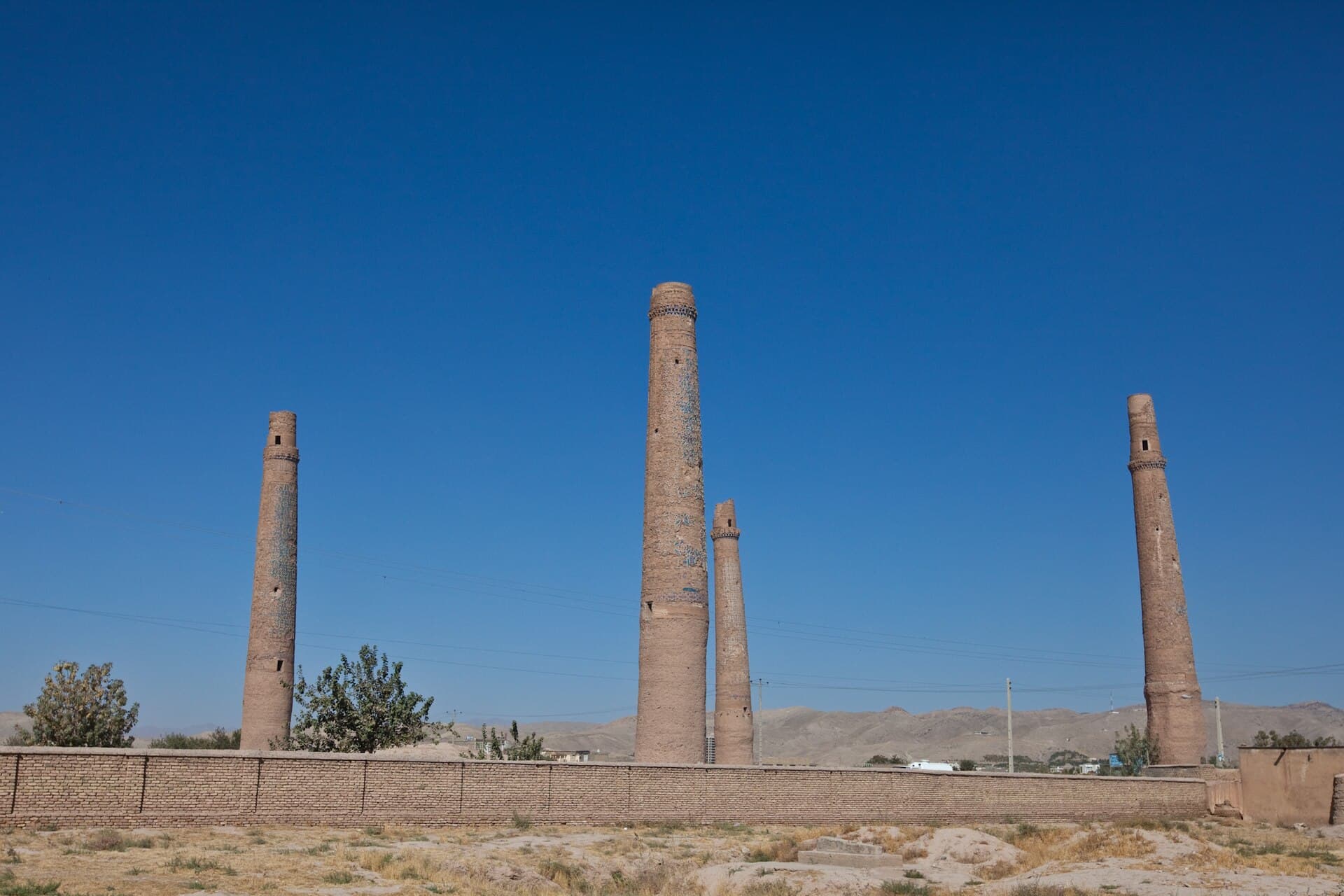
The Citadel of Herat, known locally as Arg-e Herat or Qala Ikhtiaruddin, is a fort in the city of Herat in western Afghanistan. Its round brick towers dominate the centre of the old city and can be seen from many spots around it. Inside is the National Museum of Herat. It is among the finest castles in the country since its restoration, and a climb up puts a whole city at your feet. The citadel dates back to 330 BC, when Alexander the Great and his army arrived after the Battle of Gaugamela. Many empires used it as a headquarters over 2,000 years, and it was destroyed and rebuilt many times. After decades of neglect it began to crumble, and from 2006 a major restoration with international organisations gave it its present look. You enter by a raised passage into paved inner courts with long walls of arches and windows, then reach the great tower and ramparts. In vaulted brick corridors the museum shows pieces from the history of the region. From the top you see Herat's rooftops, the minarets of the Friday Mosque and the mountains on the horizon. Stay away from unfenced edges. It is about 700 m in a straight line from the Friday Mosque of Herat, so combine them on foot, and about 1.4 km from the Musalla Complex. Wear comfortable shoes, and ask before taking photos in the museum. The UK Foreign Office currently advises against all travel to Afghanistan, and access may not be possible, so check official guidance before making any plans.
Brick above the city.
Brick in the museum.
Herat and the minarets.
Centre of Old Herat, Afghanistan
It goes back to Alexander the Great in 330 BC and has been rebuilt many times.
Do not count on it, and check official guidance first, as the UK Foreign Office advises against all travel to Afghanistan.