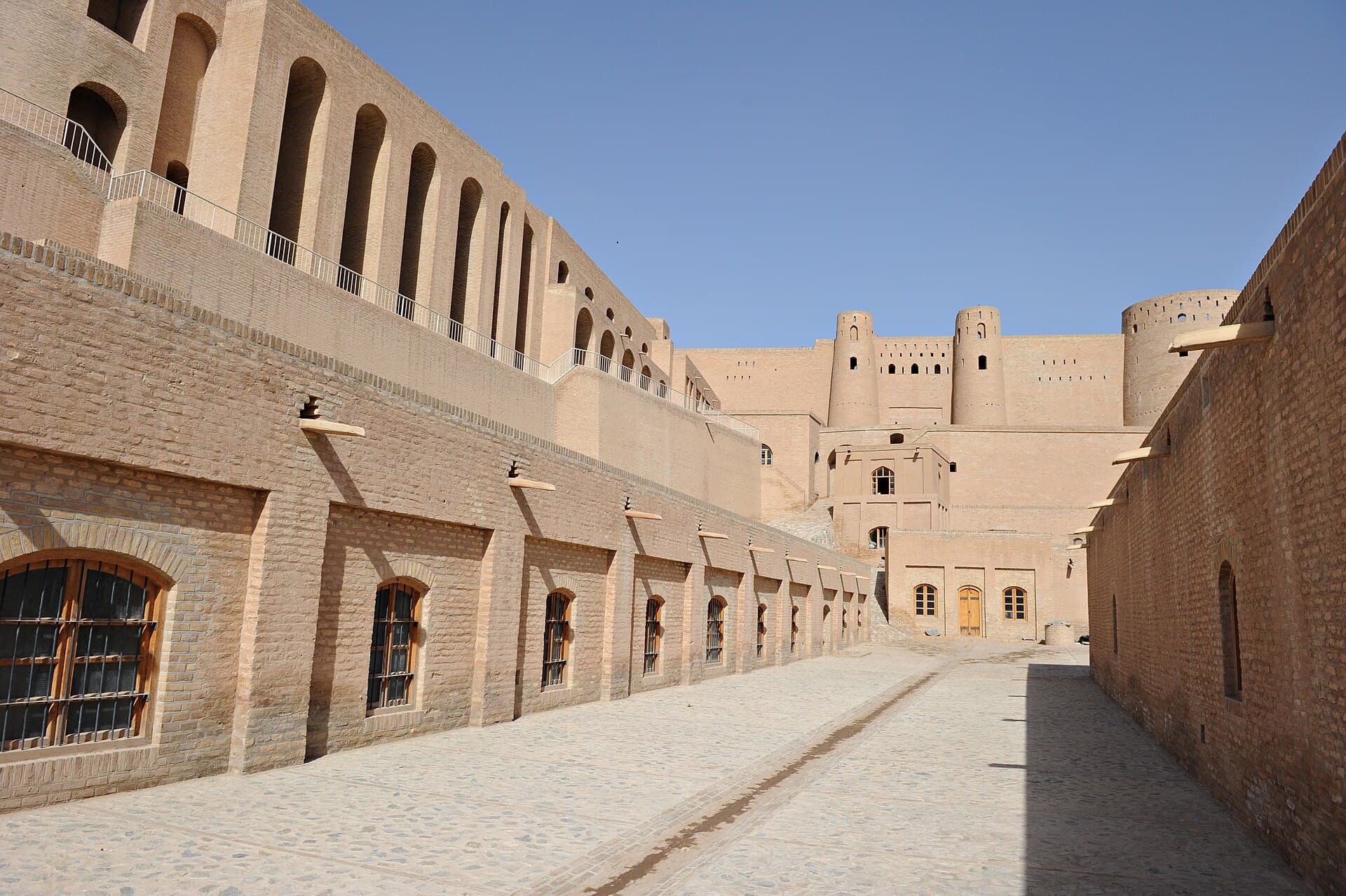
The broad courtyard
Arches round a paved floor.
DidierTais — CC BY-SA 3.0 · Todd Huffman — CC BY 2.0 · Todd Huffman — CC BY 2.0 · Marius Arnesen from Oslo, Norway — CC BY-SA 2.0 · Yves Picq http://veton.picq.fr — CC BY-SA 3.0
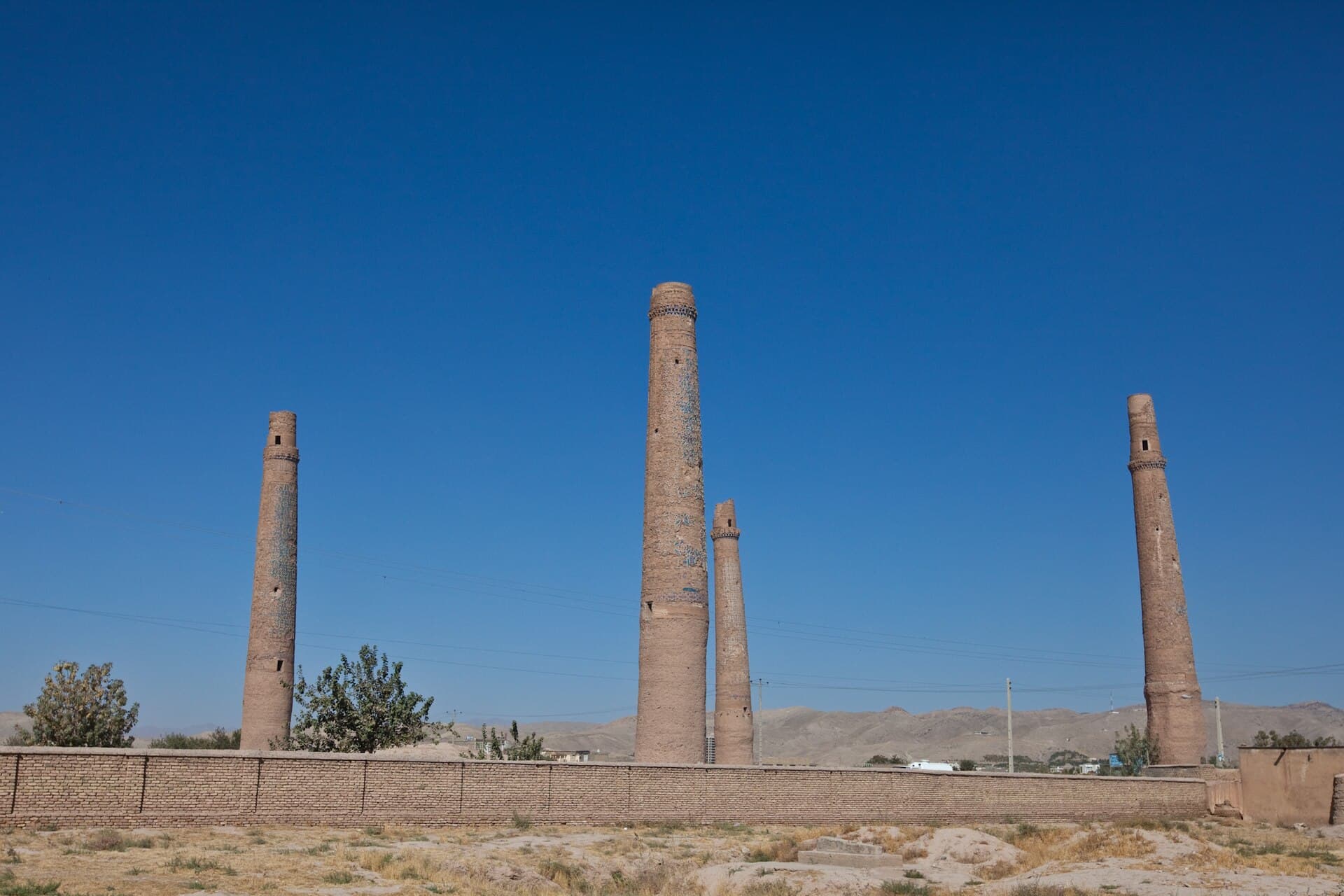
The Friday Mosque of Herat is a congregational mosque in western Afghanistan and among the finest works of tile in the Islamic world. The Ghurid Sultan Ghiyath al-Din Muhammad laid its foundation in 1200. It appears on the 500-afghani note. The size of its courtyard and the colours of its blue walls amaze you, above all in the first rays of the sun, after a walk through the dusty streets of the city. Successive rulers extended it many times, from the Kartids and Timurids to the Mughals and Durranis, and its basic Ghurid structure has survived. Its present look dates largely from the 20th century. It was not always the largest mosque in Herat, as the Mosque and Madrasa of Gawhar Shad was far bigger, and its remains still stand at the Musalla Complex. You enter a broad paved courtyard ringed by tall arches and walls covered in blue and turquoise tiles patterned with flowers and script, with two minarets above. A great gateway has finely worked muqarnas arches that deserve a long look. There are carved wooden doors and stone steps. This is a place of worship, so keep quiet and avoid prayer times. It is about 700 m in a straight line from the Citadel of Herat, and you can walk there. Dress modestly, women should cover their hair, and take off your shoes where asked. The UK Foreign Office currently advises against all travel to Afghanistan, and access may not be possible, so check official guidance before making any plans.
Arches round a paved floor.
Flowers and script.
Very fine work.
Centre of Old Herat, Afghanistan
Its Ghurid structure survives, but its present look dates largely from the 20th century.
Do not count on it, and check official guidance first, as the UK Foreign Office advises against all travel to Afghanistan.