
The statue that sang
Cracked in an earthquake and sounded at sunrise, then was repaired and fell silent forever.
Marc Ryckaert (MJJR) — CC BY 3.0 · MusikAnimal — CC BY-SA 4.0 · Holger Uwe Schmitt — CC BY-SA 4.0 · Holger Uwe Schmitt — CC BY-SA 4.0
Two enormous stone figures standing alone in an open field beside the west bank road, each about eighteen metres high — and all that remains of the largest temple ever built in Egypt. That is the story: the pair guarded the entrance to the mortuary temple of Amenhotep III, which covered more ground than Karnak. But it was built too close to the Nile, and the annual flood undermined it year after year until it collapsed, after which later pharaohs carried off its stone for their own buildings. Only these two survived, because each is a single solid block that could not easily be broken up. The Greek name comes from a mistake. The northern statue cracked in an earthquake in 27 BC and afterwards produced a sound at sunrise — most likely the stone expanding and trapped moisture evaporating in the fissures. Greeks and Romans took it for Memnon, the Trojan hero, greeting his mother Eos, goddess of the dawn, and it became a tourist attraction of the ancient world. Roman visitors carved their names on the base, and the graffiti is still there. The statue was then repaired in the third century AD, at which point the sound stopped and never returned. Stopping is free with no fence and no gate — the figures stand right beside the road and take a few minutes. Excavation continues behind them, uncovering more of the temple and other statues that have been re-erected. Ten minutes to half an hour, and every west bank tour passes them.
Cracked in an earthquake and sounded at sunrise, then was repaired and fell silent forever.
Names of ancient-world visitors carved into the base.
Work behind them uncovering more of Amenhotep III's temple and re-erected statues.
West Bank, on the Valley of the Kings road
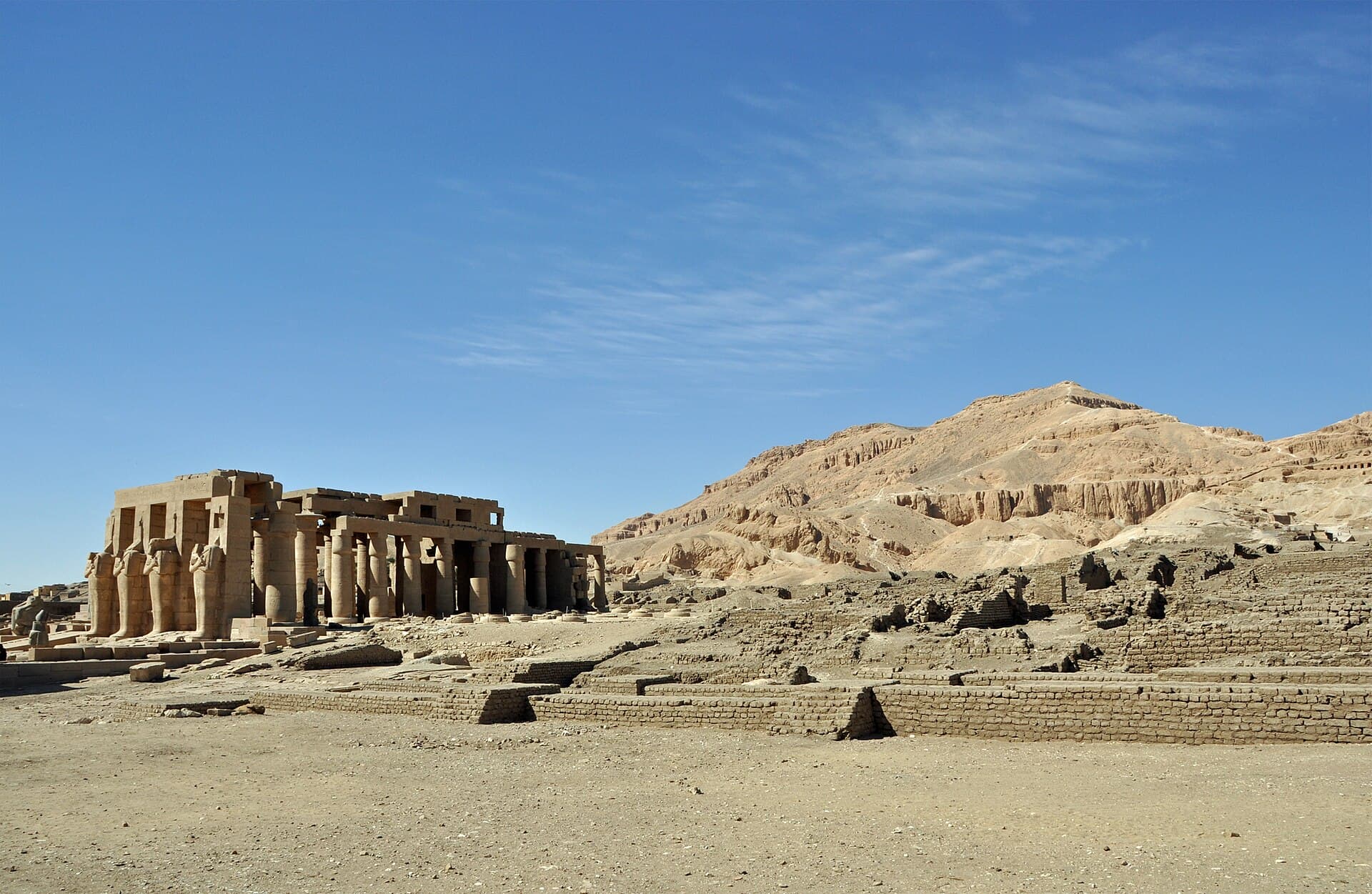 RamesseumThe memorial temple of Ramesses II on Luxor's West Bank, built to keep his memor11 minutes walk4.6
 Medinet HabuThe mortuary temple of Ramesses III, and the finest thing on the west bank after12 minutes walk4.9
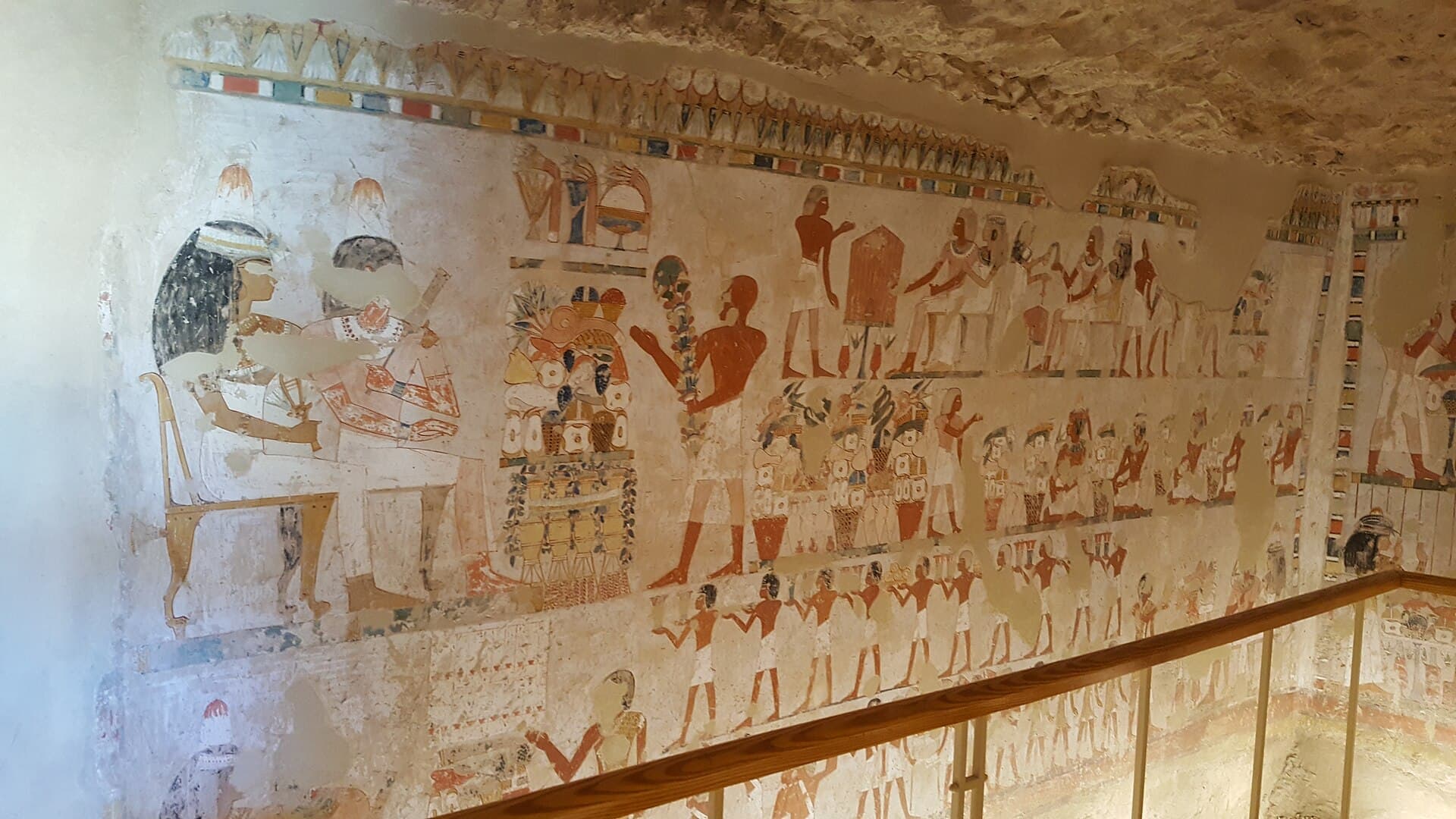 Tombs of the Nobles (Sheikh Abd el-Qurna)A necropolis on the slopes of the West Bank hills, the largest group of private 14 minutes walk4.4
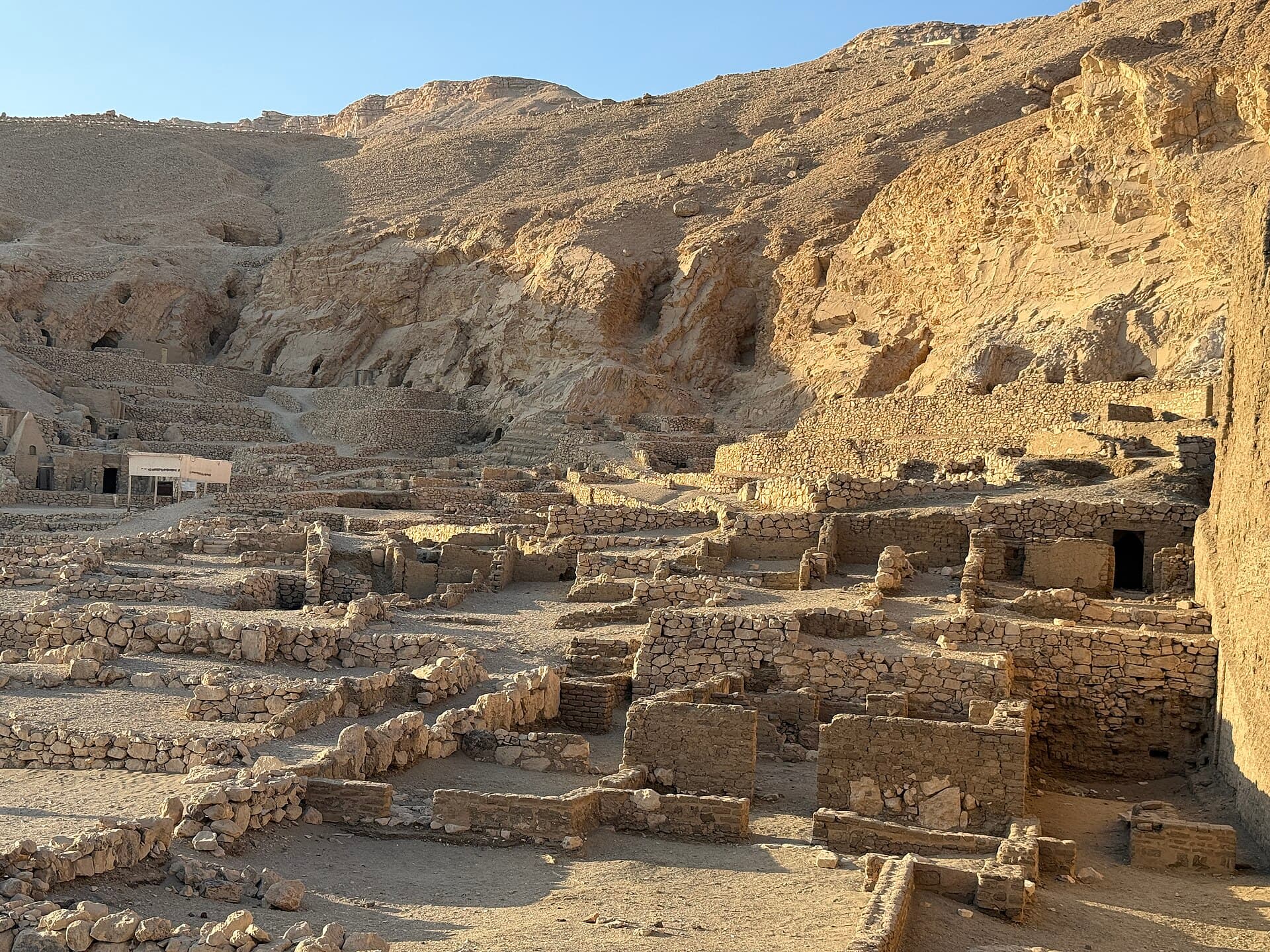 Deir el-Medina (Workers' Village)The village of the craftsmen and artists who cut and decorated the royal tombs i15 minutes walk4.8
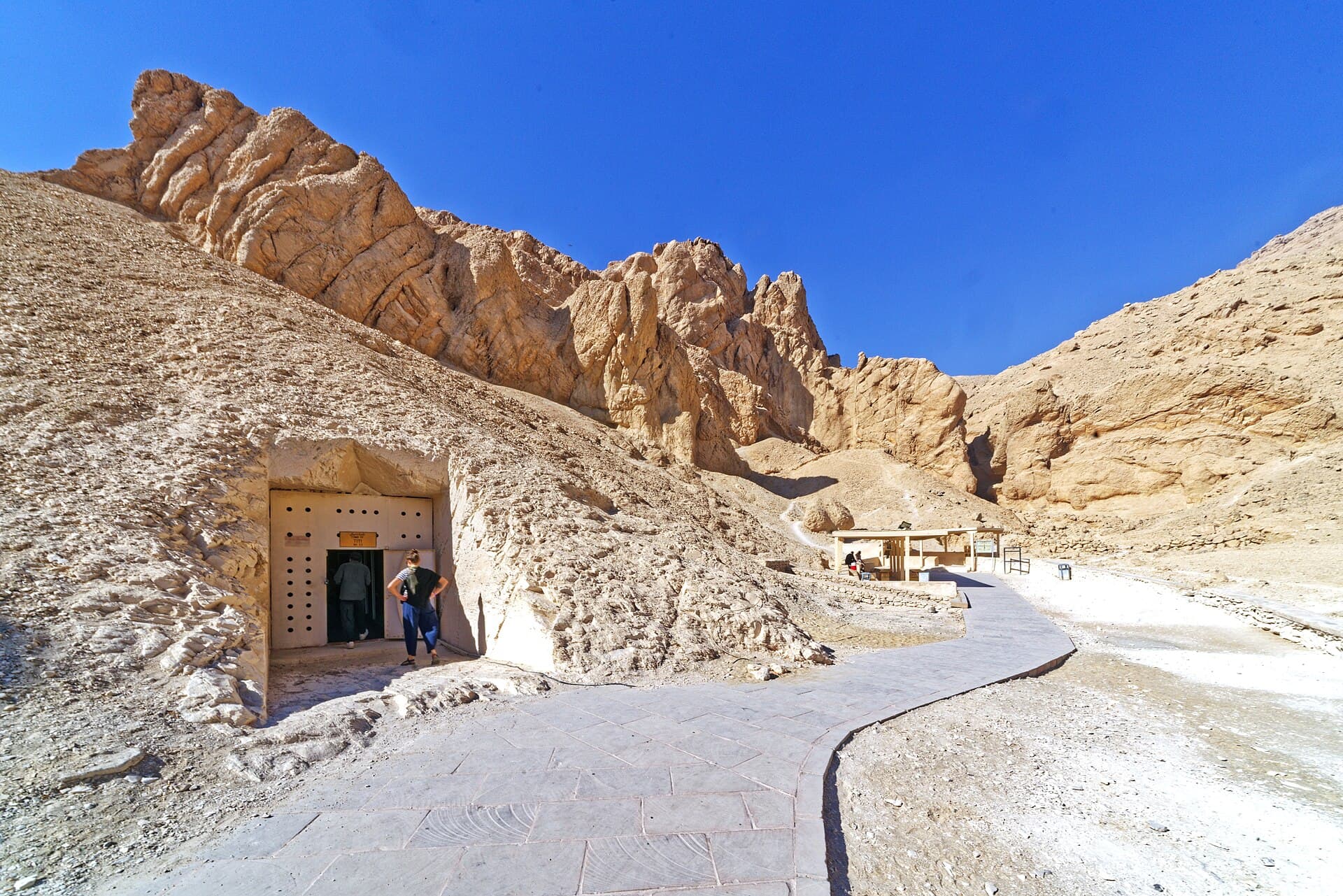 Valley of the QueensA rocky valley on Luxor's West Bank where queens, princes, princesses and senior24 minutes walk4.6
Yes, because stopping is free, costs ten minutes, and the road passes them anyway. Do not plan a trip around them — they are a stop within a west bank day rather than a destination.
It was repaired in the third century AD under the emperor Septimius Severus, and the restoration most likely sealed the fissures where the sound originated. It has never been heard since — the attempt to fix it is what ended the phenomenon.