
The Sea Peoples reliefs
A historical record of the invasion that felled Mediterranean civilisations and which Egypt repelled.
Marc Ryckaert — CC BY 3.0 · Marc Ryckaert (MJJR) — CC BY 3.0 · ولاء — Public domain · ولاء — Public domain
The mortuary temple of Ramesses III, and the finest thing on the west bank after the Valley of the Kings — yet most visitors pass it without going in, because it is off the usual circuit. What sets it apart from every other temple in Luxor is colour. The reliefs here keep their original paint over large areas — blue, red and green on columns and ceilings, not a faded trace but standing colour. The reason is that the temple lay buried for a long time and was shielded from the sun, and it is the best opportunity in Luxor to see what temples actually looked like: fully painted rather than bare stone. The reliefs on its outer walls are a historical record rather than decoration: they show Ramesses III's battles against the Sea Peoples — the maritime invasion that brought down the Mediterranean civilisations of that century and which Egypt repelled. These carvings are among the most important sources known anywhere for those events, showing ships, weapons and individually characterised prisoners. The entrance is through a gateway that is not Egyptian in form: the migdol, built like a Syrian fortress and unusual in Egyptian architecture. The walled complex is large and contains an older temple from the reigns of Hatshepsut and Thutmose III, along with the remains of a palace and storerooms. Crowds here are far lighter than at Karnak or Hatshepsut, and that alone makes the visit more pleasant. An hour and a quarter, added to a west bank day after the Valley of the Kings and Hatshepsut.
A historical record of the invasion that felled Mediterranean civilisations and which Egypt repelled.
Blue, red and green on columns and ceilings — the best chance in Luxor to see it.
Built like a Syrian fortress, and quite alien to Egyptian architecture.
West Bank, south of the Valley of the Kings
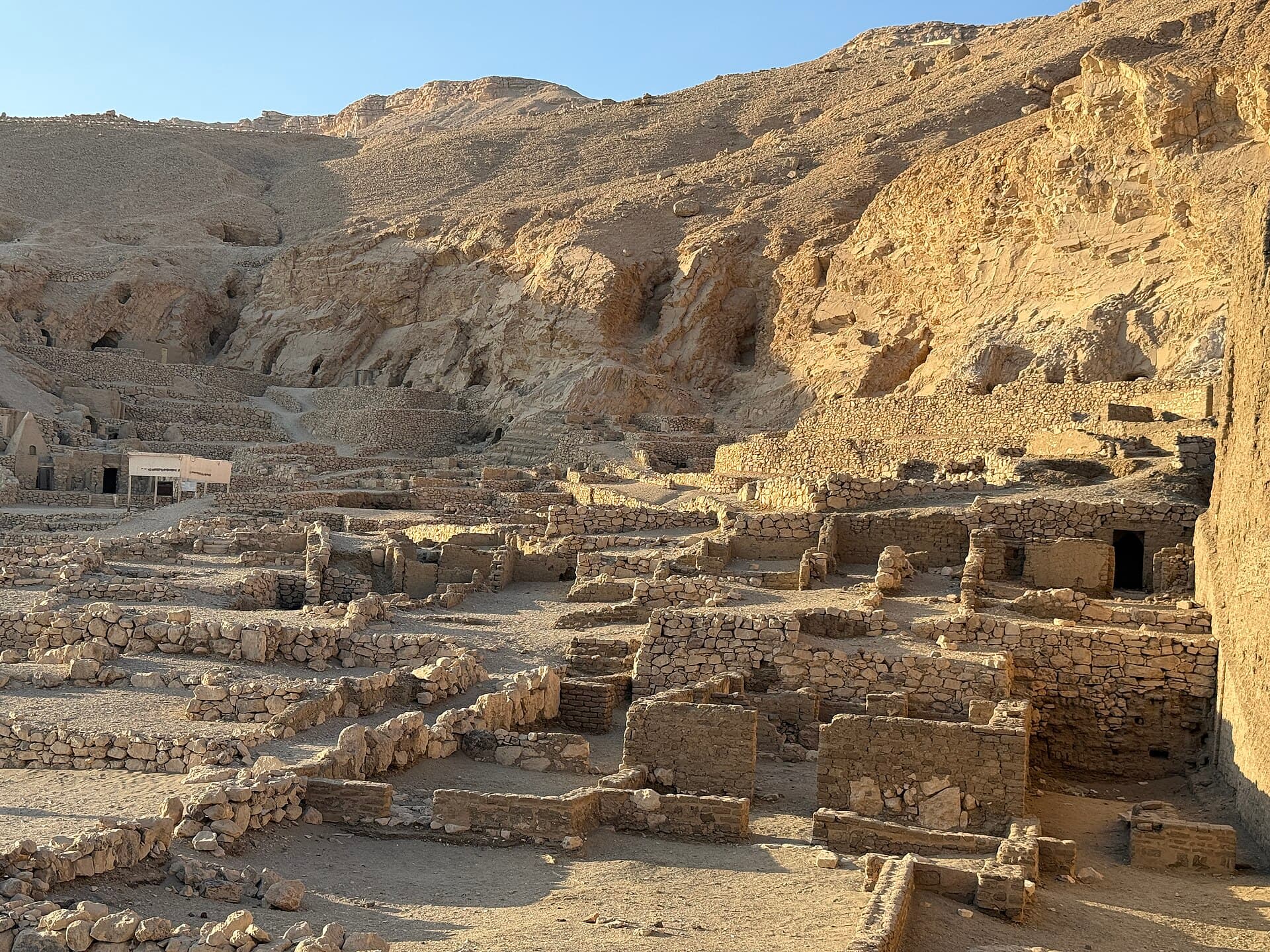 Deir el-Medina (Workers' Village)The village of the craftsmen and artists who cut and decorated the royal tombs i12 minutes walk4.8
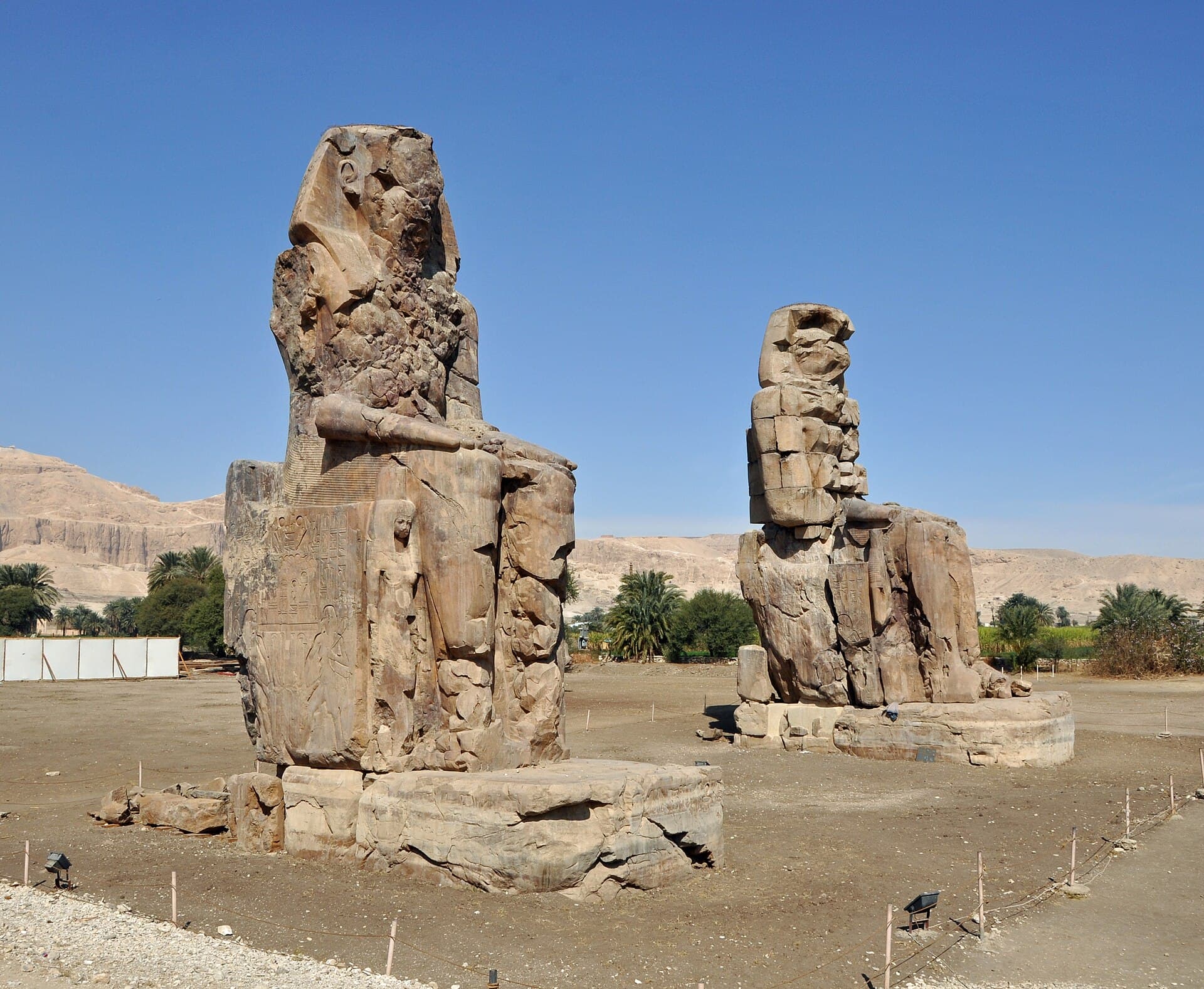 Colossi of MemnonTwo enormous stone figures standing alone in an open field beside the west bank 12 minutes walk4.5
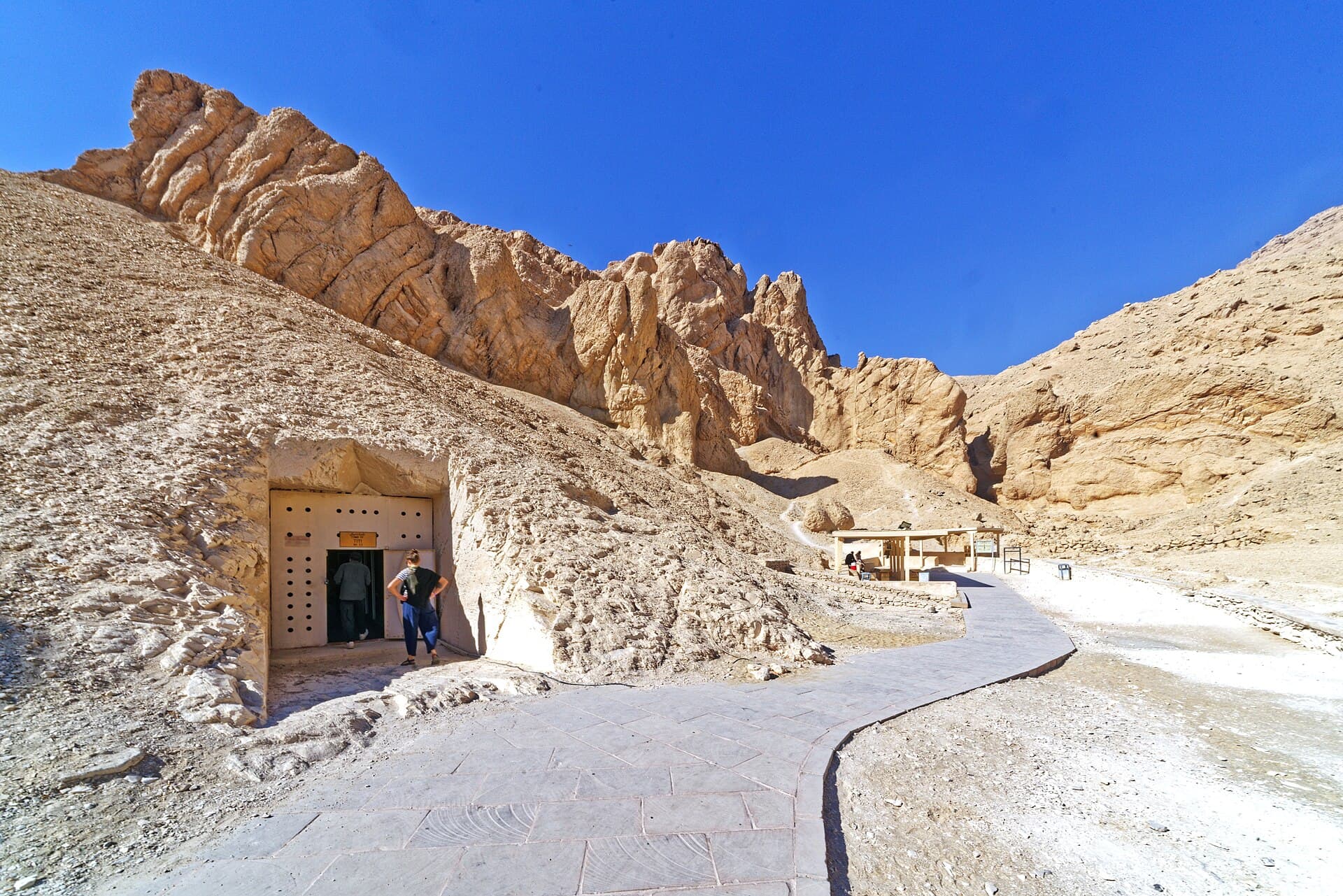 Valley of the QueensA rocky valley on Luxor's West Bank where queens, princes, princesses and senior15 minutes walk4.6
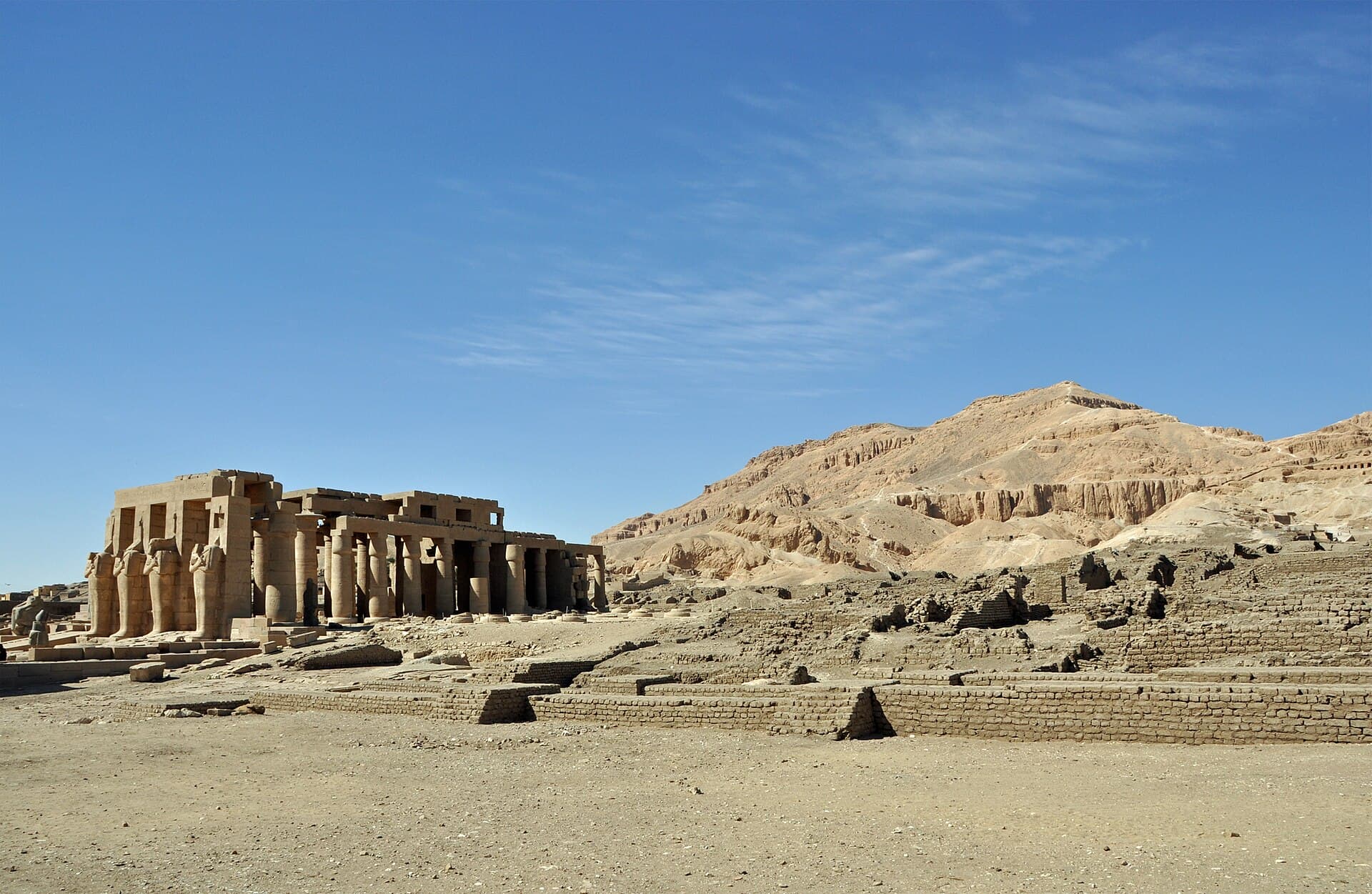 RamesseumThe memorial temple of Ramesses II on Luxor's West Bank, built to keep his memor17 minutes walk4.6
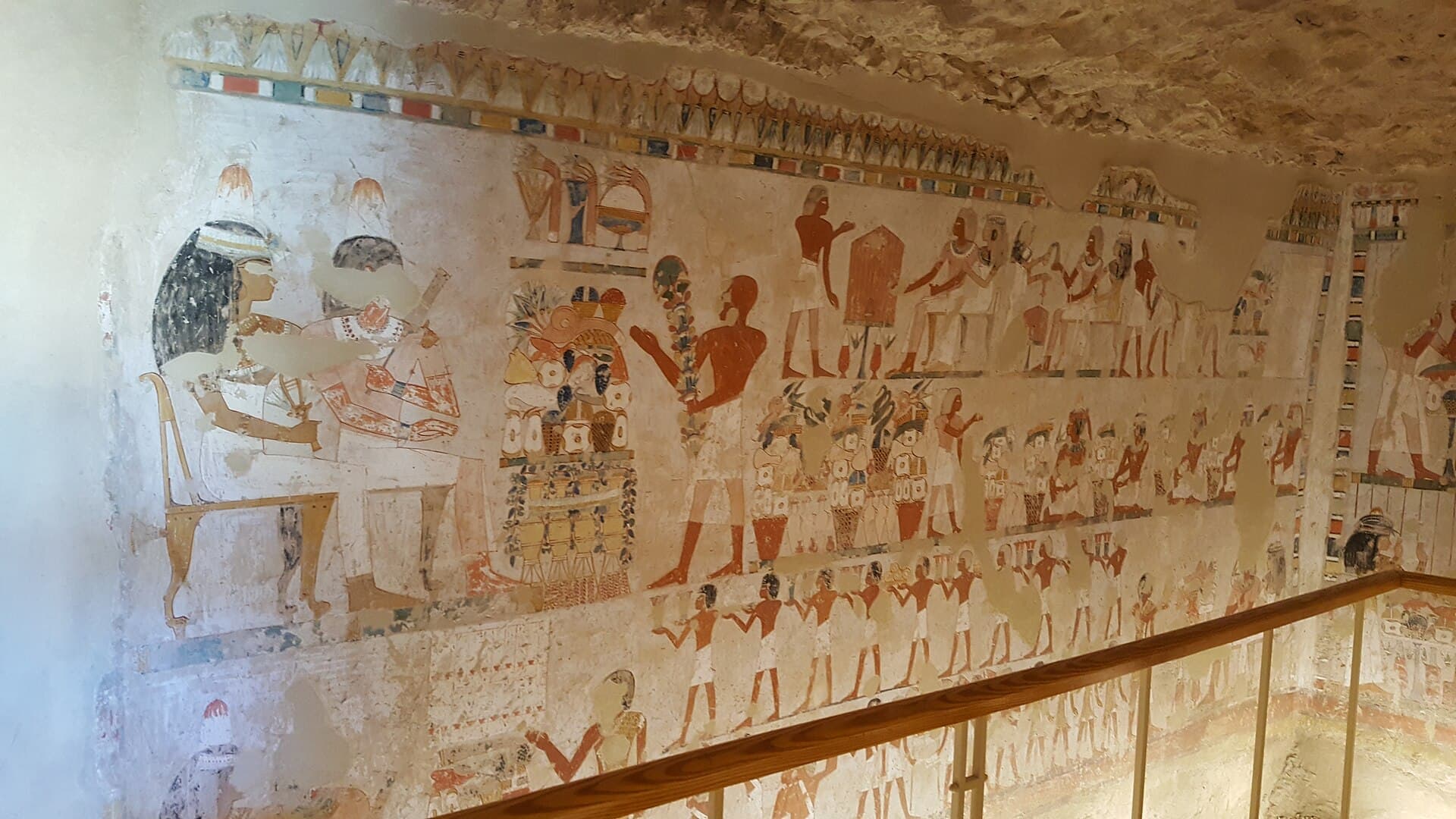 Tombs of the Nobles (Sheikh Abd el-Qurna)A necropolis on the slopes of the West Bank hills, the largest group of private 19 minutes walk4.4
If you can manage a fourth site, then yes without hesitation — it is better than a good deal of what people see before it. The order: Valley of the Kings at opening, then Hatshepsut, then a short stop at the Colossi, then Medinet Habu. Anyone flagging should save it for a second morning on its own — it deserves that.
It lay buried under sand and debris for centuries, shielded from the sun, wind and rain that stripped the colour from exposed temples. When it was excavated the paint was still on the stone. The roofed inner halls show it best, because the ceilings gave additional protection.